Wild things of the national parks
The animals, plants, and fungi of the national parks: some we've spotted, most we're still looking for. What they eat, how big they get, whether you should worry, and which parks you'll find them in. Made for kids ages 6–12.
Or read them park by park.
Worried about bites? See which ones can hurt a kid.
Animals
Mammals
-
 Mammal
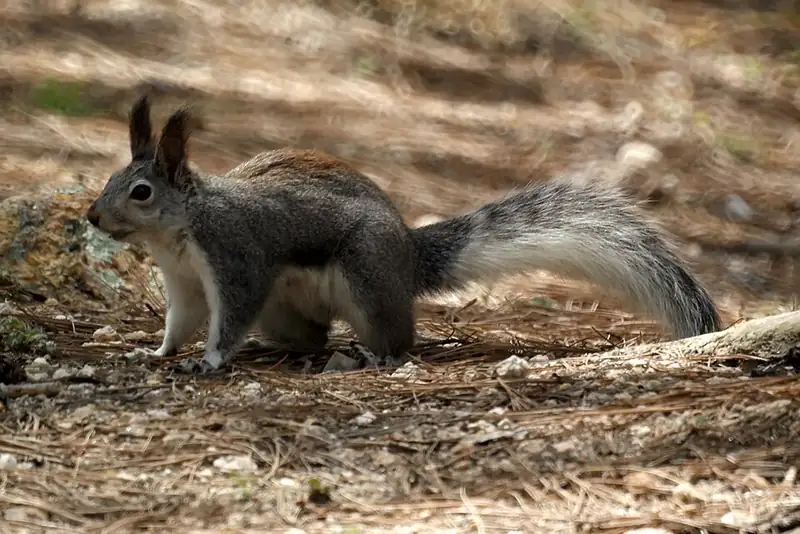
 Abert's squirrel
Sciurus aberti
A tasseled-eared squirrel of ponderosa pine forests at Mesa Verde, Rocky Mountain, and Great Sand Dunes, nicknamed the scrabbit.
-
 Mammal
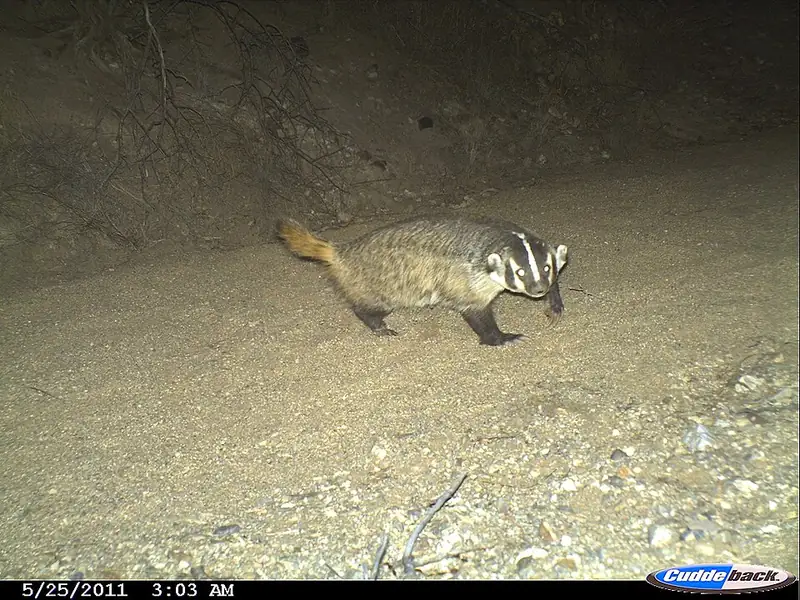
 American badger
Taxidea taxus
A short, wide-bodied digger with a white-striped face, common on the grasslands of Yellowstone and Badlands, that can vanish underground in minutes.
-
 Mammal
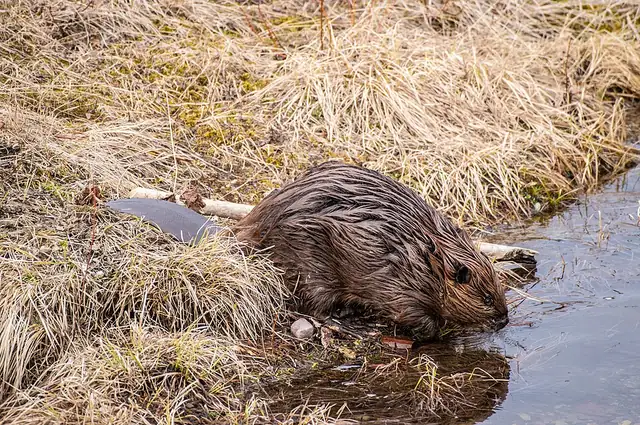
 American beaver
Castor canadensis
North America's largest rodent, a keystone species whose dams reshape whole streams at Yellowstone, Glacier, and ten other parks along the route.
-
 Mammal
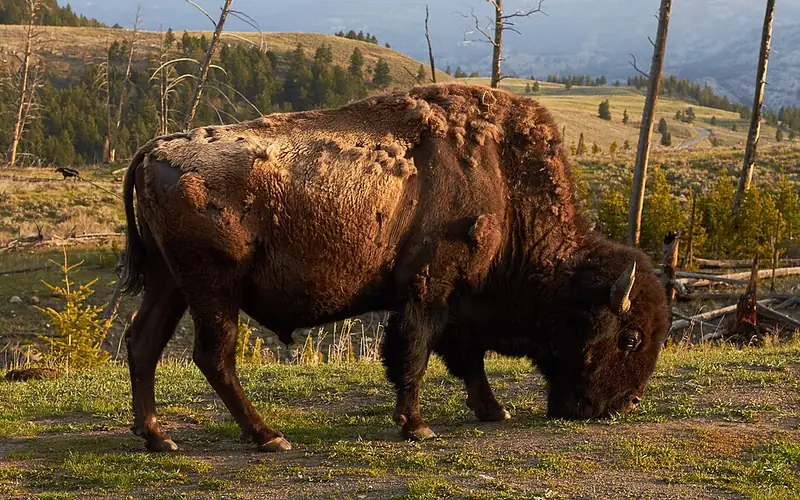
 American bison
Bison bison
The biggest land animal in North America, a shaggy grazer of the plains you can watch cross the road in Yellowstone.
-
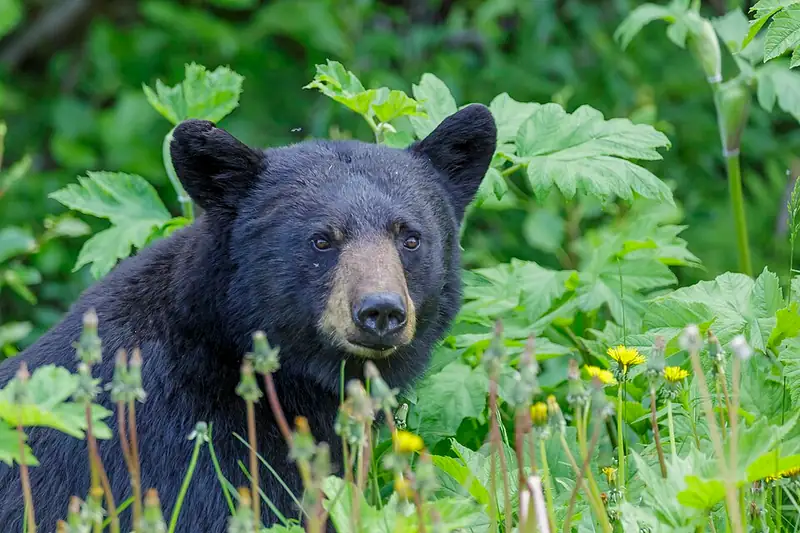 Mammal
 American black bear
Ursus americanus
The bear you're most likely to meet east of the Rockies, a strong tree-climber that eats mostly plants and comes in black, brown, or cinnamon.
-
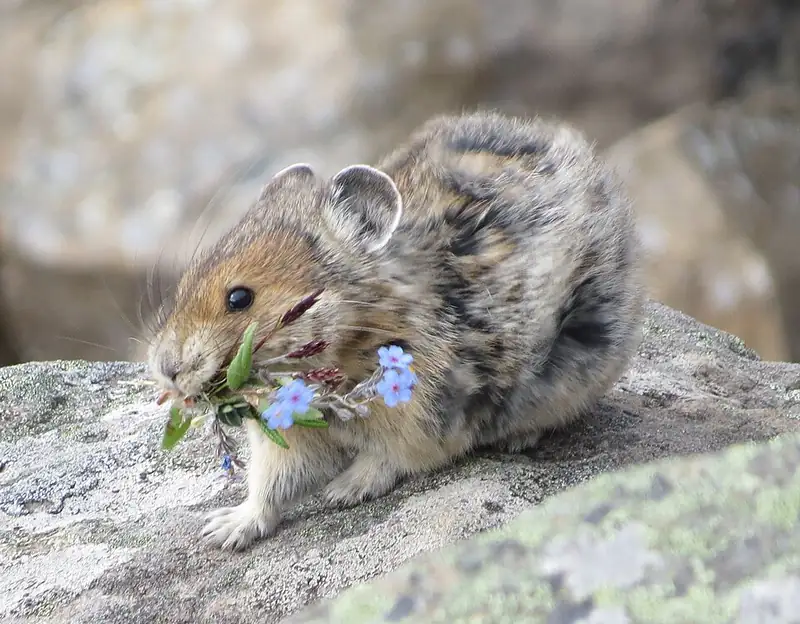 Mammal
 American pika
Ochotona princeps
A small round cousin of the rabbit that lives in mountain rock piles at Rocky Mountain, Mount Rainier, and North Cascades, and never sleeps through winter.
-
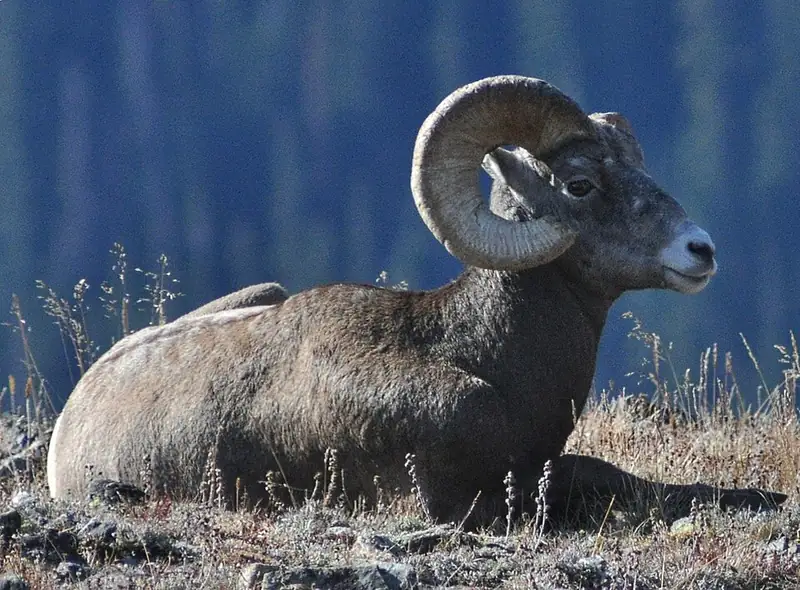 Mammal
 Bighorn sheep
Ovis canadensis
A wild sheep of cliffs and canyons, where rams carry heavy curled horns and both sexes cross steep rock other animals can't.
-
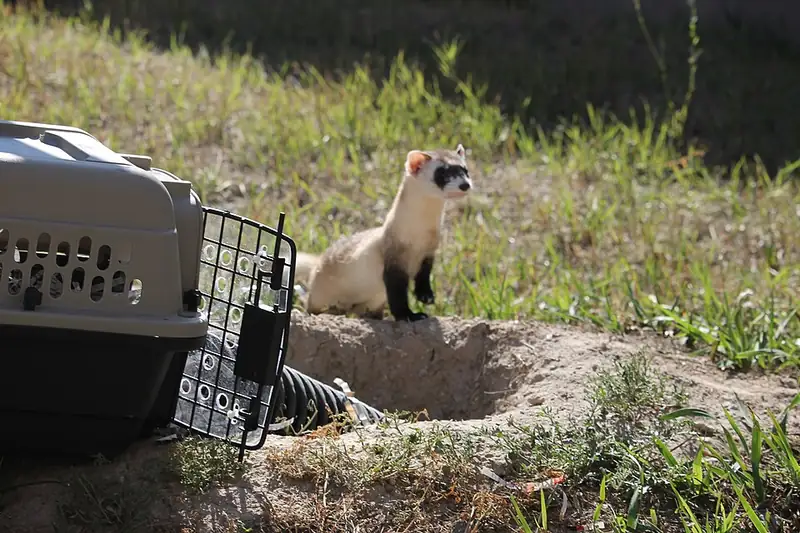 Mammal
 Black-footed ferret
Mustela nigripes
A masked, prairie-dog-hunting weasel declared extinct in 1979, brought back from a single Wyoming colony and now living wild again at Badlands and Wind Cave.
-
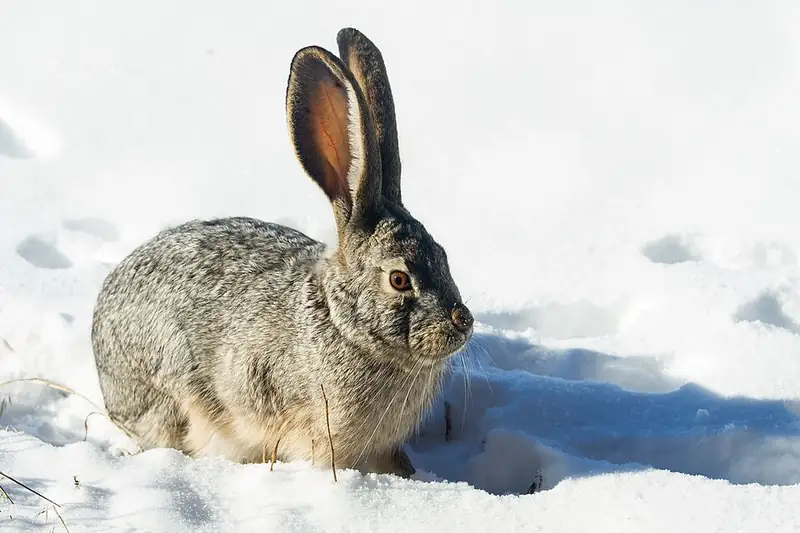 Mammal
 Black-tailed jackrabbit
Lepus californicus
A big-eared hare of Joshua Tree, Lava Beds, Arches, and Canyonlands that dumps body heat through those ears and outruns coyotes in zigzags at 40 miles an hour.
-
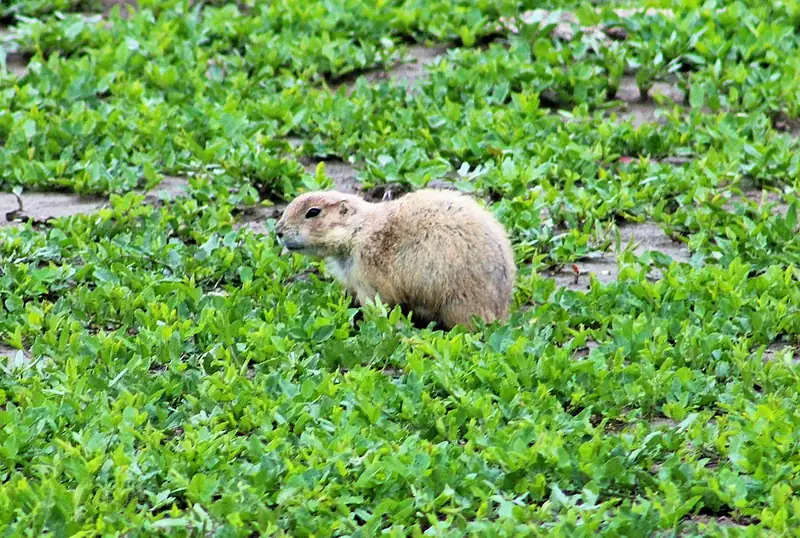 Mammal
 Black-tailed prairie dog
Cynomys ludovicianus
A burrowing ground squirrel, not a dog. Its towns along Theodore Roosevelt's scenic loop mow the grass short and pull bison and pronghorn in to graze.
-
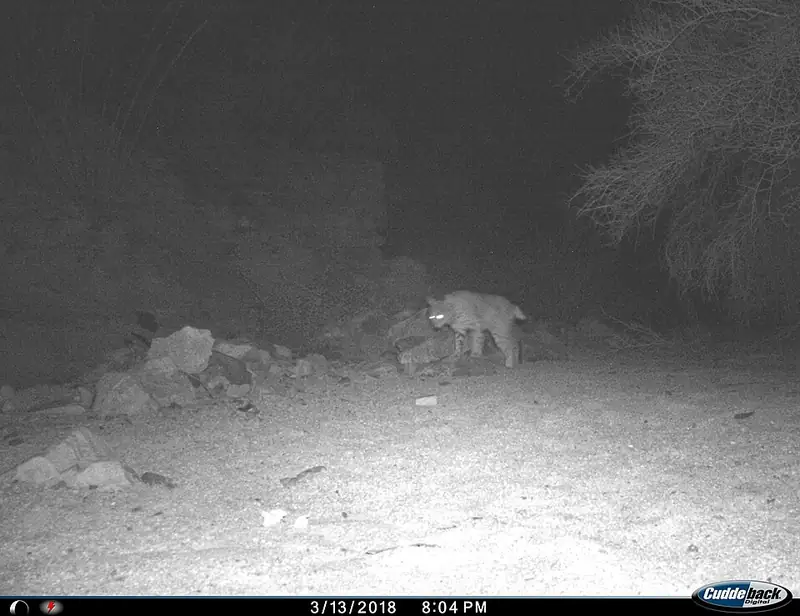 Mammal
 Bobcat
Lynx rufus
A small wildcat about twice the size of a house cat, common but rarely seen, that can bring down prey many times its own weight.
-
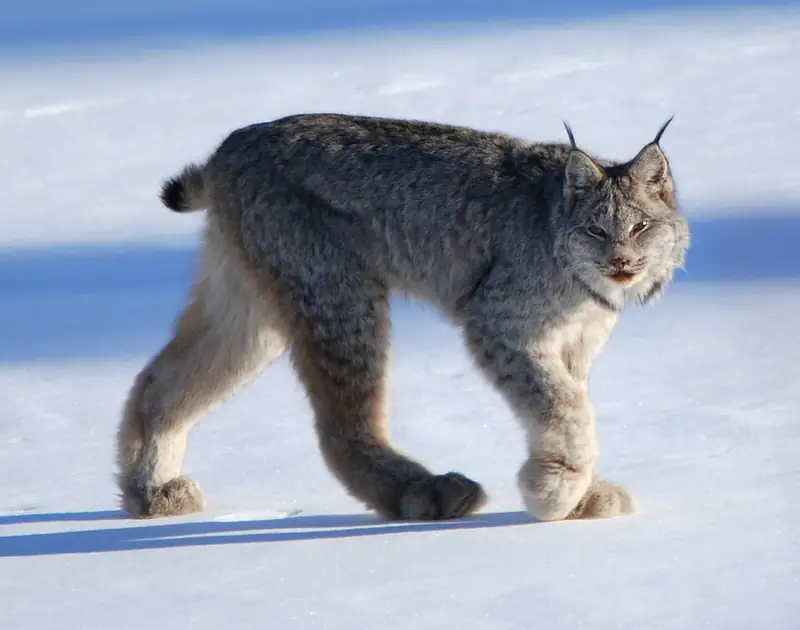 Mammal
 Canada lynx
Lynx canadensis
A rare, snow-adapted wild cat with tufted ears and huge furry paws, living in high conifer forest at Glacier, Yellowstone, and Grand Teton.
-
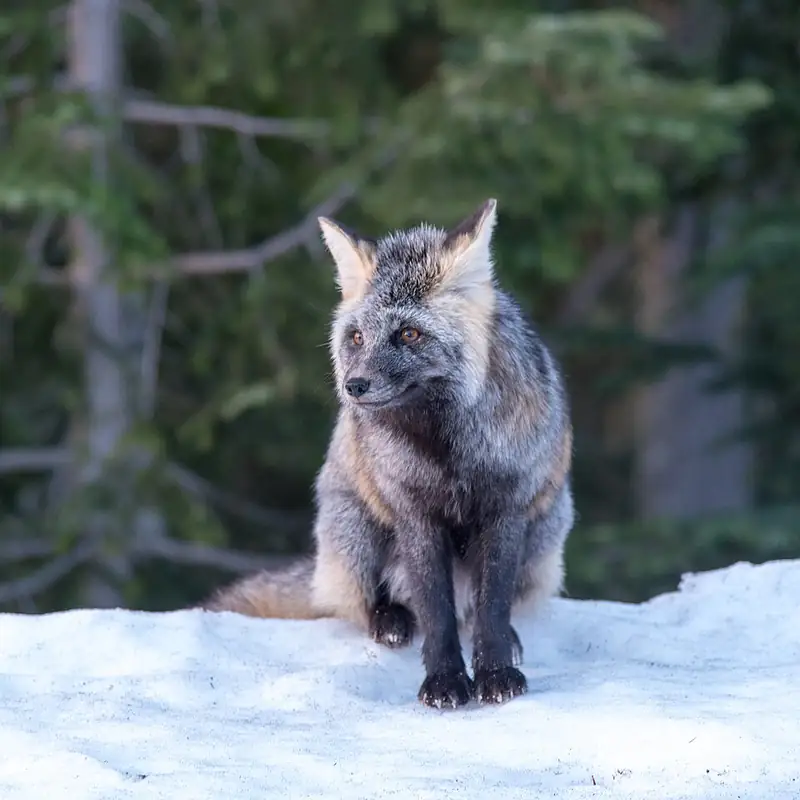 Mammal
 Cascade red fox
Vulpes vulpes cascadensis
A rare, high-elevation red fox subspecies found almost nowhere but Mount Rainier's subalpine meadows, in red, black, or mixed cross-colored fur.
-
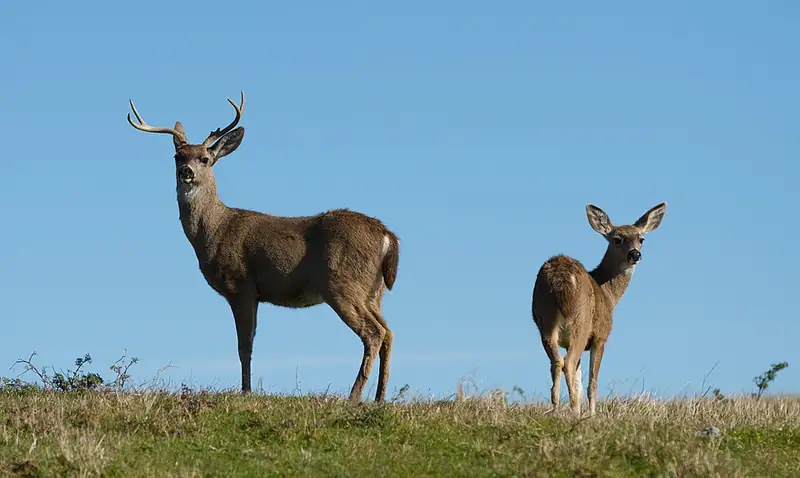 Mammal
 Columbian black-tailed deer
Odocoileus hemionus columbianus
The coastal rainforest subspecies of mule deer, common on foggy meadow edges from Olympic to Redwood, easy to tell apart by its all-black tail.
-
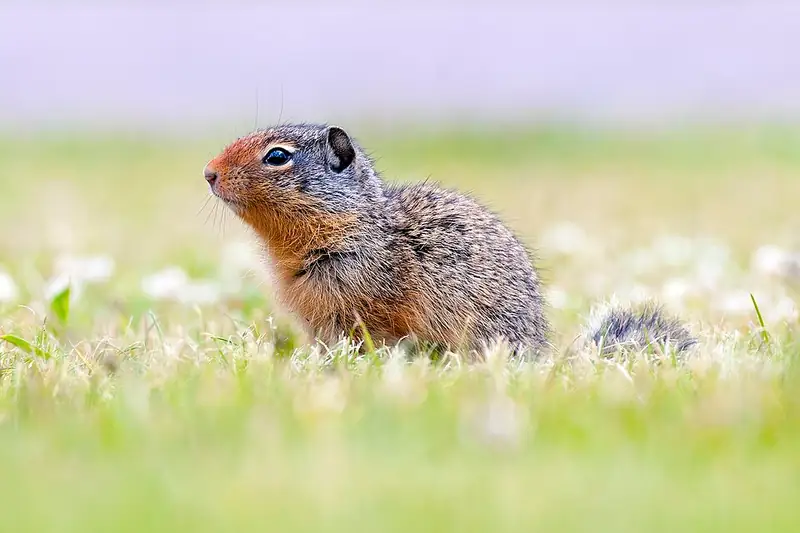 Mammal
 Columbian ground squirrel
Urocitellus columbianus
The squeaking, upright little rodent standing outside its burrow in every open meadow at Glacier, and the animal you are most certain to see there.
-
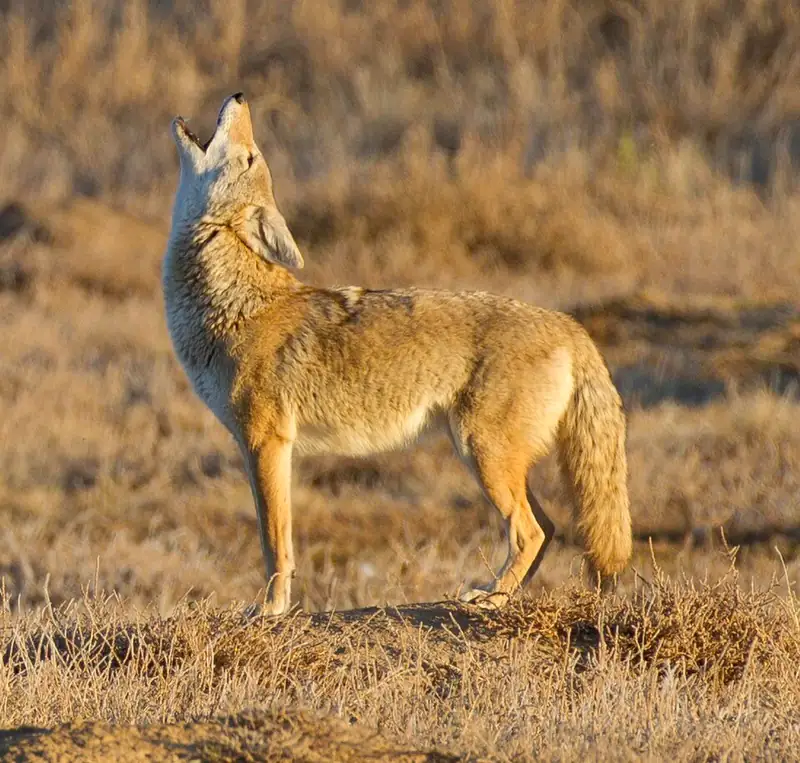 Mammal
 Coyote
Canis latrans
The wild dog you're most likely to hear at a national park — a coyote, at home in the desert, the mountains, and the edges of towns.
-
 Mammal
 Dall sheep
Ovis dalli
A snowy-white wild sheep of Alaska's steepest ridges, where ewes raise lambs on cliffs and rams carry horns that curl a full circle.
-
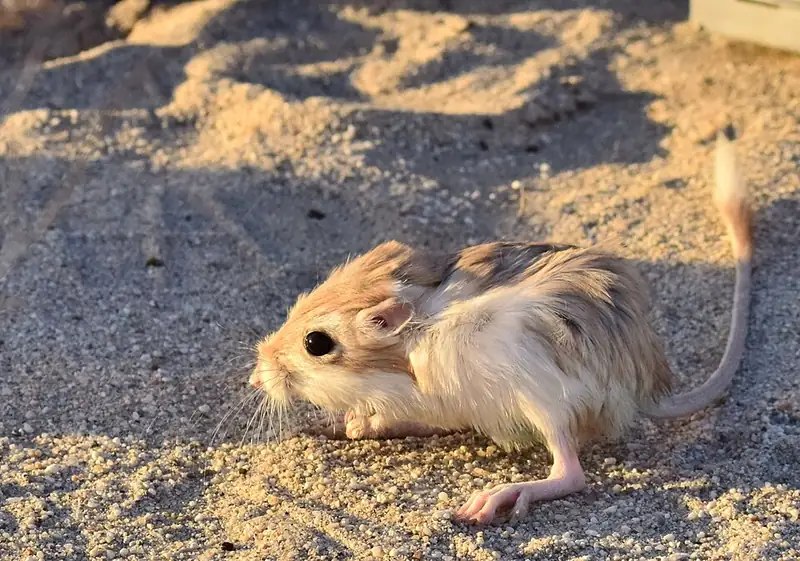 Mammal
 Desert kangaroo rat
Dipodomys deserti
A sand-dune rodent of Joshua Tree that never drinks water and dodges a striking sidewinder with a midair kick.
-
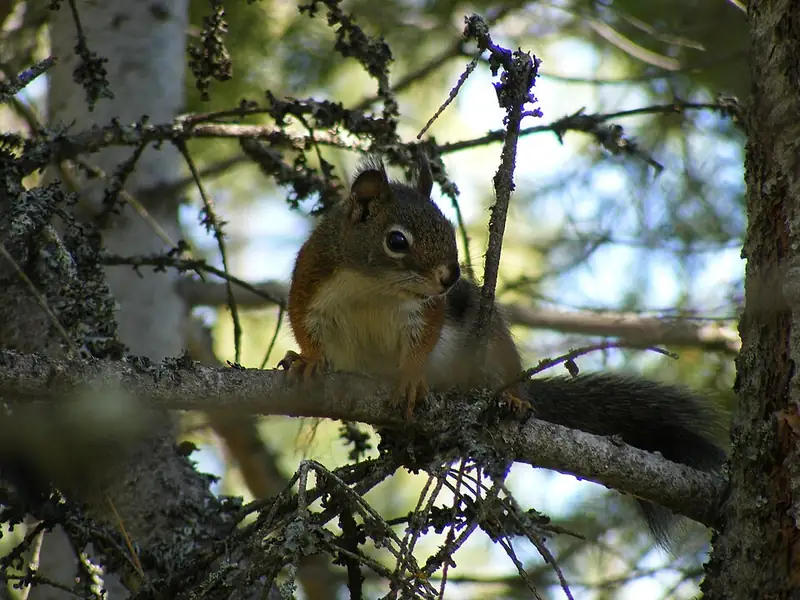 Mammal
 Douglas squirrel
Tamiasciurus douglasii
A small, loud tree squirrel of West Coast conifer forests, known for cutting green cones by the hundred and scolding every hiker who walks under its tree.
-
 Mammal
 Eastern chipmunk
Tamias striatus
A busy striped ground squirrel that stuffs seeds into stretchy cheek pouches and hides them in an underground pantry.
-
 Mammal
 Eastern gray squirrel
Sciurus carolinensis
A gray acrobat of the oak woods that buries nuts one by one and sometimes forgets where, sprouting new forests by accident.
-
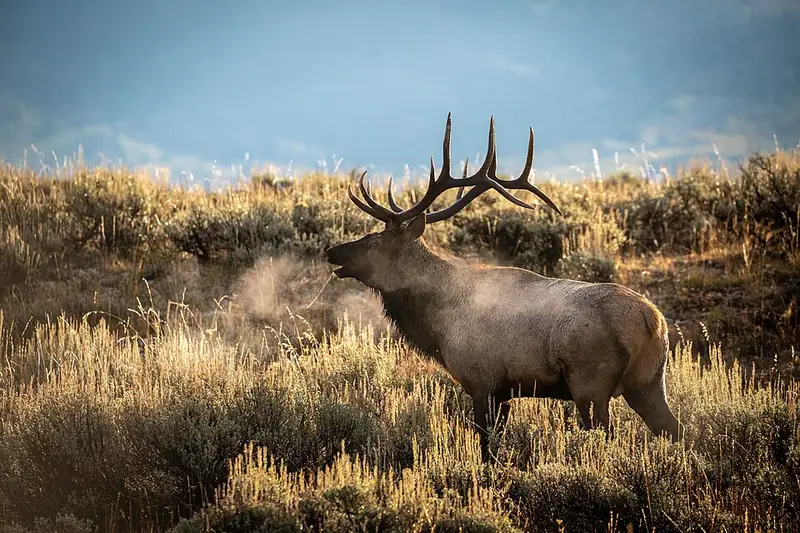 Mammal
 Elk
Cervus canadensis
A large deer of mountain meadows whose bulls grow branching antlers and, each fall, bugle a high whistling call across the valley.
-
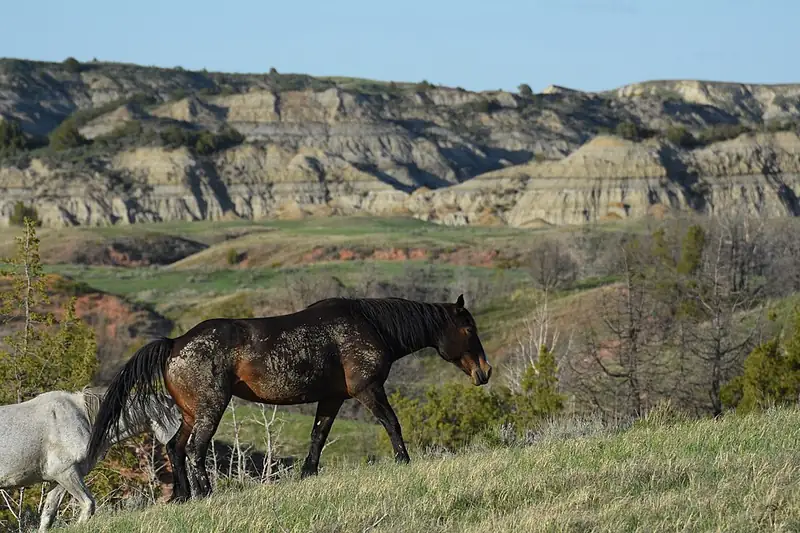 Mammal
 Feral horse
Equus ferus caballus
Ranch horses turned loose on the open range and never gathered back. Their descendants live in Theodore Roosevelt's South Unit as feral livestock.
-
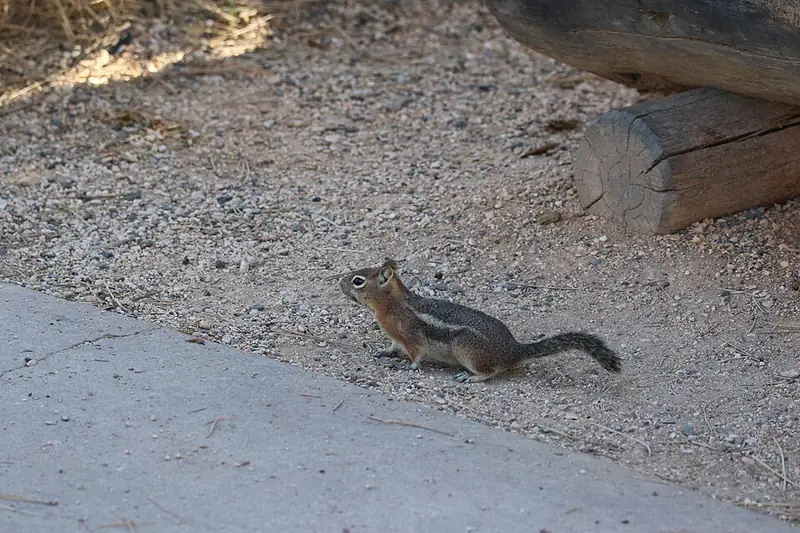 Mammal
 Golden-mantled ground squirrel
Callospermophilus lateralis
A chipmunk-lookalike ground squirrel with a reddish-gold head and shoulders and no face stripes, common on rocks and trailsides from Glacier to Mesa Verde.
-
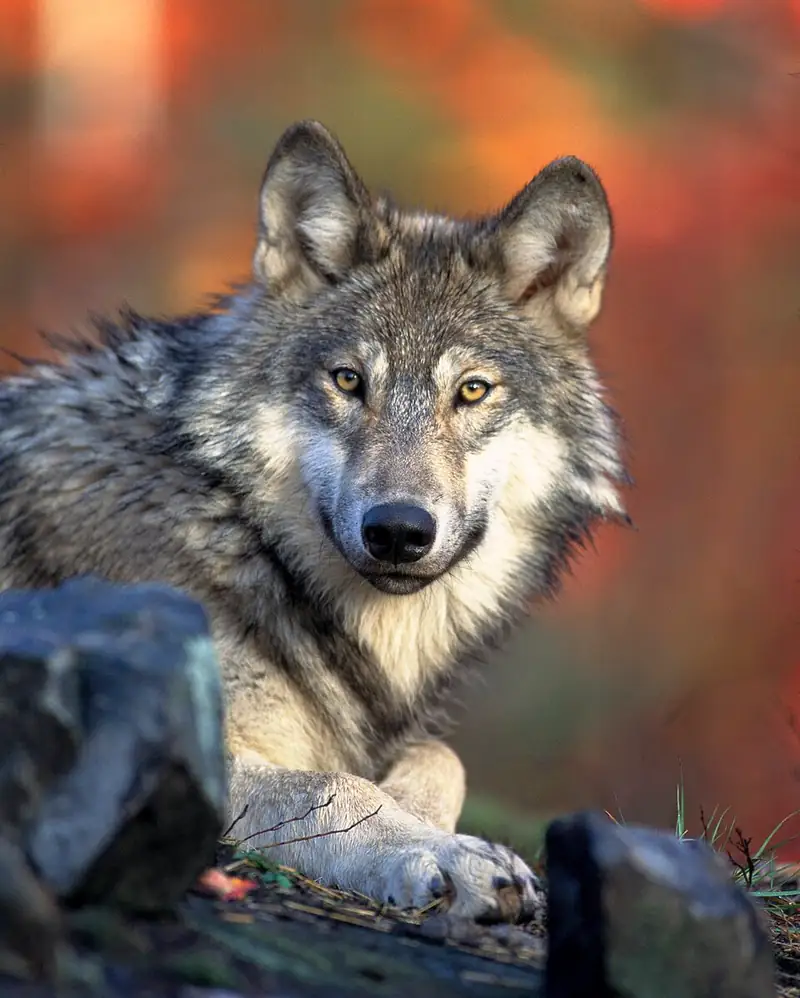 Mammal
 Gray wolf
Canis lupus
The biggest wild dog in North America, a pack hunter you might hear howling at dawn in Yellowstone, Denali, or Isle Royale.
-
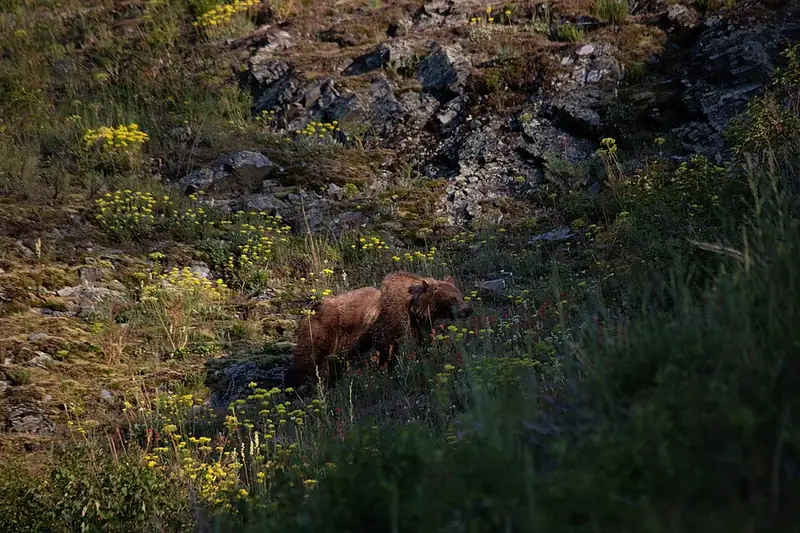 Mammal
 Grizzly bear
Ursus arctos horribilis
A big brown bear of the northern Rockies and Alaska, marked by a hump of muscle over its shoulders and long digging claws.
-
 Mammal
 Harbor seal
Phoca vitulina
A gray, dog-snouted true seal that rests hauled out on rocks and floating glacier ice, bobbing in Alaska fjords with ear holes and no ear flaps.
-
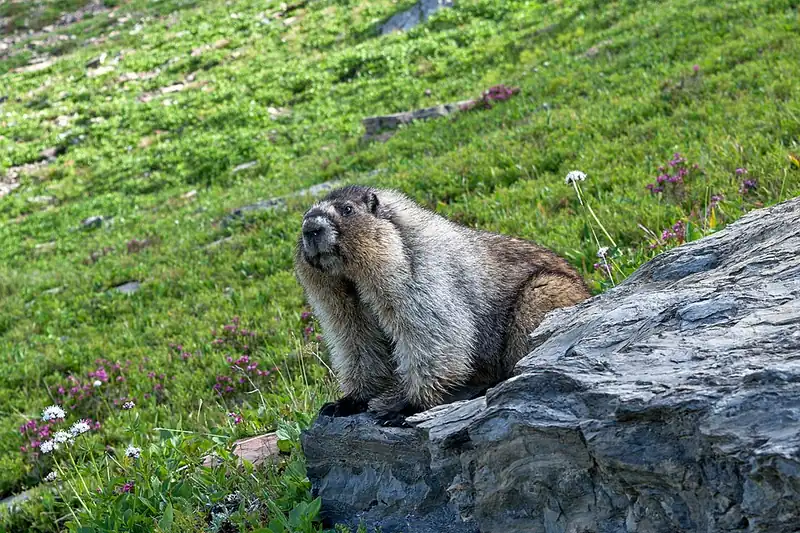 Mammal
 Hoary marmot
Marmota caligata
The big silver-gray ground squirrel of the high meadows at Mount Rainier, famous for the sharp whistle it gives when danger is near.
-
 Mammal
 Humpback whale
Megaptera novaeangliae
A giant ocean mammal famous for breaching and long songs, following the food to Glacier Bay every summer to eat until its blubber is thick again.
-
 Mammal
 Little brown bat
Myotis lucifugus
A tiny brown flyer that hunts insects over water at dusk and sleeps in caves and barns, eating half its own weight in bugs each night.
-
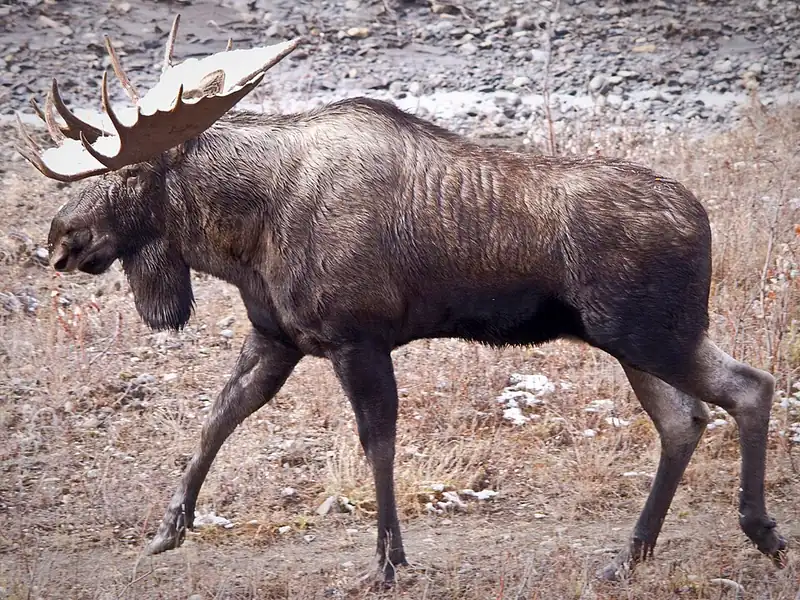 Mammal
 Moose
Alces alces
The largest deer in the world, a long-legged giant you might see wading in ponds at Grand Teton, Isle Royale, Denali, or Rocky Mountain.
-
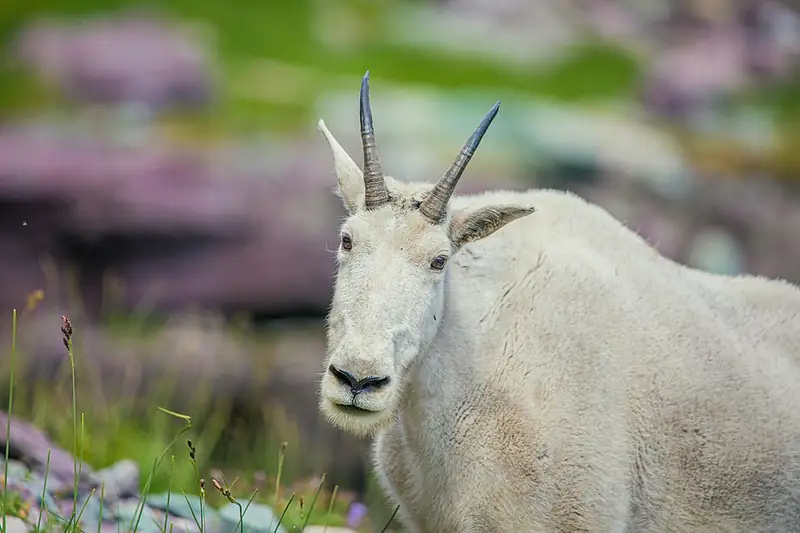 Mammal
 Mountain goat
Oreamnos americanus
A white, shaggy climber with black horns that lives on the steepest crags and pumice fields high on Mount Rainier, where almost nothing else can walk.
-
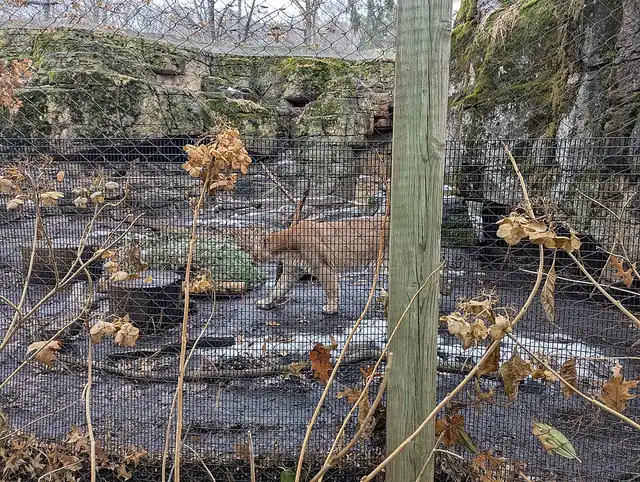 Mammal
 Mountain lion
Puma concolor
A tan, solitary big cat found from Glacier to Mesa Verde, called cougar, puma, or panther by region, and rarely seen at all.
-
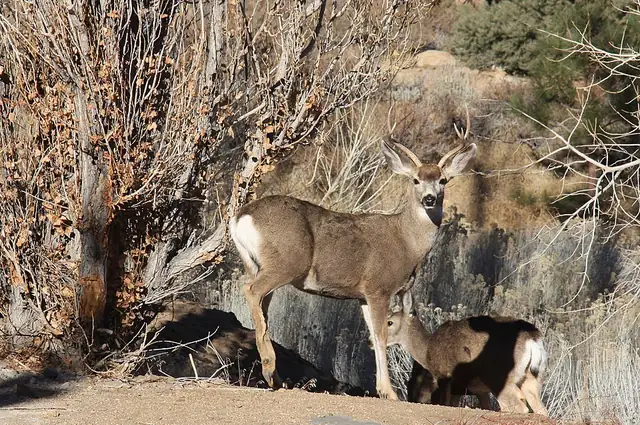 Mammal
 Mule deer
Odocoileus hemionus
A western deer named for its big mule-like ears, common on canyon rims and in desert washes in Grand Canyon, Zion, Yosemite, Arches, Canyonlands, and Saguaro.
-
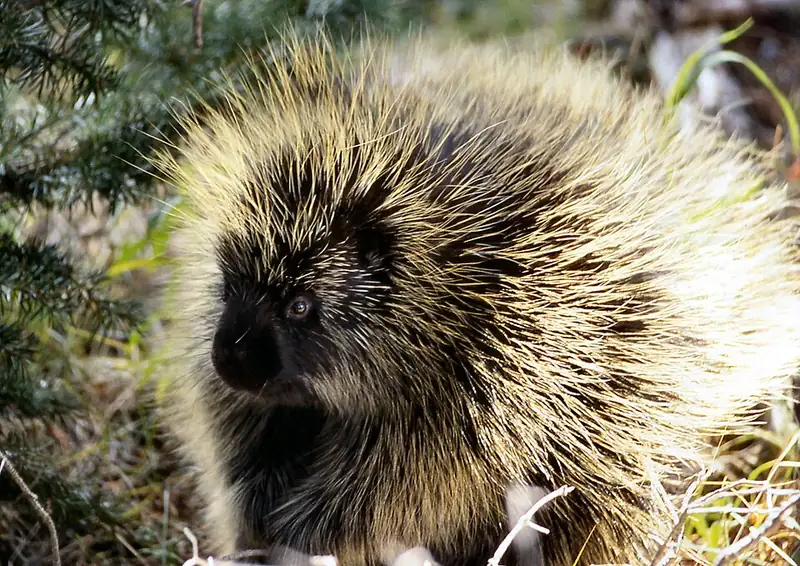 Mammal
 North American porcupine
Erethizon dorsatum
A slow, quill-covered rodent of the canyon country at Arches and Canyonlands, and the second-largest rodent in North America after the beaver.
-
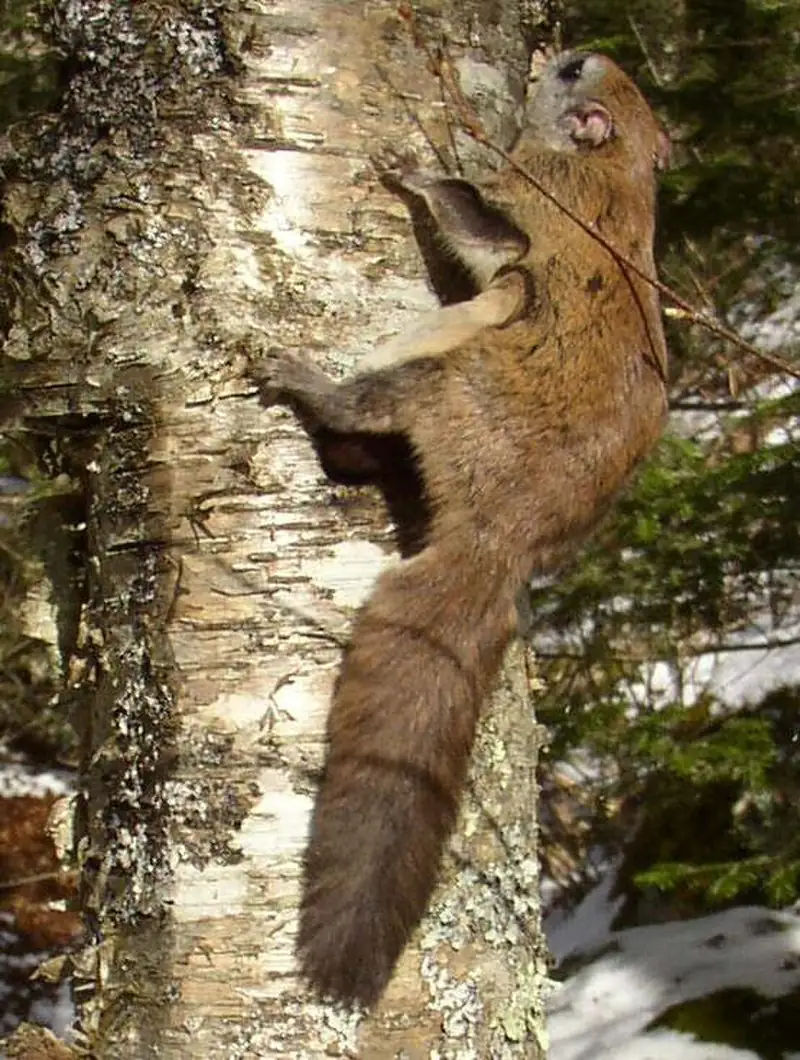 Mammal
 Northern flying squirrel
Glaucomys sabrinus
A nocturnal glider of old-growth conifer forests that eats mostly underground fungus and, under a UV light, glows bubblegum pink.
-
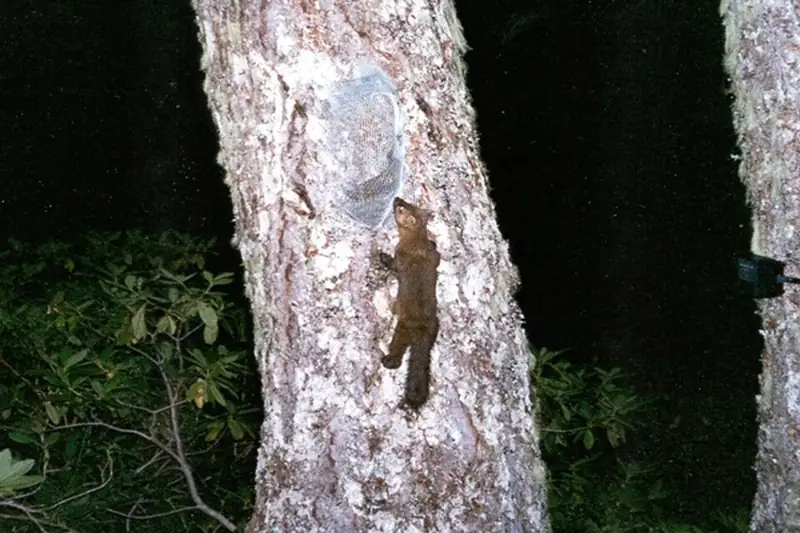 Mammal
 Pacific marten
Martes caurina
A tree-climbing weasel relative of the old-growth canopy, whose coastal population was feared extinct for 50 years before a trail camera caught one in 1996.
-
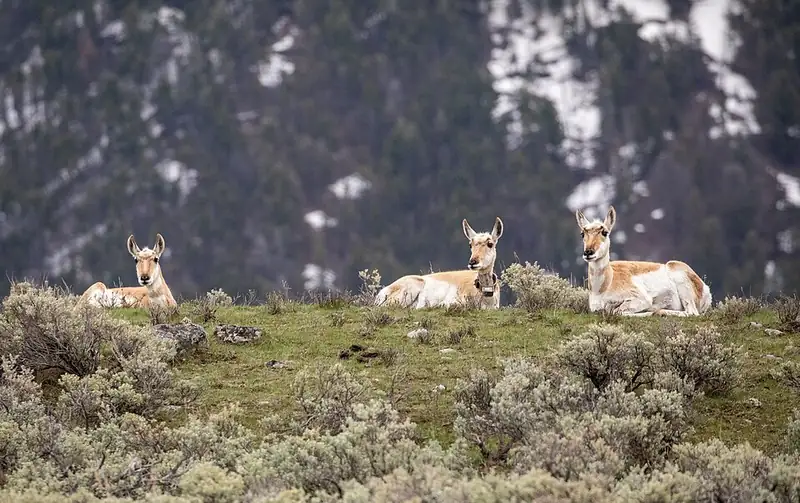 Mammal
 Pronghorn
Antilocapra americana
North America's fastest land mammal, seen in Yellowstone's northern range and at Lava Beds, built to outrun a predator that went extinct 12,000 years ago.
-
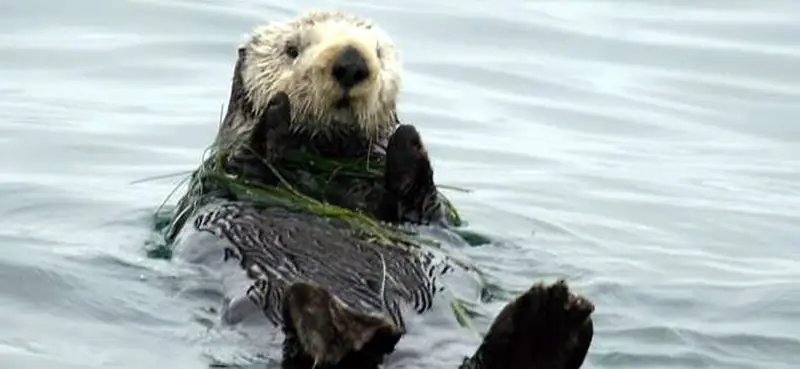 Mammal
 Sea otter
Enhydra lutris
The heaviest weasel-family animal alive, floating on its back in Olympic's coastal kelp beds with no blubber at all, just the densest fur of any mammal.
-
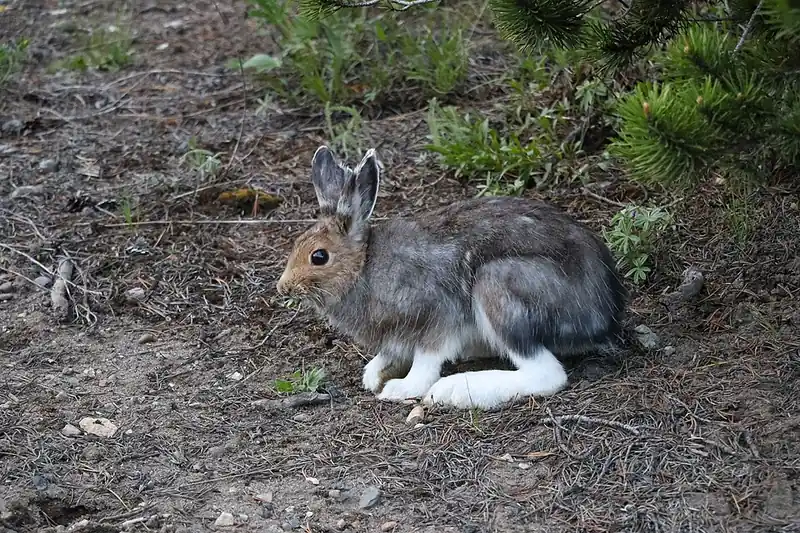 Mammal
 Snowshoe hare
Lepus americanus
A forest hare whose coat flips from brown to white on a clock set by daylight, not by snow, and whose oversized feet work like actual snowshoes.
-
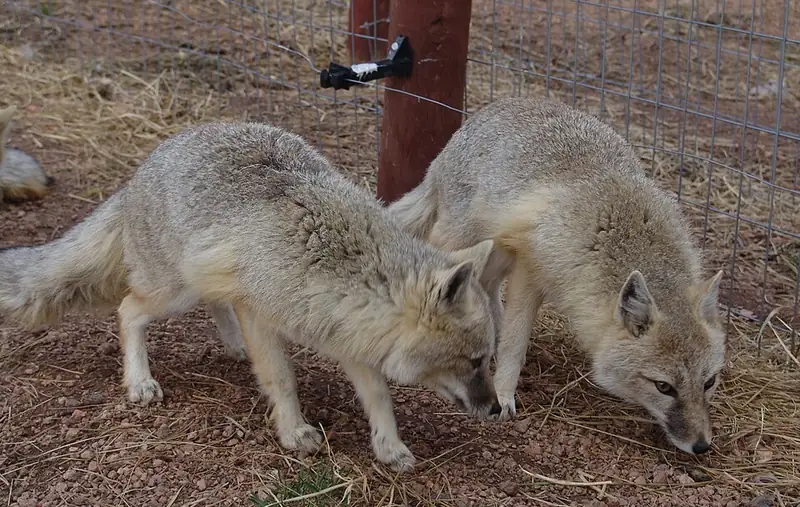 Mammal
 Swift fox
Vulpes velox
A cat-sized fox of the shortgrass prairie, wiped out of South Dakota for most of the twentieth century and reintroduced to Badlands starting in 2003.
-
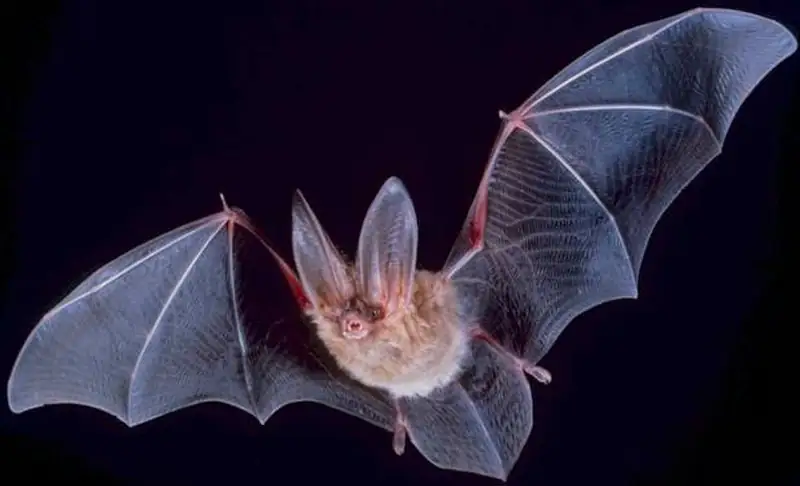 Mammal
 Townsend's big-eared bat
Corynorhinus townsendii
A soft brown bat with enormous curling ears that roosts in the cool lava-tube caves of Lava Beds and hunts moths in the dark.
-
 Mammal
 White-tailed deer
Odocoileus virginianus
The most common large mammal in eastern parks, running through the woods and waving a white tail like a flag when it bolts.
-
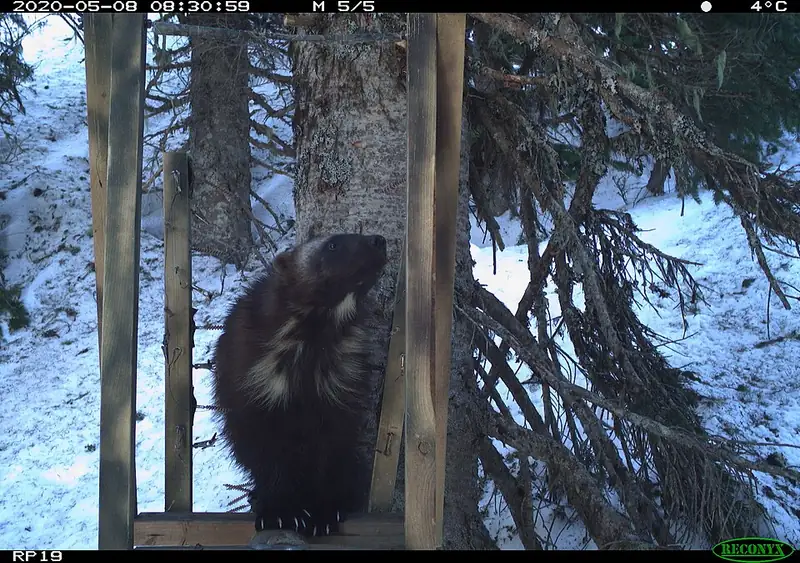 Mammal
 Wolverine
Gulo gulo
The largest weasel-family member, so rare in Washington that a 2020 den at Mount Rainier was its first confirmed wolverine family in over a century.
-
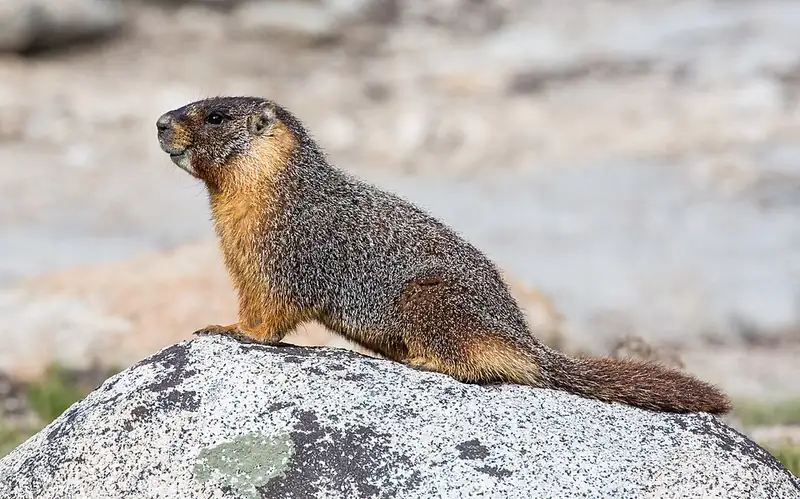 Mammal
 Yellow-bellied marmot
Marmota flaviventris
A chubby, whistling ground squirrel that suns itself on high-country rocks at Rocky Mountain and Yosemite, and sleeps away most of the year.
Birds
-
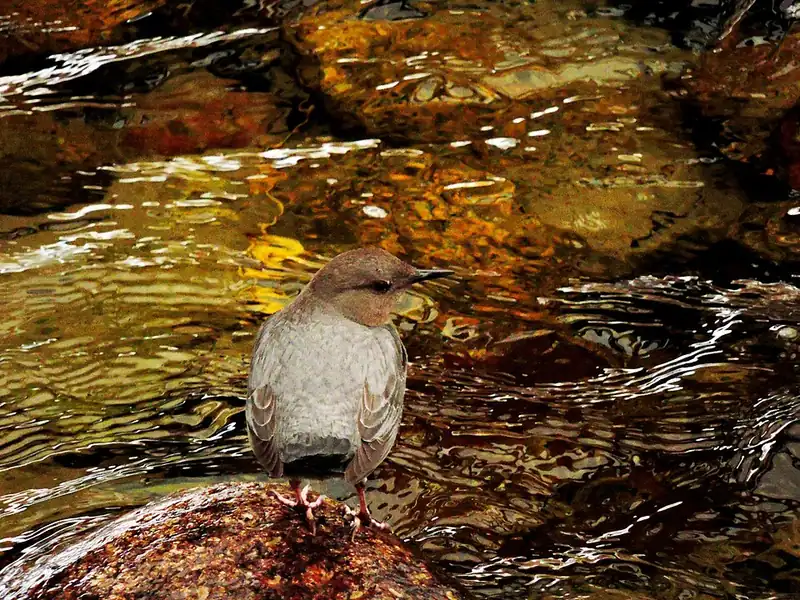 Bird
Bird American dipper
Cinclus mexicanus
A stream-gray songbird that walks along the bottom of cold mountain creeks to hunt, the only songbird in North America that does.
-
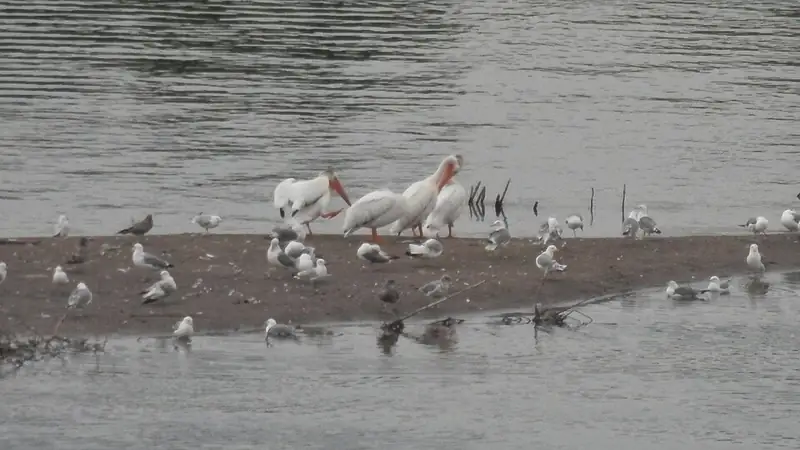 Bird
Bird American white pelican
Pelecanus erythrorhynchos
A huge white bird with an orange throat pouch that fishes in groups and nests on tiny islands in Yellowstone Lake and other high-country waters.
-
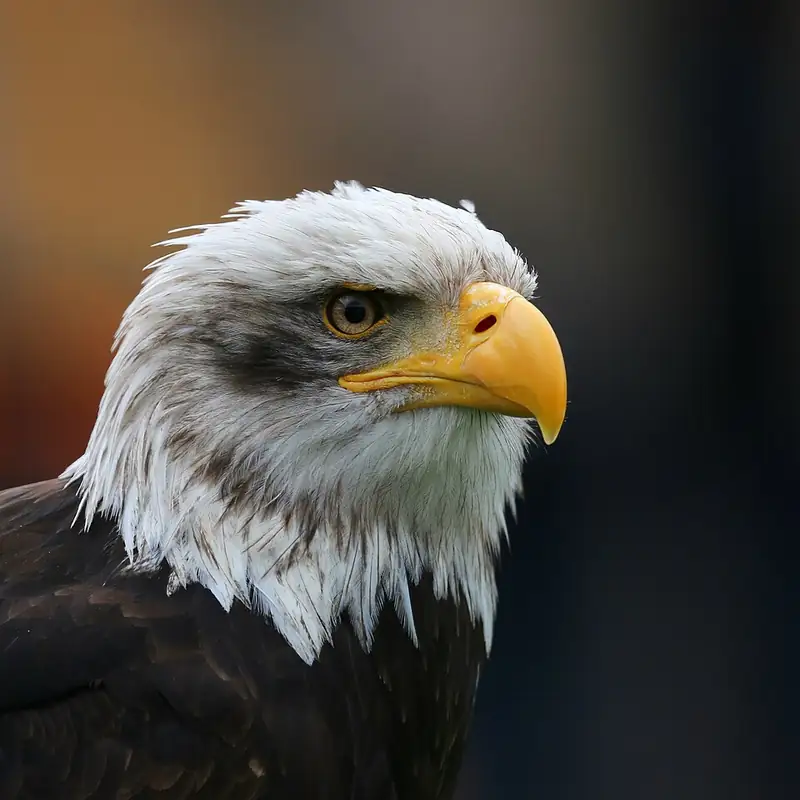 Bird
Bird Bald eagle
Haliaeetus leucocephalus
The white-headed fish hawk that is the national bird of the United States, common along the lakes of Voyageurs and the coasts of Olympic and Katmai.
-
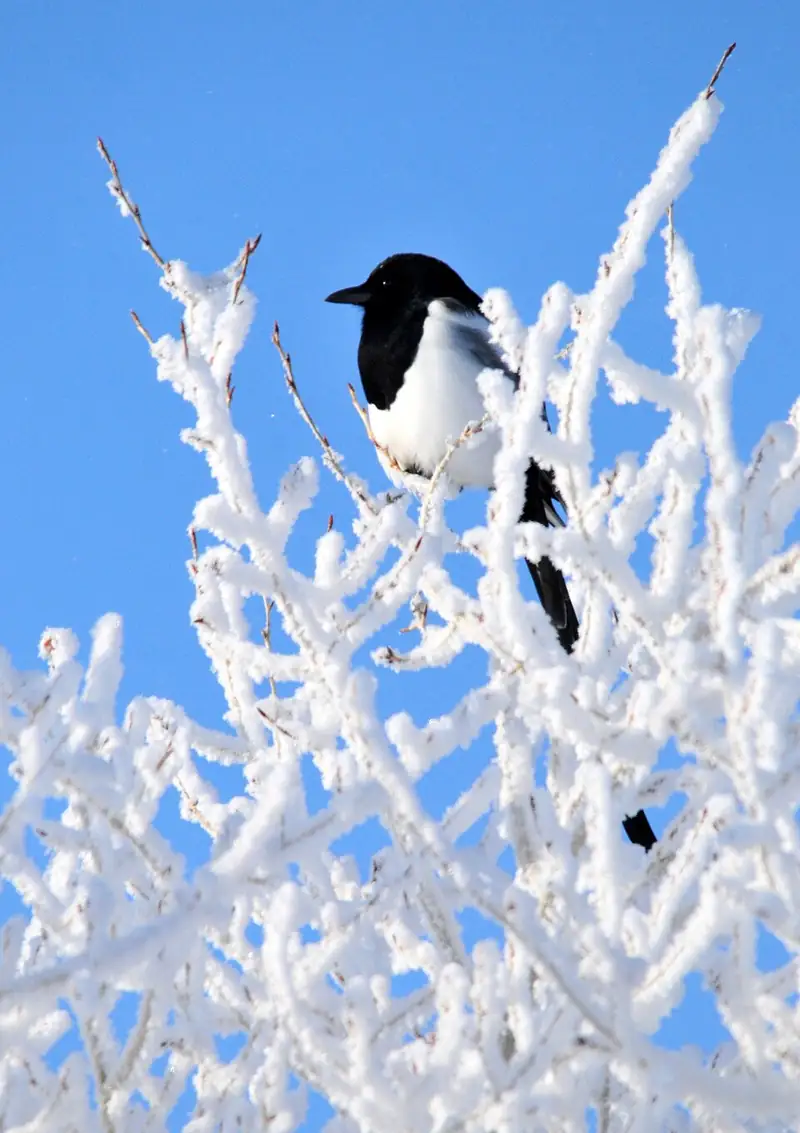 Bird
Bird Black-billed magpie
Pica hudsonia
A black-and-white corvid with a tail as long as its body, common on fences and roadsides across the northern Rockies and Great Plains.
-
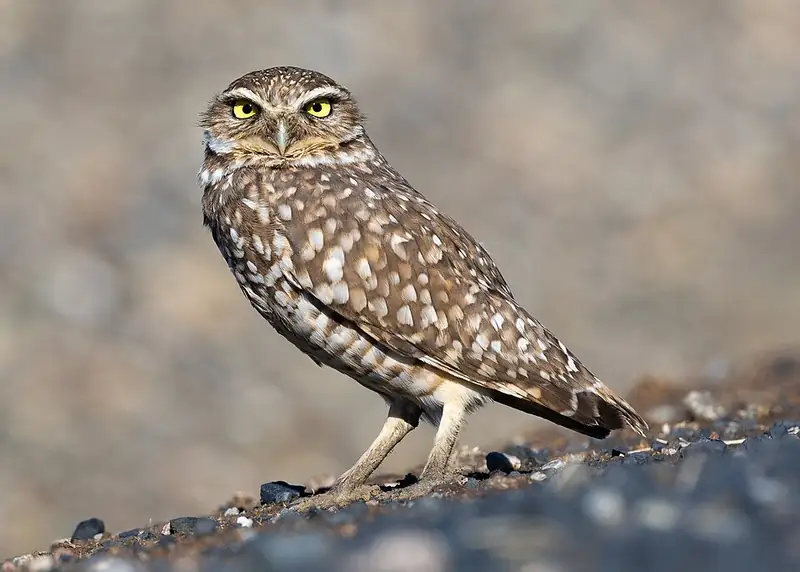 Bird
Bird Burrowing owl
Athene cunicularia
A small owl that nests underground in old prairie-dog burrows and hunts in daylight across Western grasslands, unlike most owls.
-
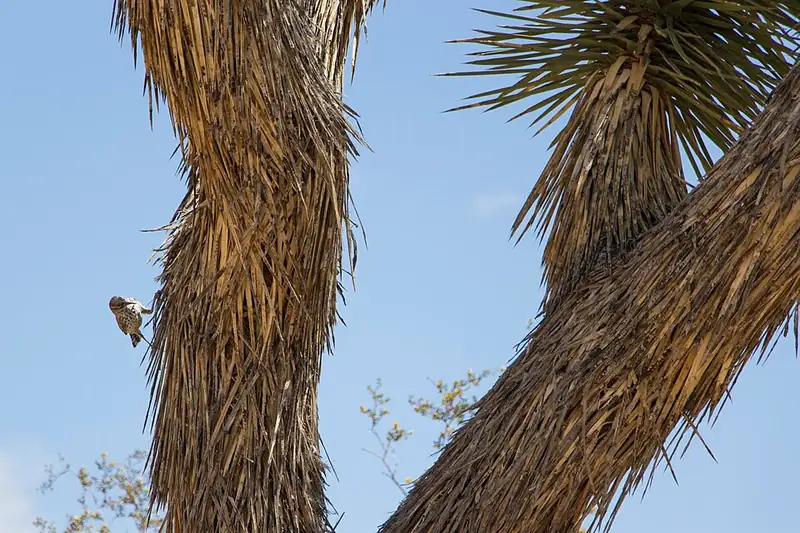 Bird
Bird Cactus wren
Campylorhynchus brunneicapillus
The largest wren in the U.S., which jams a football-shaped nest deep inside a cholla cactus's own thorns for protection.
-
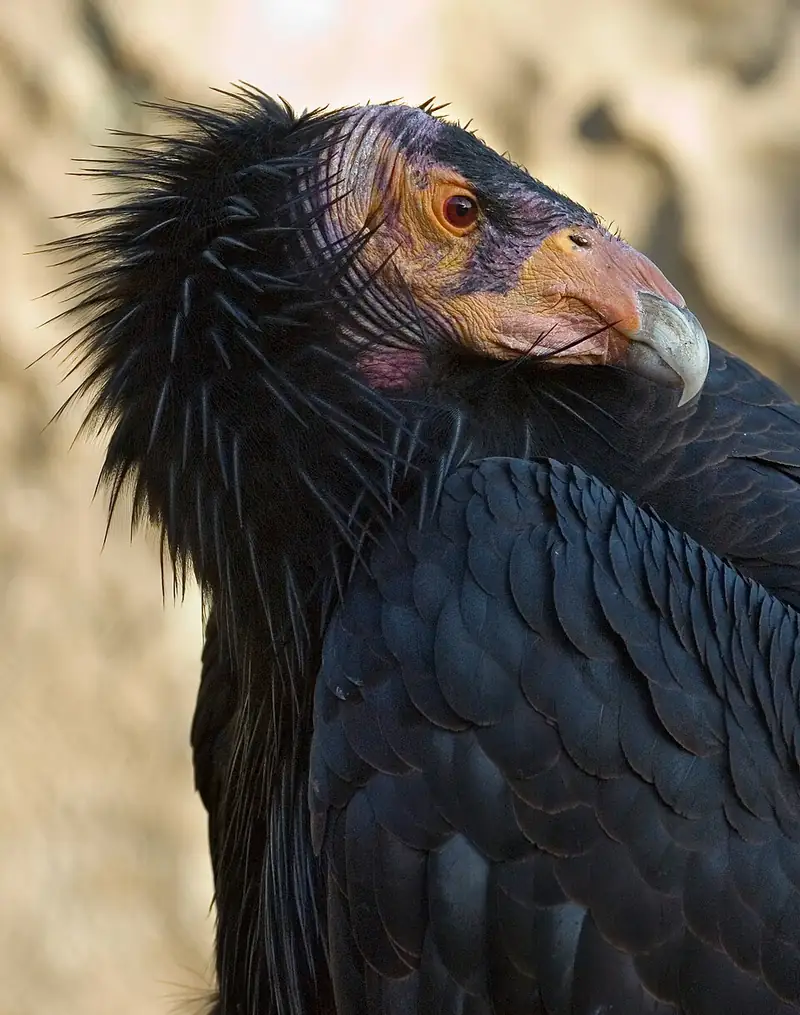 Bird
Bird California condor
Gymnogyps californianus
The biggest flying bird in North America, a bare-headed scavenger you can watch ride the wind over the cliffs at Grand Canyon and Zion.
-
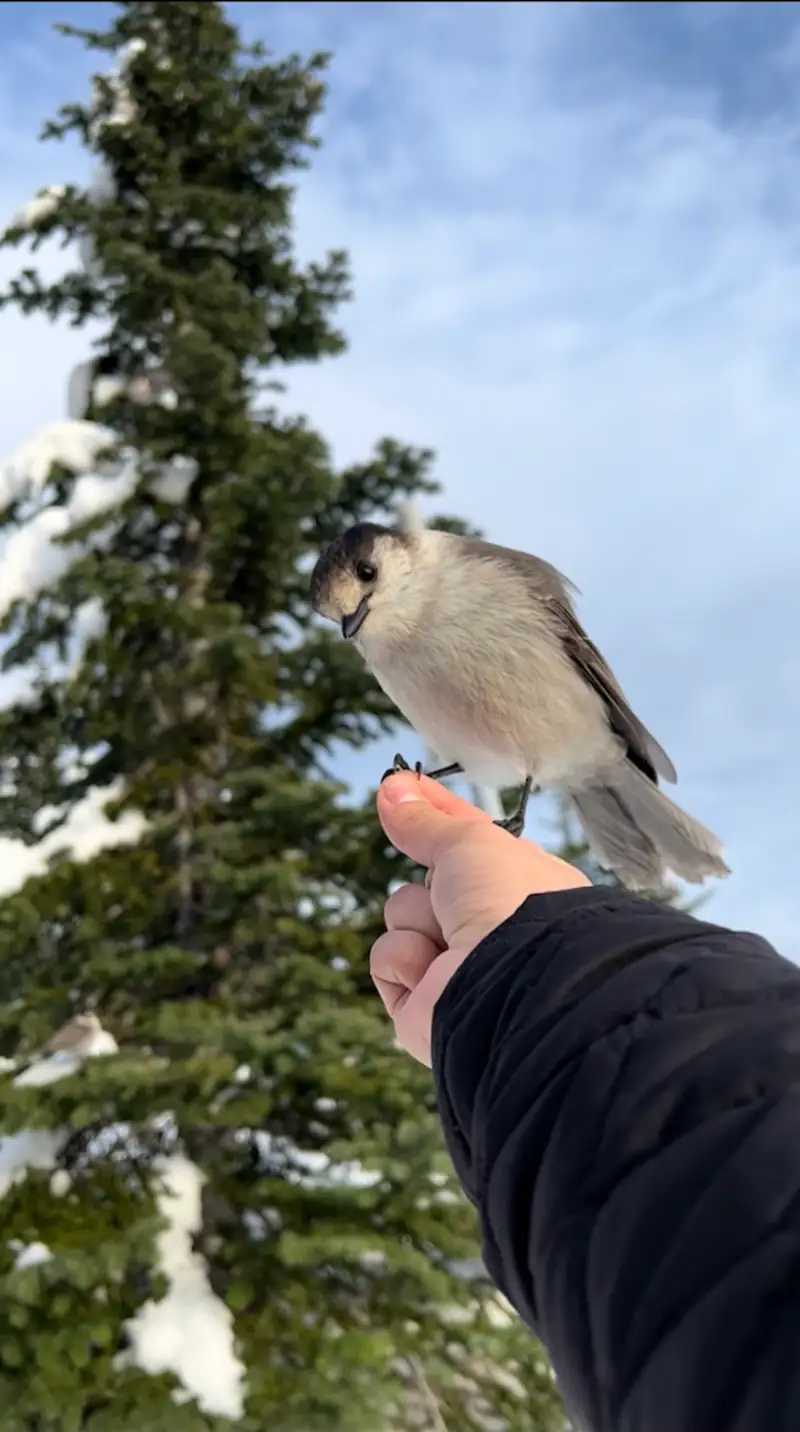 Bird
Bird Canada jay
Perisoreus canadensis
A fearless, fluffy gray bird that glues thousands of food scraps into tree bark with its own sticky spit and remembers nearly all of them through winter.
-
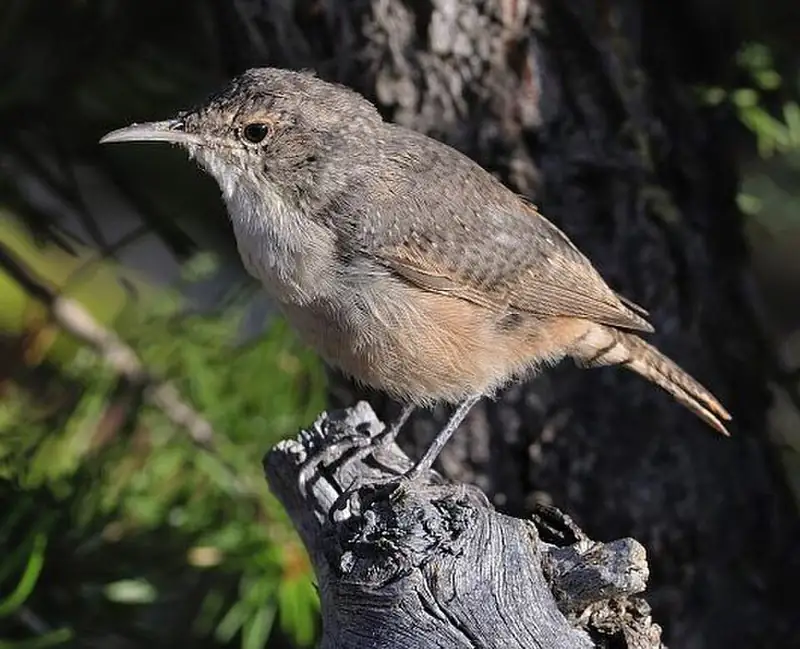 Bird
Bird Canyon wren
Catherpes mexicanus
A small, rusty-brown songbird of canyon cliffs at Black Canyon, Arches, and Canyonlands, far more often heard than seen.
-
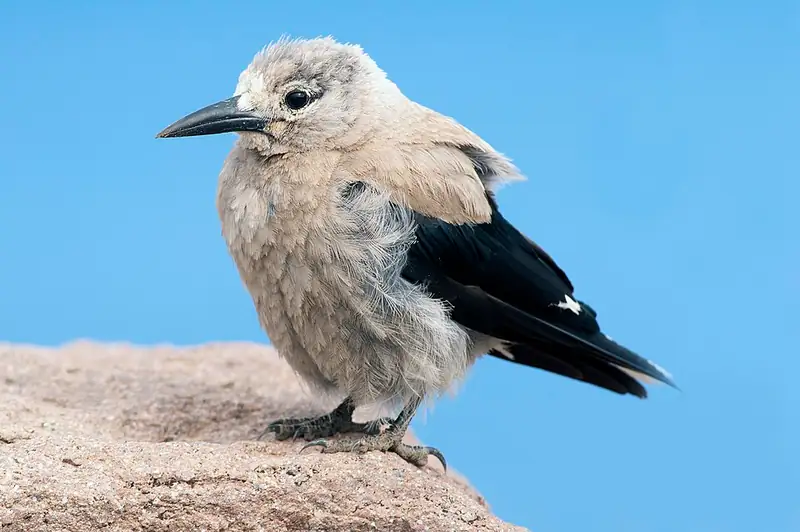 Bird
Bird Clark's nutcracker
Nucifraga columbiana
A pale-gray, black-winged cousin of the crow that hides tens of thousands of pine seeds each fall and remembers where to find them again.
-
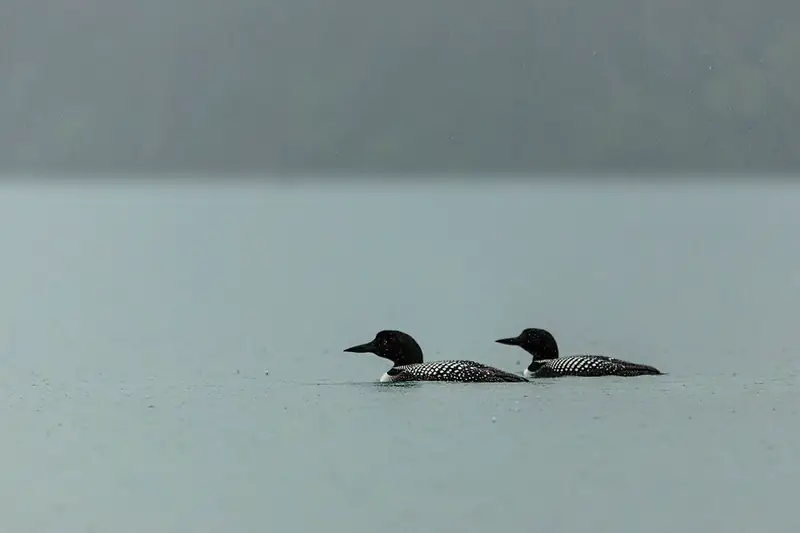 Bird
Bird Common loon
Gavia immer
The black-and-white diving bird whose call carries across Glacier's lakes; one in five of Montana's nesting loons is inside this park.
-
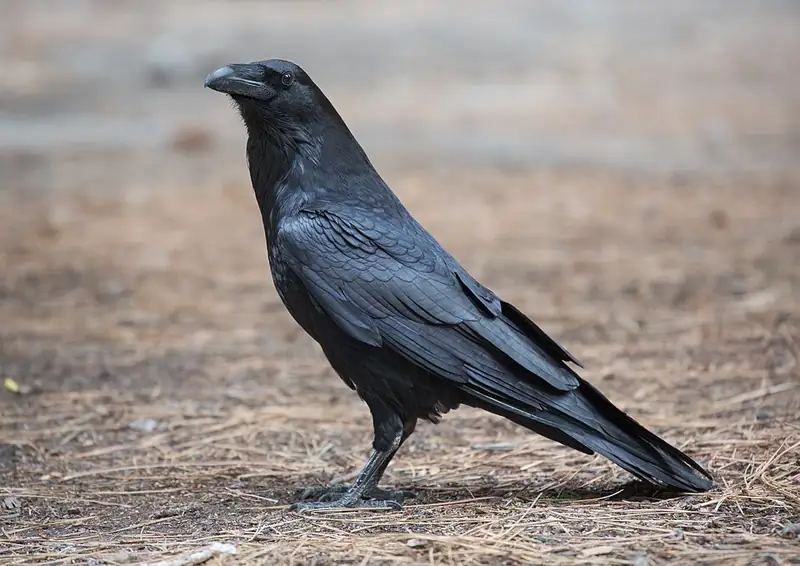 Bird
Bird Common raven
Corvus corax
A big, glossy-black problem-solver that rolls and tumbles in the wind over the cliffs of Grand Canyon, Arches, and Canyonlands.
-
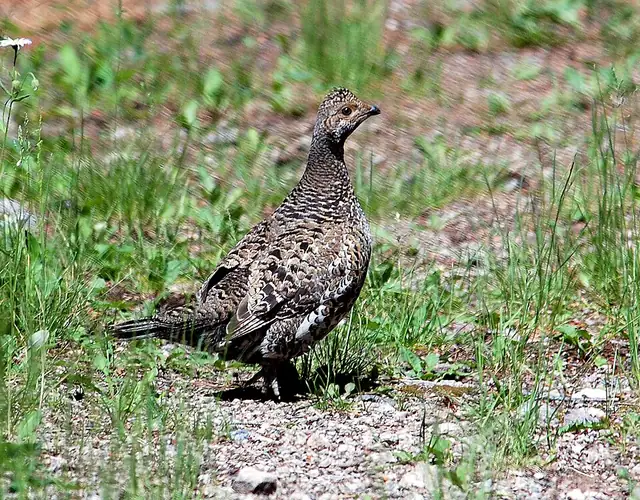 Bird
Bird Dusky grouse
Dendragapus obscurus
A large, slow forest grouse of Black Canyon's sagebrush flats and conifer slopes, easier to find in spring.
-
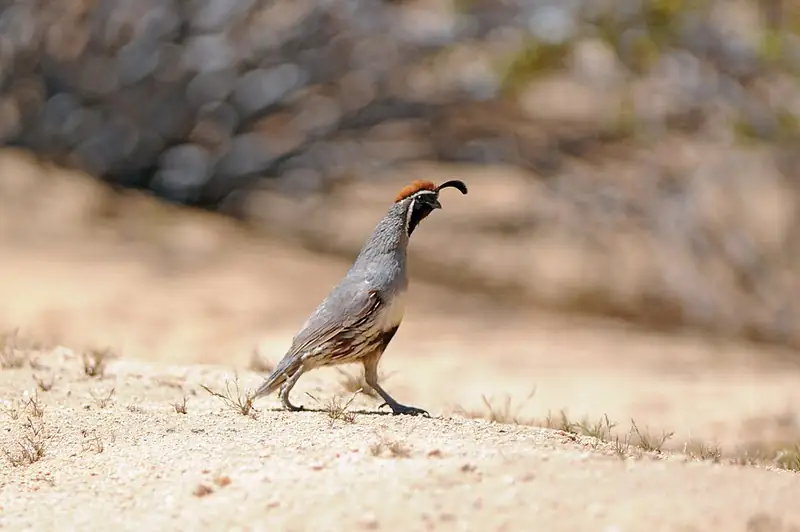 Bird
Bird Gambel's quail
Callipepla gambelii
A ground-loving desert quail with a forward-curling black topknot that runs from danger in a dusty covey instead of flying.
-
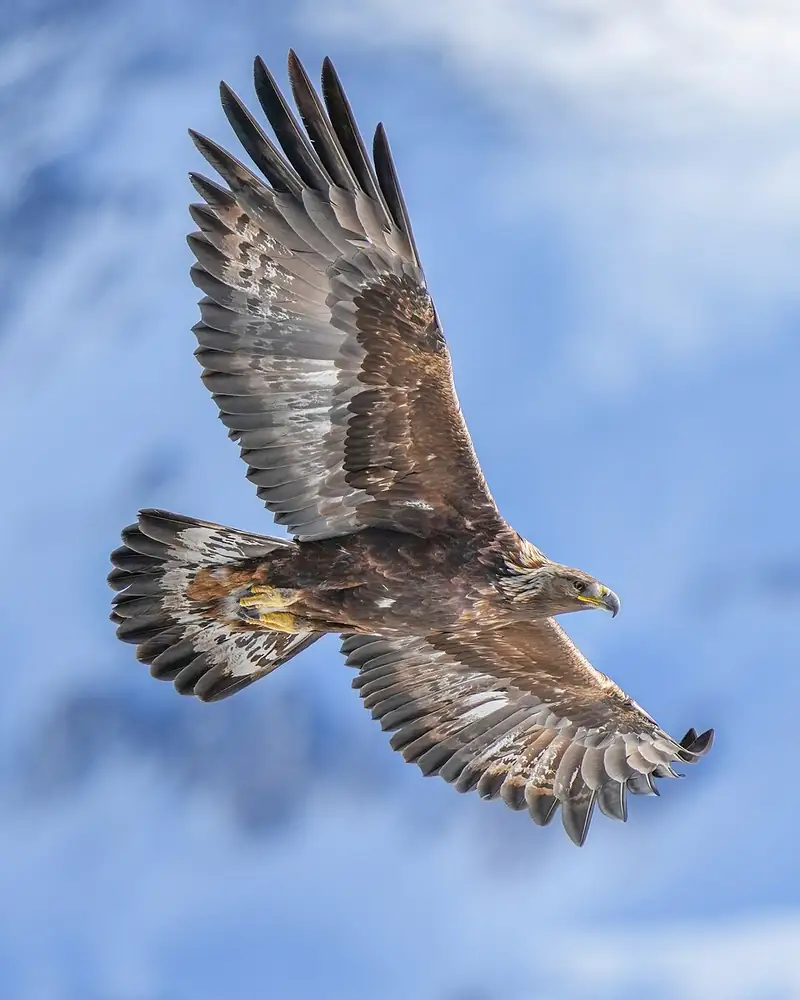 Bird
Bird Golden eagle
Aquila chrysaetos
A dark brown eagle with golden neck feathers that hunts rabbits and hares across open country, nesting on cliffs in Denali, Death Valley, and Great Basin.
-
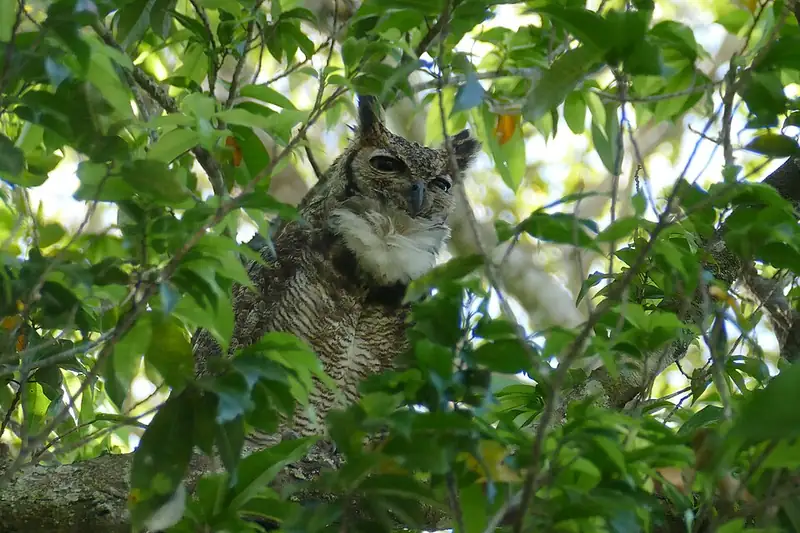 Bird
Bird Great horned owl
Bubo virginianus
A big night hunter with feathery "horns" and a deep hoot, found from the saguaro desert to the Everglades, hunting after dark on silent wings.
-
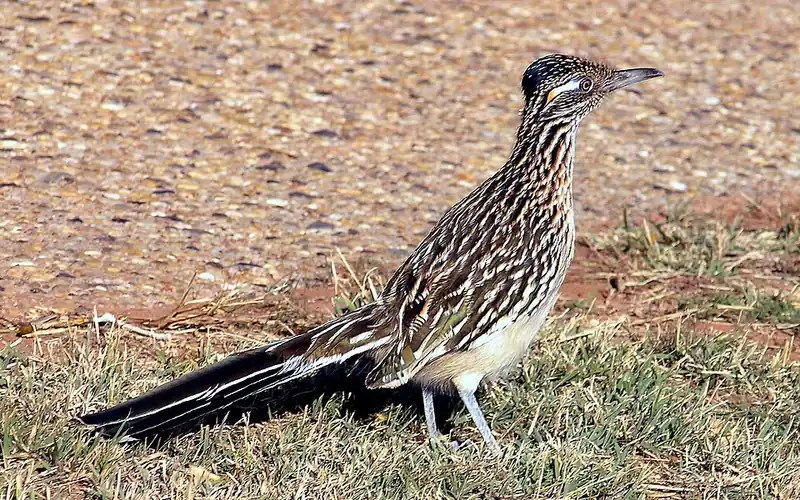 Bird
Bird Greater roadrunner
Geococcyx californianus
A long-legged desert bird that would rather run than fly, chasing down lizards and snakes across the ground at Saguaro, Big Bend, and White Sands.
-
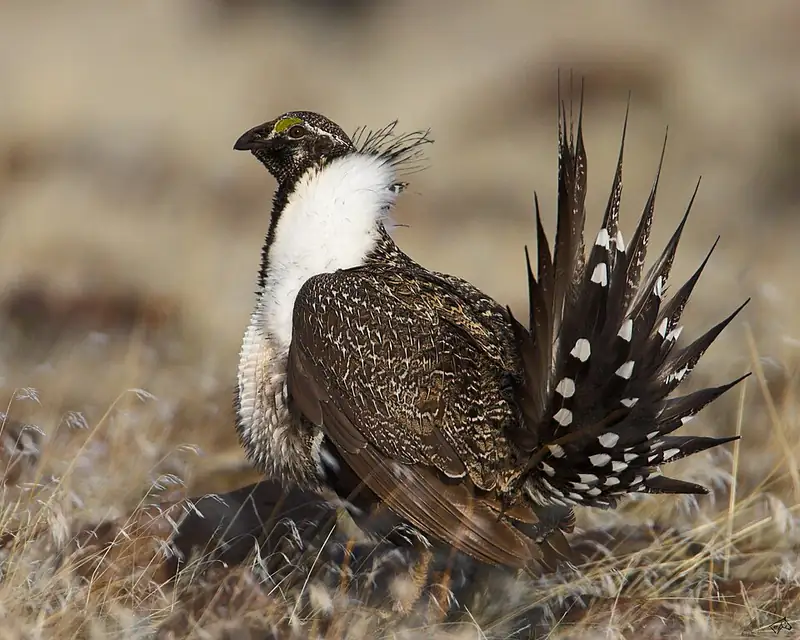 Bird
Bird Greater sage-grouse
Centrocercus urophasianus
North America's largest grouse, dependent on sagebrush, known for the popping, booming display males perform on spring dancing grounds.
-
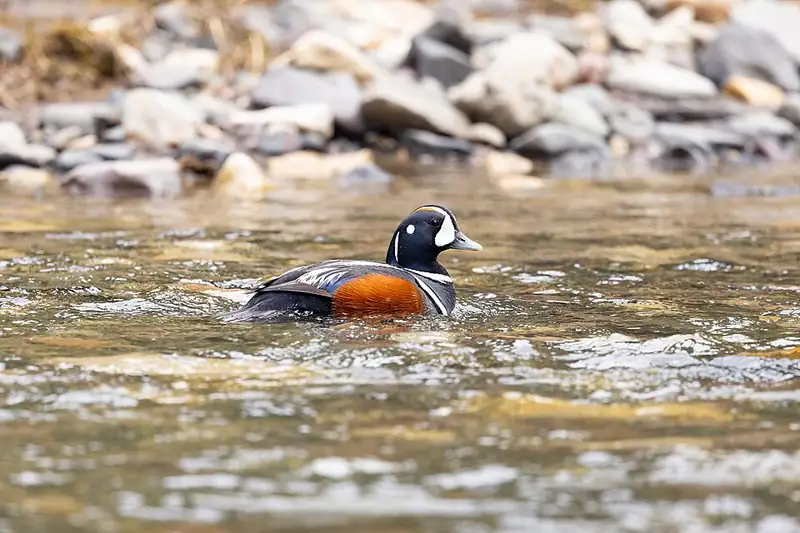 Bird
Bird Harlequin duck
Histrionicus histrionicus
A slate-blue and chestnut sea duck that breeds by diving and bracing in fast mountain whitewater instead of calm water.
-
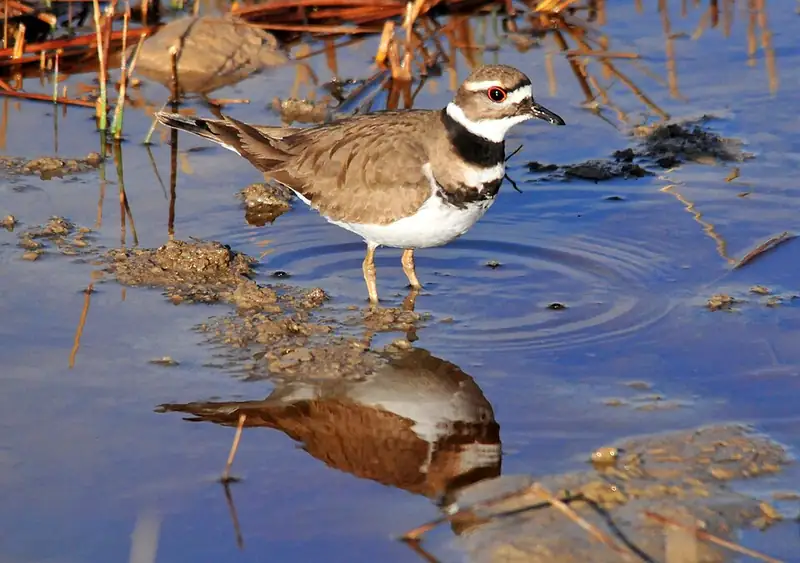 Bird
Bird Killdeer
Charadrius vociferus
A shorebird that lives nowhere near a shore. At Badlands we never saw one. We heard it call its own name across the campground.
-
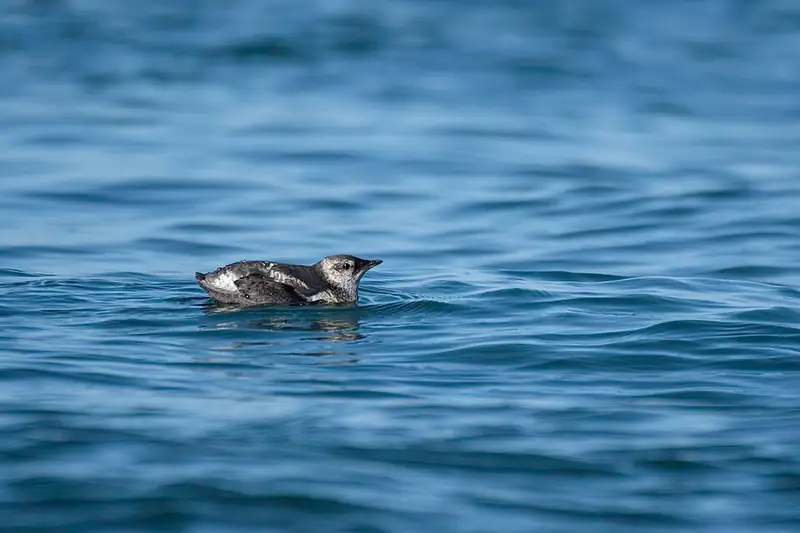 Bird
Bird Marbled murrelet
Brachyramphus marmoratus
A small seabird that nests far inland on a mossy old-growth limb, with no nest built around the egg, a nest nobody found until 1974.
-
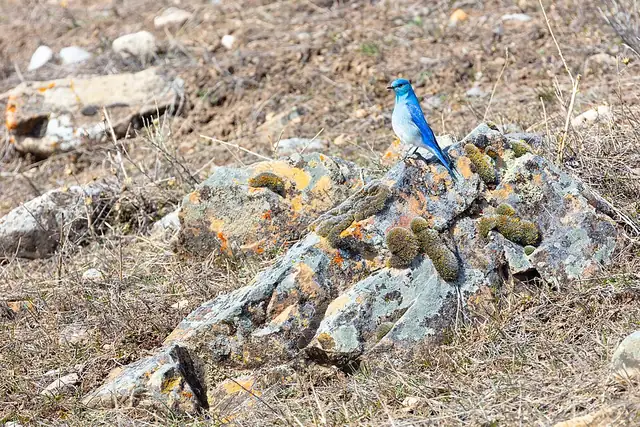 Bird
Bird Mountain bluebird
Sialia currucoides
A sky-blue thrush of high, open country, the only bluebird seen regularly above 5,000 feet, nesting in lava-rock crevices at Craters of the Moon.
-
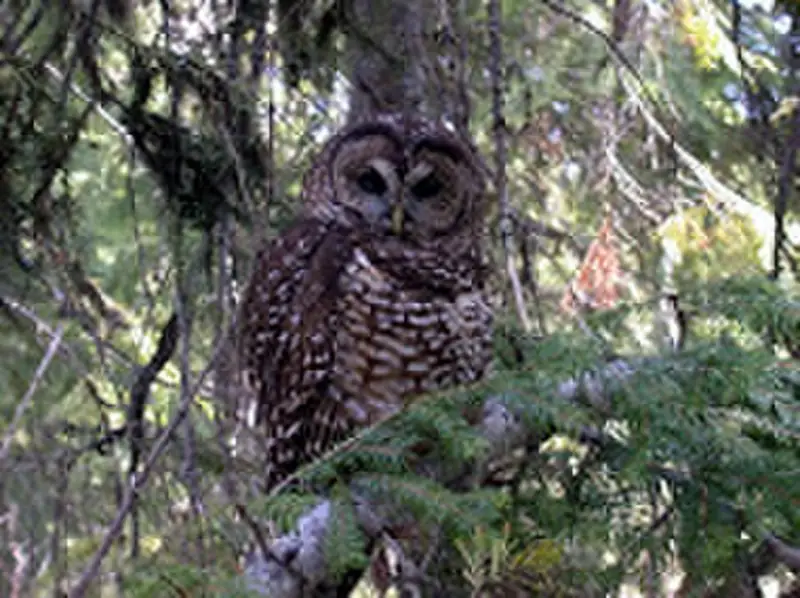 Bird
Bird Northern spotted owl
Strix occidentalis caurina
A nocturnal old-growth owl whose numbers keep falling even in protected forest, as a bigger relative from the East moves into its territory.
-
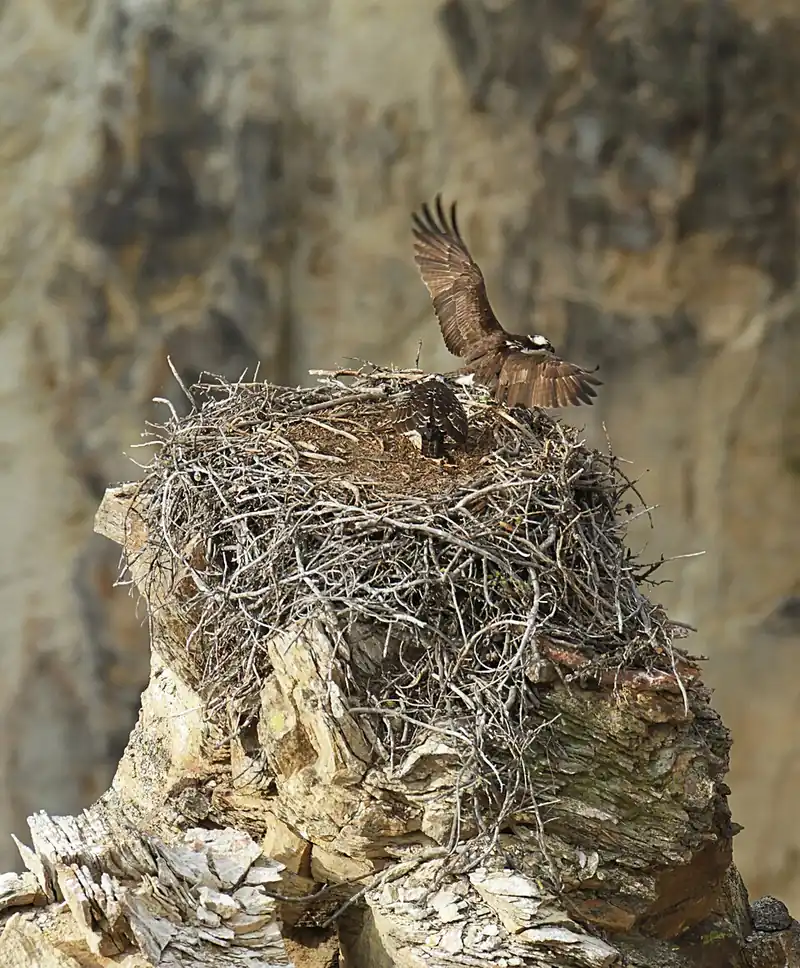 Bird
Bird Osprey
Pandion haliaetus
A fish-hunting hawk that dives feet-first into open water and flies off with its catch turned head-forward like a torpedo.
-
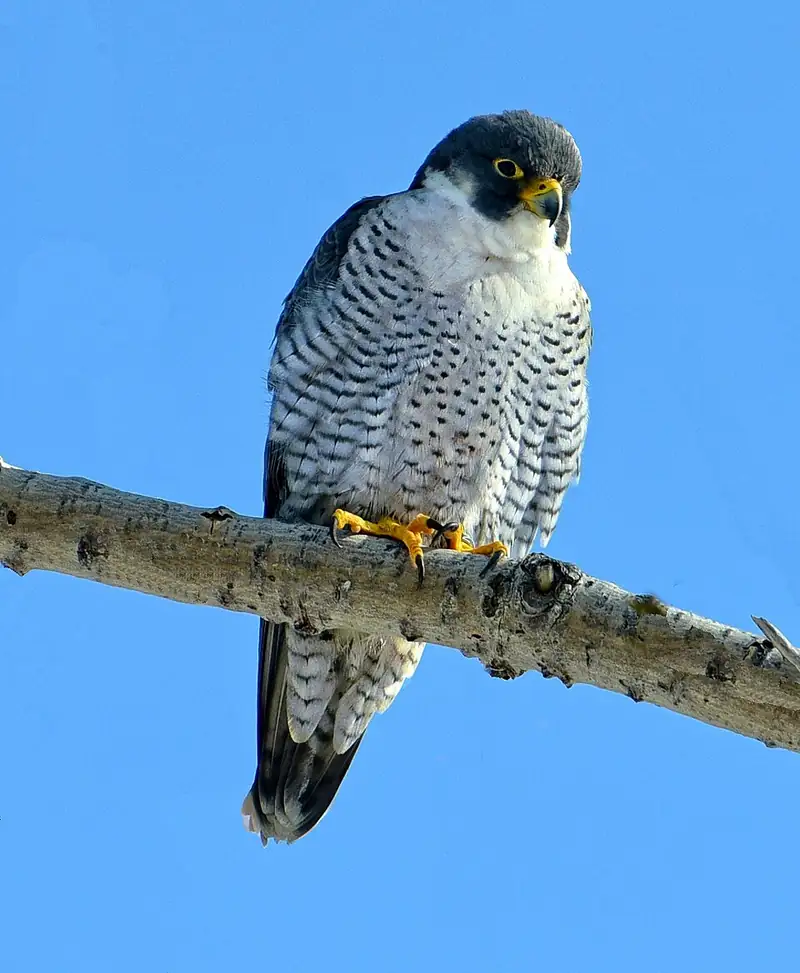 Bird
Bird Peregrine falcon
Falco peregrinus
The fastest animal alive, a crow-sized falcon that folds its wings and stoops on other birds in midair, and a species that nearly vanished before recovering.
-
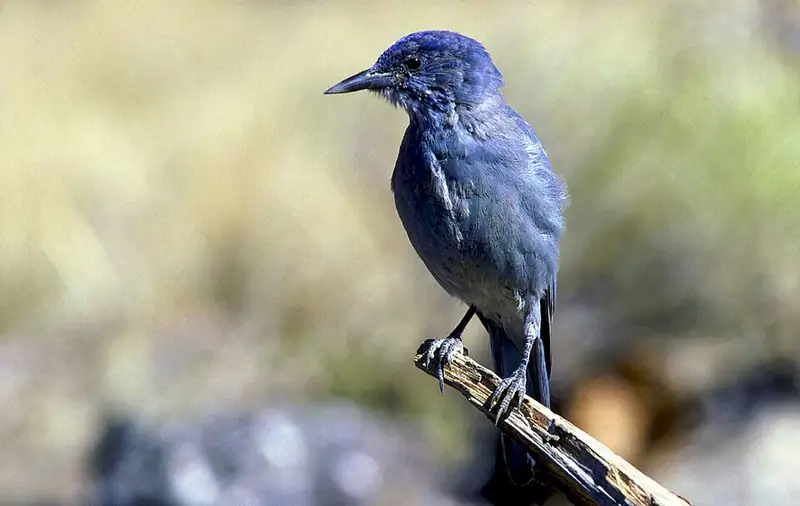 Bird
Bird Pinyon jay
Gymnorhinus cyanocephalus
A dusty-blue crow relative that travels Mesa Verde and Black Canyon in loud flocks, burying pine seeds it will dig up again later.
-
 Bird
Bird Red-tailed hawk
Buteo jamaicensis
The hawk most often recorded in Yellowstone. We watched a hawk take a pika near the Roosevelt cabins and could not tell you which hawk it was.
-
 Bird
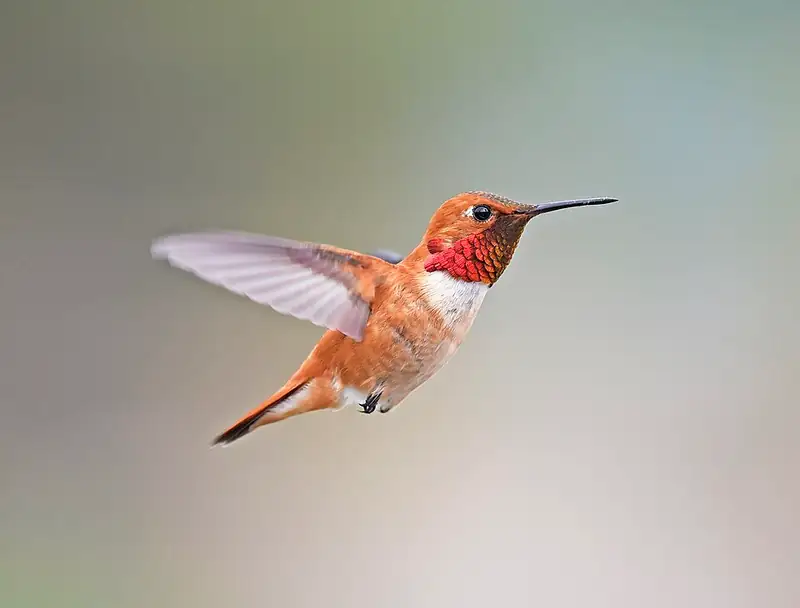
Bird Rufous hummingbird
Selasphorus rufus
A copper-orange hummingbird that flies farther, relative to its size, than almost any other bird on Earth, from Mexico to Alaska and back every year.
-
 Bird
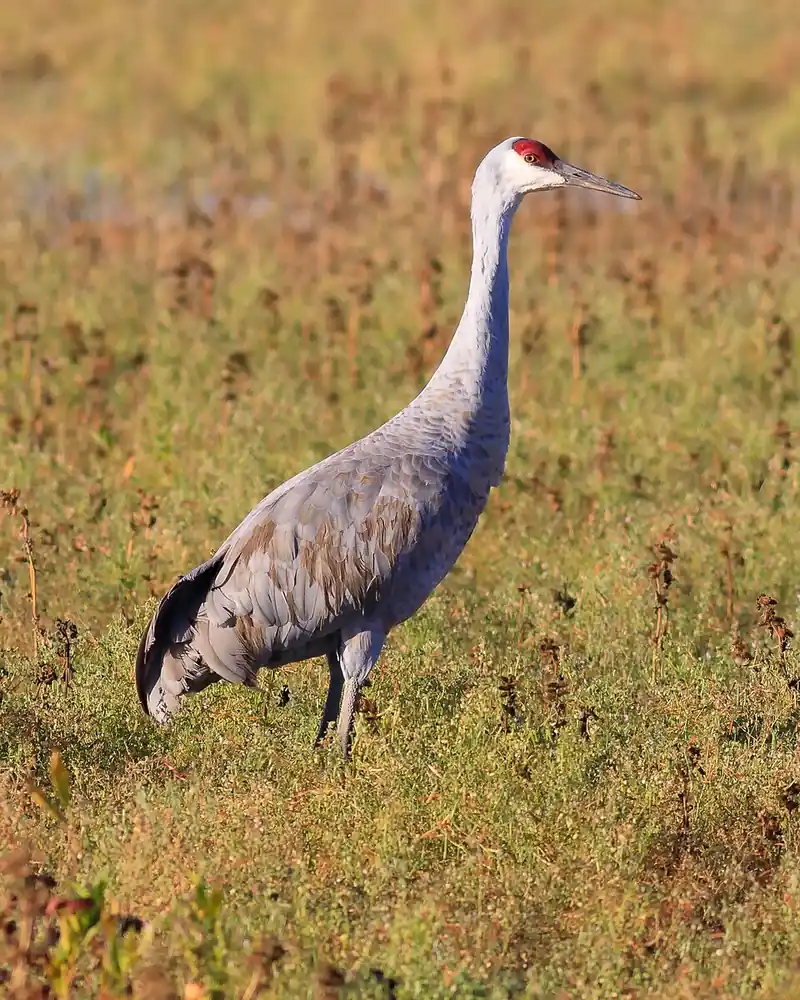
Bird Sandhill crane
Antigone canadensis
A tall gray wading bird with a red forehead and a bugling call, gathering by the thousands near Great Sand Dunes and standing year-round in the Everglades.
-
 Bird
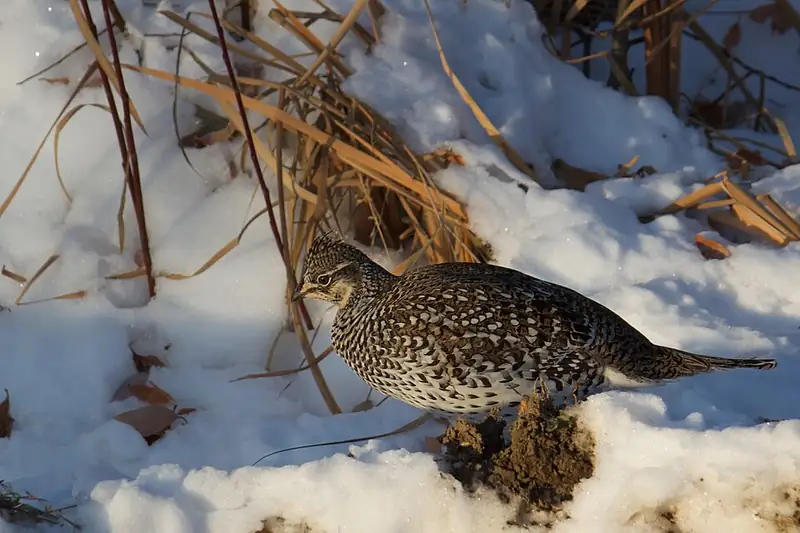
Bird Sharp-tailed grouse
Tympanuchus phasianellus
A prairie grouse that dances on open ground at dawn, stamping its feet and inflating purple air sacs on its neck to attract a mate.
-
 Bird
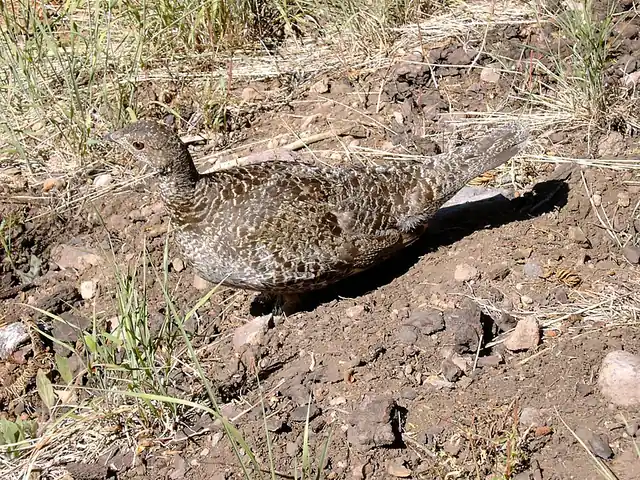
Bird Sooty grouse
Dendragapus fuliginosus
A large, dark forest grouse whose male hoots from bare yellow neck patches in spring, then walks itself uphill each fall to spend winter eating conifer needles.
-
 Bird
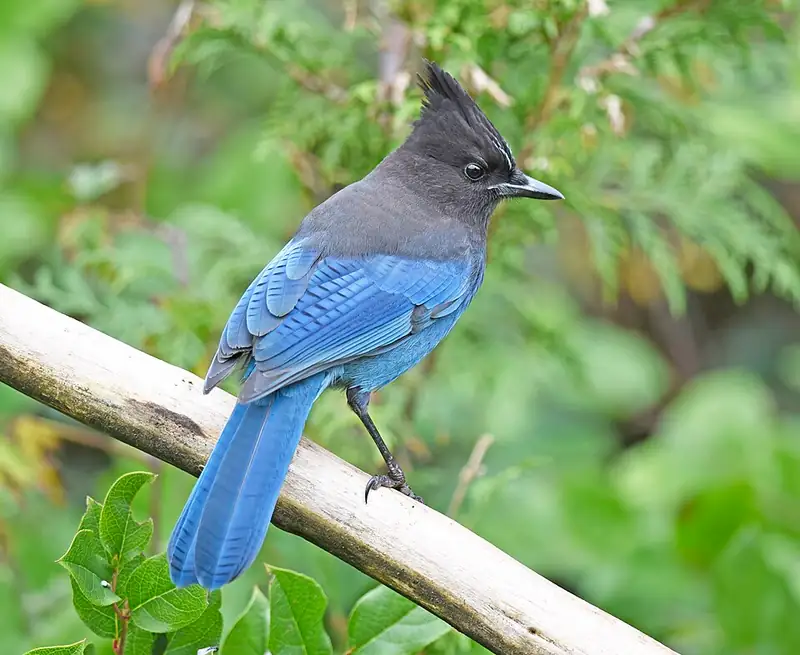
Bird Steller's jay
Cyanocitta stelleri
A deep-blue mountain jay with a black crest and a loud voice, the campground bird that will eye your sandwich at Yosemite, Sequoia, and Crater Lake.
-
 Bird
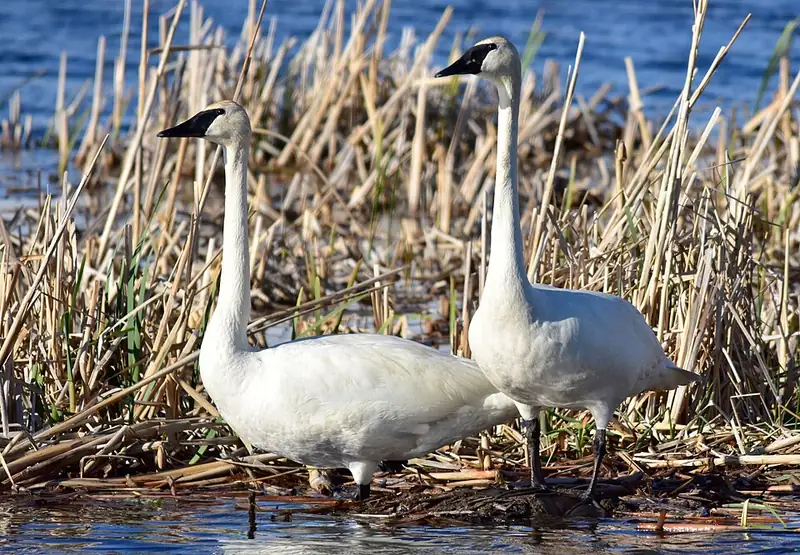
Bird Trumpeter swan
Cygnus buccinator
North America's largest waterfowl, a white swan with a trumpeting call, found on rivers and lakes from Yellowstone to the Dakota prairies.
-
 Bird
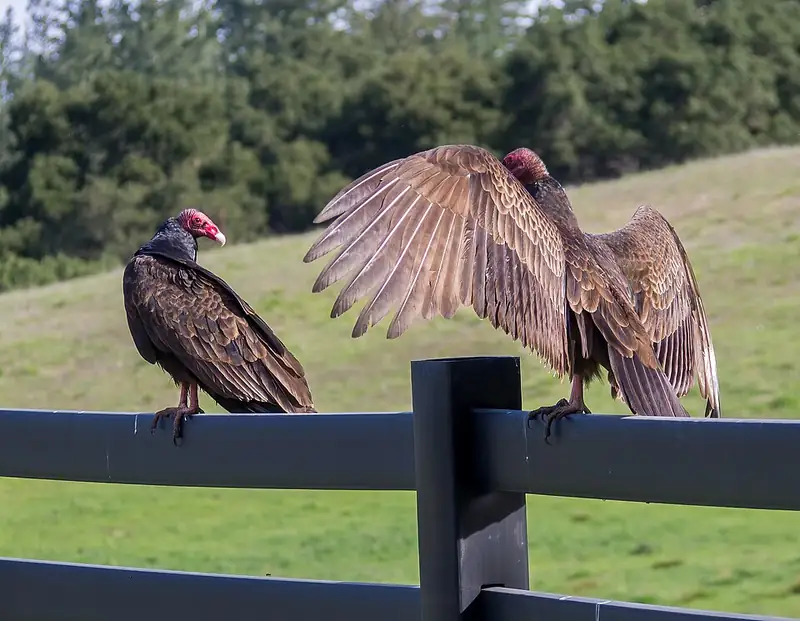
Bird Turkey vulture
Cathartes aura
A large, dark soaring bird with a bare red head, circling on thermals over open country, using one of the sharpest noses of any bird.
-
 Bird
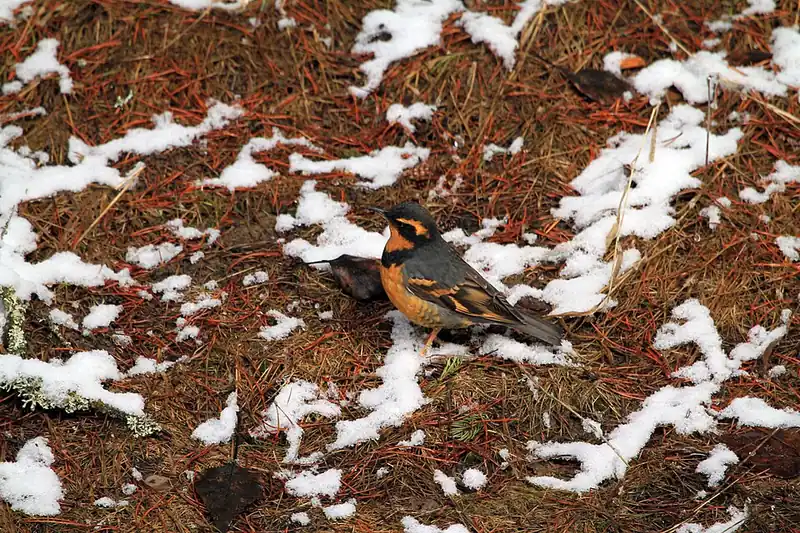
Bird Varied thrush
Ixoreus naevius
A ringing single whistle from deep, shaded old-growth forest, and a bird so well hidden most visitors only ever hear it.
-
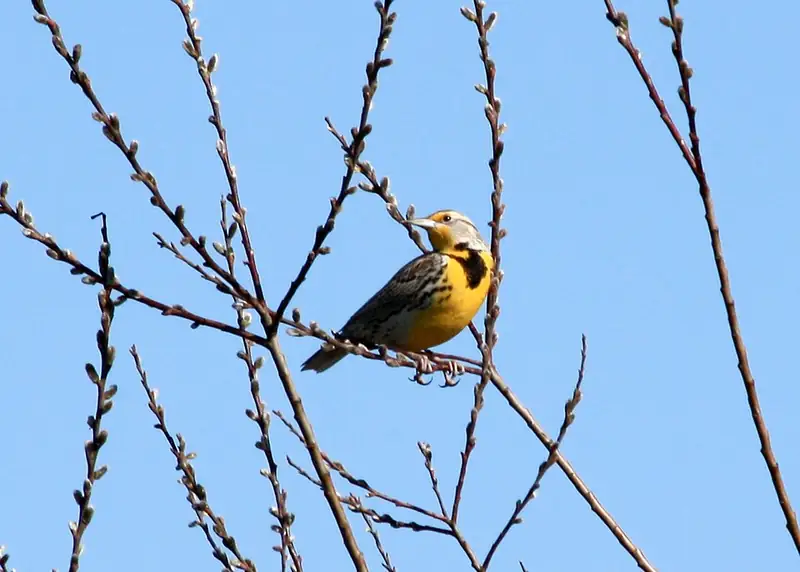 Bird
Bird Western meadowlark
Sturnella neglecta
A grassland songbird with a yellow throat and a black V on its chest, the state bird of Montana, Wyoming, and North Dakota.
-
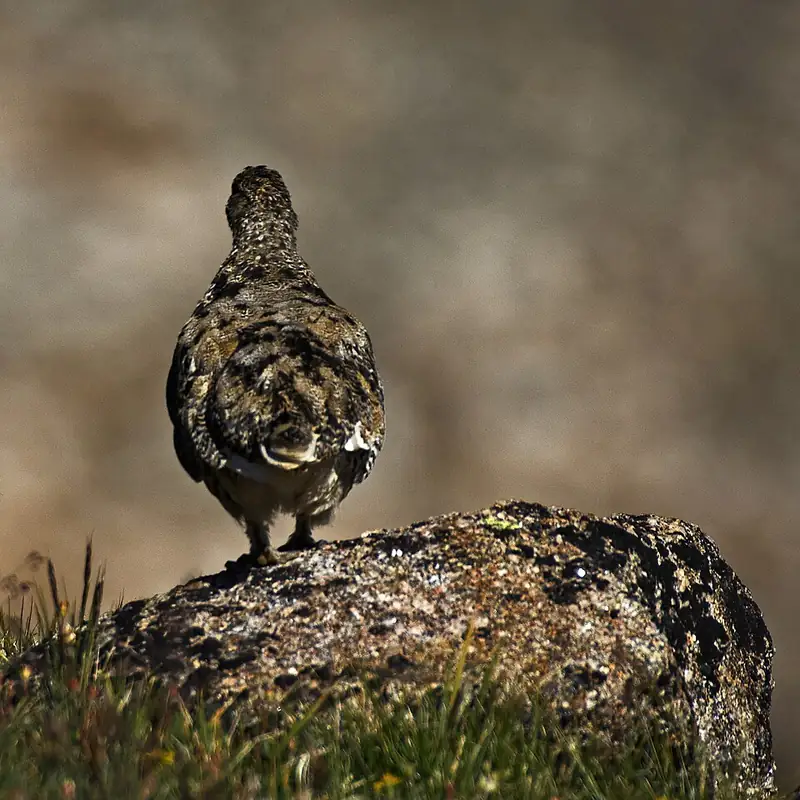 Bird
Bird White-tailed ptarmigan
Lagopus leucura
A small alpine grouse that turns pure white in winter and nearly vanishes against rock and snow above treeline in the Rockies.
-
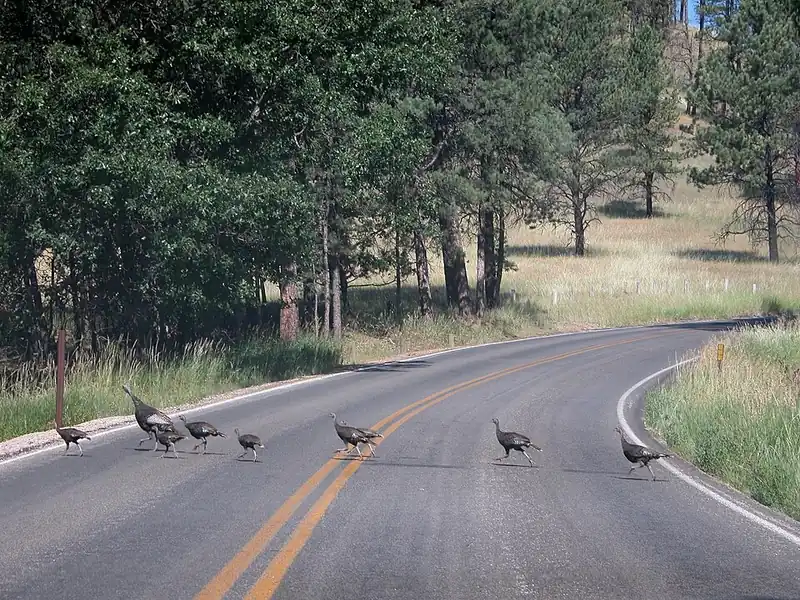 Bird
Bird Wild turkey
Meleagris gallopavo
A forest bird in a park with almost no forest. Badlands turkeys hold to the wooded draws, because a turkey needs a tree to sleep in.
Reptiles
-
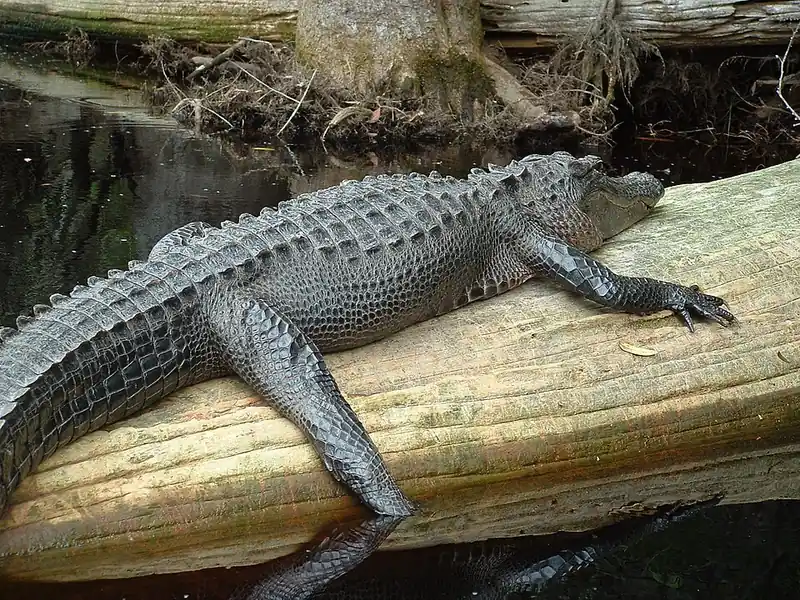 Reptile
 American alligator
Alligator mississippiensis
A big, armor-backed reptile that floats like a log in southern swamps and rivers, the top predator of the wetlands at Everglades and Congaree.
-
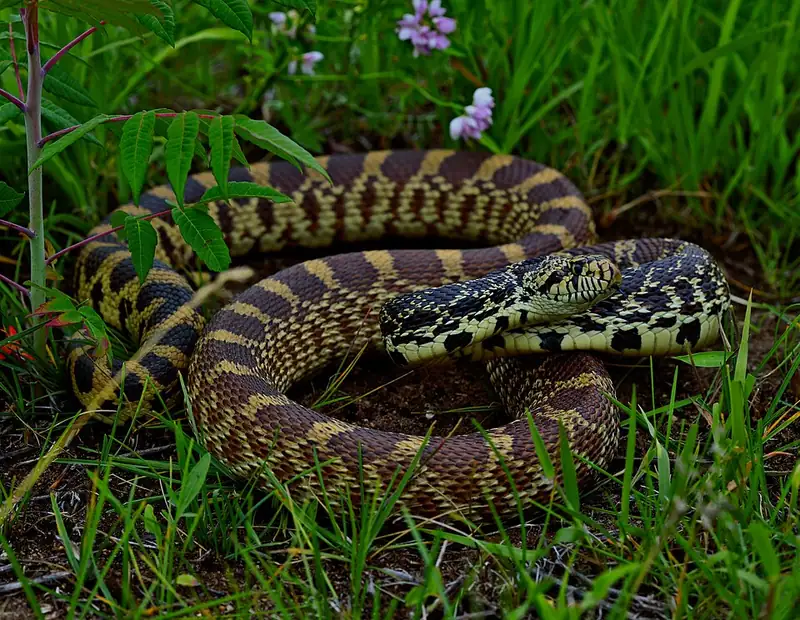 Reptile
 Bullsnake
Pituophis catenifer sayi
A big, harmless snake that fakes being a rattlesnake — hissing, flattening its head, and shaking its tail in dry grass — to talk its way out of trouble.
-
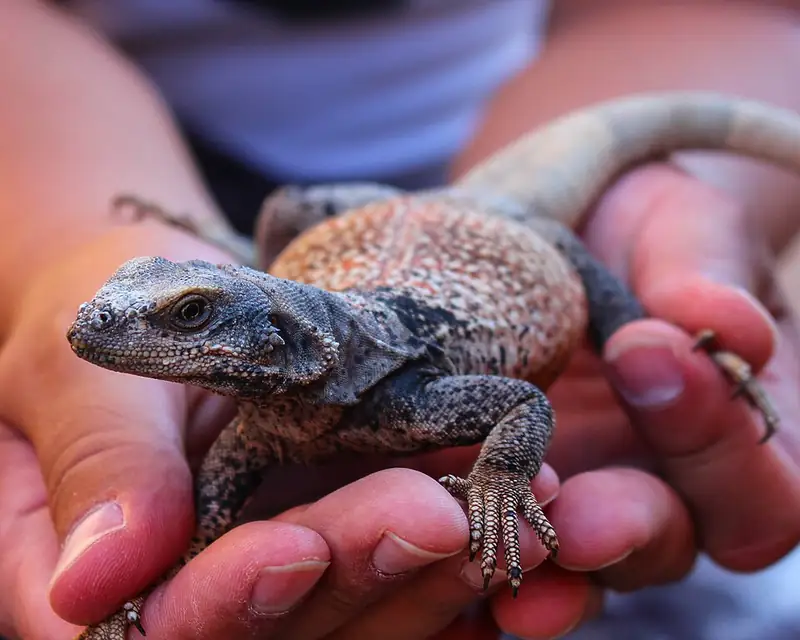 Reptile
 Common chuckwalla
Sauromalus ater
Joshua Tree's largest lizard, a slow plant-eater that wedges into a rock crack and inflates its lungs so nothing can pull it back out.
-
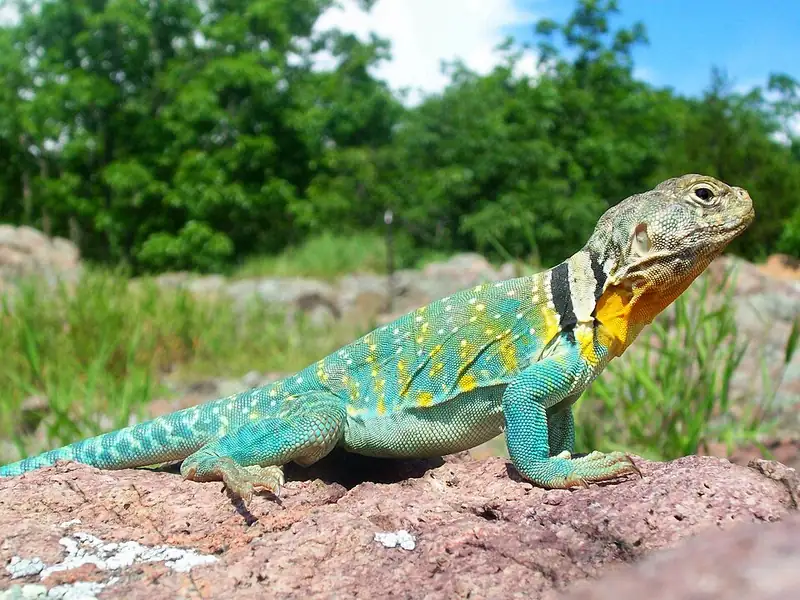 Reptile
 Common collared lizard
Crotaphytus collaris
A bright, big-headed lizard with two black neck bands that can sprint on its back legs like a tiny dinosaur across the slickrock at Arches and Canyonlands.
-
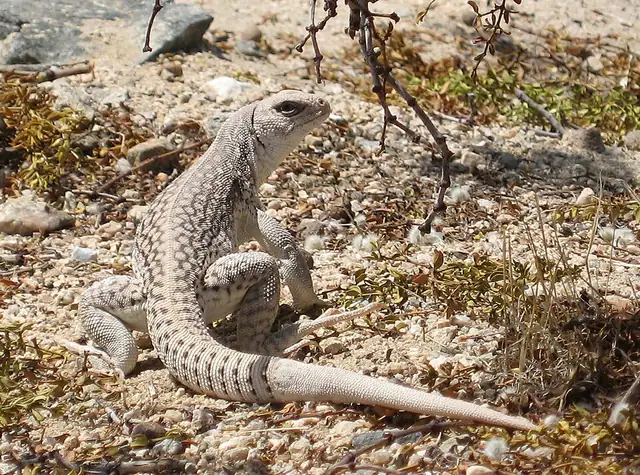 Reptile
 Desert iguana
Dipsosaurus dorsalis
A pale, plant-eating lizard that stays out on the open sand at Joshua Tree in midday heat that sends every other lizard into the shade.
-
 Reptile
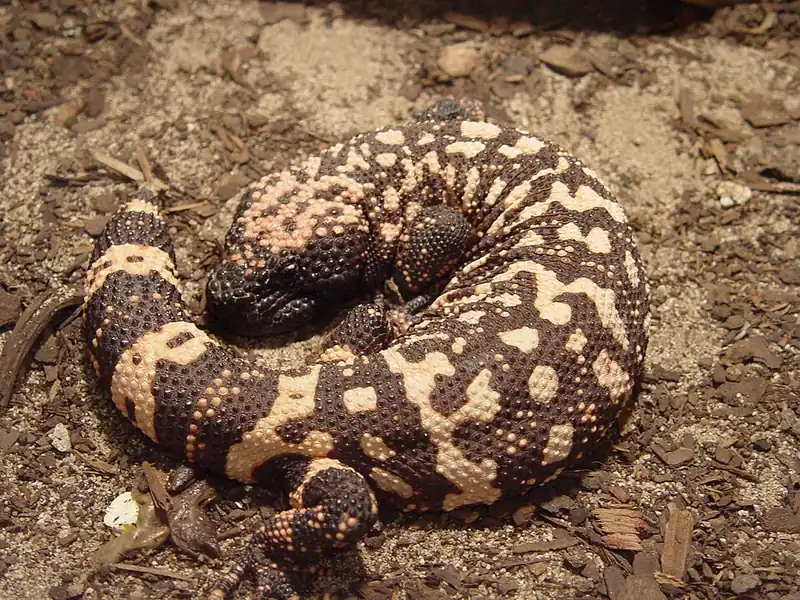
 Gila monster
Heloderma suspectum
A slow, heavy desert lizard covered in bead-like black and orange scales, one of the only venomous lizards in the U.S., found in the desert at Saguaro.
-
 Reptile
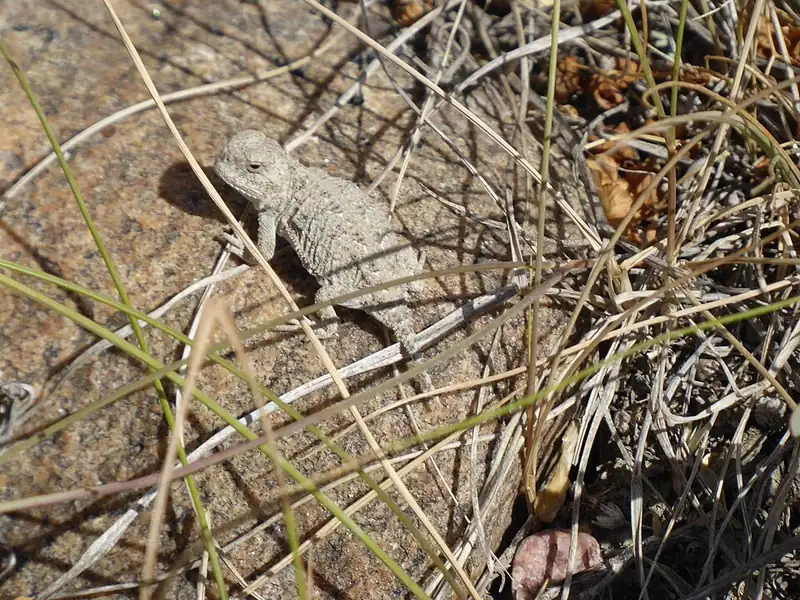
 Greater short-horned lizard
Phrynosoma hernandesi
A flat, spiky, dirt-colored lizard, sometimes called a horned toad, that can squirt blood from its eyes at a coyote and gives birth to live young.
-
 Reptile
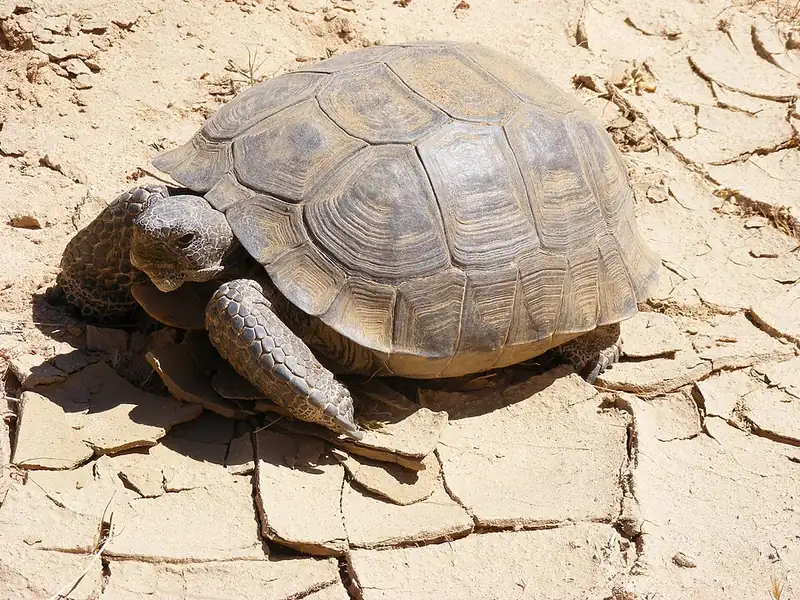
 Mojave desert tortoise
Gopherus agassizii
A slow, dome-shelled land turtle that digs long burrows to escape the desert heat, living in the Mojave country of Joshua Tree, Saguaro, and Death Valley.
-
 Reptile
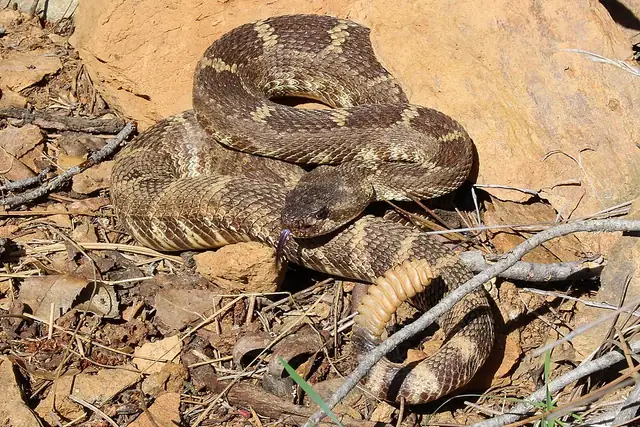
 Northern Pacific rattlesnake
Crotalus oreganus
The only rattlesnake in these Northern California volcanic parks, born fully venomous but silent, with a single button instead of a working rattle.
-
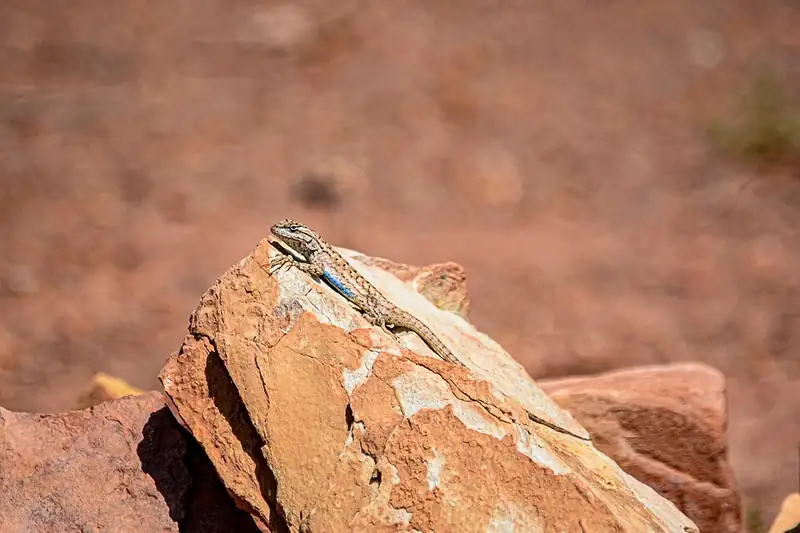 Reptile
 Plateau fence lizard
Sceloporus tristichus
A gray-brown lizard with blue belly patches on males, smaller than the flashier collared lizard on the same sunny rock at Mesa Verde, Arches, and Black Canyon.
-
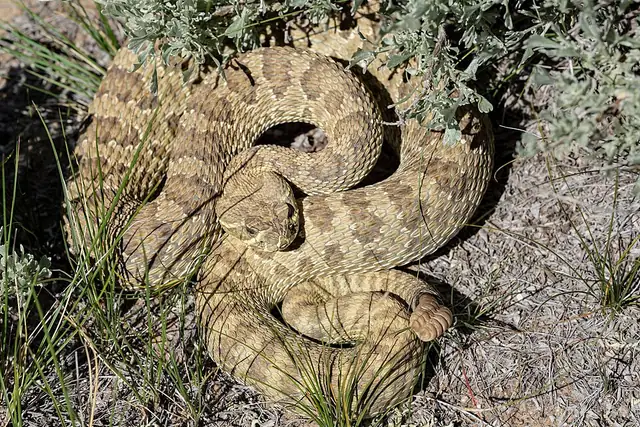 Reptile
 Prairie rattlesnake
Crotalus viridis
A gray-green pit viper with a buzzing rattle, the only venomous reptile at several of the parks it shares with prairie dogs and badgers.
-
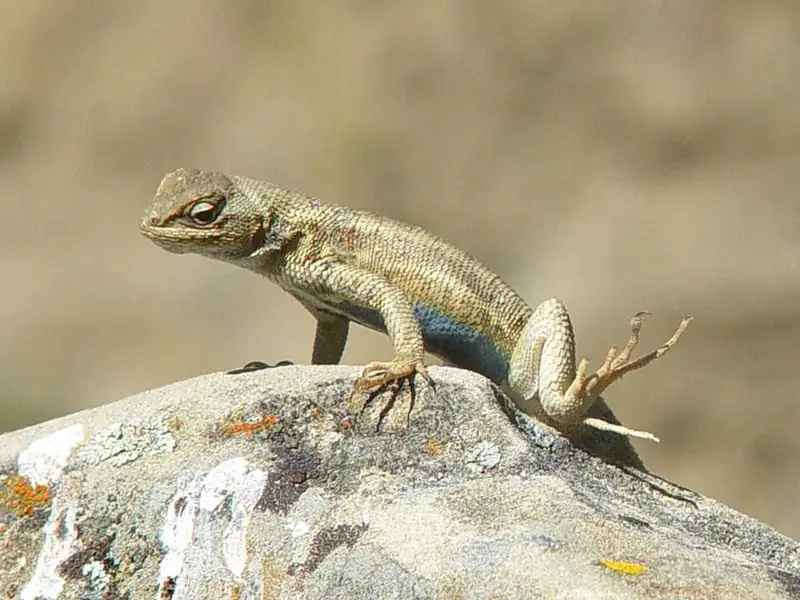 Reptile
 Sagebrush lizard
Sceloporus graciosus
A small, slender, high-country lizard, the fence lizard's cousin, whose males flash blue belly and throat patches in a push-up display.
-
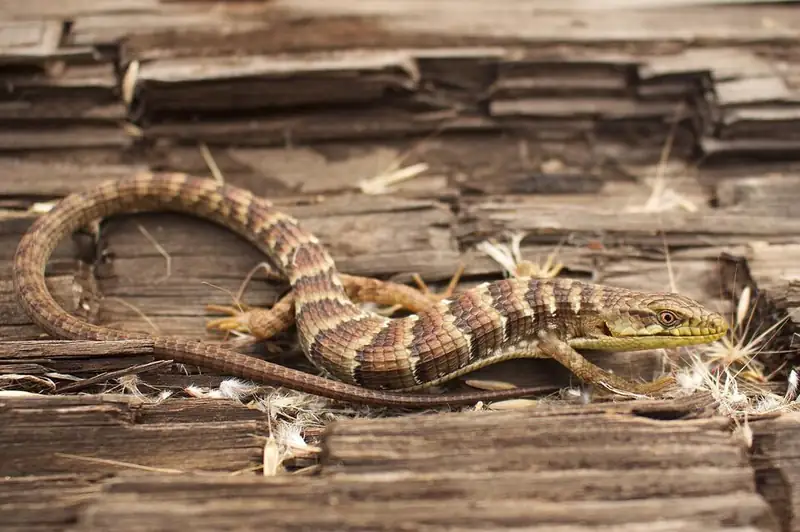 Reptile
 Southern alligator lizard
Elgaria multicarinata
A long, keeled-scale lizard that bites and holds on when grabbed, hunts black widow spiders, and can drop its tail and grow a new one.
-
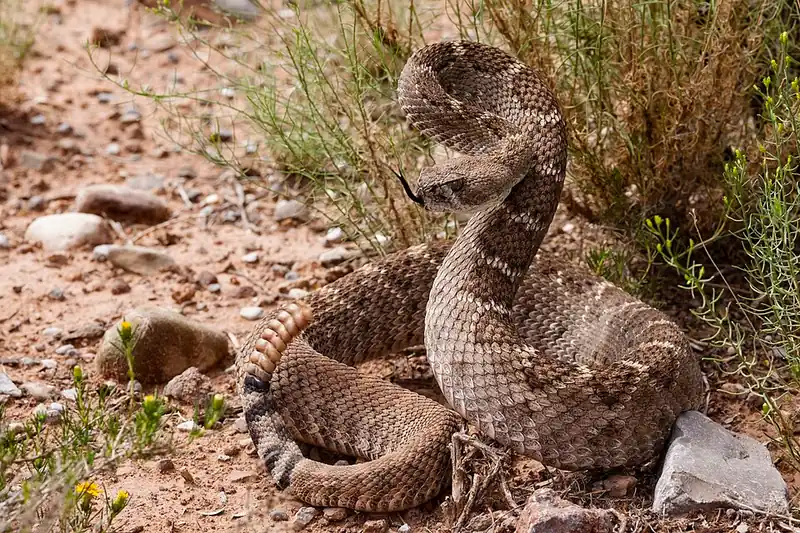 Reptile
 Western diamondback rattlesnake
Crotalus atrox
A big desert rattlesnake with diamond shapes down its back and a black-and-white "coon tail," most likely to be sunning near a trail at Big Bend or Saguaro.
-
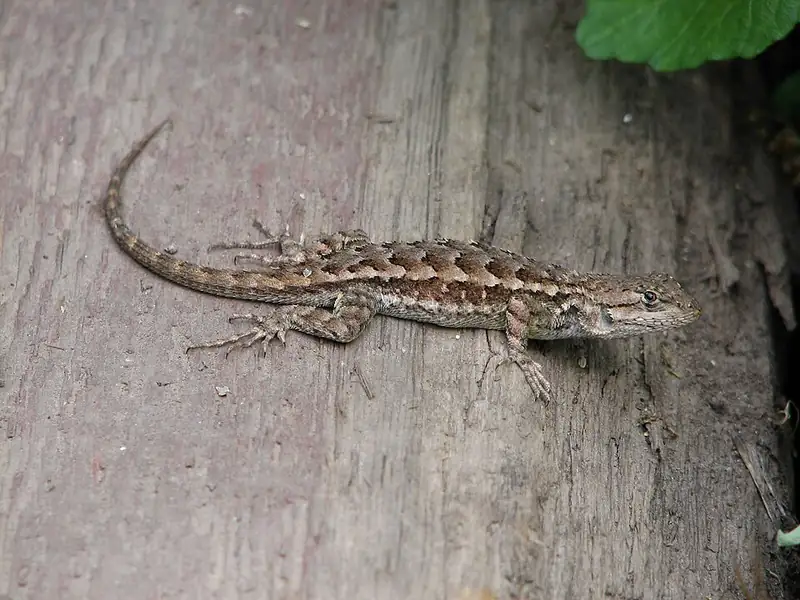 Reptile
 Western fence lizard
Sceloporus occidentalis
The blue-bellied lizard of West Coast rock walls and fence rails, whose blood carries a protein that kills the Lyme disease bacterium inside a feeding tick.
-
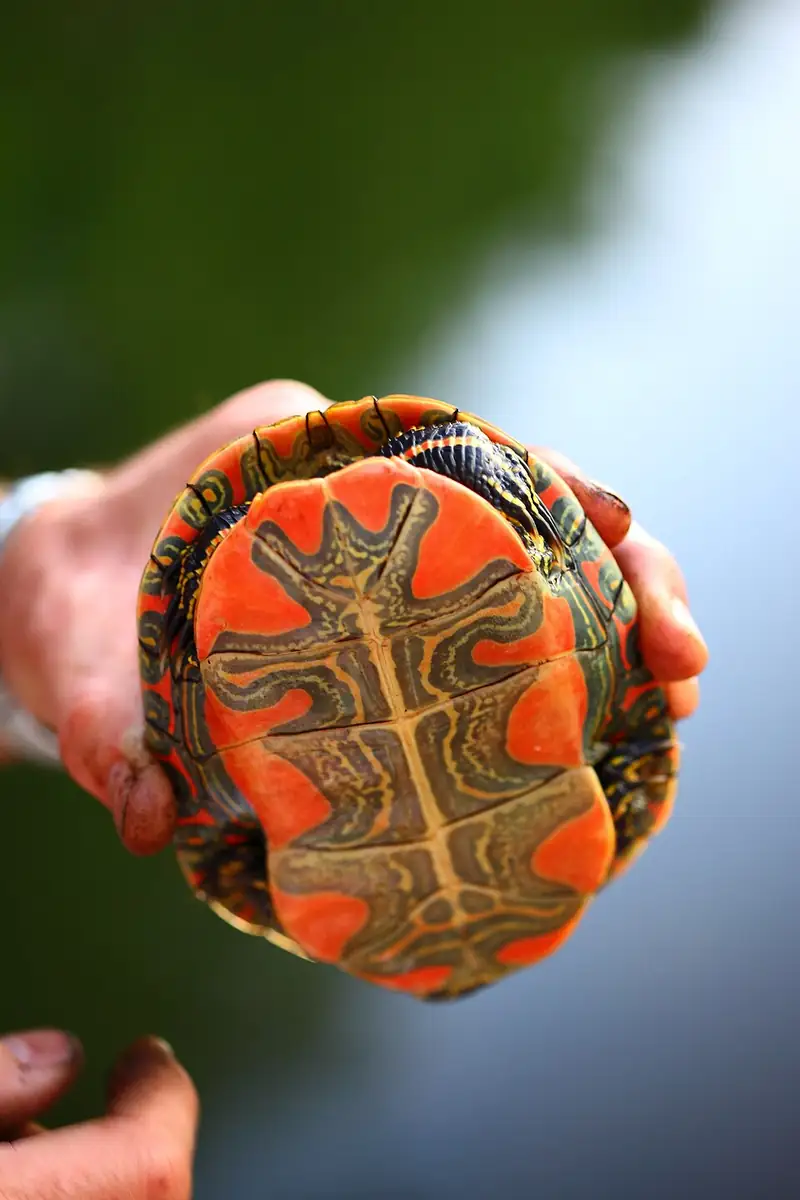 Reptile
 Western painted turtle
Chrysemys picta bellii
A smooth-shelled turtle with red-striped legs that basks on logs in northern lakes and survived being nearly frozen as a hatchling.
-
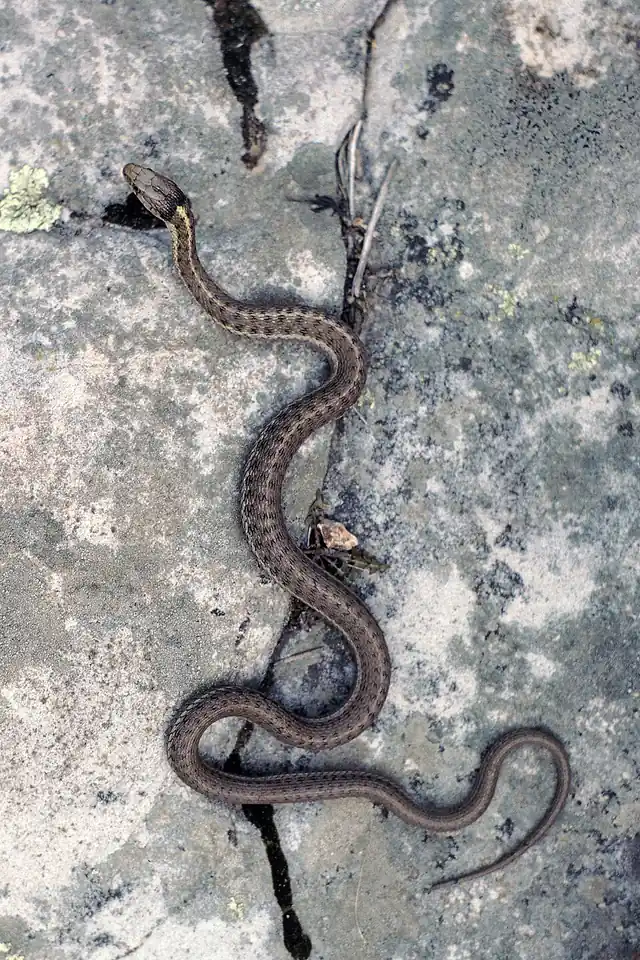 Reptile
 Western terrestrial garter snake
Thamnophis elegans
A slim, striped snake found from stream banks to talus slopes across ten of these parks, and the most commonly seen reptile in several of them.
Amphibians
-
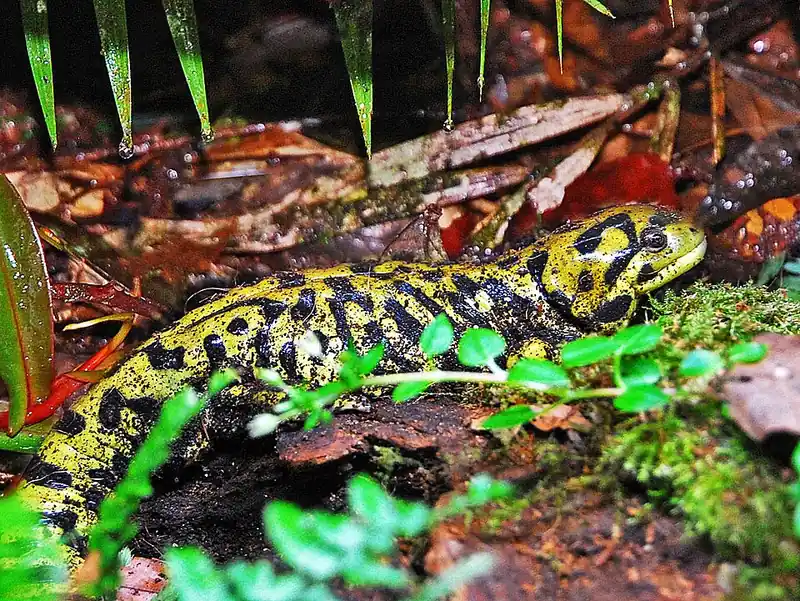 Amphibian
 Barred tiger salamander
Ambystoma mavortium
A stout, yellow-barred salamander that spends most of the year underground and gathers in prairie ponds to breed, living around Great Sand Dunes and Badlands.
-
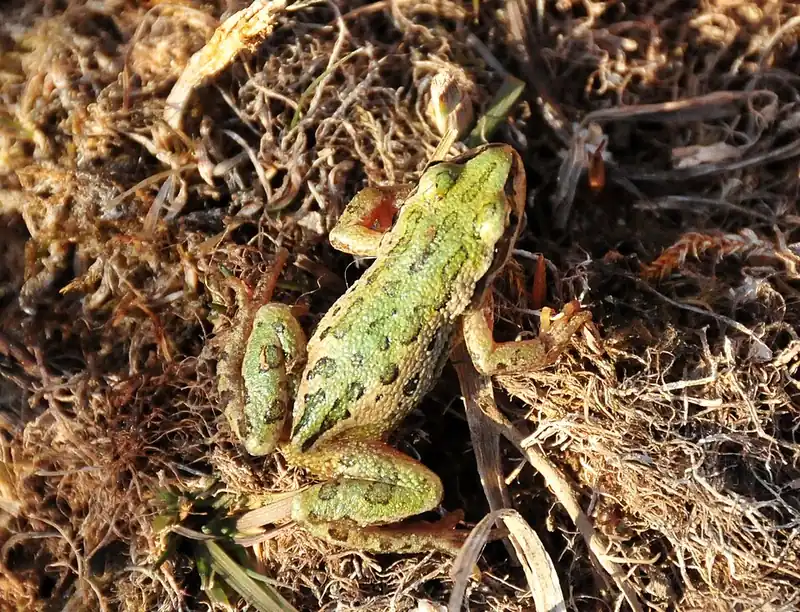 Amphibian
 Boreal chorus frog
Pseudacris maculata
A finger-sized frog whose spring trill fills Rocky Mountain wetlands, and whose cells can freeze solid and still wake up.
-
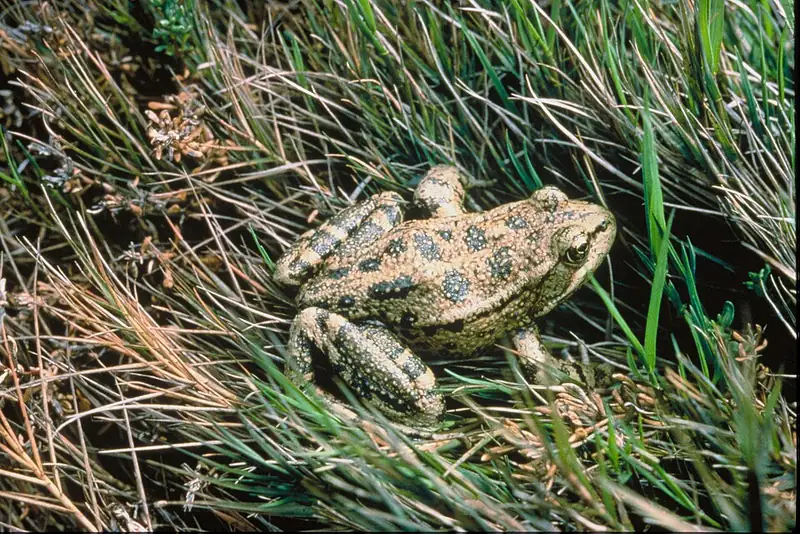 Amphibian
 California red-legged frog
Rana draytonii
The largest native frog in the western United States, with a reddish belly and legs, living in quiet ponds and creeks at Pinnacles.
-
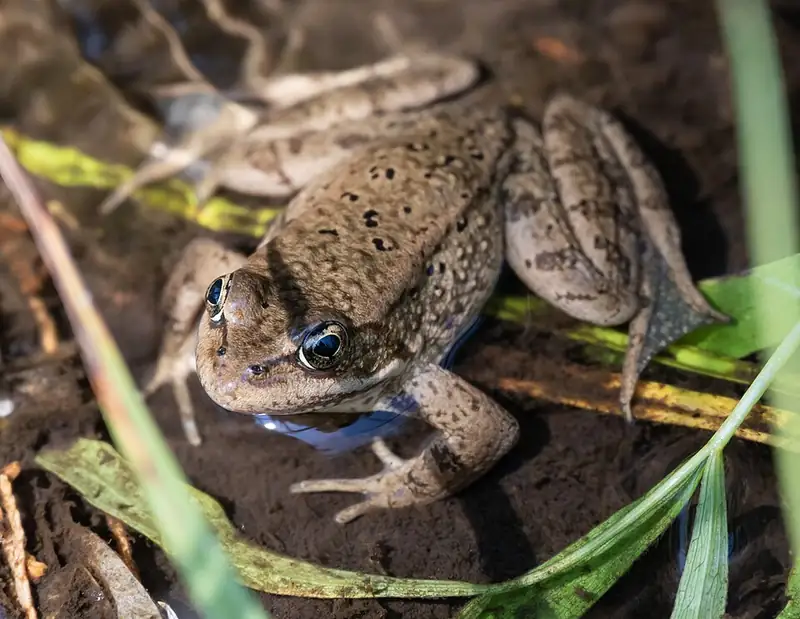 Amphibian
 Cascades frog
Rana cascadae
A brown, black-spotted frog of cold high-mountain meadow ponds, once common through the Cascades and now vanishing from parts of its range.
-
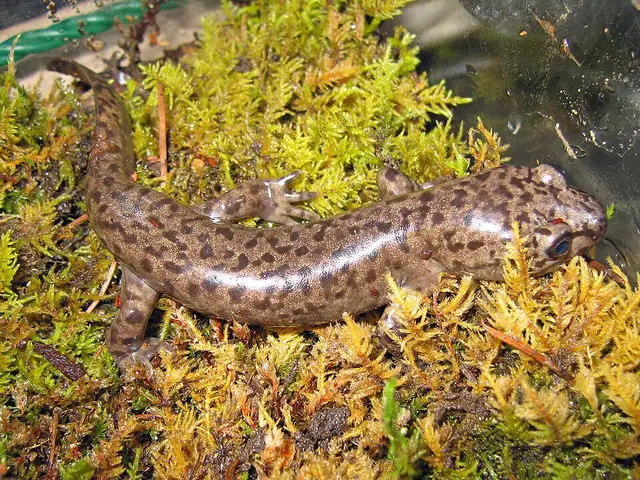 Amphibian
 Coastal giant salamander
Dicamptodon tenebrosus
The largest terrestrial salamander in North America, a foot-long forest hunter that eats mice and other salamanders and can bark when it is grabbed.
-
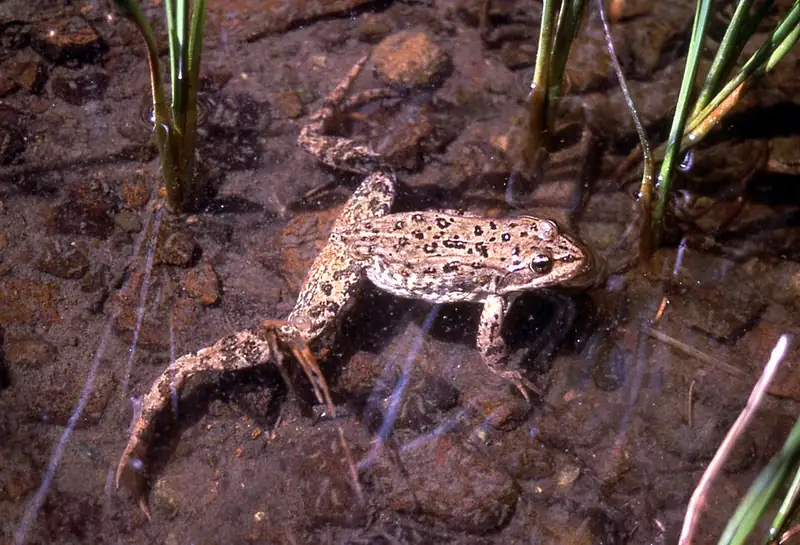 Amphibian
 Columbia spotted frog
Rana luteiventris
A spotted frog with a pale mustache stripe that stays active under the ice of Yellowstone and Grand Teton ponds through winter.
-
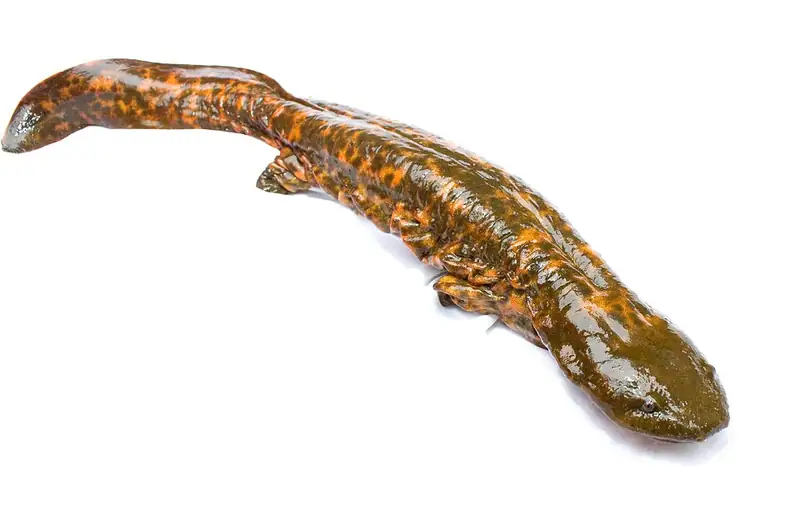 Amphibian
 Eastern hellbender
Cryptobranchus alleganiensis
A giant, wrinkly salamander that breathes through its skin and hides under rocks in cold, clean streams at Great Smoky Mountains and New River Gorge.
-
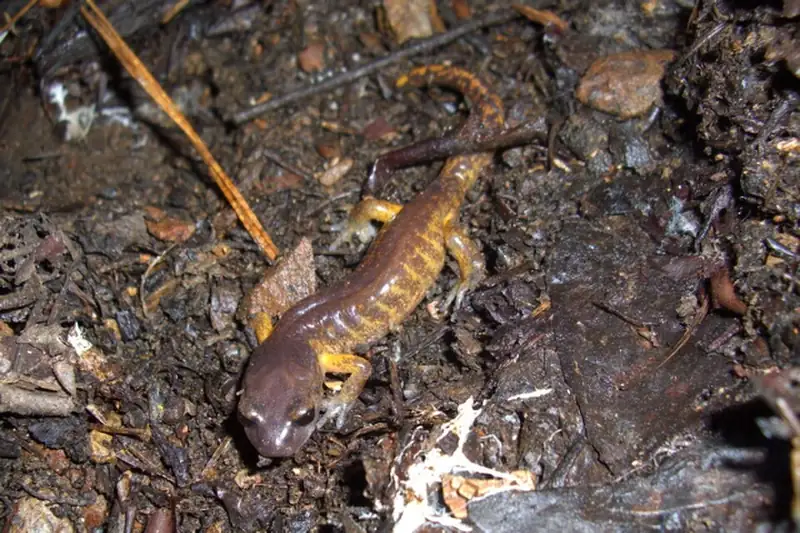 Amphibian
 Ensatina
Ensatina eschscholtzii
A lungless salamander that breathes through its skin, a textbook 'ring species' whose subspecies loop around California's Central Valley without quite meeting.
-
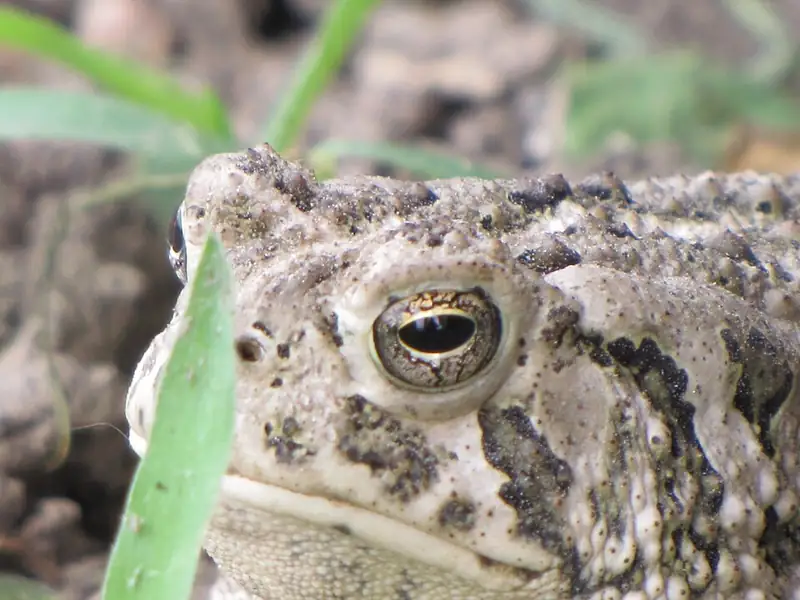 Amphibian
 Great Plains toad
Anaxyrus cognatus
A warty prairie toad that rises from the ground by the thousands after summer rain to fill Great Sand Dunes with a buzzing, metallic trill.
-
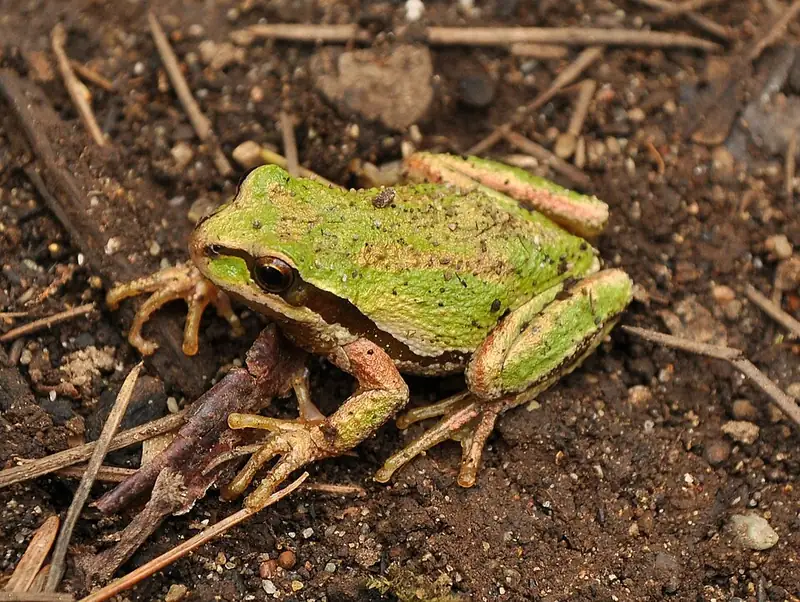 Amphibian
 Pacific chorus frog
Pseudacris regilla
A two-inch frog that shifts between green and brown and calls the ribbit Hollywood dubs onto night scenes everywhere, from sea level to alpine ponds.
-
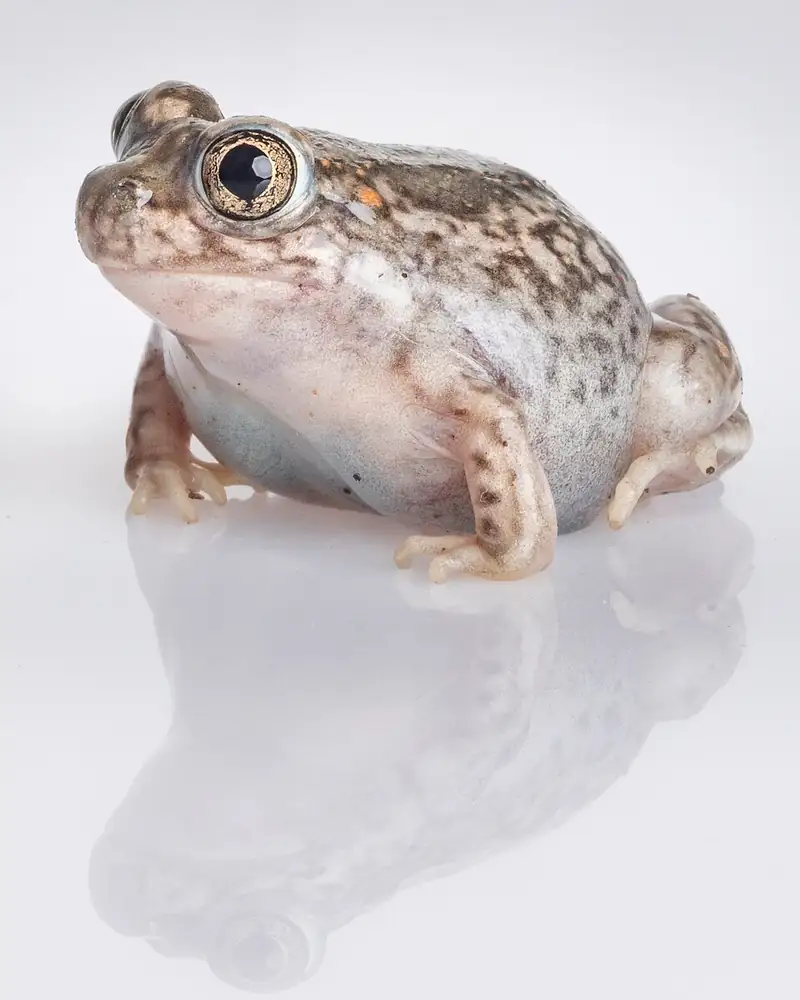 Amphibian
 Plains spadefoot
Spea bombifrons
A cat-eyed toad that digs backward into sand with a spade on each hind foot and spends nearly all year hidden underground.
-
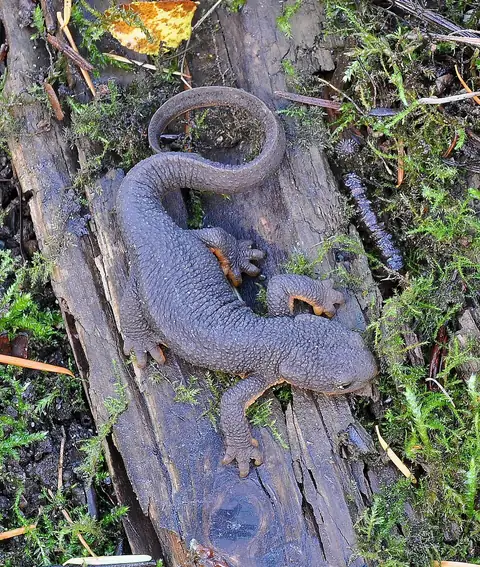 Amphibian
 Rough-skinned newt
Taricha granulosa
A brown, warty-skinned newt with a bright orange belly that carries enough poison to kill a person, found in ponds and wet forests across the Pacific Northwest.
-
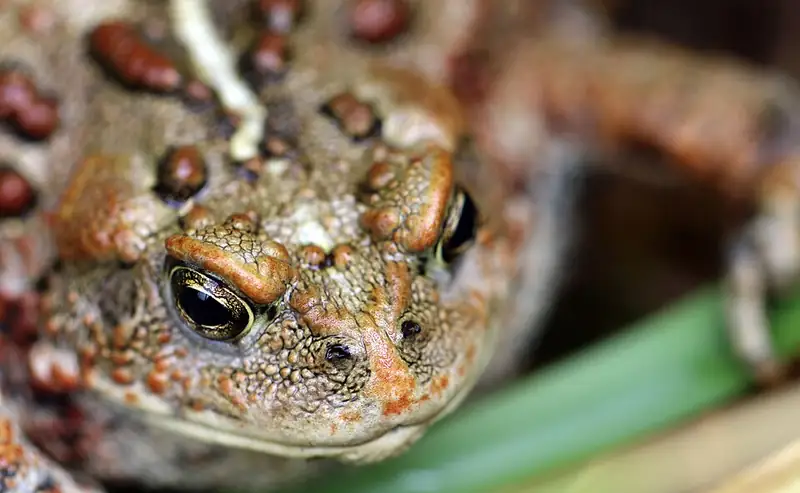 Amphibian
 Western toad
Anaxyrus boreas
A stout, warty toad that walks instead of hopping, with poison glands behind each eye, ranging from lowland ponds to mountain lakes across the Cascades.
Fish
-
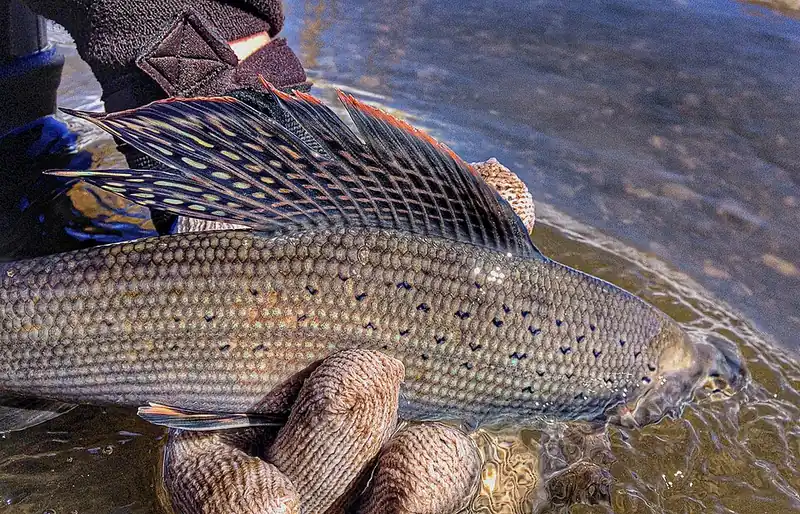 Fish
Fish Arctic grayling
Thymallus arcticus
A native trout relative with a tall, sail-like dorsal fin, gone from Yellowstone's rivers for 80 years and only now being put back.
-
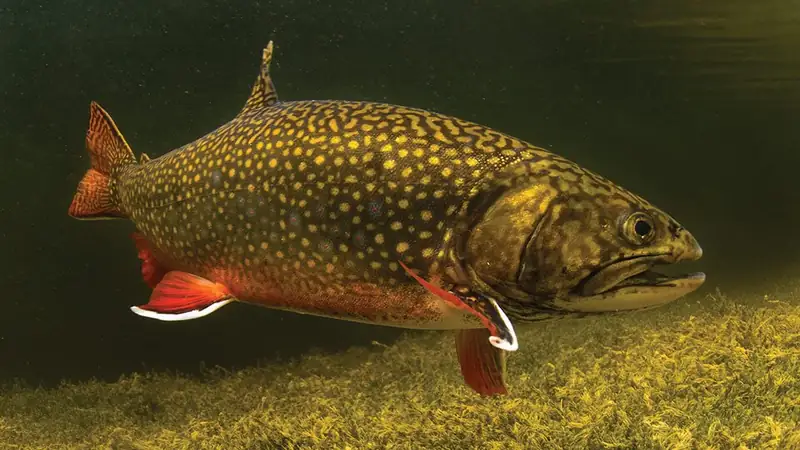 Fish
Fish Brook trout
Salvelinus fontinalis
A small, wormy-patterned native fish with red spots ringed in blue, the only trout that truly belongs in the cold high streams of the Smokies and Shenandoah.
-
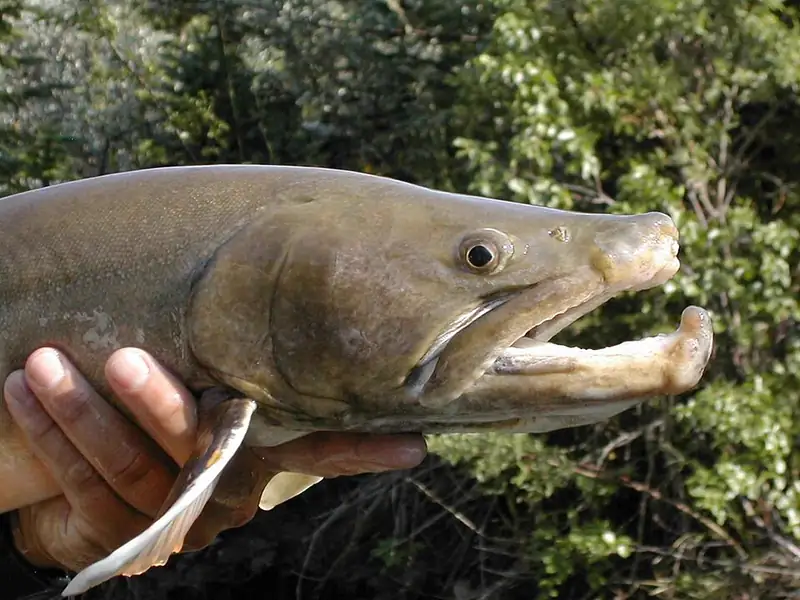 Fish
Fish Bull trout
Salvelinus confluentus
A char, not a true trout, that needs the coldest, cleanest water in the mountains, so finding one is itself a kind of water-quality report.
-
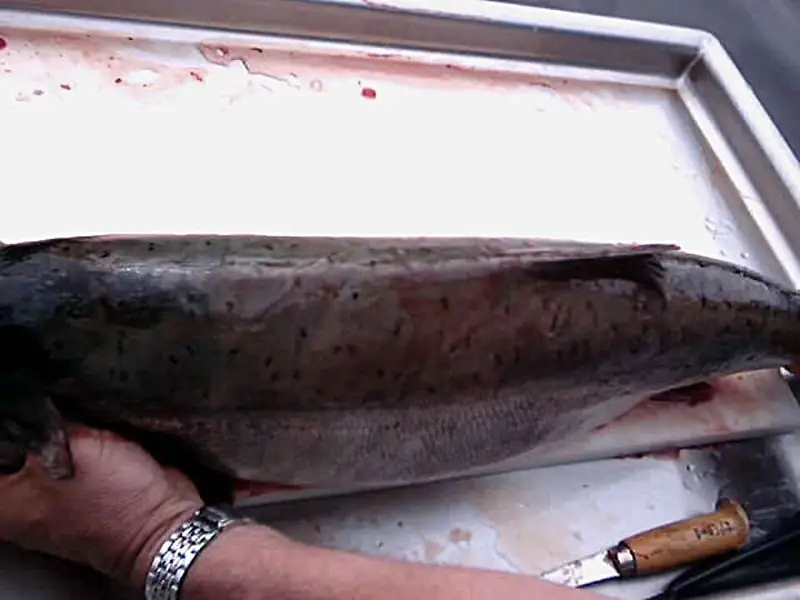 Fish
Fish Chinook salmon
Oncorhynchus tshawytscha
The biggest Pacific salmon, called king salmon, whose Elwha River run climbed back over a hundred-year-old dam site within a few years of its removal.
-
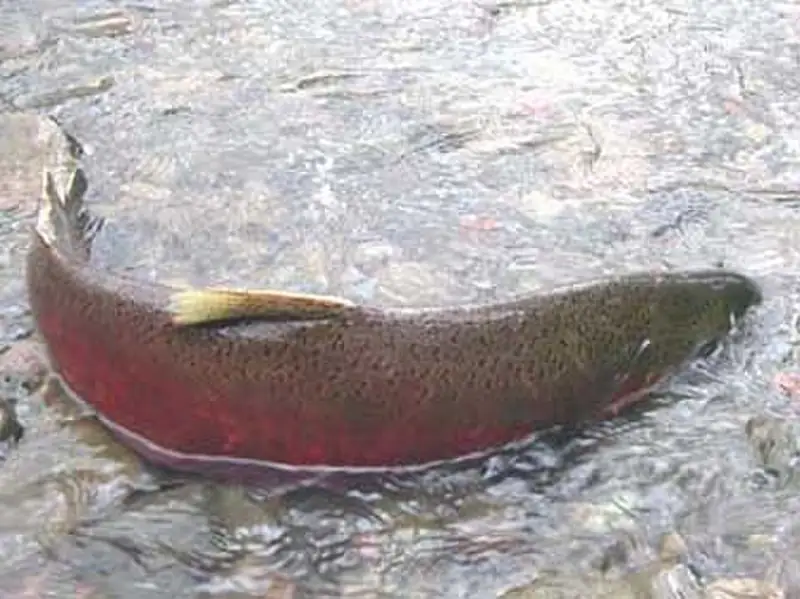 Fish
Fish Coho salmon
Oncorhynchus kisutch
A silver ocean salmon that comes home each winter to the small creeks under the redwoods, turning brick-red and hook-jawed to spawn once and die.
-
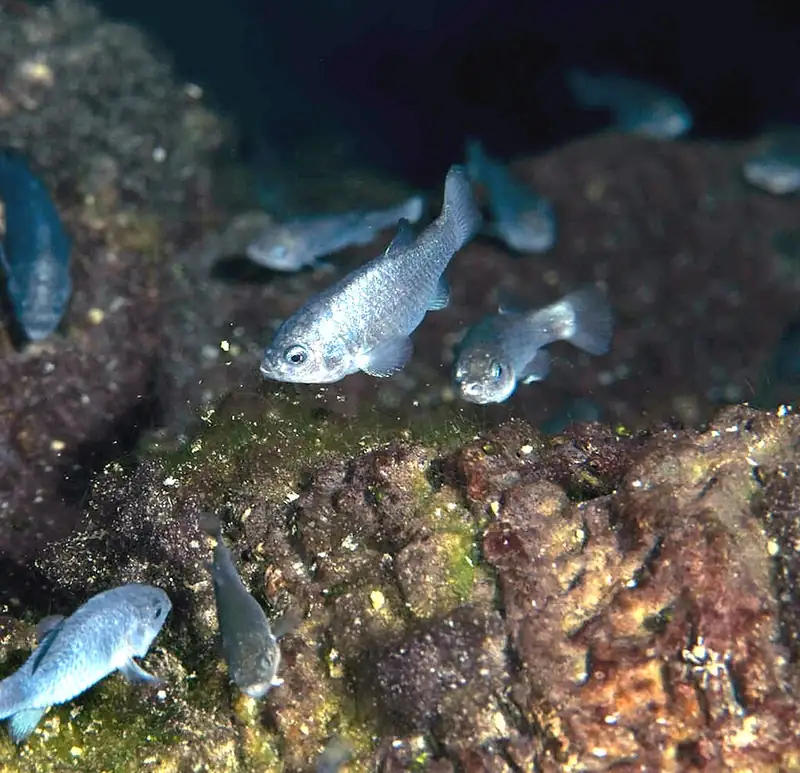 Fish
Fish Devils Hole pupfish
Cyprinodon diabolis
A tiny blue fish that lives in one warm, deep desert pool at Death Valley and nowhere else on Earth, one of the rarest fish in the world.
-
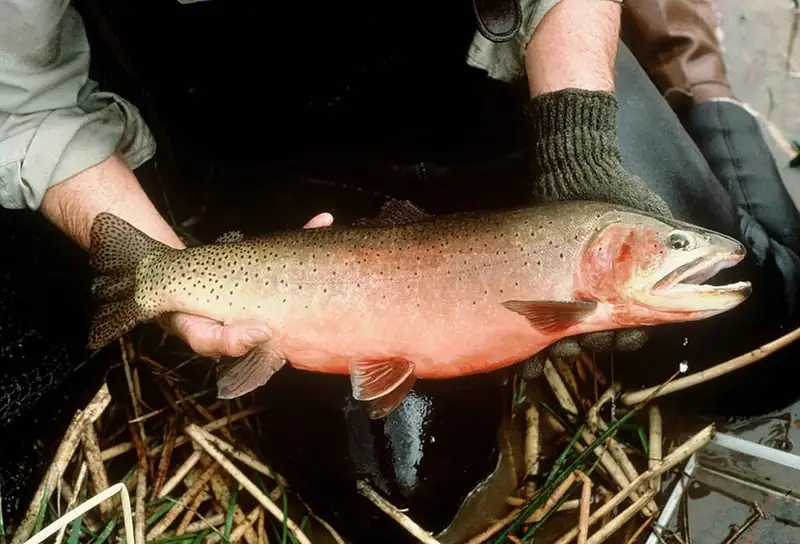 Fish
Fish Greenback cutthroat trout
Oncorhynchus clarkii stomias
Colorado's state fish, one of two native cutthroat trout in Rocky Mountain's streams, nearly wiped out by a century of stocking other fish.
-
 Fish
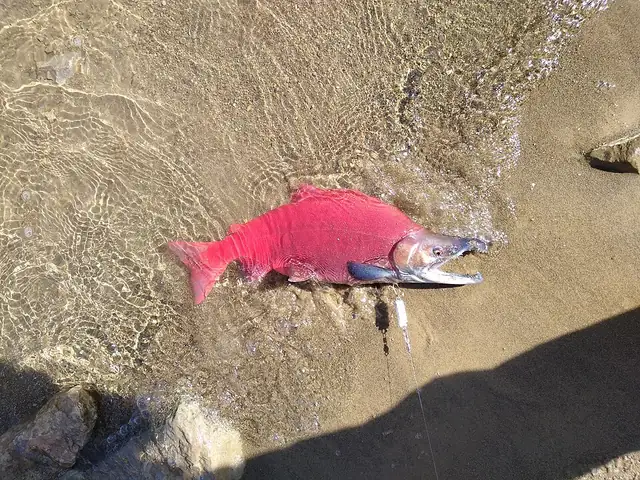
Fish Kokanee salmon
Oncorhynchus nerka
A landlocked sockeye salmon that spends its whole life inside Crater Lake, turning bright red to spawn without ever swimming a mile toward the ocean.
-
 Fish
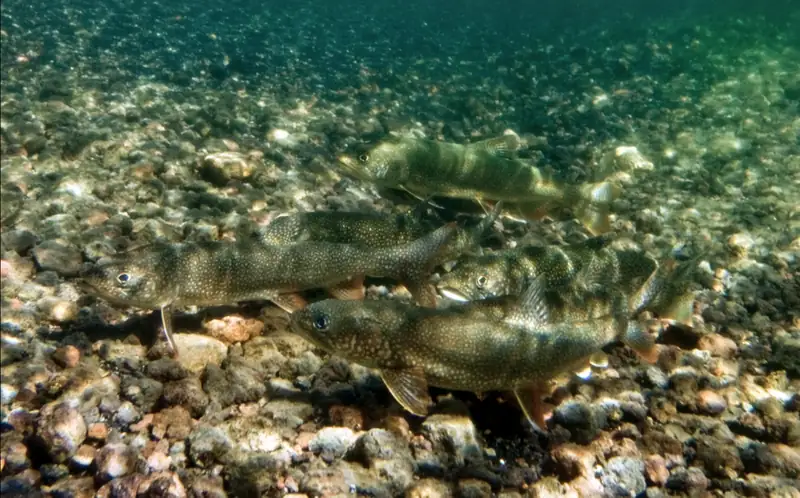
Fish Lake trout
Salvelinus namaycush
A large, deep-water char with a forked tail, native at Glacier but an invasive species anglers must kill on sight in Yellowstone and Grand Teton lakes.
-
 Fish
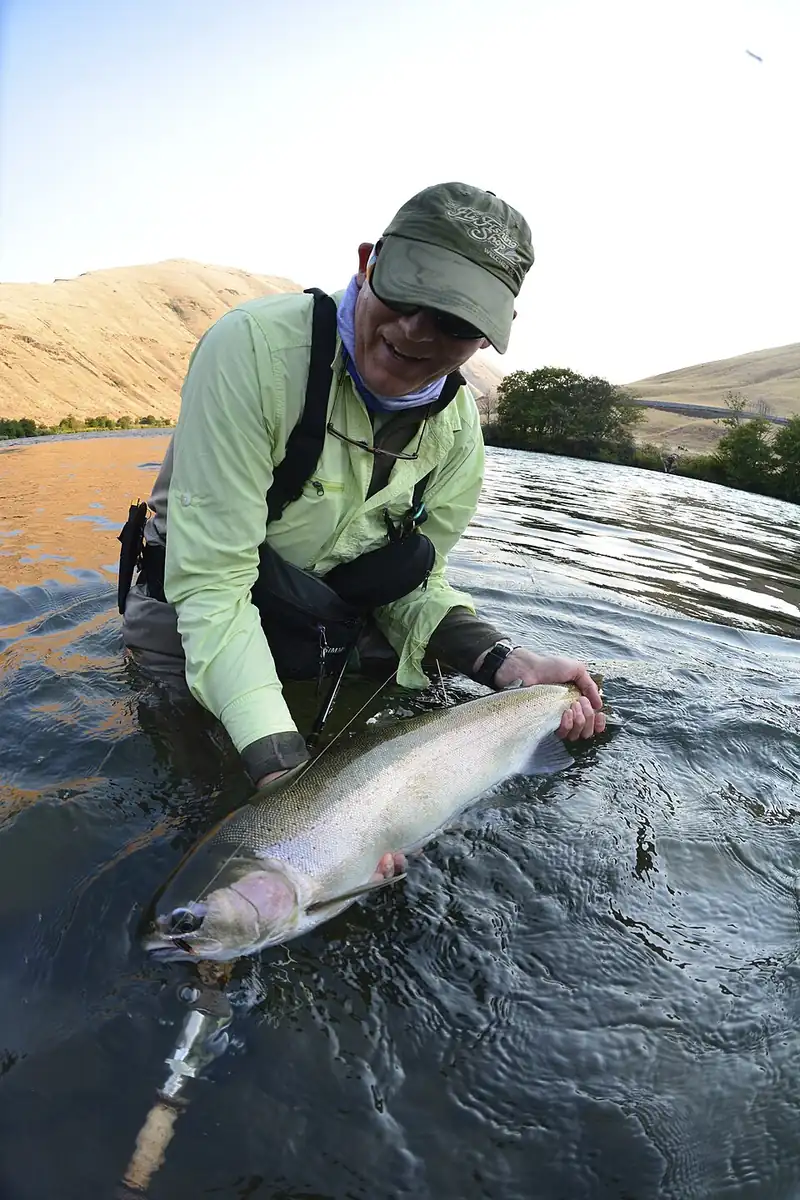
Fish Steelhead
Oncorhynchus mykiss
A rainbow trout that swims to the ocean and back, the one salmon-family fish here that can spawn more than once instead of dying after a single trip.
-
 Fish
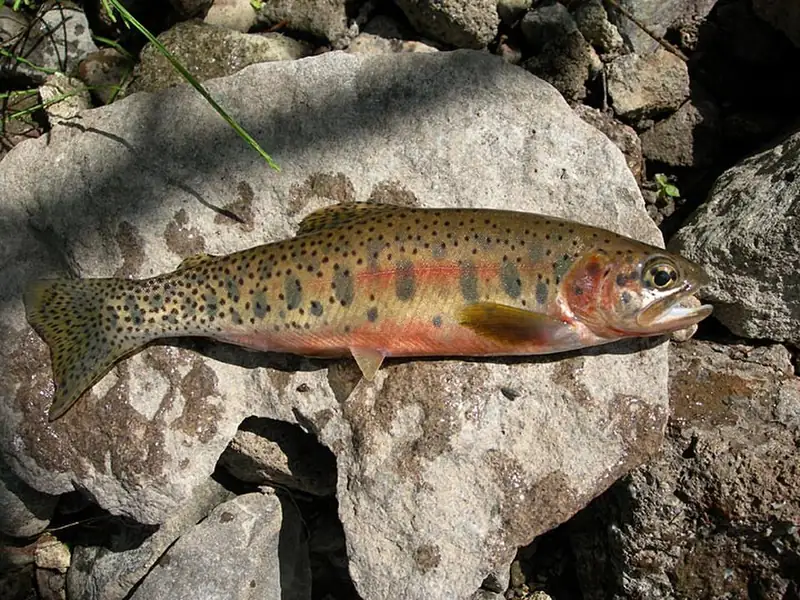
Fish Westslope cutthroat trout
Oncorhynchus clarkii lewisi
Montana's state fish, a headwater trout with a red jaw slash, restored to Yellowstone and Glacier streams after nonnative stocking nearly wiped it out.
-
 Fish
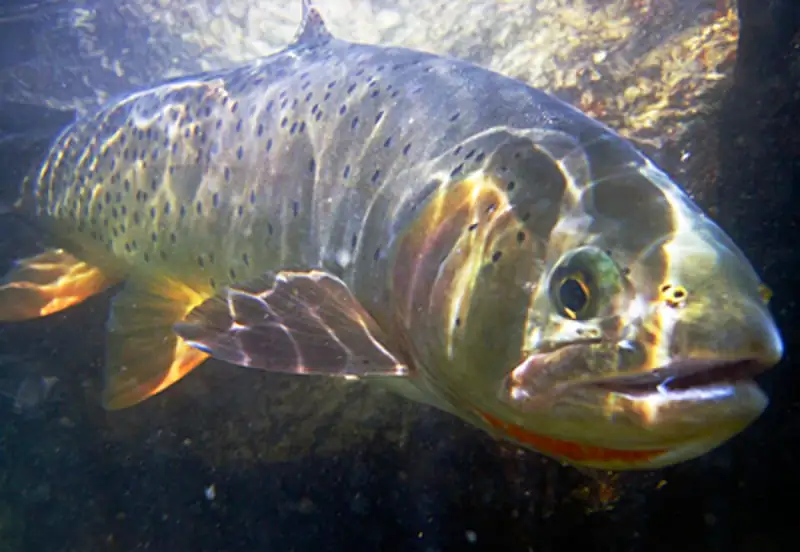
Fish Yellowstone cutthroat trout
Oncorhynchus clarkii bouvieri
A native trout with a red-orange slash under its jaw, the fish that fed the whole web of life around Yellowstone Lake for thousands of years.
Invertebrates
-
 Invertebrate
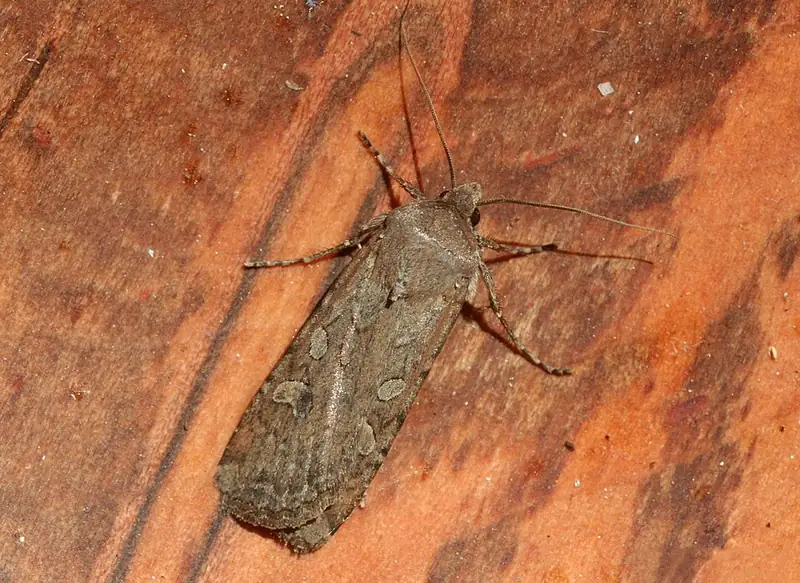
 Army cutworm moth
Euxoa auxiliaris
A gray moth that migrates from Great Plains farm fields to high mountain talus, where grizzly bears flip rocks to eat it by the thousands each summer.
-
 Invertebrate
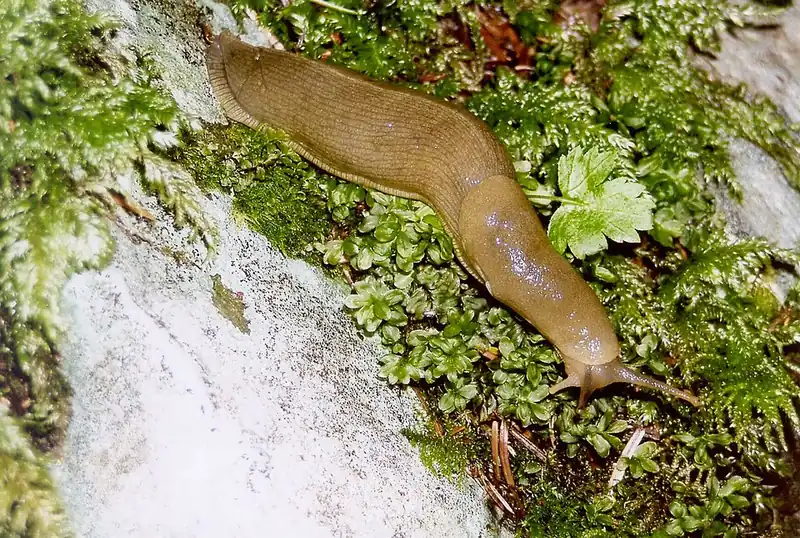
 Banana slug
Ariolimax columbianus
A long yellow slug, sometimes as big as a real banana, that glides across the damp floor of the redwood forest and cleans up what falls there.
-
 Invertebrate
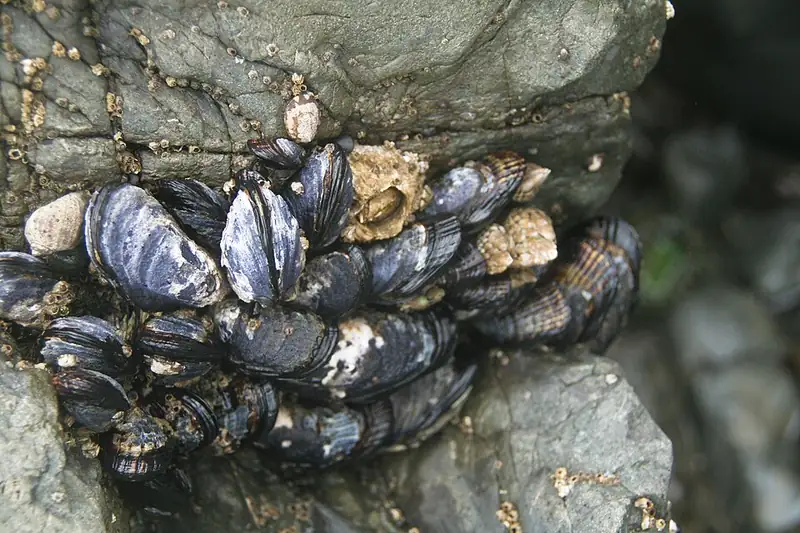
 California mussel
Mytilus californianus
The big blue-black mussel that packs Pacific rocks by the thousands, anchored by threads so strong they inspired medical glue.
-
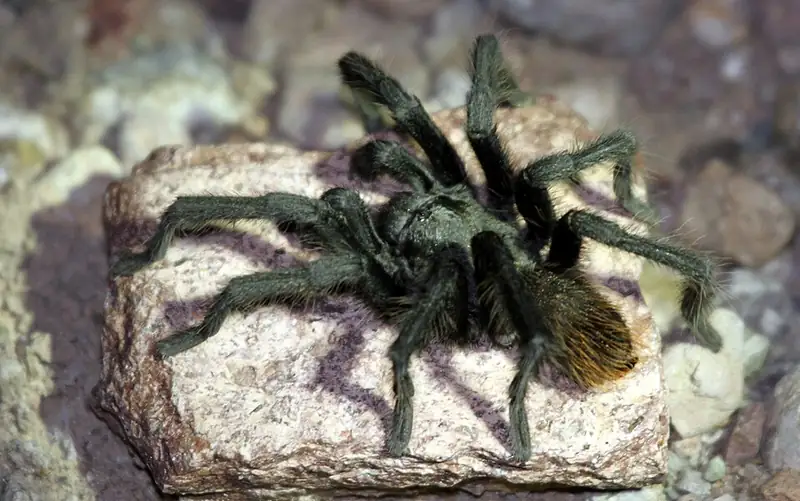 Invertebrate
 Desert tarantula
Aphonopelma chalcodes
A large, gentle desert spider with a pale, hairy body that spends its days in a silk-lined burrow and comes out on fall evenings to look for a mate.
-
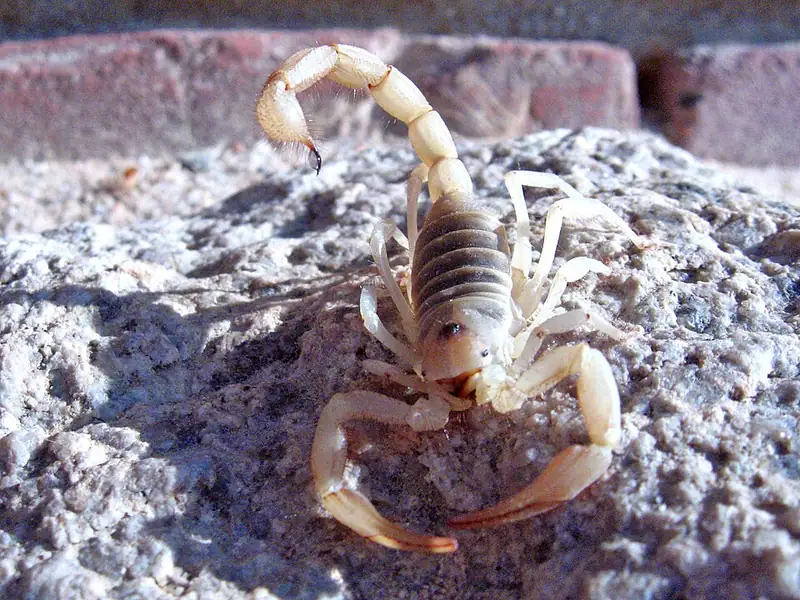 Invertebrate
 Giant desert hairy scorpion
Hadrurus arizonensis
The largest scorpion in North America, a sandy-colored desert digger covered in sensing hairs that glows blue-green under ultraviolet light.
-
 Invertebrate
 Giant green anemone
Anthopleura xanthogrammica
A bright green tide-pool anemone that farms algae inside its own body for the color and eats crabs whole with a ring of stinging tentacles.
-
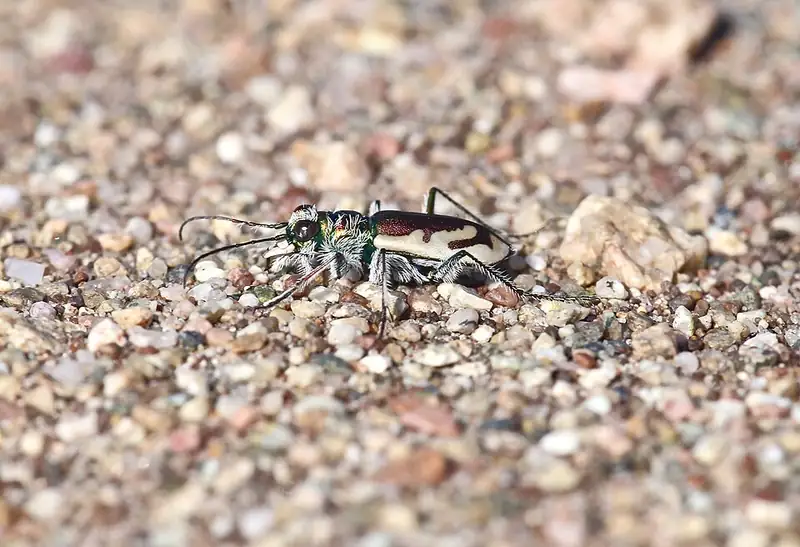 Invertebrate
 Great Sand Dunes tiger beetle
Cicindela theatina
A beetle found nowhere else on Earth but the Great Sand Dunes, hunting ants and mites across the open sand in a coat with a violin-shaped pattern.
-
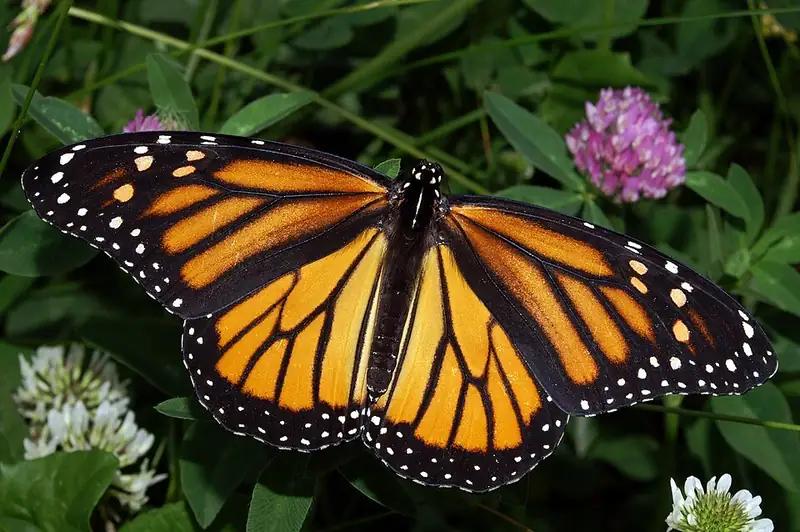 Invertebrate
 Monarch butterfly
Danaus plexippus
The orange-and-black butterfly whose fall generation flies thousands of miles to the same winter trees, feeding only on milkweed as a caterpillar.
-
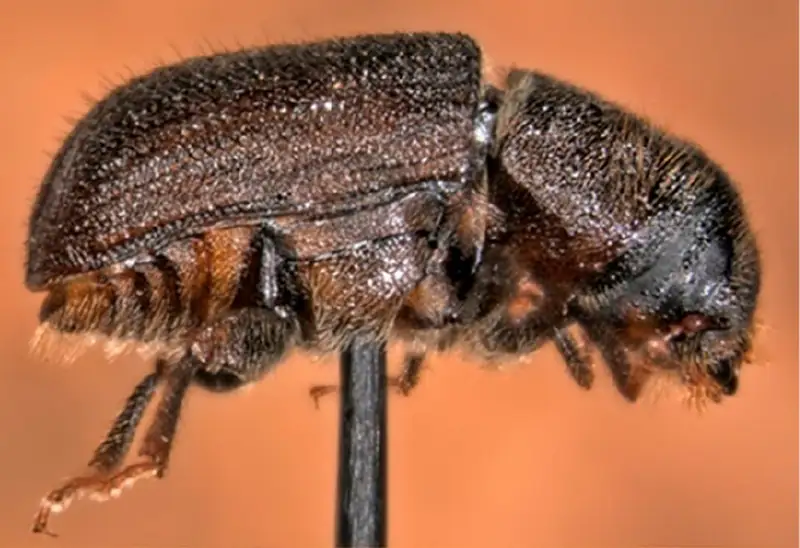 Invertebrate
 Mountain pine beetle
Dendroctonus ponderosae
A beetle about the size of a grain of rice that tunnels under pine bark and can turn a mountainside red at Yellowstone, Glacier, and Rocky Mountain.
-
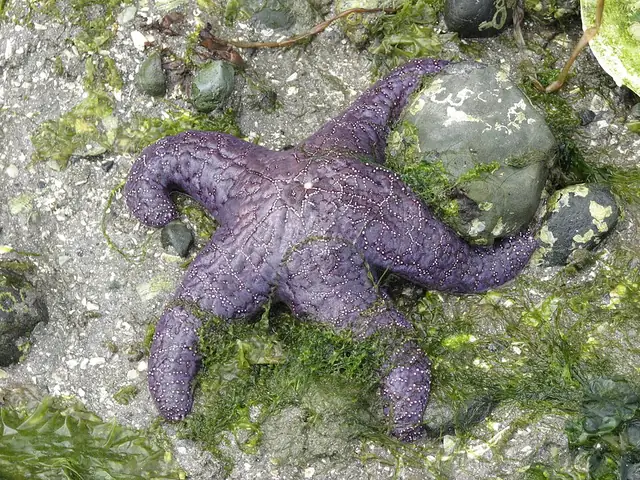 Invertebrate
 Ochre sea star
Pisaster ochraceus
The purple or orange five-armed star of Pacific tide pools whose appetite for mussels decides what everything else on the rock gets to be.
-
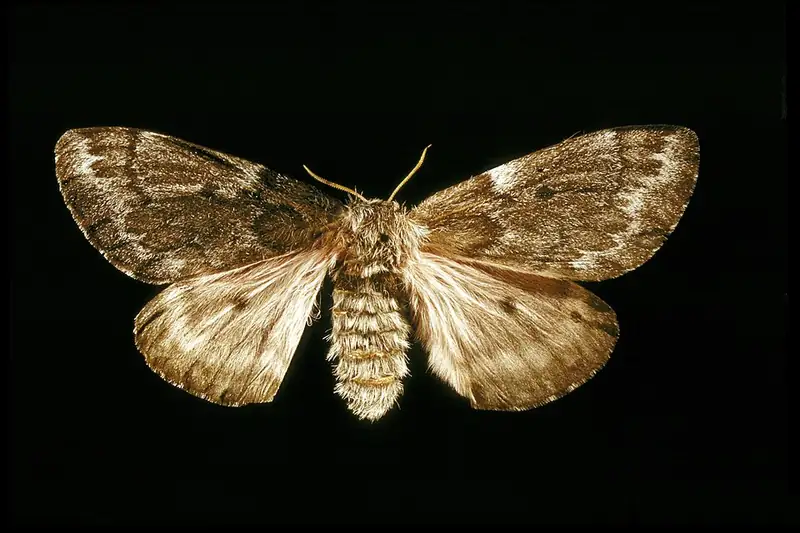 Invertebrate
 Pandora moth
Coloradia pandora
A large gray forest moth of ponderosa country whose caterpillars boom every few decades and once fed the Klamath and Paiute people who harvested them.
-
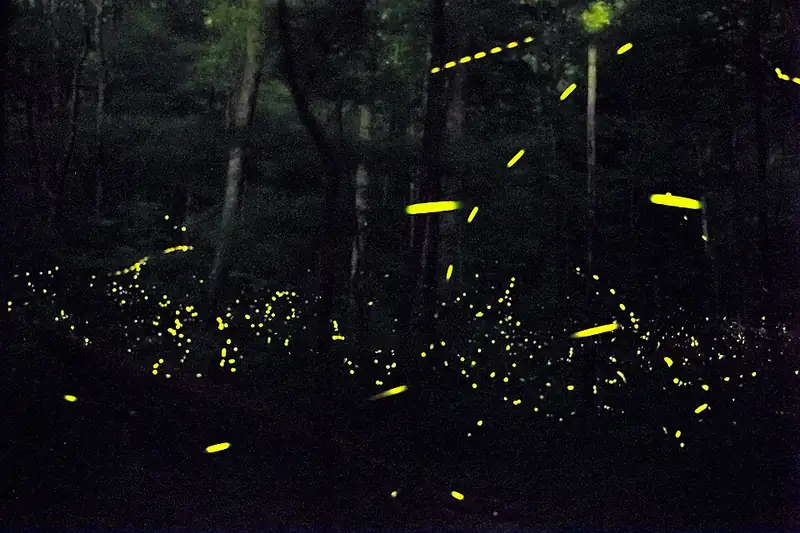 Invertebrate
 Synchronous firefly
Photinus carolinus
A woodland beetle of the southern Appalachians whose males flash together in waves on June nights, one of the few in North America that blink in unison.
-
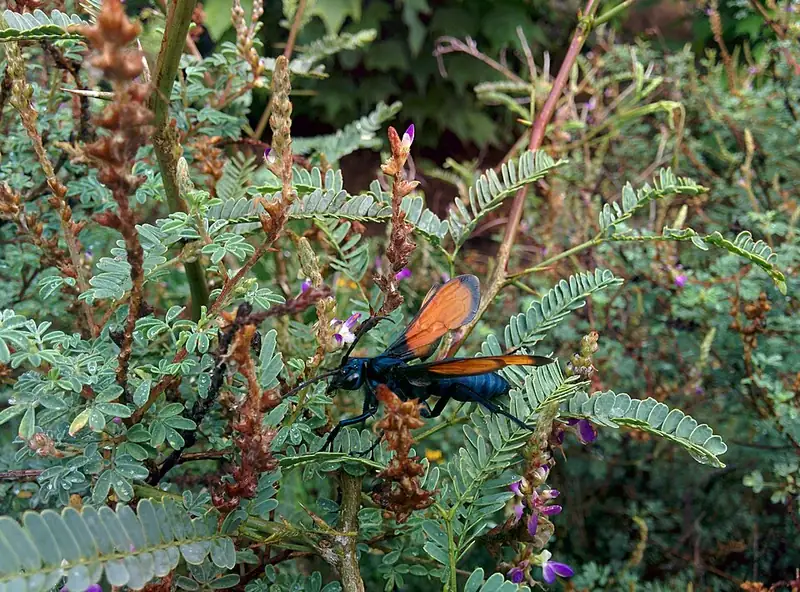 Invertebrate
 Tarantula hawk
Pepsis
A big black desert wasp with orange wings that hunts tarantulas, delivers one of the most painful stings on Earth, and almost never bothers people.
-
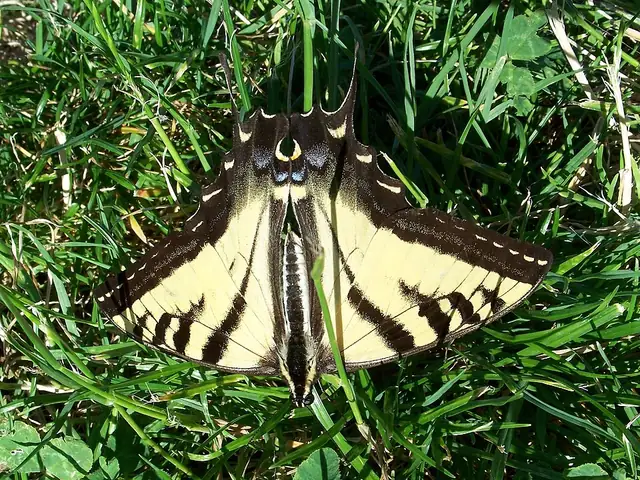 Invertebrate
 Western tiger swallowtail
Papilio rutulus
The big yellow-and-black butterfly of western streamsides whose caterpillar wears fake snake eyes and flips out a stinky orange horn when scared.
-
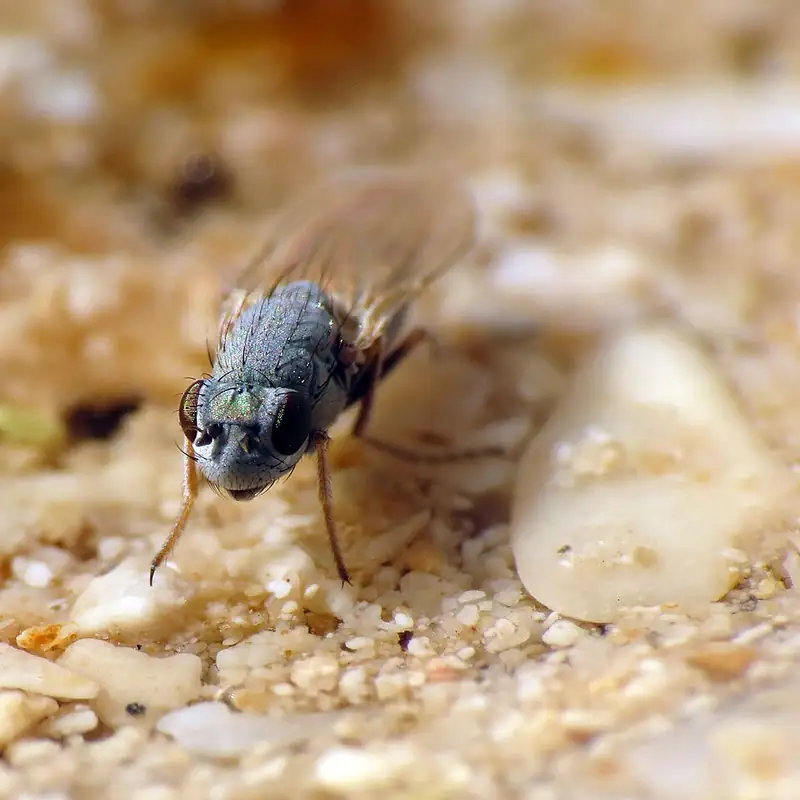 Invertebrate
 Yellowstone brine fly
Ephydra bruesi
A small fly that lives in Yellowstone's hot runoff channels, walking on water close to the boiling point that would kill almost anything else.
Plants
Plants
-
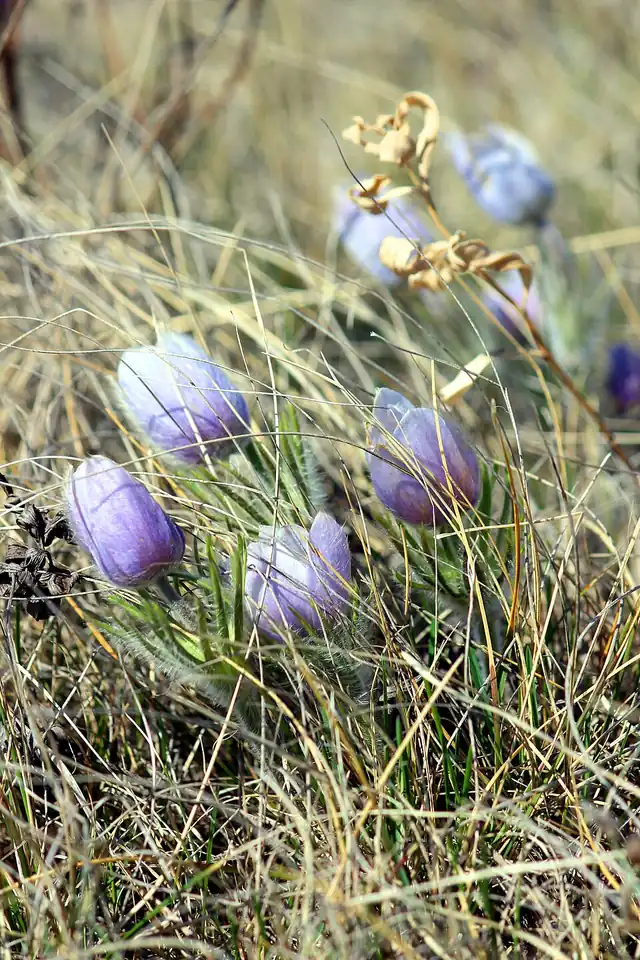 Plant
Plant American pasqueflower
Pulsatilla patens ssp. multifida
A furry, purple-blue prairie flower that beats the grass out of the ground each spring, blooming before almost anything else is green.
-
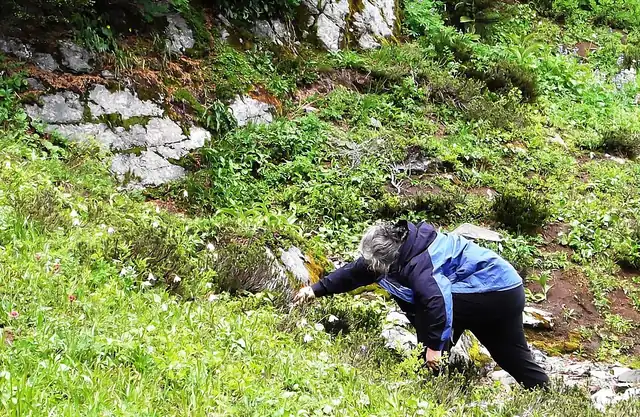 Plant
Plant Avalanche lily
Erythronium montanum
A white mountain lily that blooms at the very edge of the melting snow, chasing the snowline uphill all summer as the drifts pull back.
-
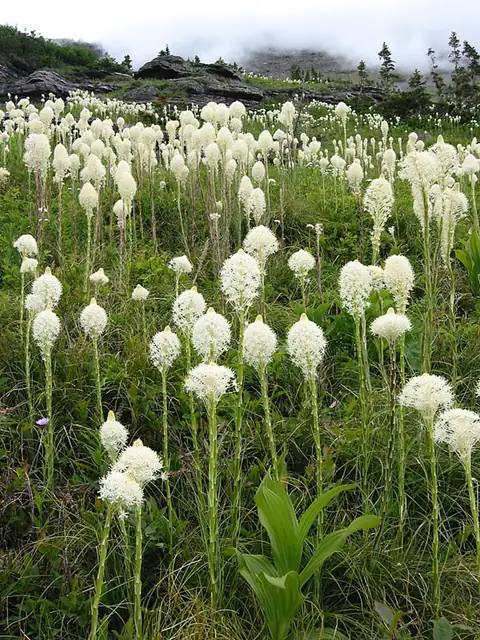 Plant
Plant Beargrass
Xerophyllum tenax
A mountain plant that is not a grass but a lily, sending up a tall creamy plume only every few years, its tough leaves woven into watertight baskets and hats.
-
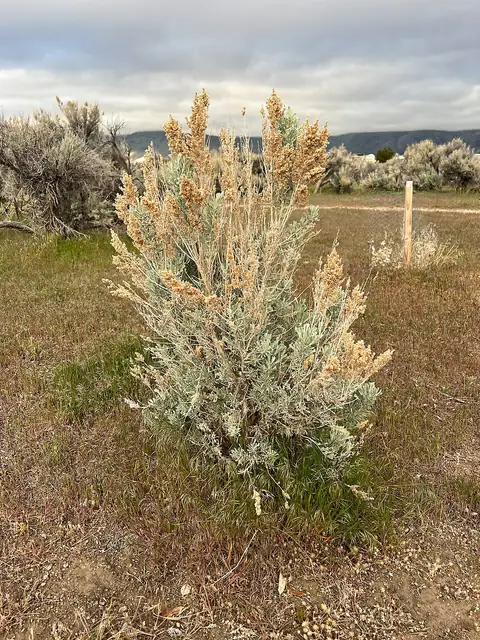 Plant
Plant Big sagebrush
Artemisia tridentata
The silver-leaved, sharp-smelling evergreen shrub of the high desert West, and the main food of the greater sage-grouse nearly all year.
-
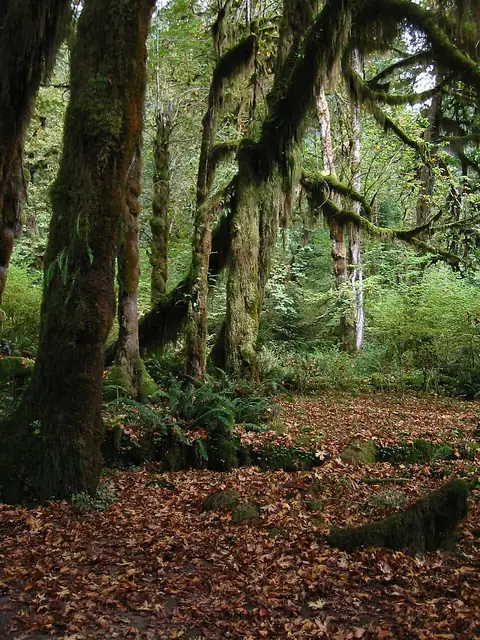 Plant
Plant Bigleaf maple
Acer macrophyllum
A Pacific Northwest maple with the largest leaves of any maple, often draped in moss and ferns in the rainforests of Olympic and North Cascades.
-
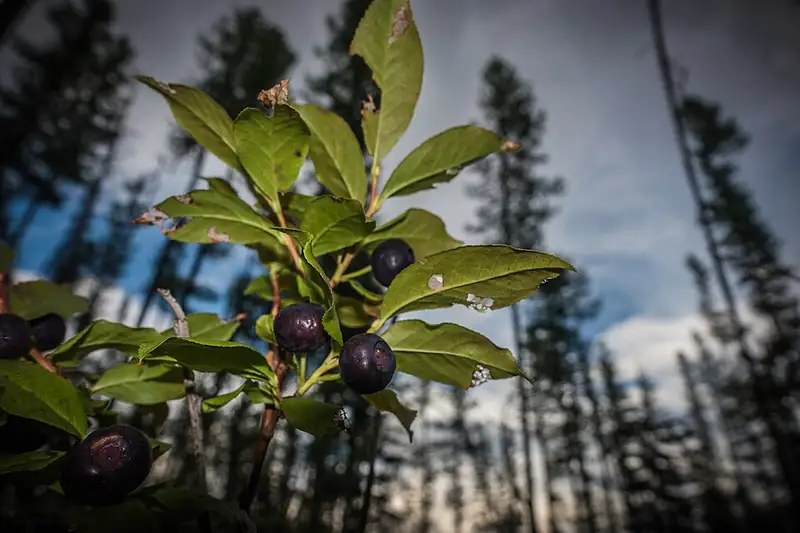 Plant
Plant Black huckleberry
Vaccinium membranaceum
The dark purple berry that feeds Glacier's bears and half the pancakes in Montana, growing on open and burned slopes all over the park.
-
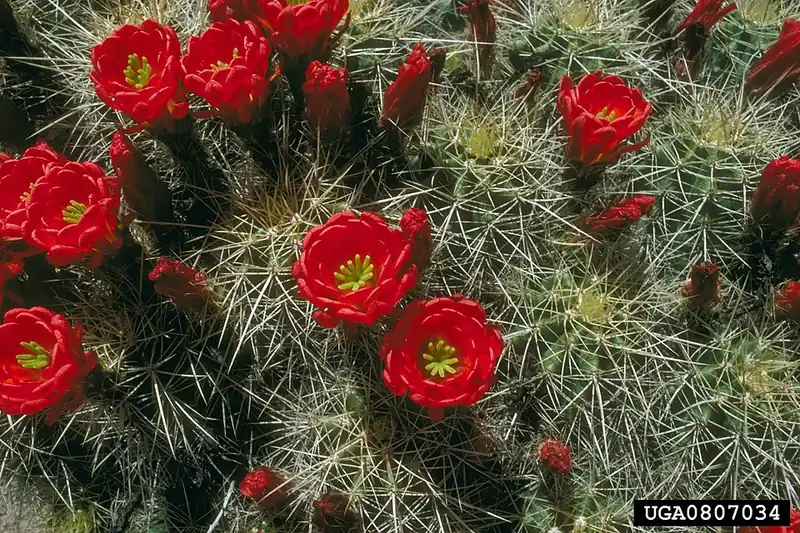 Plant
Plant Claret cup cactus
Echinocereus triglochidiatus
A low, mounding desert cactus that bursts into bright red, cup-shaped flowers each spring at Arches, Canyonlands, and Big Bend.
-
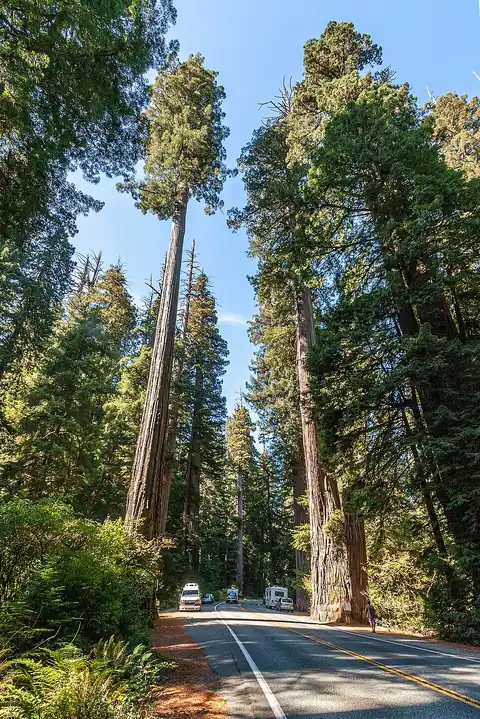 Plant
Plant Coast redwood
Sequoia sempervirens
The tallest tree on Earth, a fog-loving evergreen of the northern California coast where trails at Redwood run beneath 300-foot trunks.
-
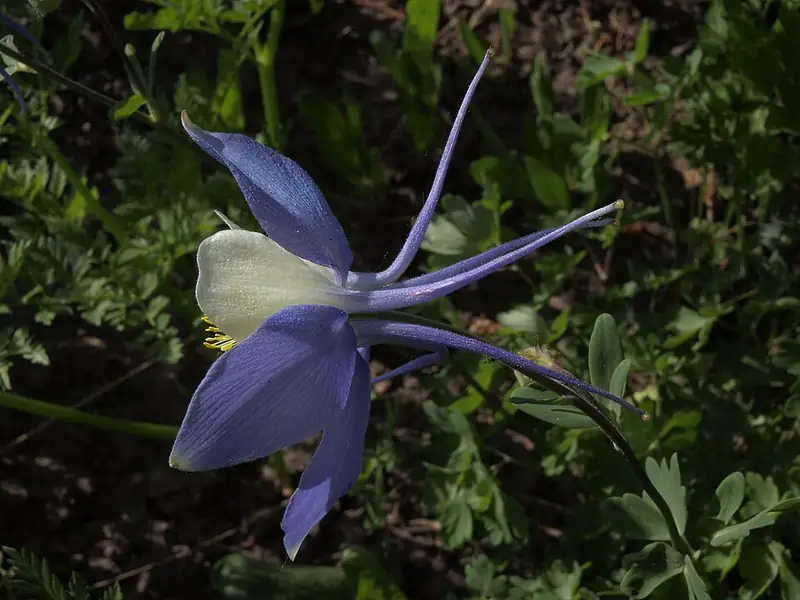 Plant
Plant Colorado blue columbine
Aquilegia coerulea
Colorado's blue-and-white state flower, its long spurs full of nectar that only a hawkmoth's tongue can reach.
-
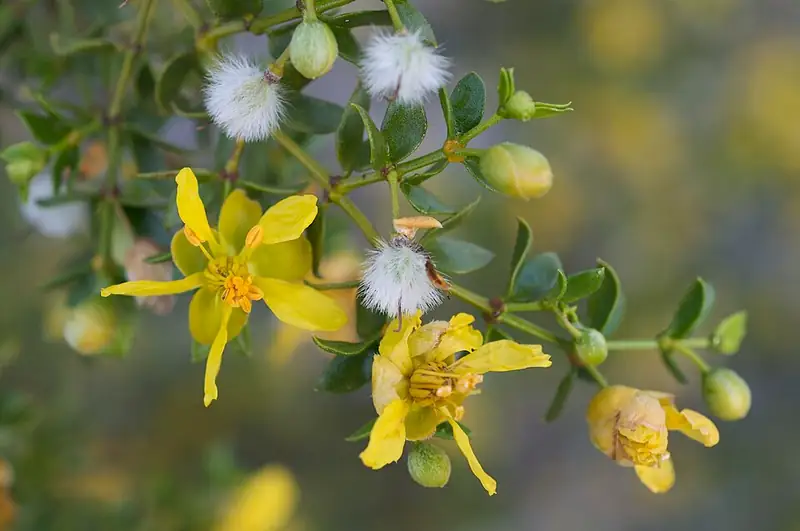 Plant
Plant Creosote bush
Larrea tridentata
The scraggly desert shrub whose leaves make the smell of desert rain, and whose slow-spreading clone rings are among the oldest living things on Earth.
-
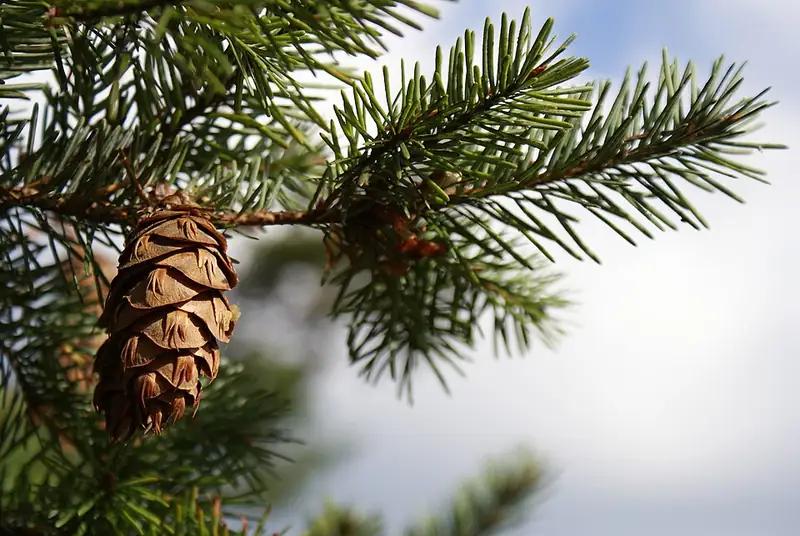 Plant
Plant Douglas-fir
Pseudotsuga menziesii
One of the tallest trees on Earth, not actually a true fir, whose cones carry little three-pointed flaps a Native story calls the tails and legs of hiding mice.
-
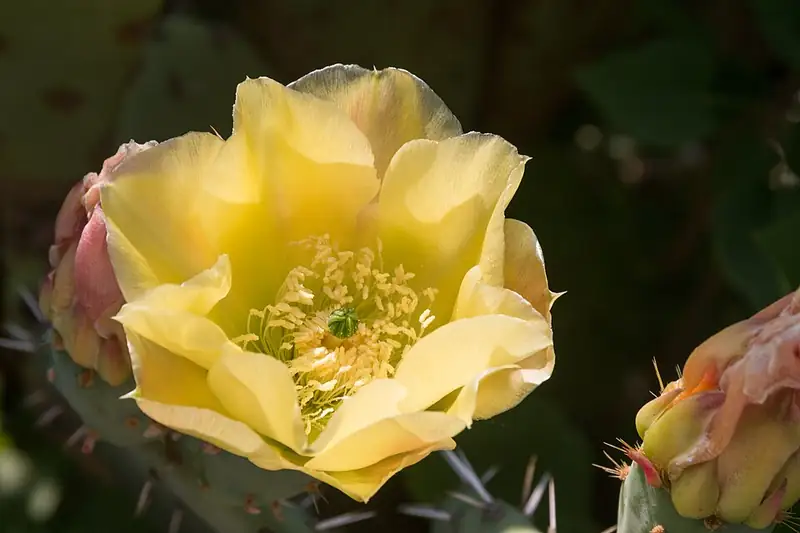 Plant
Plant Engelmann prickly pear
Opuntia engelmannii
A wide, flat-padded cactus of the southwestern deserts, spreading in low clumps with yellow flowers and purple fruit at Big Bend, Saguaro, and Arches.
-
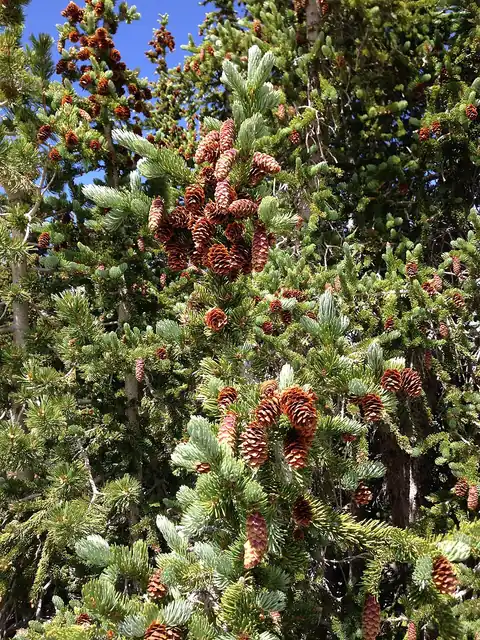 Plant
Plant Engelmann spruce
Picea engelmannii
A high-elevation spruce with scaly bark and sharp, squarish needles, whose Colorado stands have lost more than a million acres to a beetle since 1996.
-
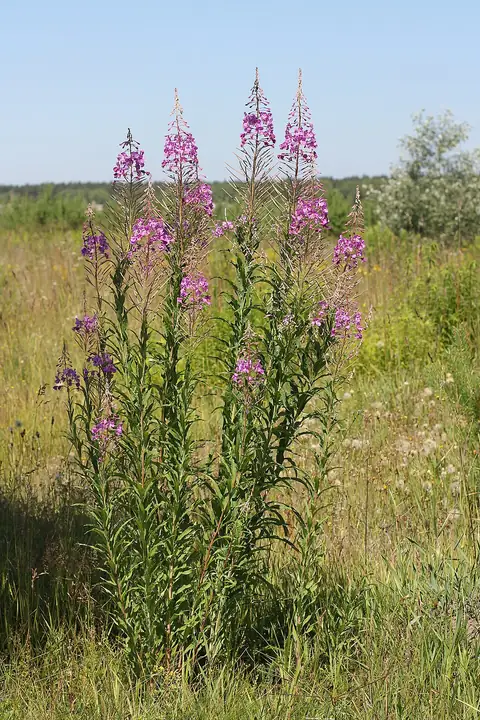 Plant
Plant Fireweed
Chamerion angustifolium
A tall pink-purple wildflower that is often the first color to return to a burned mountainside.
-
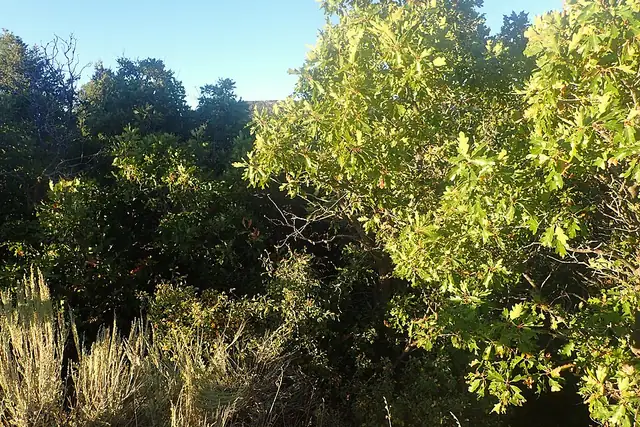 Plant
Plant Gambel oak
Quercus gambelii
The shrub oak that forms thickets across Black Canyon's rim, with underground buds that resprout after fire.
-
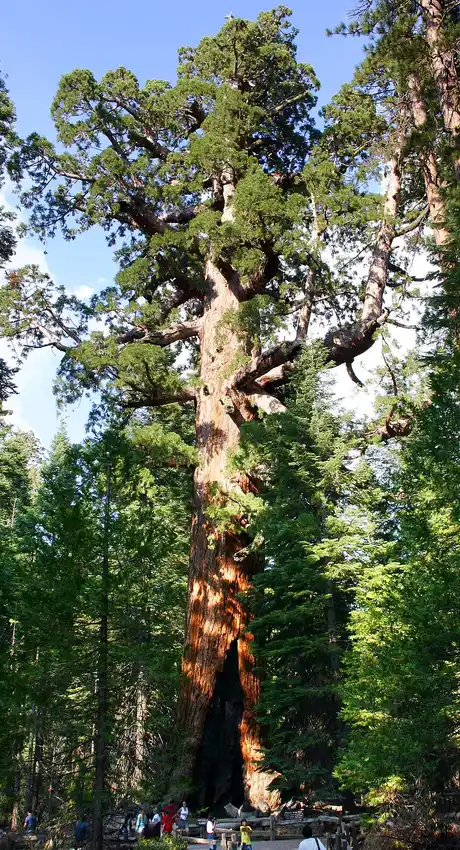 Plant
Plant Giant sequoia
Sequoiadendron giganteum
The largest tree on Earth by wood volume, growing only in scattered groves on the west slope of California's Sierra Nevada.
-
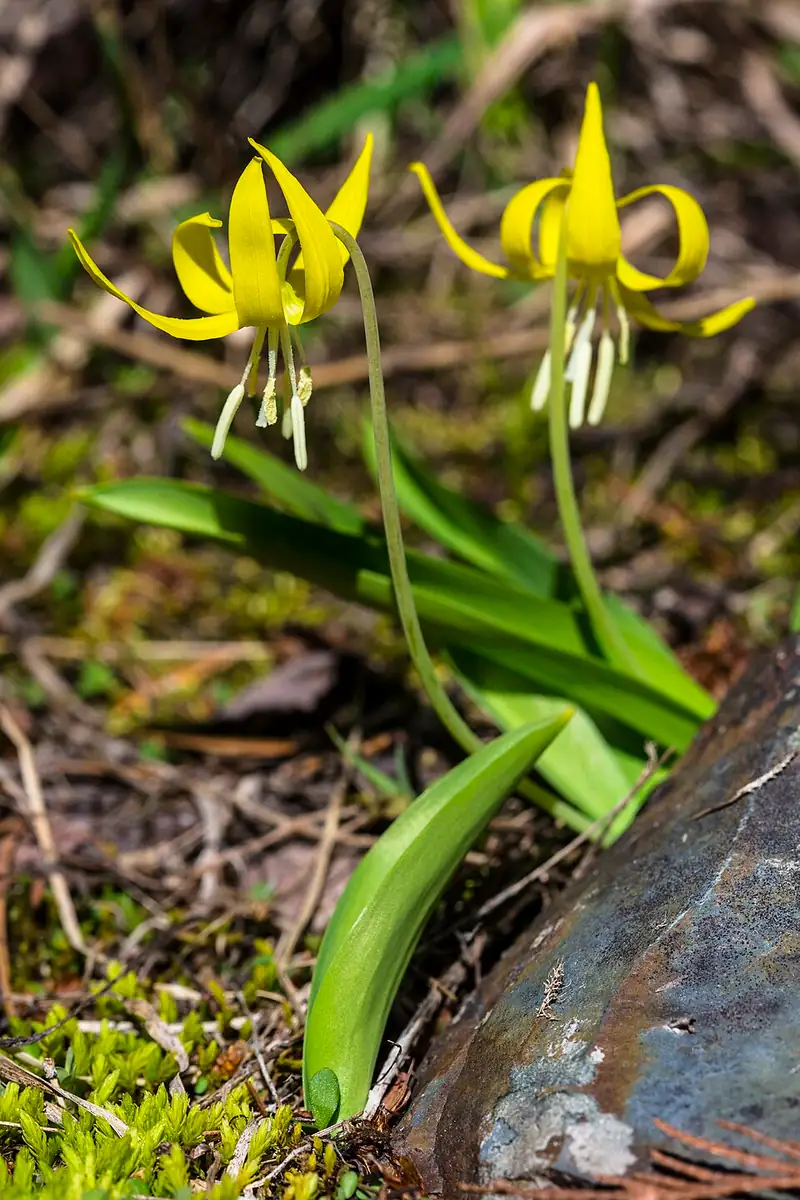 Plant
Plant Glacier lily
Erythronium grandiflorum
A nodding yellow spring flower whose bulb is such important grizzly bear food that the bear's digging can grow bigger flowers the following year.
-
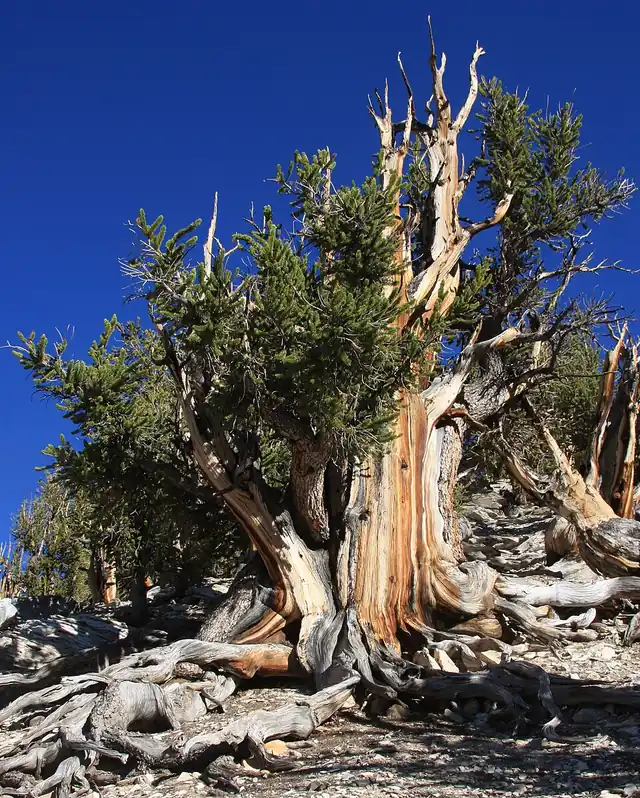 Plant
Plant Great Basin bristlecone pine
Pinus longaeva
The oldest known single living tree on Earth, a twisted, high-mountain pine that grows in the thin, cold air of Great Basin National Park.
-
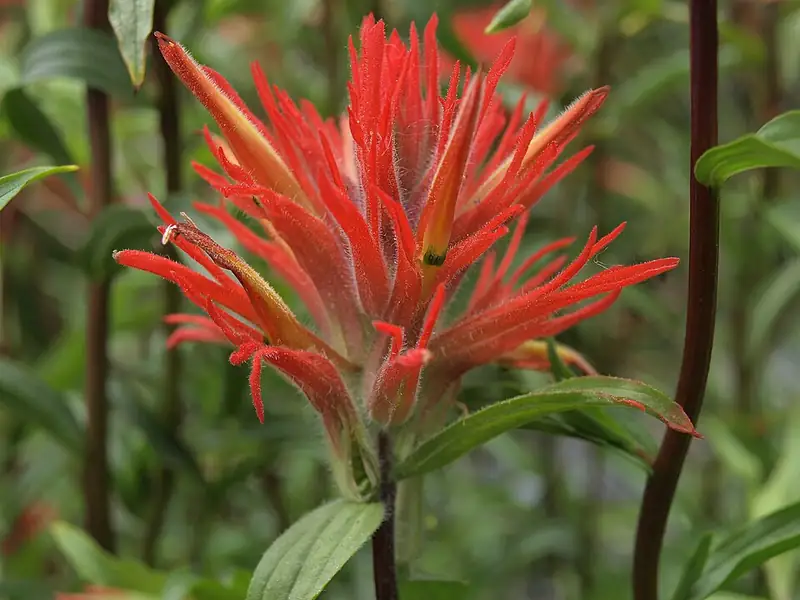 Plant
Plant Indian paintbrush
Castilleja miniata
A scarlet mountain wildflower that steals water and food from its neighbors' roots, and whose bright color comes from leaves, not petals.
-
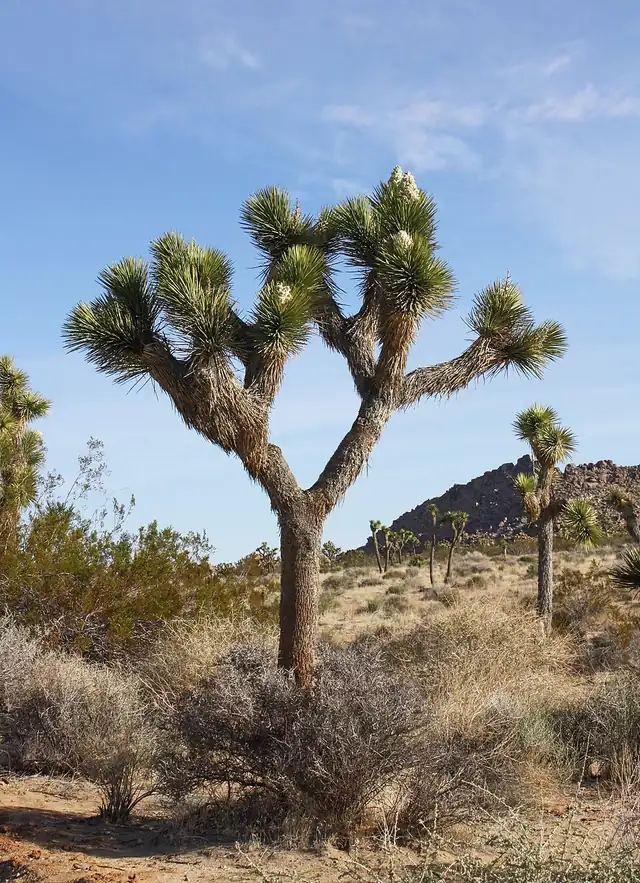 Plant
Plant Joshua tree
Yucca brevifolia
A spiky, branching yucca of the Mojave Desert, the plant that gives Joshua Tree National Park its name and its strange, arm-waving skyline.
-
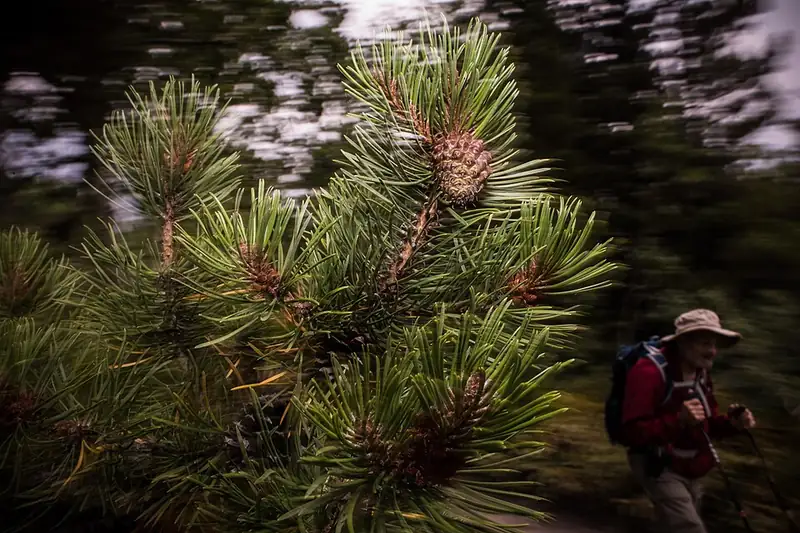 Plant
Plant Lodgepole pine
Pinus contorta var. latifolia
The thin-barked pine covering 80% of Yellowstone's forest, some of whose cones only open in the heat of a fire.
-
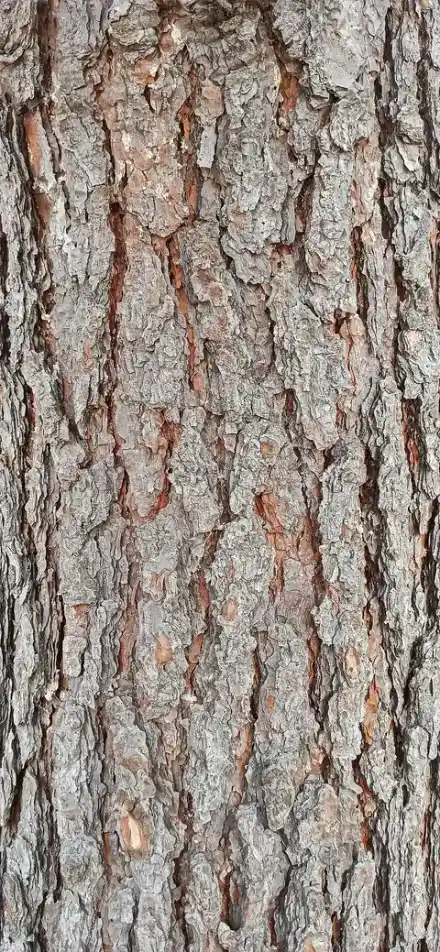 Plant
Plant Ponderosa pine
Pinus ponderosa
A tall western pine whose sun-warmed bark smells like butterscotch and vanilla, and which drops its low branches so ground fire can pass safely beneath it.
-
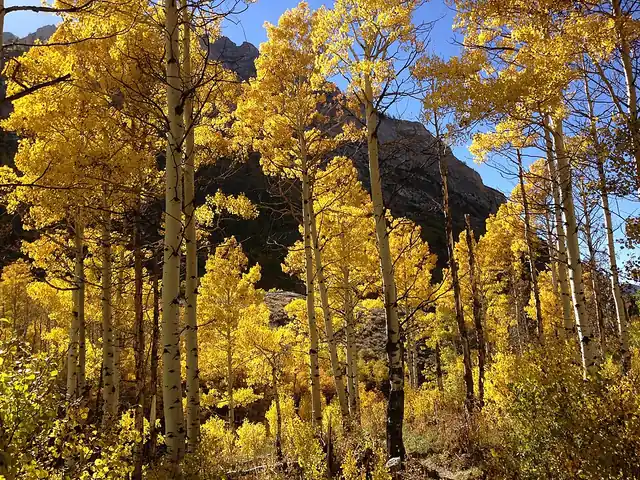 Plant
Plant Quaking aspen
Populus tremuloides
A white-barked mountain tree whose flat-stemmed leaves shiver in the lightest breeze, turning whole hillsides gold each fall.
-
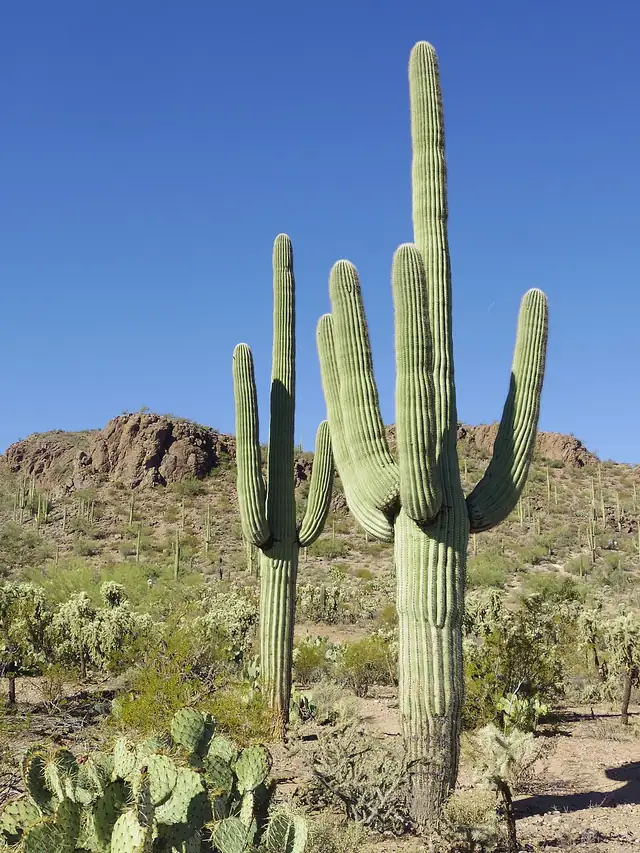 Plant
Plant Saguaro
Carnegiea gigantea
The tall, arm-raising cactus of the Sonoran Desert, found in the United States mainly around Tucson at Saguaro National Park.
-
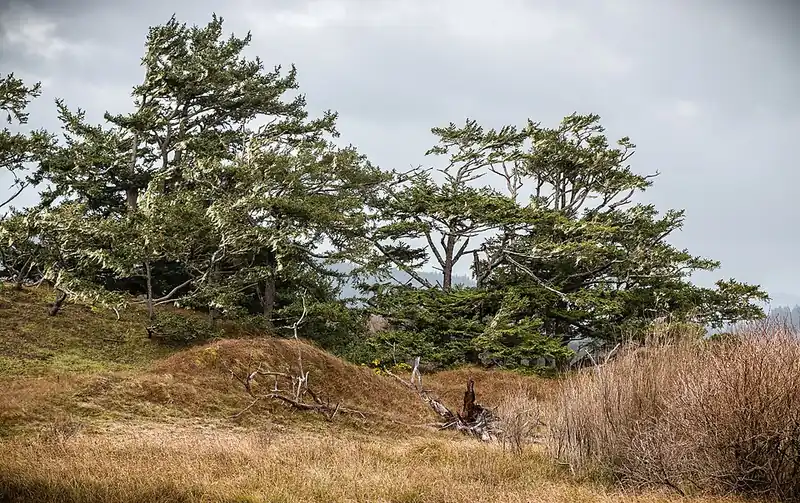 Plant
Plant Sitka spruce
Picea sitchensis
The giant of the coastal fog belt, whose light, strong wood built early airplanes, with needles sharp enough to prick your finger.
-
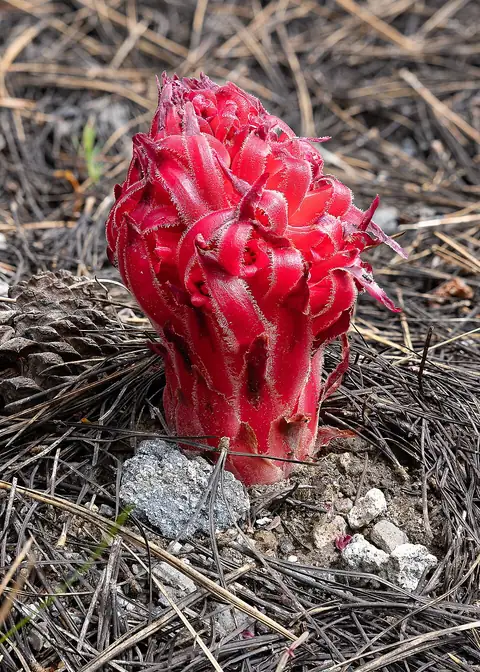 Plant
Plant Snow plant
Sarcodes sanguinea
A bright red, leafless stalk that pushes up through melting spring snow in the conifer forests of Lassen Volcanic, and makes no food of its own.
-
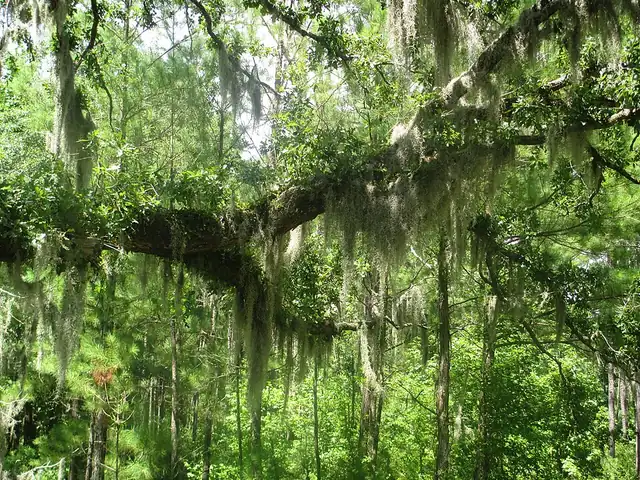 Plant
Plant Spanish moss
Tillandsia usneoides
Not a moss at all but a flowering air plant that drapes in gray strands from the branches of trees at Congaree and the Everglades.
-
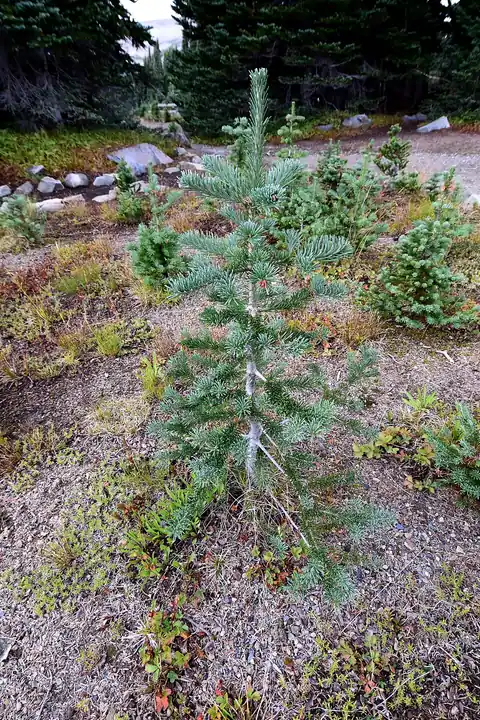 Plant
Plant Subalpine fir
Abies lasiocarpa
A narrow, spire-shaped high-mountain fir with smooth gray bark and flat, soft needles, moving in wherever fire has stayed away long enough.
-
 Plant
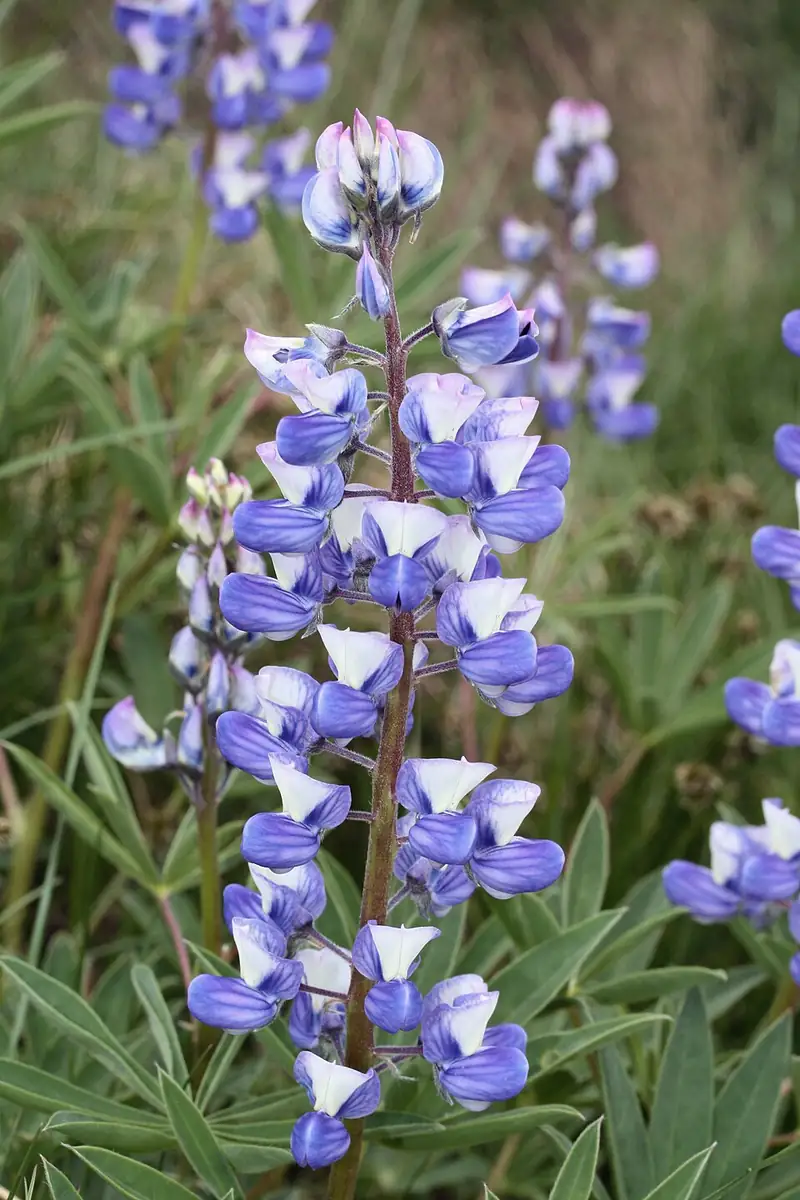
Plant Subalpine lupine
Lupinus latifolius
The blue lupine that fills Mount Rainier's Paradise meadows in summer and quietly rebuilds raw volcanic soil by pulling nitrogen from the air.
-
 Plant
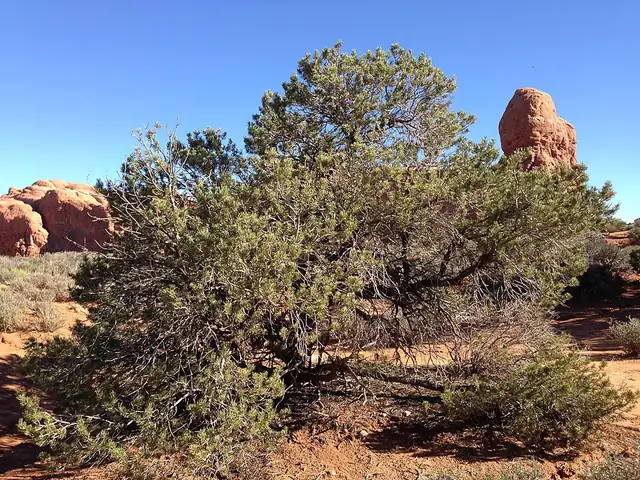
Plant Two-needle pinyon
Pinus edulis
A short, gnarled pine of the drier Southwest, growing at Mesa Verde, Black Canyon, and Great Sand Dunes, with nuts a jay plants by forgetting them.
-
 Plant
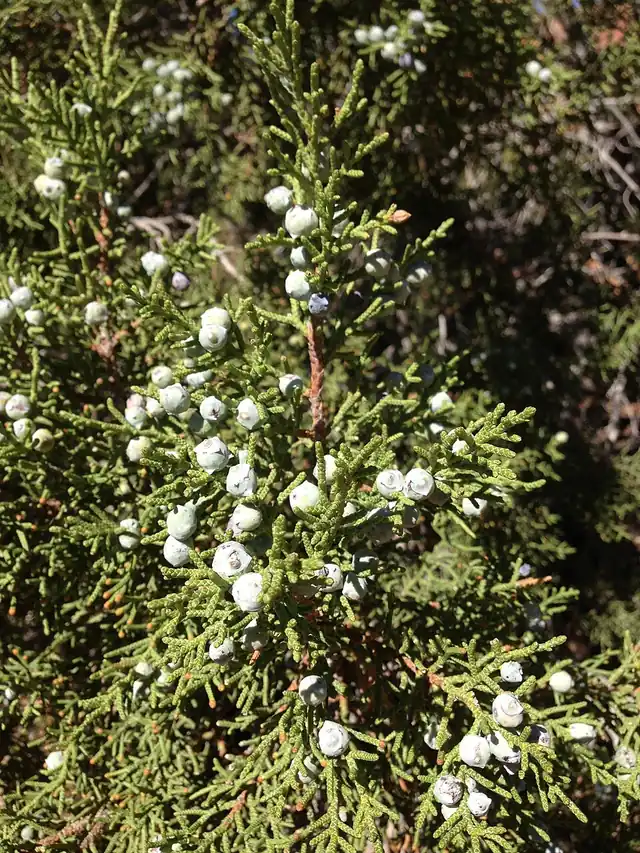
Plant Utah juniper
Juniperus osteosperma
A short, twisted evergreen of dry canyon country, rooting in cracked rock at Mesa Verde, Black Canyon, Arches, Canyonlands, and Craters of the Moon lava fields.
-
 Plant
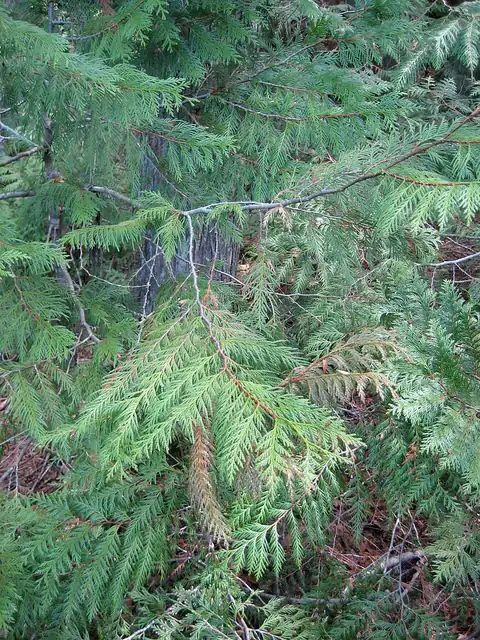
Plant Western red cedar
Thuja plicata
The great rainforest tree of the Northwest Coast, called the tree of life, used by Coast Salish and other nations for canoes, longhouses, and baskets.
-
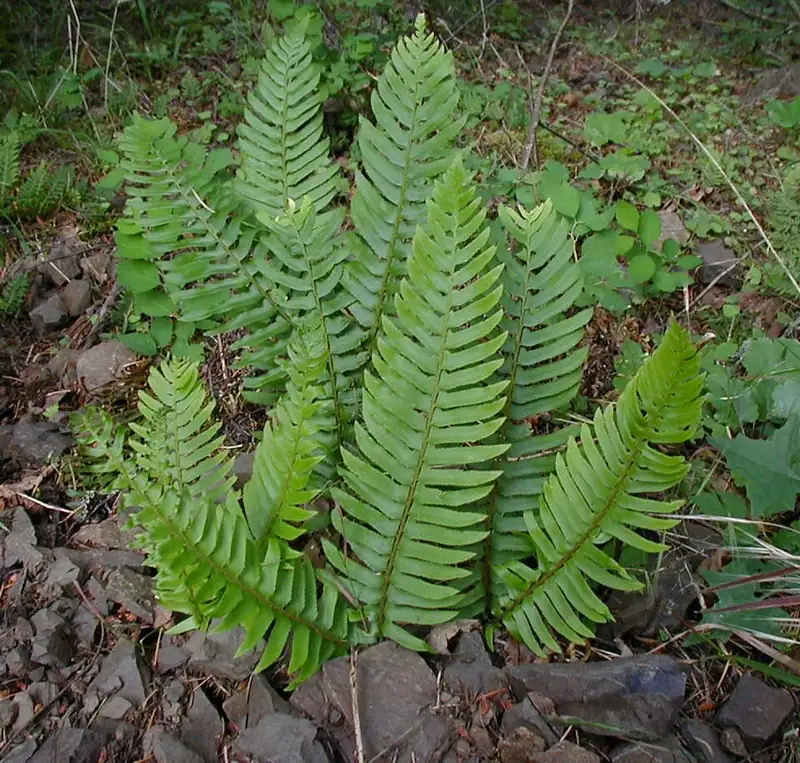 Plant
Plant Western sword fern
Polystichum munitum
The knee-high fern that carpets the Northwest rainforest floor in deep green all year, each leaflet marked with a little hilt like a tiny sword.
-
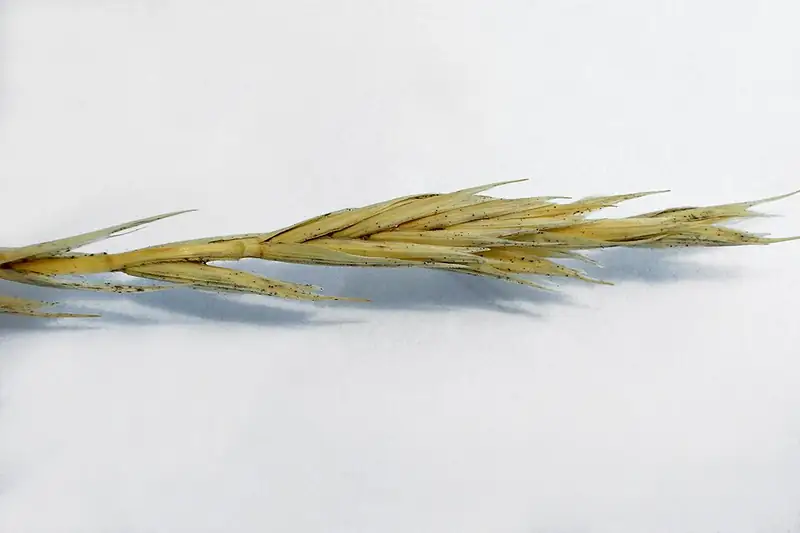 Plant
Plant Western wheatgrass
Pascopyrum smithii
A blue-green prairie grass whose underground rhizomes weave a tough sod — the official state grass of North and South Dakota.
-
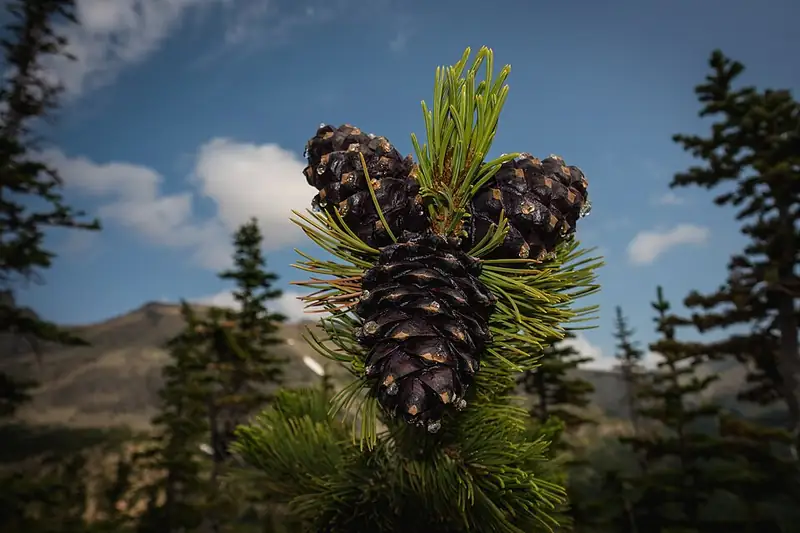 Plant
Plant Whitebark pine
Pinus albicaulis
The twisted pine at Glacier's treeline that feeds grizzlies and Clark's nutcrackers, holds the snowpack in place, and is dying faster than it grows.
-
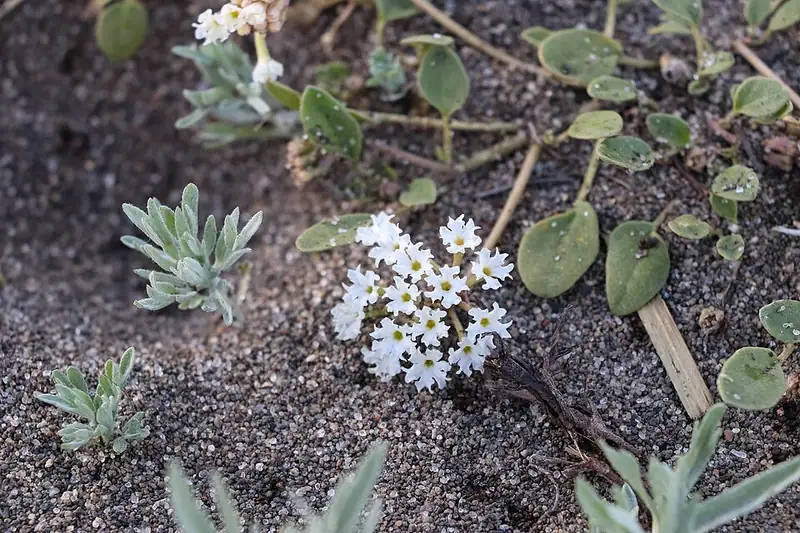 Plant
Plant Yellowstone sand verbena
Abronia ammophila
A white-flowered relative of desert sand verbenas found nowhere on Earth except a few beaches on Yellowstone Lake.
Fungi
Fungi
-
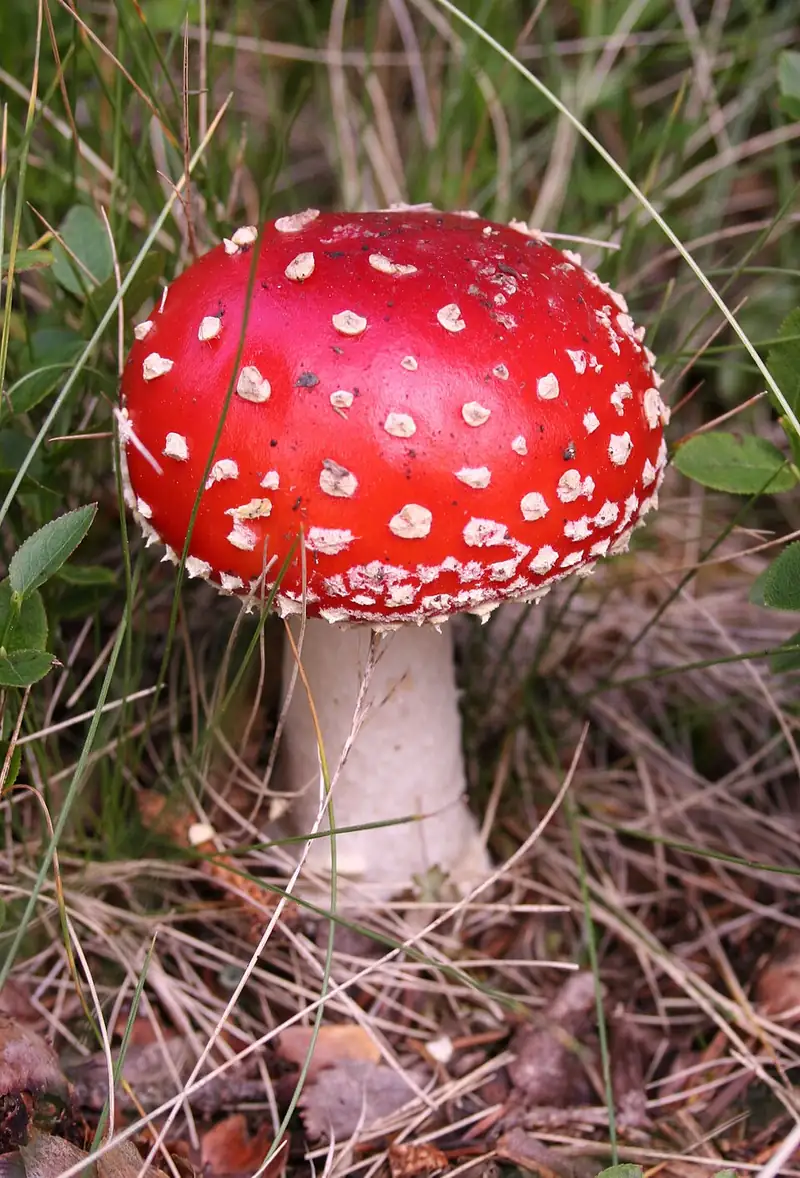 Fungus
 Fly agaric
Amanita muscaria
The storybook red mushroom with white spots, found in northern conifer and birch woods. It is joined to tree roots and poisonous to eat.
-
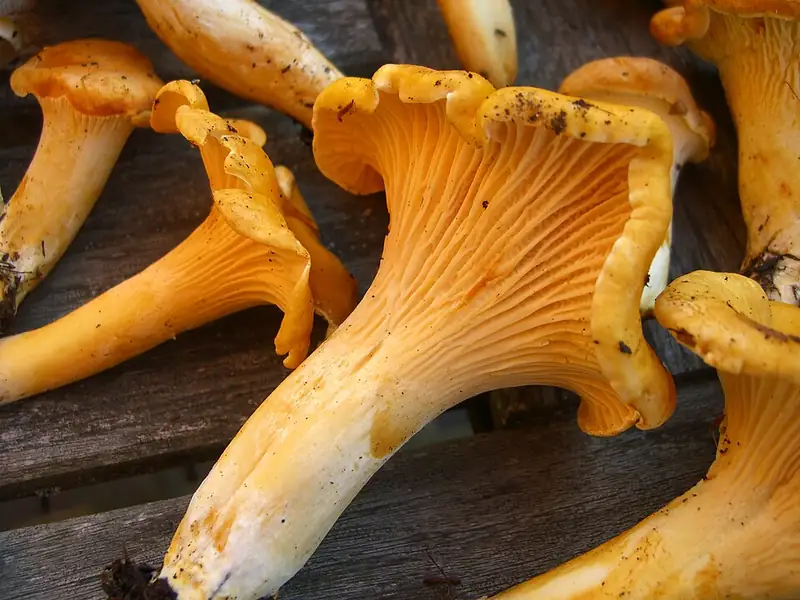 Fungus
 Golden chanterelle
Cantharellus formosus
A trumpet-shaped golden mushroom of Pacific Northwest conifer forests that lives joined to tree roots and trades food with the trees.
-
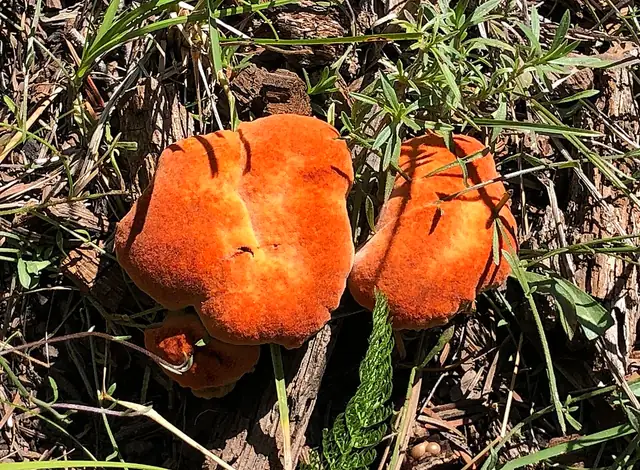 Fungus
 Lobster mushroom
Hypomyces lactifluorum
Not really a mushroom at all, but a fungus that attacks another mushroom, turning it lobster-orange, firm, and good to eat.
-
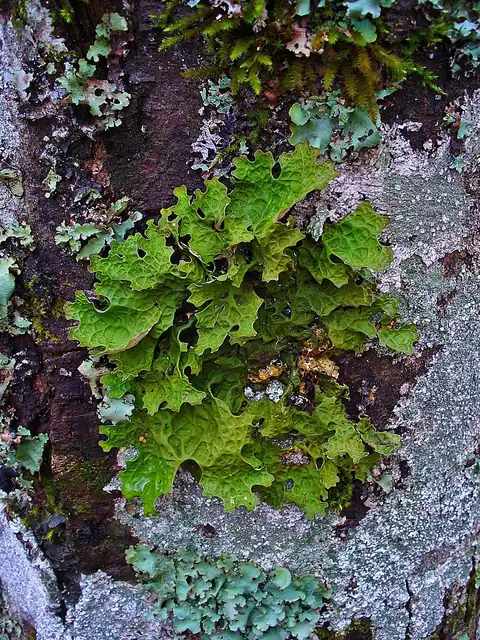 Fungus
 Lungwort lichen
Lobaria pulmonaria
A green, lettuce-like patch on old-growth trees that is three living things in one, and grows only where the air is clean.
-
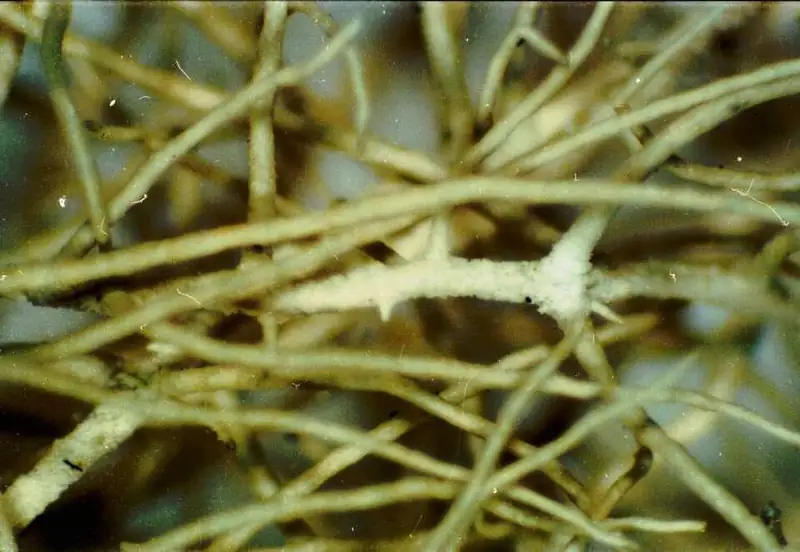 Fungus
 Methuselah's beard lichen
Usnea longissima
The longest lichen in the world, hanging in pale green beards from old rainforest branches, and a winter food for deer and flying squirrels.
-
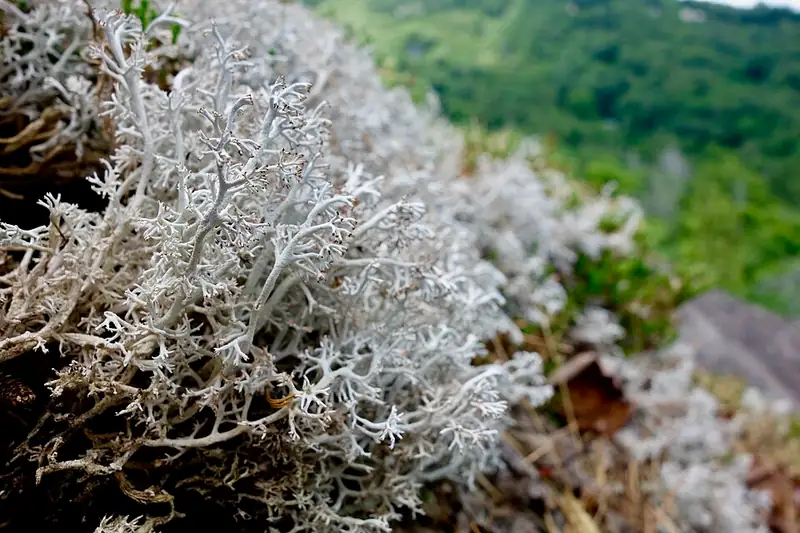 Fungus
 Reindeer lichen
Cladonia rangiferina
A pale, spongy, branching lichen that carpets northern ground. It is a fungus and an alga living as one body, and it is winter food for caribou.
Nothing matches that search.