Pandora moth
A large gray forest moth of ponderosa country whose caterpillars boom every few decades and once fed the Klamath and Paiute people who harvested them.
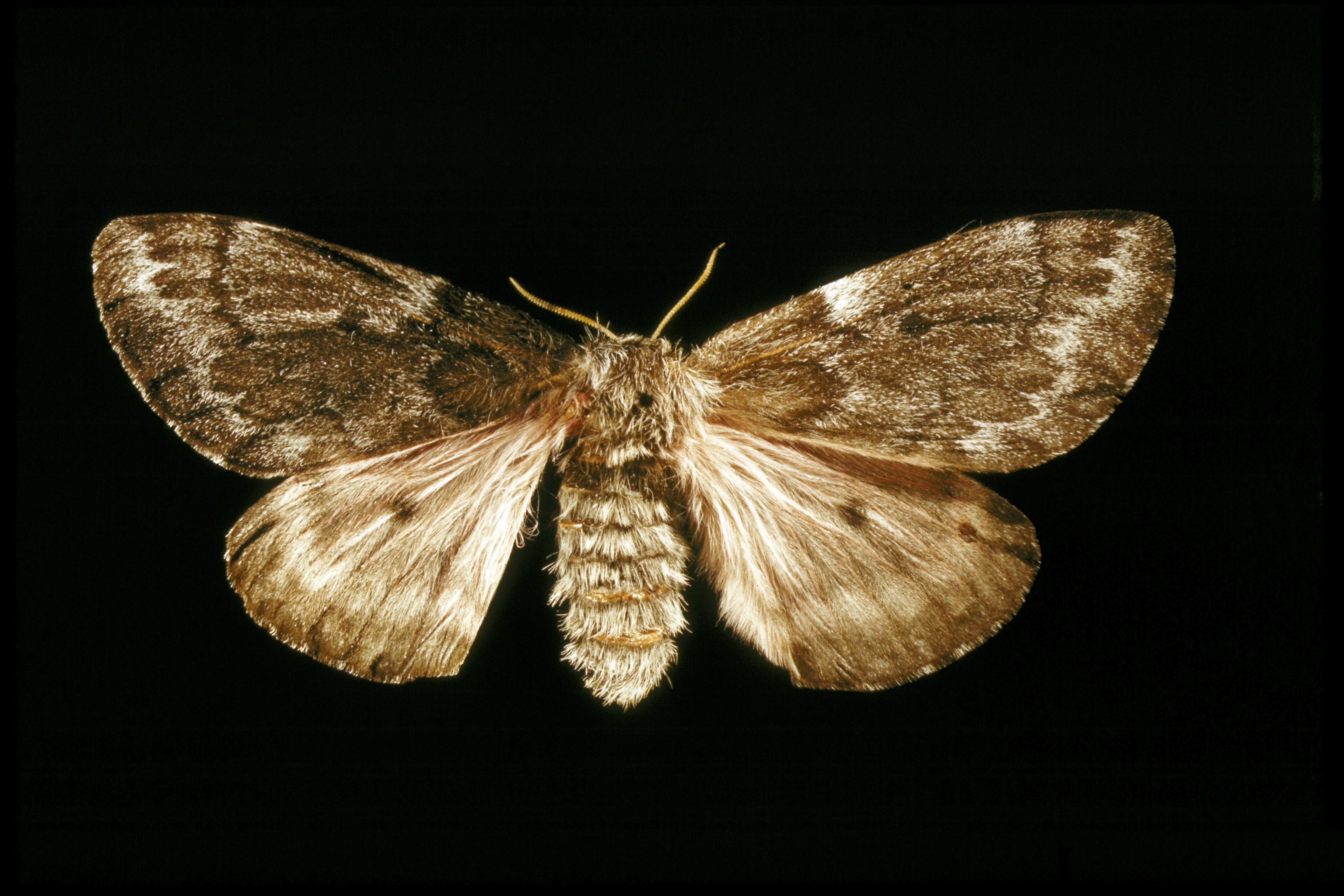

Pandora moth at a glance
Coloradia pandora Coloradia pandora is kol-oh-RAY-dee-uh pan-DOR-uh
- Type
- Invertebrate · moth
- Diet
- Herbivore
- Size
- Wings spread about as wide as a playing card is tall, roughly 3 inches across.
- Lifespan
- The caterpillar takes about two years to grow. The adult moth lives only about a week and never eats.
- Conservation
- Not formally assessed by IUCN; native and widespread in western pine forests
Eats ponderosa and lodgepole pine needles (as a caterpillar)
The caterpillar eats pine needles, mainly ponderosa and lodgepole, high in the trees. The adult moth has no working mouthparts and never feeds at all, living only long enough to mate and lay eggs.
Should you worry?
The moth is harmless, but the caterpillar's spines can sting bare skin. It prickles like a nettle, so look rather than grab; it is not dangerous.
Some summers the ponderosa forest around Crater Lake is quiet, and some summers it is crawling. The pandora moth runs on a slow clock. A stand of pines can go twenty or thirty years with hardly a moth in sight, and then the numbers climb and climb until the caterpillars are everywhere at once, thick on the trunks, chewing the needles high in the crowns, in an outbreak that can cover whole mountainsides before it fades again. A person could visit this forest their whole life and see it happen only two or three times.
The adult that flies out of it is built for one thing and denied everything else. A gray moth the width of a playing card, it comes into the world with no working mouth at all. It cannot eat. It lives about a week on the fat it stored as a caterpillar, just long enough to find a mate and lay the next batch of eggs, and then it is done. All the eating, all the growing, happened earlier, over nearly two years spent as a caterpillar in the pines.
Those caterpillars were once a harvest. For the Klamath, the Paiute, and other peoples of this pine country, an outbreak meant a season of plenty. They gathered the caterpillars, called piagi, by the trench and the basketful, roasted and dried them, and stored a rich food that arrived on the same long cycle as the moths. The boom that fills the forest every few decades was, and to some families still is, something to wait for.
Did you know?
- Its numbers boom and crash on a long cycle, so a forest can go 20 to 30 years quietly and then fill with caterpillars all at once in a giant outbreak.
- The adult moth has no working mouth and cannot eat. It survives on fat stored from its caterpillar days, just long enough to find a mate and lay eggs.
- The Klamath, Paiute, and other Indigenous peoples harvested the caterpillars, called piagi, as a rich food, collecting them in trenches around the trees and roasting or drying them to store.
Common questions
Why do pandora moths appear all at once some years?
Their numbers rise and fall on a long cycle. A pine forest can stay quiet for 20 to 30 years and then have a huge outbreak where caterpillars are everywhere, before the numbers drop back down again.
Do pandora moth caterpillars kill the pine trees?
Usually not. They eat a lot of needles during an outbreak and can slow a tree's growth, but healthy pines almost always survive and grow new needles once the outbreak passes.
Did people really eat the caterpillars?
Yes. The Klamath, Paiute, and other peoples gathered pandora caterpillars, called piagi, as a valued food, roasting or drying them. It is a tradition that goes back generations in the pine country.
What do I do if a pandora moth caterpillar stings?
Brush the caterpillar off with a stick, not bare hands. Press tape on the skin, sticky side down, and pull it up to lift out the spines, then wash with soap and water. Call Poison Control at 1-800-222-1222 for more help.