Gray wolf
The biggest wild dog in North America, a pack hunter you might hear howling at dawn in Yellowstone, Denali, or Isle Royale.
We saw it Our family spotted this one at Yellowstone National Park in August 2026.
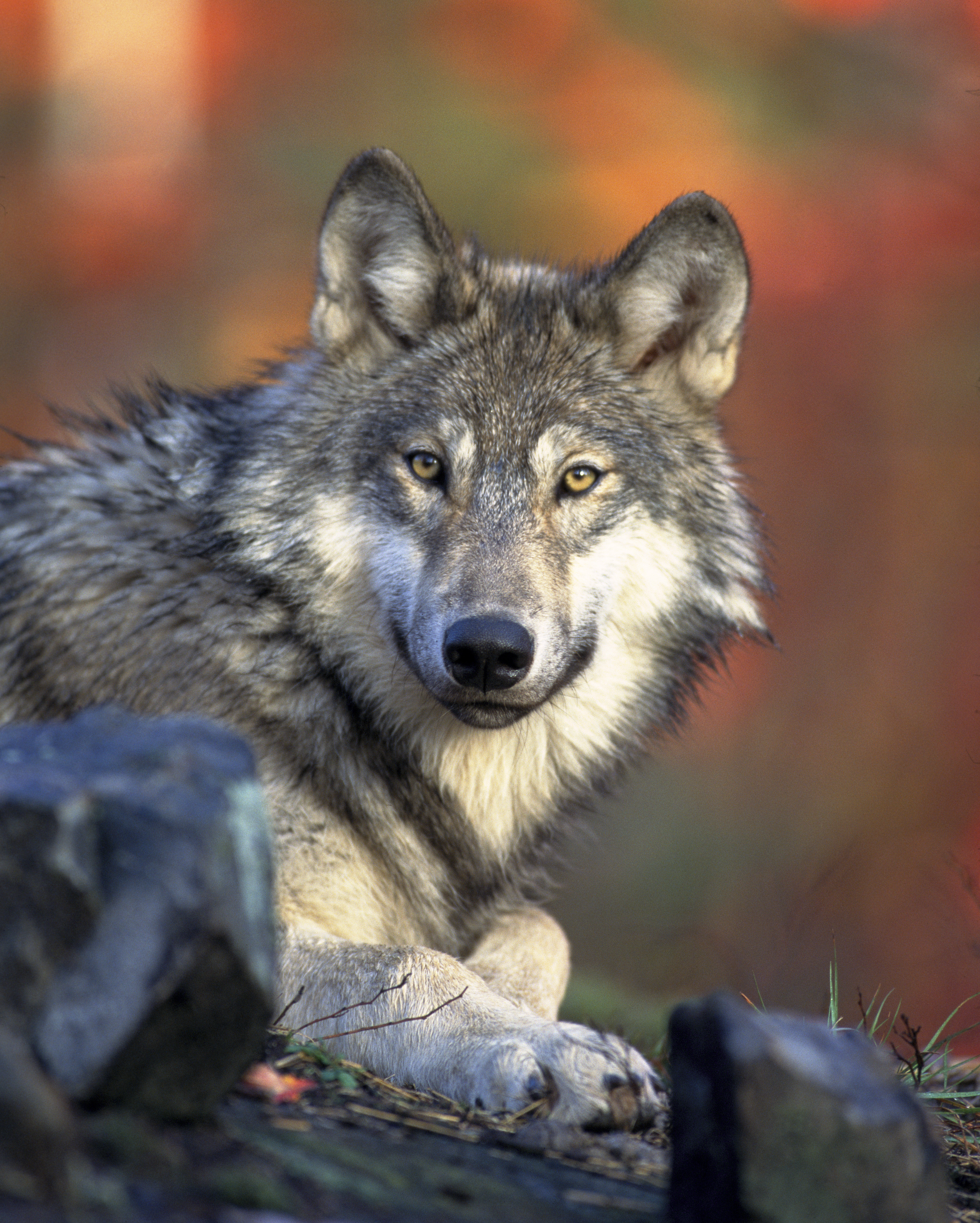
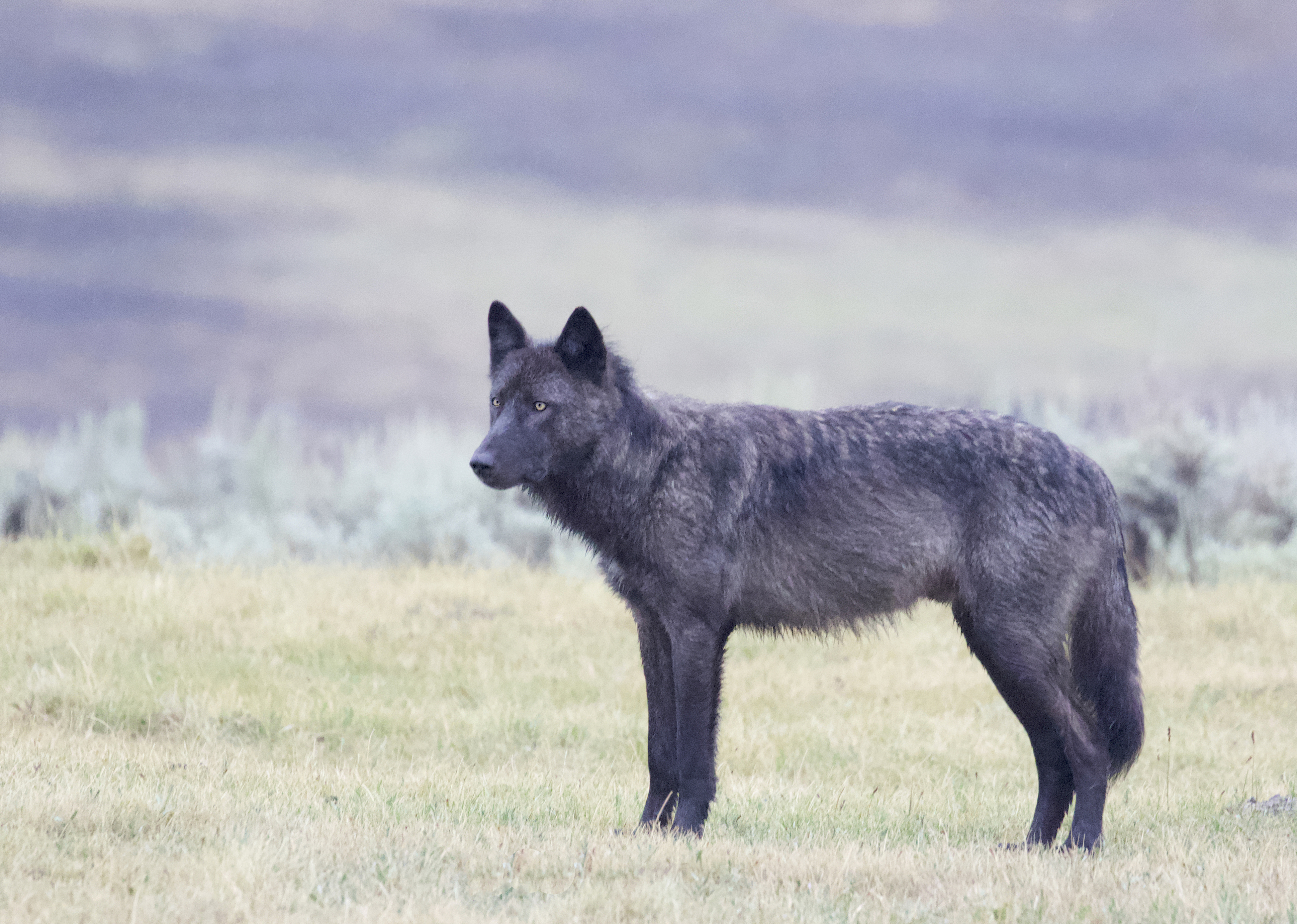
Gray wolf at a glance
Canis lupus Gray wolf; Canis lupus is KAY-niss LOO-pus
- Type
- Mammal · canine
- Diet
- Carnivore
- Size
- About the size of a big German shepherd dog, but with longer legs. A male weighs about as much as a fourth-grader (100 to 130 pounds), and stands knee-to-hip high on a grown-up at the shoulder (about 26 to 36 inches).
- Lifespan
- Around 4 to 5 years in the wild in Yellowstone. The oldest wolf the park ever recorded lived 12.5 years.
- Conservation
- Least concern
Eats elk, deer, moose, caribou, beaver, snowshoe hare
Wolves hunt in family packs and mostly chase big animals like elk and moose, working as a team to tire one out. In Yellowstone about 90% of what they eat in winter is elk, and they often go for the old, young, or sick ones that are easier to catch.
Should you worry?
Wild wolves almost never bother people. They hear you and leave long before you see them, so a wolf sighting is a lucky thing to watch from far away. Never feed one or leave food out, keep dogs leashed, and in Yellowstone stay at least 100 yards back (about the length of a football field).
You are far more likely to hear a wolf than to see one. At dawn in the Lamar Valley the howl comes across the sagebrush, one long note, then another answering from a ridge away, and by the time you have found the spot with your eyes, the wolf has usually moved on. That is the normal way of it: a wild wolf hears you first and leaves.
A pack is a family. There is a mother and a father and their pups from the last few years, and they live and travel and hunt together, which is how a wolf brings down an animal many times its own size. In Yellowstone winter, almost everything they catch is elk, and usually the old or the sick one, the one the pack can tire out.
Wolves were gone from Yellowstone for about seventy years before the park brought them back in 1995. On Isle Royale, out in Lake Superior, the first wolves arrived on their own, crossing a bridge of winter ice in 1948, and scientists have watched them chase the island’s moose ever since, more than sixty years of counting, one of the longest animal studies anywhere. The counting is still going on.
Did you know?
- Wolves were gone from Yellowstone for about 70 years. In 1995 the park brought them back, and today between about 83 and 123 wolves live there.
- A wolf pack is really a family: a mother, a father, and their pups from a few years. Yellowstone packs average almost 12 wolves, and the biggest one ever, the Druid Peak pack, had 37.
- On Isle Royale the wolves and moose have been studied together for more than 60 years, one of the longest wildlife studies anywhere. The first wolves walked to the island across a bridge of winter ice in 1948.
Common questions
Are wolves dangerous to kids?
Almost never. Wild wolves are shy and stay away from people. The safe rule is easy: watch from far away, never feed a wolf, and keep your dog on a leash.
Why do wolves howl?
Howling is how a pack keeps in touch across the forest and tells other packs, this is our land. On a quiet morning you can hear it a long way off.
What do wolves eat?
Mostly big animals like elk, deer, and moose, plus smaller ones like beaver and hares. In Yellowstone almost all of their winter food is elk.
How many wolves are in Yellowstone?
Since 2009 the count has stayed between about 83 and 123 wolves, living in several packs.
What eats a gray wolf?
Few animals prey on gray wolves. Rival wolf packs and coyotes attack wolves that are alone or young, and kill pups if they find them.