California condor
The biggest flying bird in North America, a bare-headed scavenger you can watch ride the wind over the cliffs at Grand Canyon and Zion.

California condor at a glance
Gymnogyps californianus KON-der; Gymnogyps californianus is jim-NOJ-ips kal-ih-forn-ee-AY-nus
- Type
- Bird · vulture
- Diet
- Carnivore
- Size
- From one wingtip to the other, a condor stretches about 9.5 feet, wider than a doorway is tall and almost as long as a small car. It weighs about 20 pounds, close to a medium-sized dog.
- Lifespan
- Condors can live a long time for a bird, up to about 60 years.
- Conservation
- Endangered
Eats dead deer, dead cattle, dead sea lions, other carrion
Condors are scavengers. They soar for hours looking for animals that are already dead, then land to eat. They never hunt live prey, and their stomach acid is strong enough to kill most germs in old meat.
Should you worry?
A condor will not hurt you. It eats things that are already dead and has no reason to bother a person. The rule goes the other way: condors are protected by law, so give them room, never feed them, and never toss trash or food scraps where one might swallow them.
The California condor is the biggest flying bird on the continent. Wingtip to wingtip it stretches about nine and a half feet, wider than a doorway is tall, and it weighs close to twenty pounds, and when it finds a rising column of warm air it can hang up there for hours without a single flap. From the ground it is a black cross against the sky, riding the wind along the cliffs.
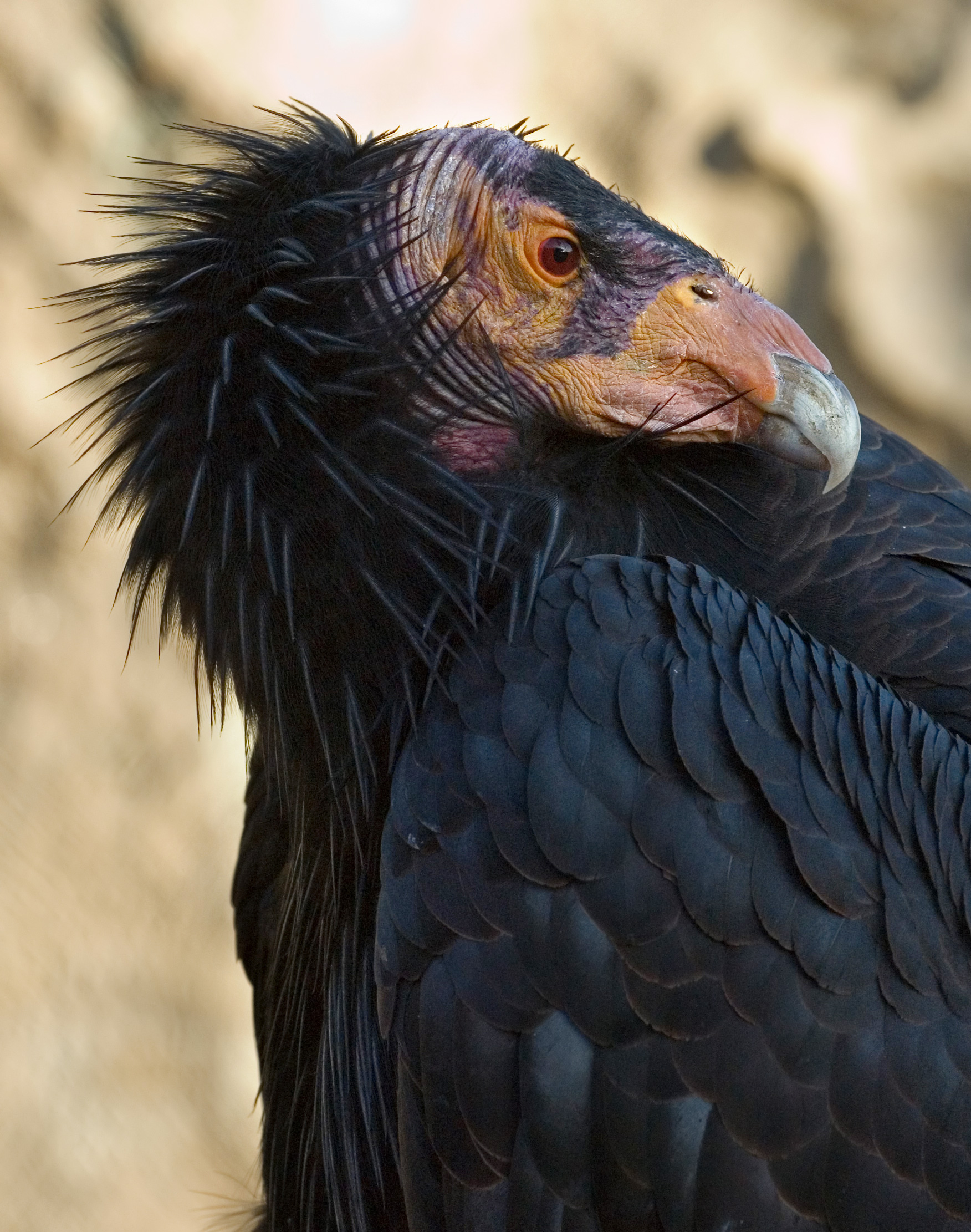
Up close it is stranger. The head is bare, orange and wrinkled, with almost no feathers on it, because a condor eats by reaching deep inside animals that are already dead, and a bald head stays cleaner than a feathered one. It hunts nothing. It soars and it watches and it waits for a meal that has stopped moving, and its stomach acid is strong enough to handle old meat that would make most animals sick.
In 1982 there were 22 California condors left in the whole world. Biologists made the hard call to catch every last wild one, raise their chicks by hand, and let them go again. Today there are around 500, about half of them flying free, and nearly every wild bird carries a big numbered tag on its wing so scientists can tell one from another across a canyon. If you find a condor over the rim, look for the number.
Did you know?
- In 1982 only 22 California condors were left alive on Earth. Biologists caught every wild one to keep the species going, and today there are around 500, with about half flying free again.
- Almost every wild condor wears a big numbered tag on its wing so scientists can tell the birds apart from far away. If you spot one, you can often read its number.
- A condor's head has almost no feathers. A bald head stays cleaner when the bird reaches deep inside a dead animal to eat.
Common questions
Are California condors dangerous to kids?
No. They eat animals that are already dead and stay away from people. Just give them room and never feed them.
How big is a California condor?
Its wings stretch about 9.5 feet across, wider than most doorways are tall. It is the biggest flying bird in North America.
What do California condors eat?
Only dead animals, like deer, cattle, and sea lions. They are scavengers, so they clean up meat instead of hunting.
Why do condors have numbers on their wings?
Each wild condor wears a numbered wing tag so scientists can follow that exact bird and keep the whole group safe.