Mammals of the National Parks
Meet the 45 mammals we've written up, like the Abert's squirrel, and the national parks where you'll find them.
-
 Mammal
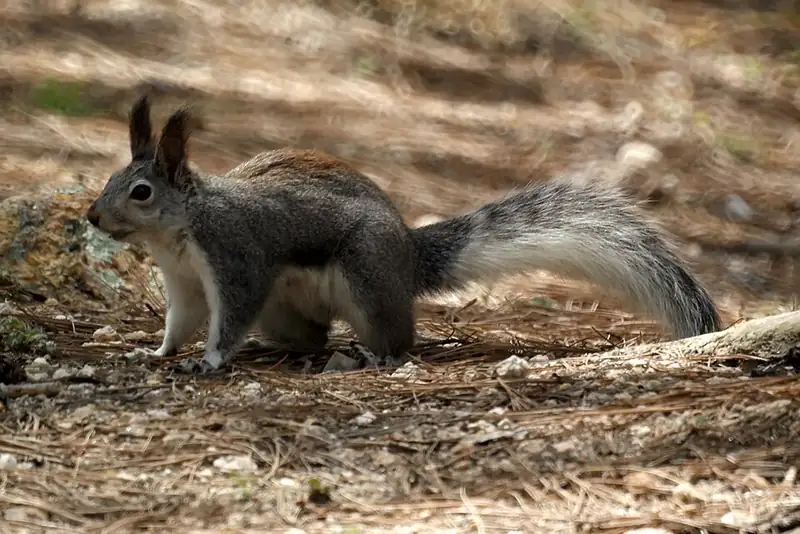
 Abert's squirrel
Sciurus aberti
A tasseled-eared squirrel of ponderosa pine forests at Mesa Verde, Rocky Mountain, and Great Sand Dunes, nicknamed the scrabbit.
-
 Mammal
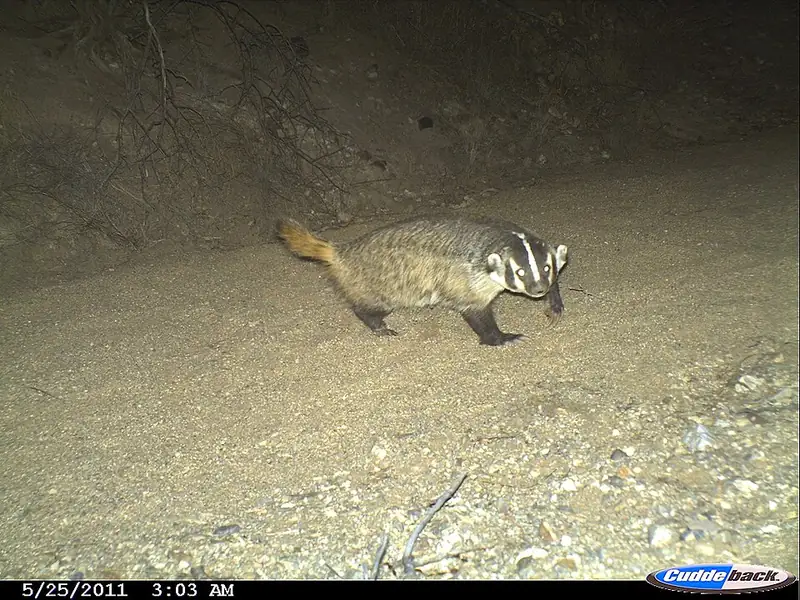
 American badger
Taxidea taxus
A short, wide-bodied digger with a white-striped face, common on the grasslands of Yellowstone and Badlands, that can vanish underground in minutes.
-
 Mammal
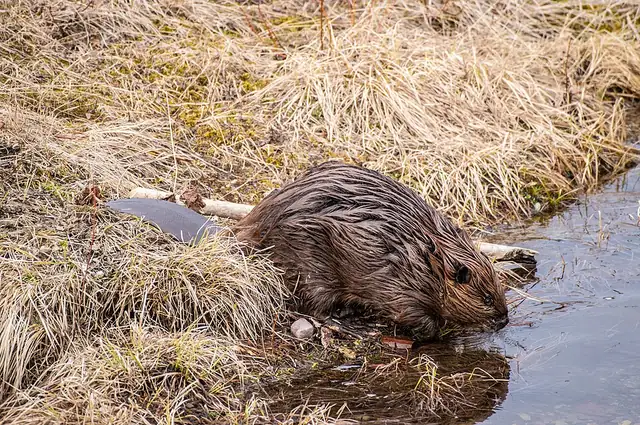
 American beaver
Castor canadensis
North America's largest rodent, a keystone species whose dams reshape whole streams at Yellowstone, Glacier, and ten other parks along the route.
-
 Mammal
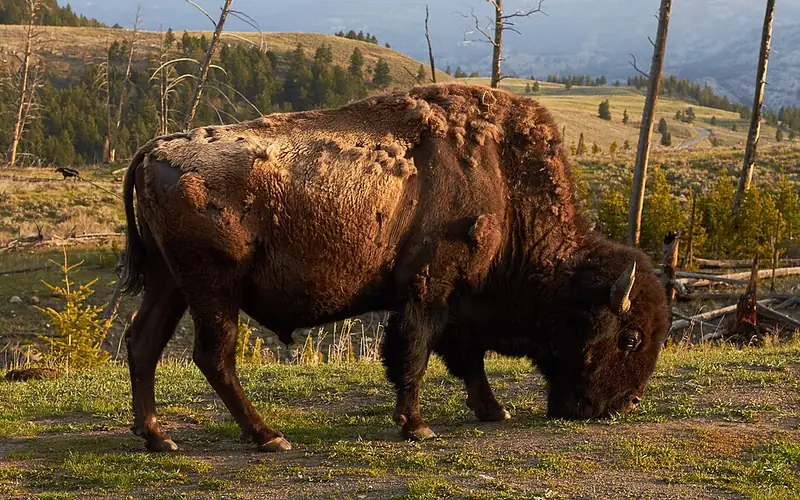
 American bison
Bison bison
The biggest land animal in North America, a shaggy grazer of the plains you can watch cross the road in Yellowstone.
-
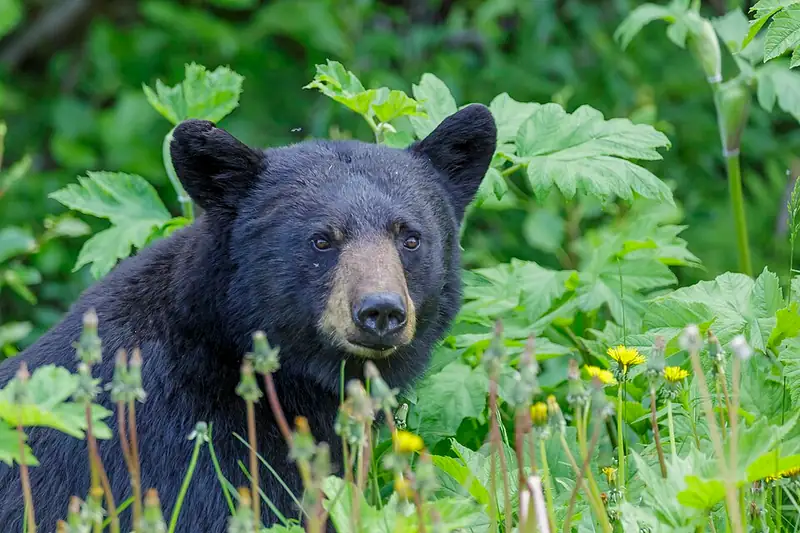 Mammal
 American black bear
Ursus americanus
The bear you're most likely to meet east of the Rockies, a strong tree-climber that eats mostly plants and comes in black, brown, or cinnamon.
-
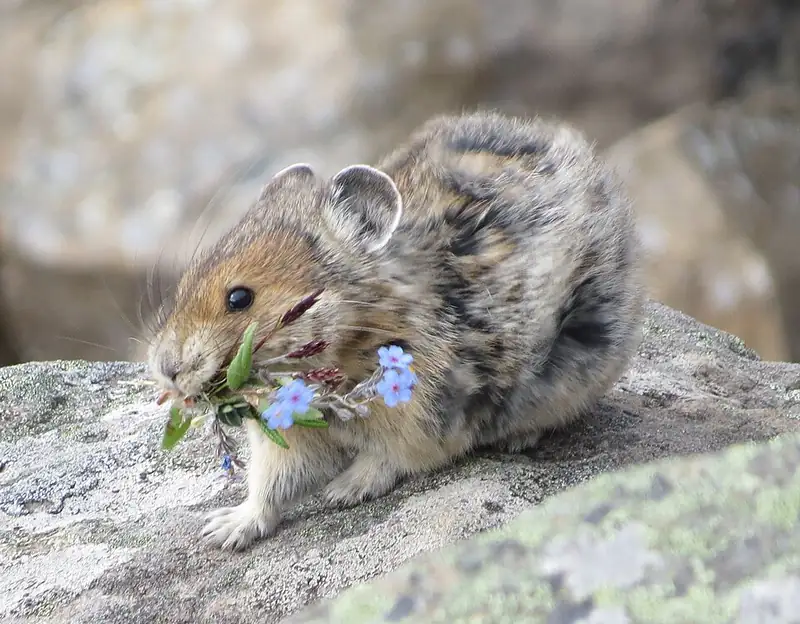 Mammal
 American pika
Ochotona princeps
A small round cousin of the rabbit that lives in mountain rock piles at Rocky Mountain, Mount Rainier, and North Cascades, and never sleeps through winter.
-
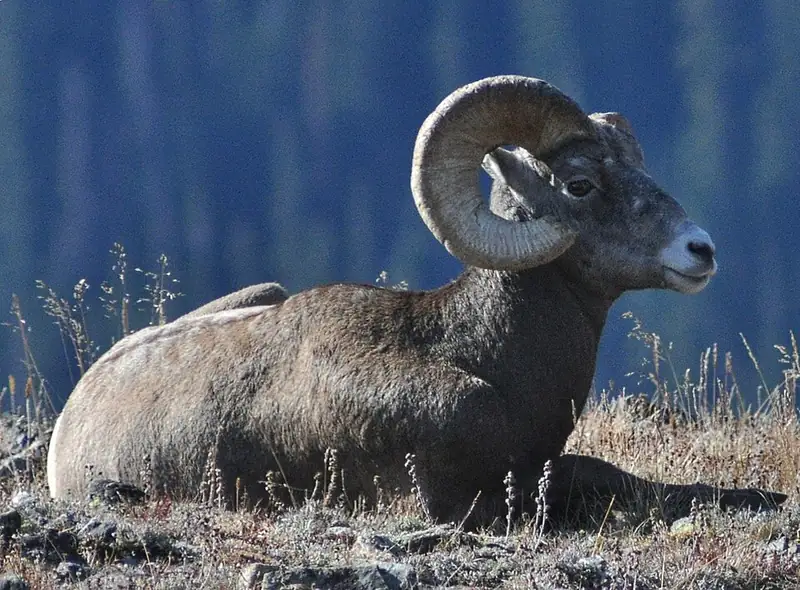 Mammal
 Bighorn sheep
Ovis canadensis
A wild sheep of cliffs and canyons, where rams carry heavy curled horns and both sexes cross steep rock other animals can't.
-
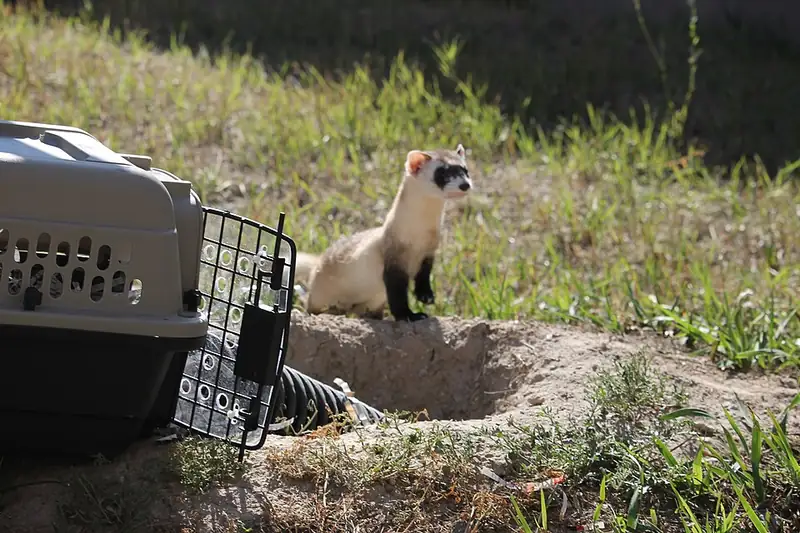 Mammal
 Black-footed ferret
Mustela nigripes
A masked, prairie-dog-hunting weasel declared extinct in 1979, brought back from a single Wyoming colony and now living wild again at Badlands and Wind Cave.
-
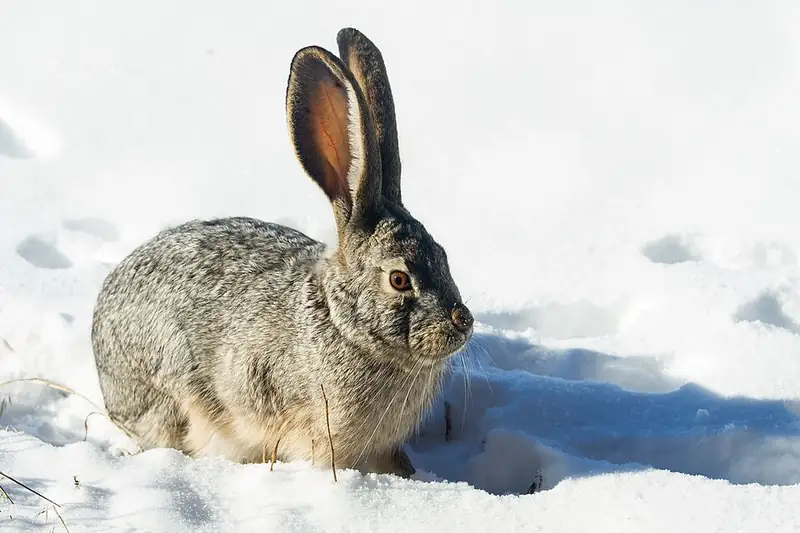 Mammal
 Black-tailed jackrabbit
Lepus californicus
A big-eared hare of Joshua Tree, Lava Beds, Arches, and Canyonlands that dumps body heat through those ears and outruns coyotes in zigzags at 40 miles an hour.
-
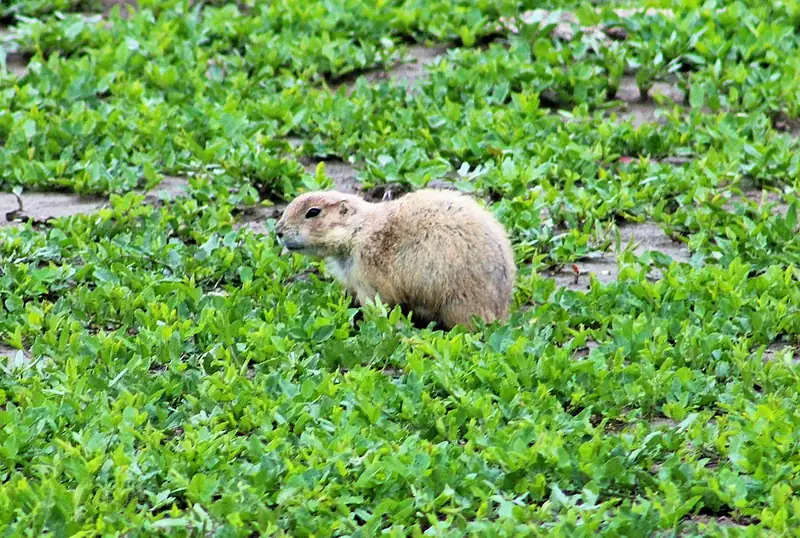 Mammal
 Black-tailed prairie dog
Cynomys ludovicianus
A burrowing ground squirrel, not a dog. Its towns along Theodore Roosevelt's scenic loop mow the grass short and pull bison and pronghorn in to graze.
-
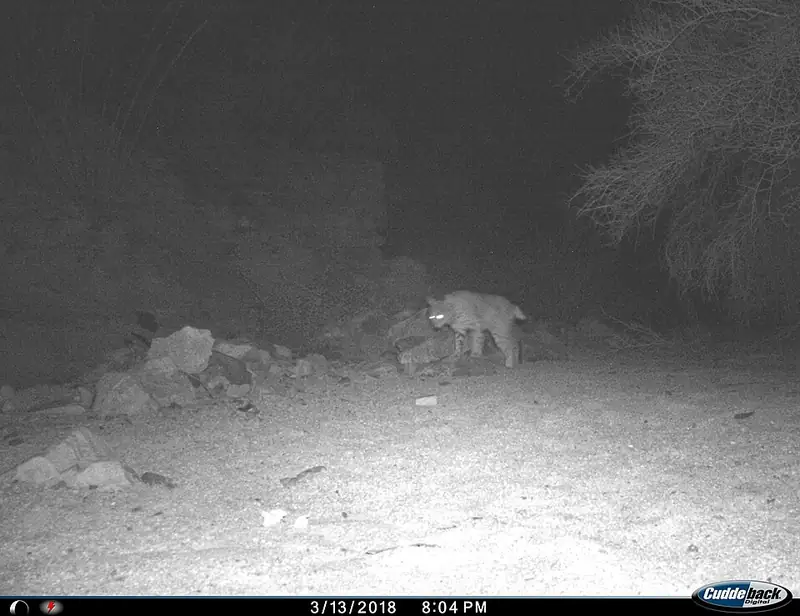 Mammal
 Bobcat
Lynx rufus
A small wildcat about twice the size of a house cat, common but rarely seen, that can bring down prey many times its own weight.
-
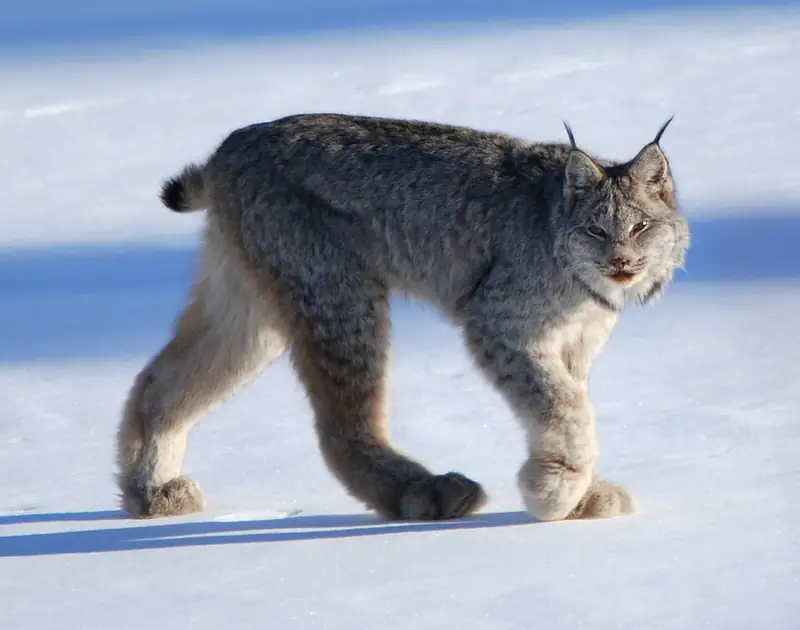 Mammal
 Canada lynx
Lynx canadensis
A rare, snow-adapted wild cat with tufted ears and huge furry paws, living in high conifer forest at Glacier, Yellowstone, and Grand Teton.
-
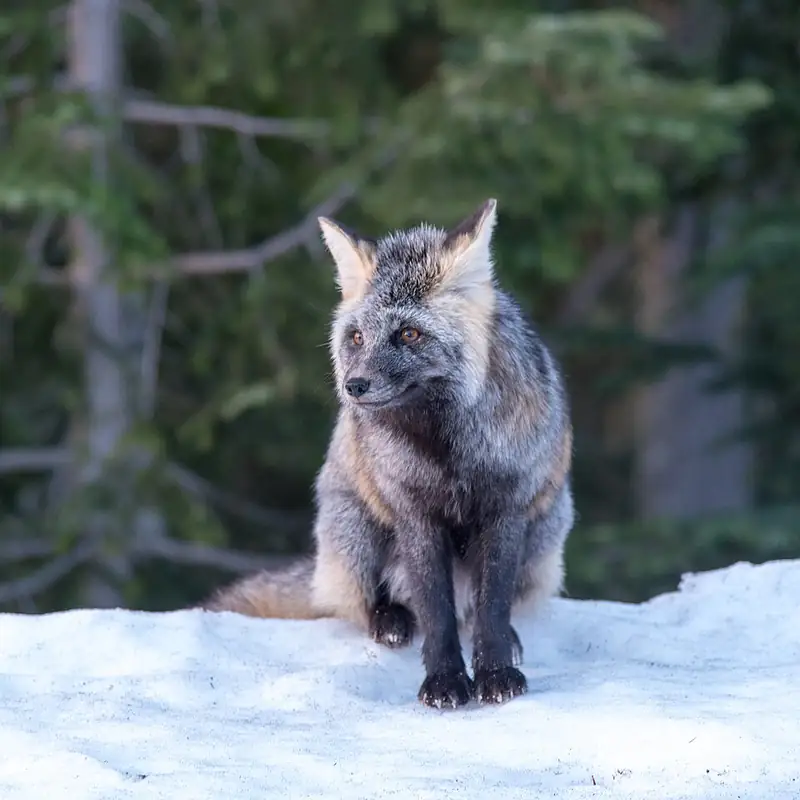 Mammal
 Cascade red fox
Vulpes vulpes cascadensis
A rare, high-elevation red fox subspecies found almost nowhere but Mount Rainier's subalpine meadows, in red, black, or mixed cross-colored fur.
-
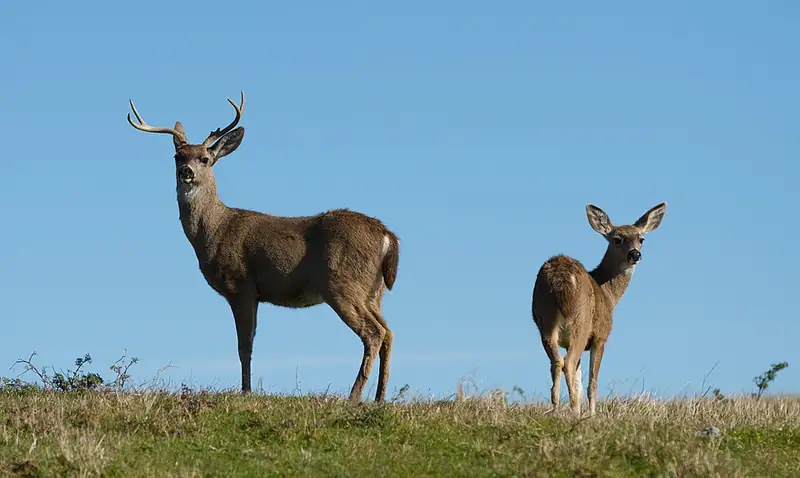 Mammal
 Columbian black-tailed deer
Odocoileus hemionus columbianus
The coastal rainforest subspecies of mule deer, common on foggy meadow edges from Olympic to Redwood, easy to tell apart by its all-black tail.
-
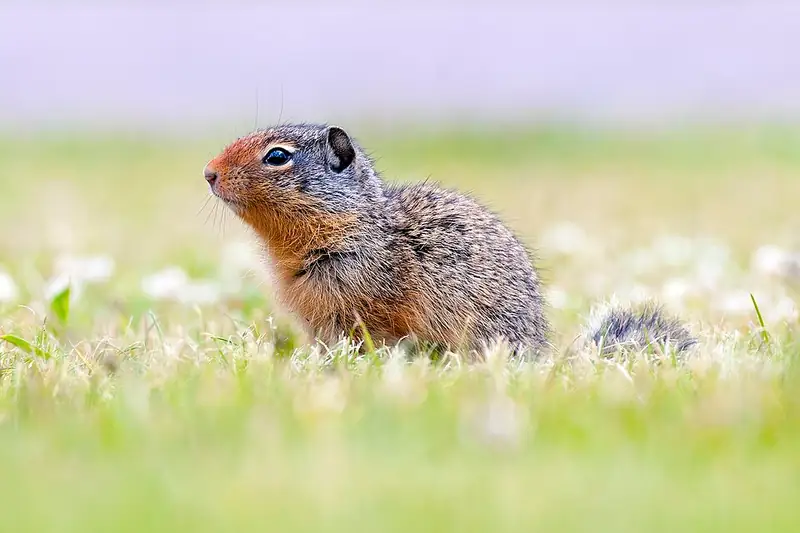 Mammal
 Columbian ground squirrel
Urocitellus columbianus
The squeaking, upright little rodent standing outside its burrow in every open meadow at Glacier, and the animal you are most certain to see there.
-
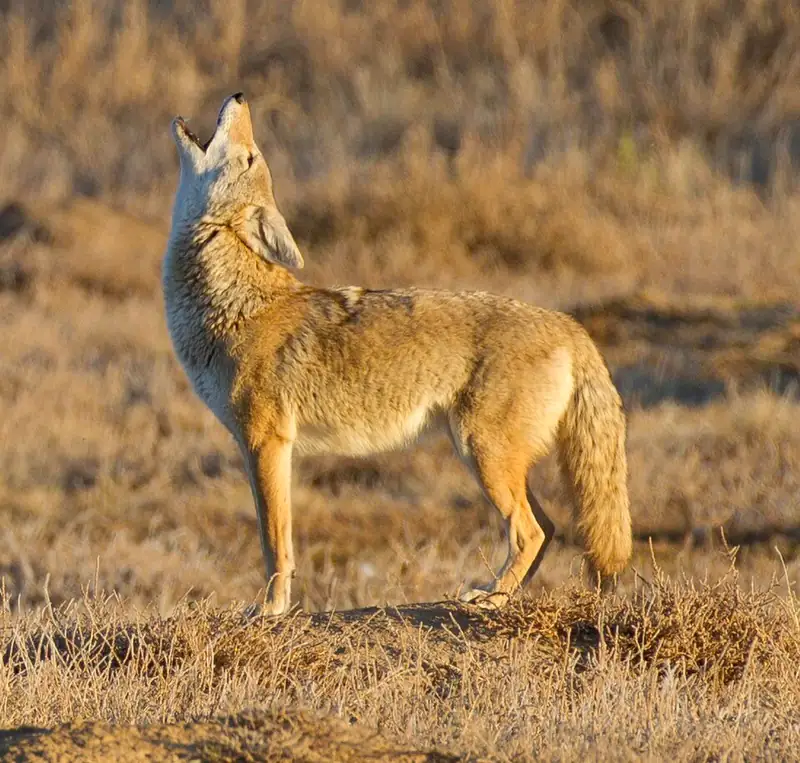 Mammal
 Coyote
Canis latrans
The wild dog you're most likely to hear at a national park — a coyote, at home in the desert, the mountains, and the edges of towns.
-
 Mammal
 Dall sheep
Ovis dalli
A snowy-white wild sheep of Alaska's steepest ridges, where ewes raise lambs on cliffs and rams carry horns that curl a full circle.
-
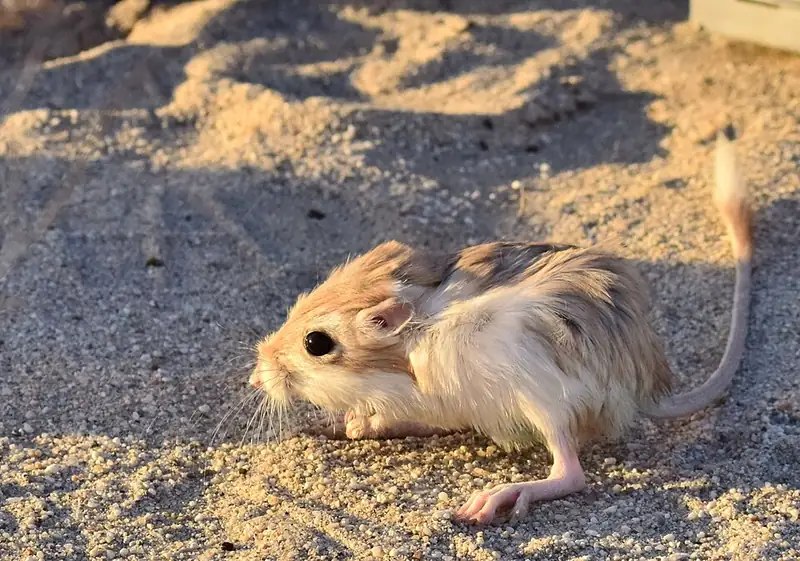 Mammal
 Desert kangaroo rat
Dipodomys deserti
A sand-dune rodent of Joshua Tree that never drinks water and dodges a striking sidewinder with a midair kick.
-
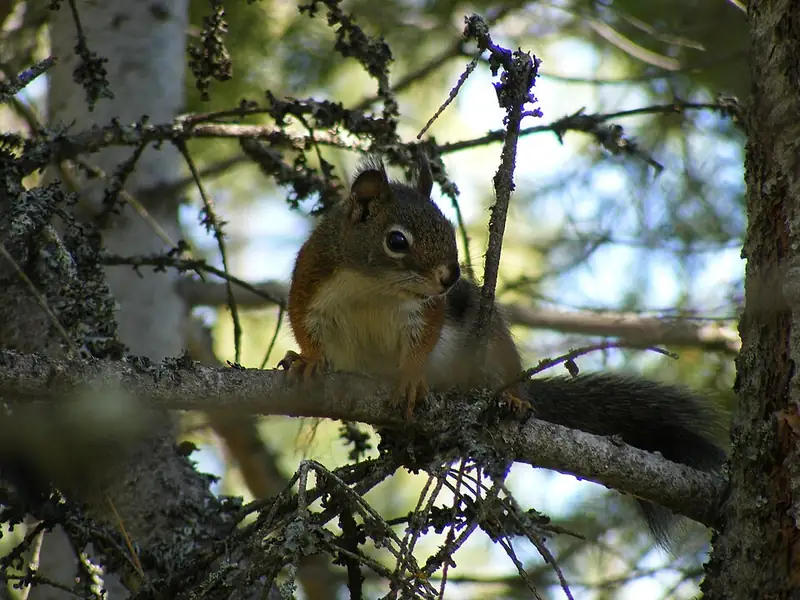 Mammal
 Douglas squirrel
Tamiasciurus douglasii
A small, loud tree squirrel of West Coast conifer forests, known for cutting green cones by the hundred and scolding every hiker who walks under its tree.
-
 Mammal
 Eastern chipmunk
Tamias striatus
A busy striped ground squirrel that stuffs seeds into stretchy cheek pouches and hides them in an underground pantry.
-
 Mammal
 Eastern gray squirrel
Sciurus carolinensis
A gray acrobat of the oak woods that buries nuts one by one and sometimes forgets where, sprouting new forests by accident.
-
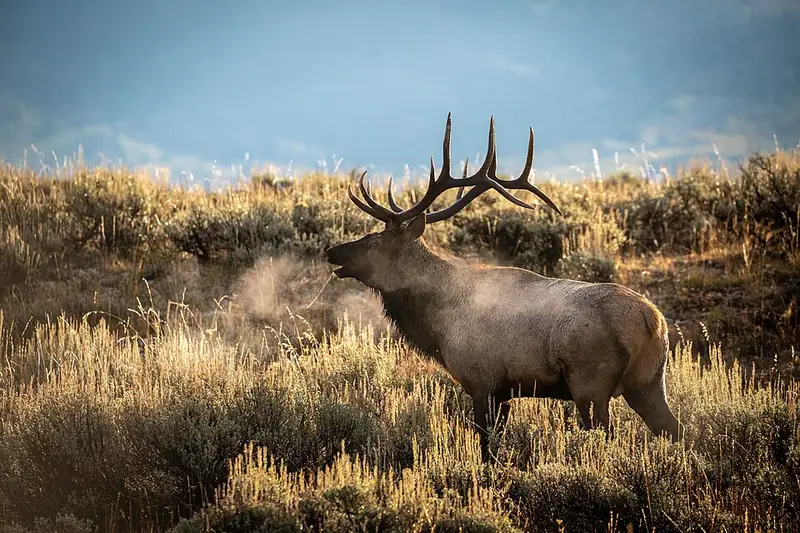 Mammal
 Elk
Cervus canadensis
A large deer of mountain meadows whose bulls grow branching antlers and, each fall, bugle a high whistling call across the valley.
-
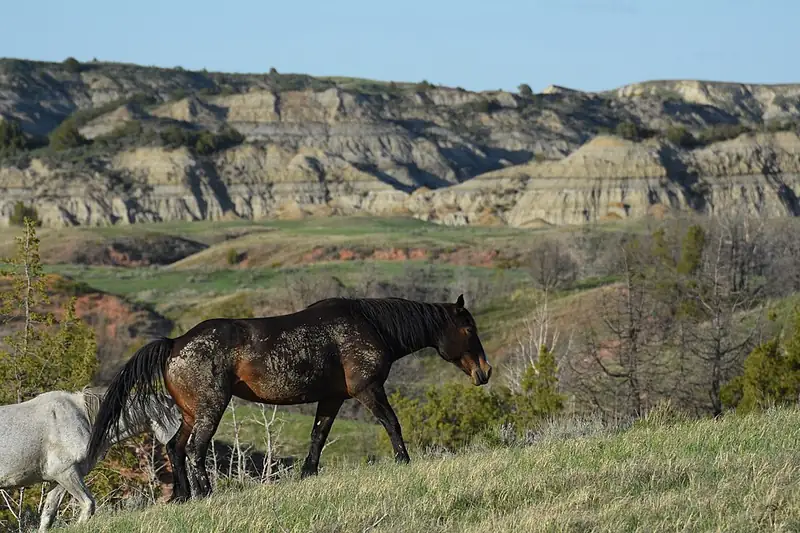 Mammal
 Feral horse
Equus ferus caballus
Ranch horses turned loose on the open range and never gathered back. Their descendants live in Theodore Roosevelt's South Unit as feral livestock.
-
 Mammal
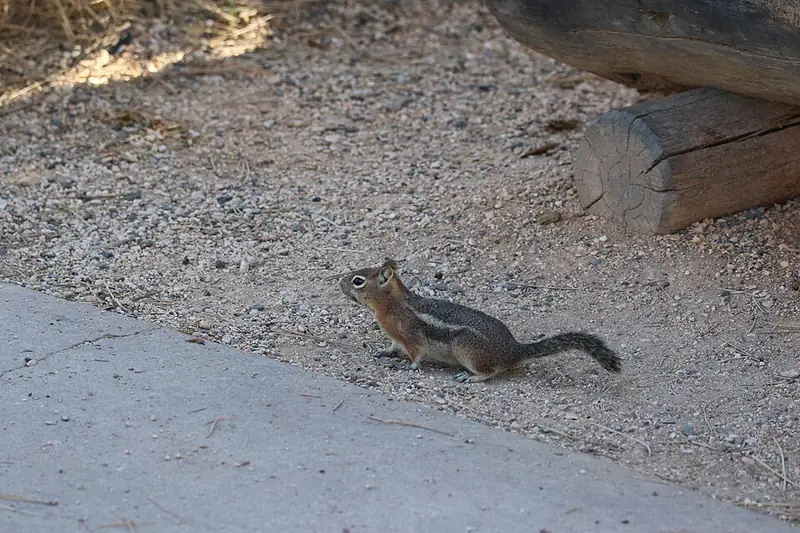
 Golden-mantled ground squirrel
Callospermophilus lateralis
A chipmunk-lookalike ground squirrel with a reddish-gold head and shoulders and no face stripes, common on rocks and trailsides from Glacier to Mesa Verde.
-
 Mammal
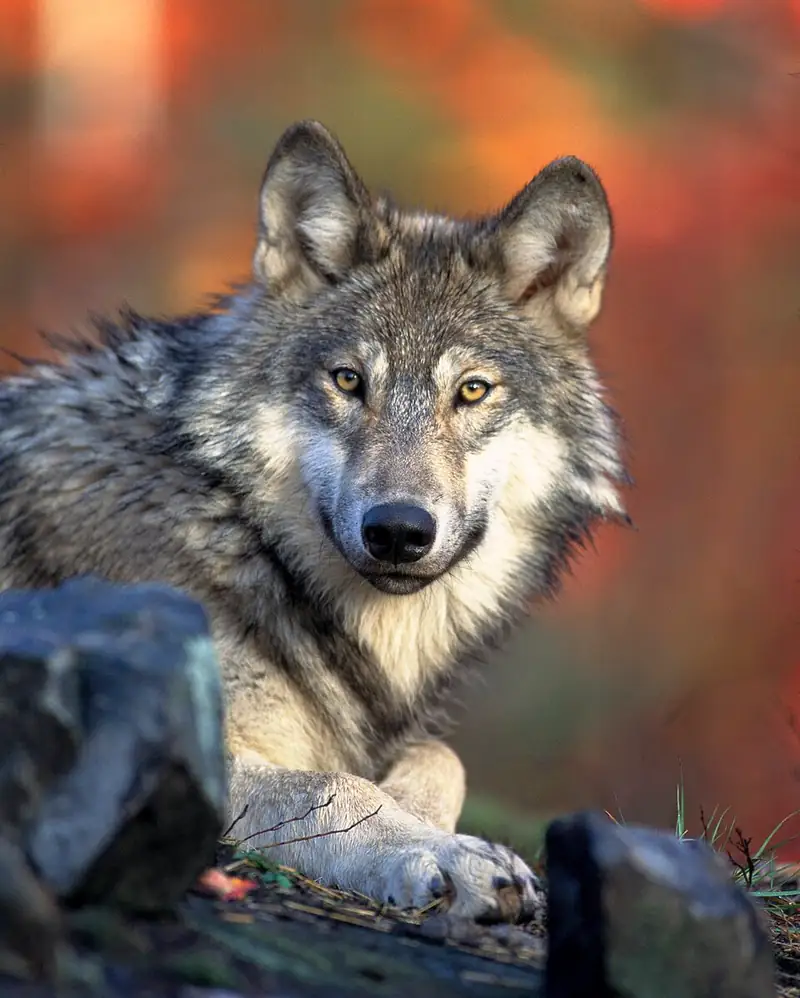
 Gray wolf
Canis lupus
The biggest wild dog in North America, a pack hunter you might hear howling at dawn in Yellowstone, Denali, or Isle Royale.
-
 Mammal
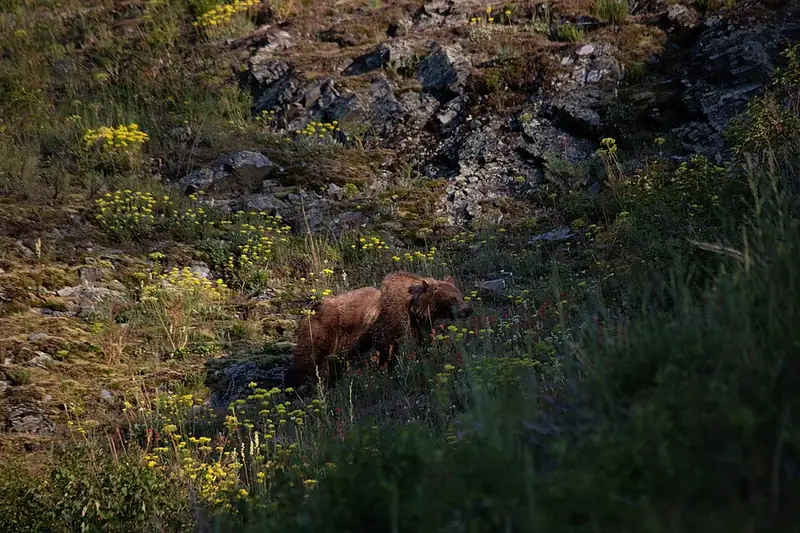
 Grizzly bear
Ursus arctos horribilis
A big brown bear of the northern Rockies and Alaska, marked by a hump of muscle over its shoulders and long digging claws.
-
 Mammal
 Harbor seal
Phoca vitulina
A gray, dog-snouted true seal that rests hauled out on rocks and floating glacier ice, bobbing in Alaska fjords with ear holes and no ear flaps.
-
 Mammal
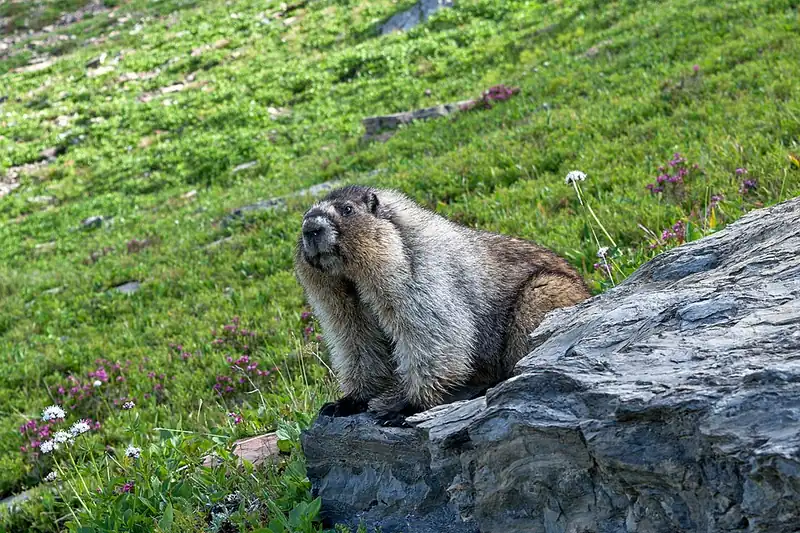
 Hoary marmot
Marmota caligata
The big silver-gray ground squirrel of the high meadows at Mount Rainier, famous for the sharp whistle it gives when danger is near.
-
 Mammal
 Humpback whale
Megaptera novaeangliae
A giant ocean mammal famous for breaching and long songs, following the food to Glacier Bay every summer to eat until its blubber is thick again.
-
 Mammal
 Little brown bat
Myotis lucifugus
A tiny brown flyer that hunts insects over water at dusk and sleeps in caves and barns, eating half its own weight in bugs each night.
-
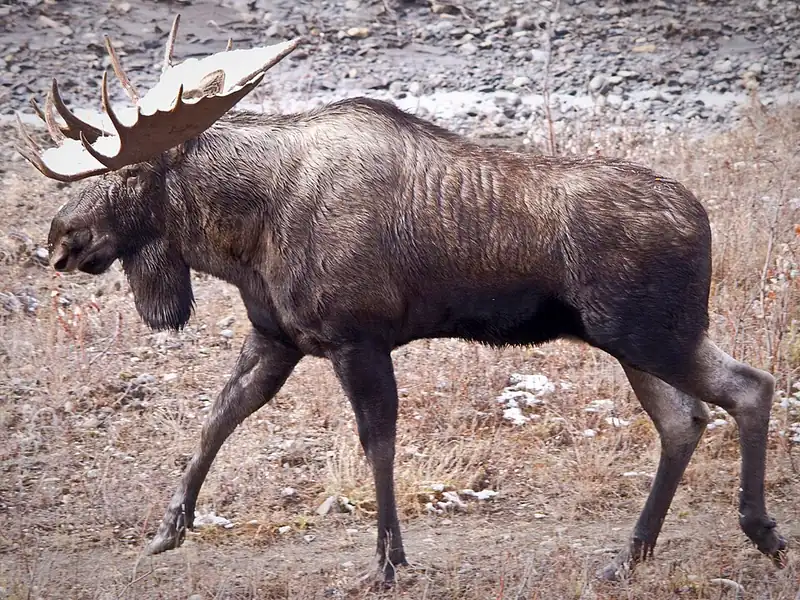 Mammal
 Moose
Alces alces
The largest deer in the world, a long-legged giant you might see wading in ponds at Grand Teton, Isle Royale, Denali, or Rocky Mountain.
-
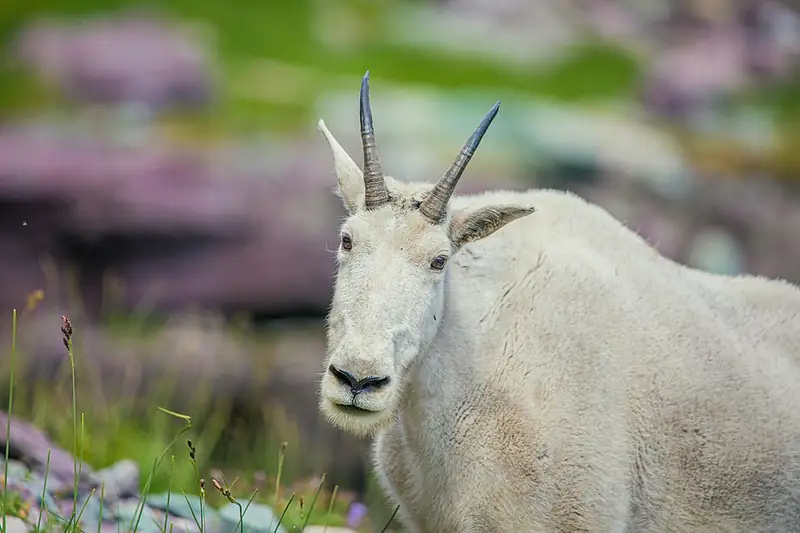 Mammal
 Mountain goat
Oreamnos americanus
A white, shaggy climber with black horns that lives on the steepest crags and pumice fields high on Mount Rainier, where almost nothing else can walk.
-
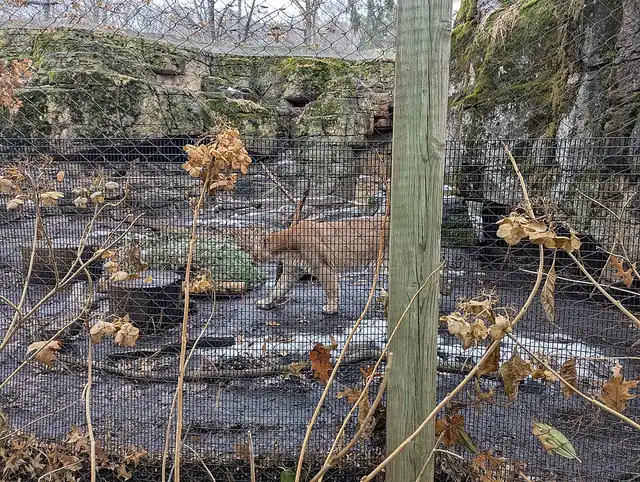 Mammal
 Mountain lion
Puma concolor
A tan, solitary big cat found from Glacier to Mesa Verde, called cougar, puma, or panther by region, and rarely seen at all.
-
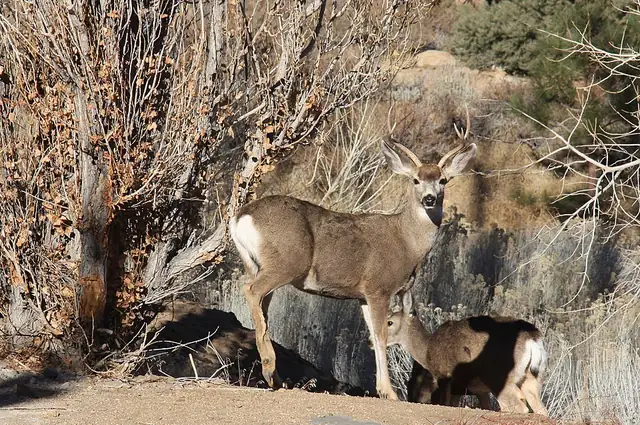 Mammal
 Mule deer
Odocoileus hemionus
A western deer named for its big mule-like ears, common on canyon rims and in desert washes in Grand Canyon, Zion, Yosemite, Arches, Canyonlands, and Saguaro.
-
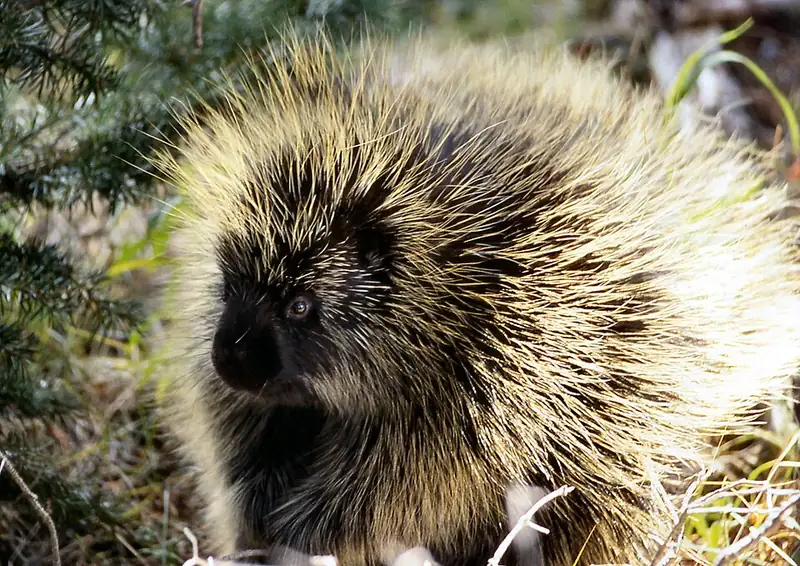 Mammal
 North American porcupine
Erethizon dorsatum
A slow, quill-covered rodent of the canyon country at Arches and Canyonlands, and the second-largest rodent in North America after the beaver.
-
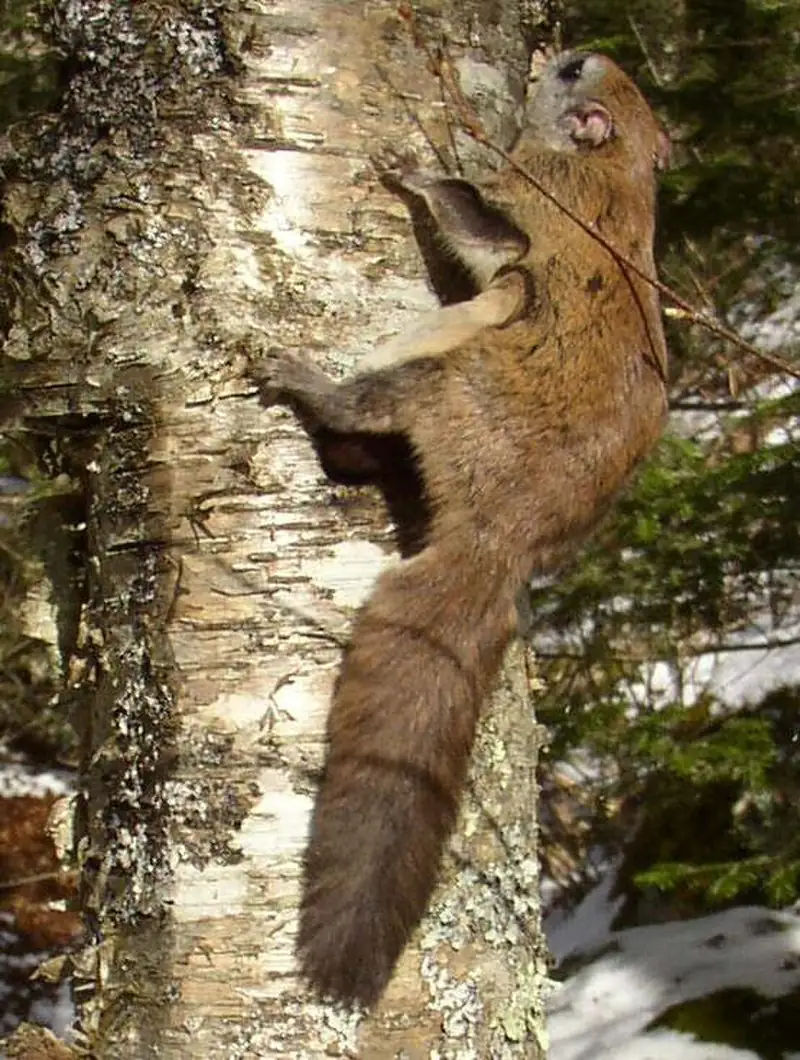 Mammal
 Northern flying squirrel
Glaucomys sabrinus
A nocturnal glider of old-growth conifer forests that eats mostly underground fungus and, under a UV light, glows bubblegum pink.
-
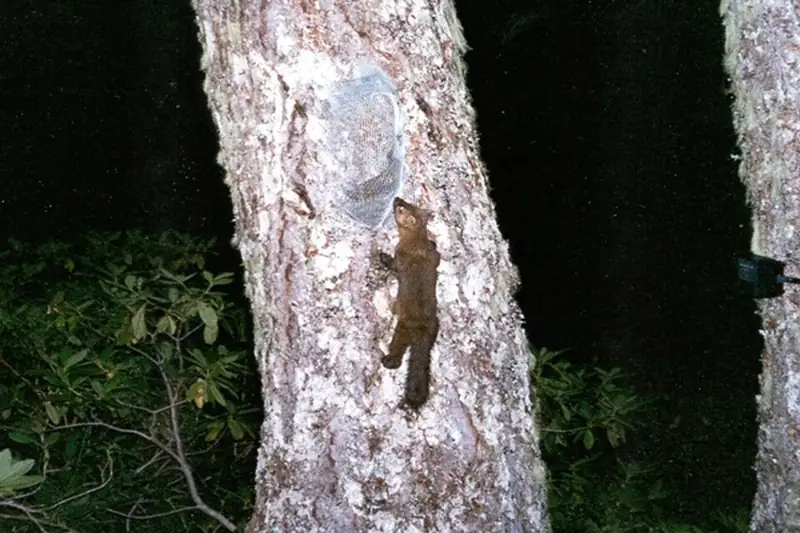 Mammal
 Pacific marten
Martes caurina
A tree-climbing weasel relative of the old-growth canopy, whose coastal population was feared extinct for 50 years before a trail camera caught one in 1996.
-
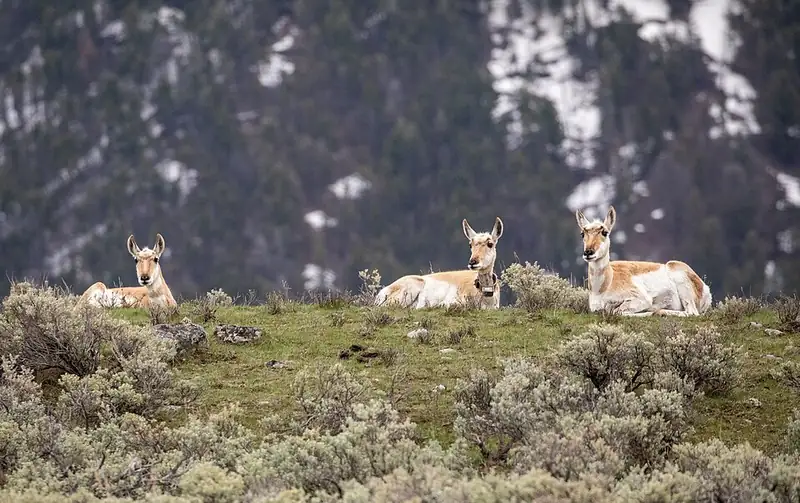 Mammal
 Pronghorn
Antilocapra americana
North America's fastest land mammal, seen in Yellowstone's northern range and at Lava Beds, built to outrun a predator that went extinct 12,000 years ago.
-
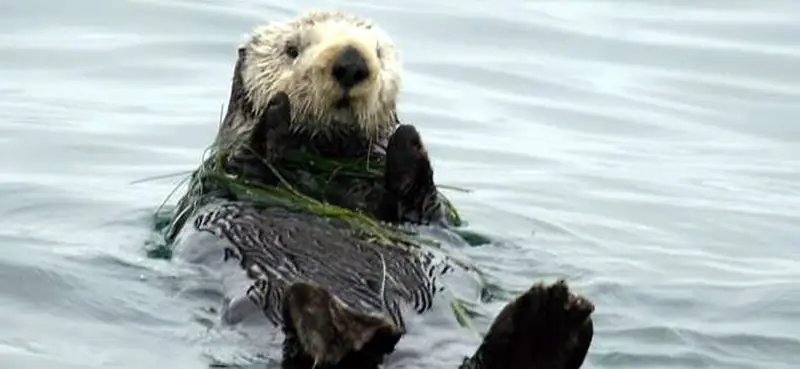 Mammal
 Sea otter
Enhydra lutris
The heaviest weasel-family animal alive, floating on its back in Olympic's coastal kelp beds with no blubber at all, just the densest fur of any mammal.
-
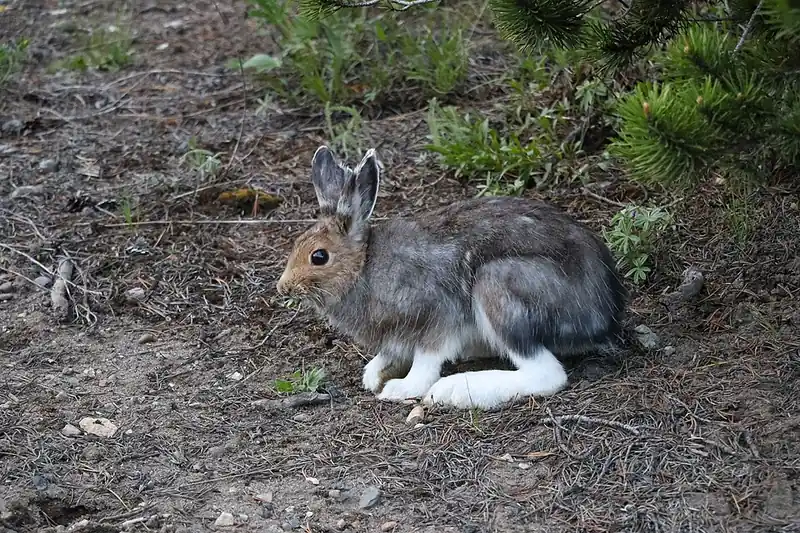 Mammal
 Snowshoe hare
Lepus americanus
A forest hare whose coat flips from brown to white on a clock set by daylight, not by snow, and whose oversized feet work like actual snowshoes.
-
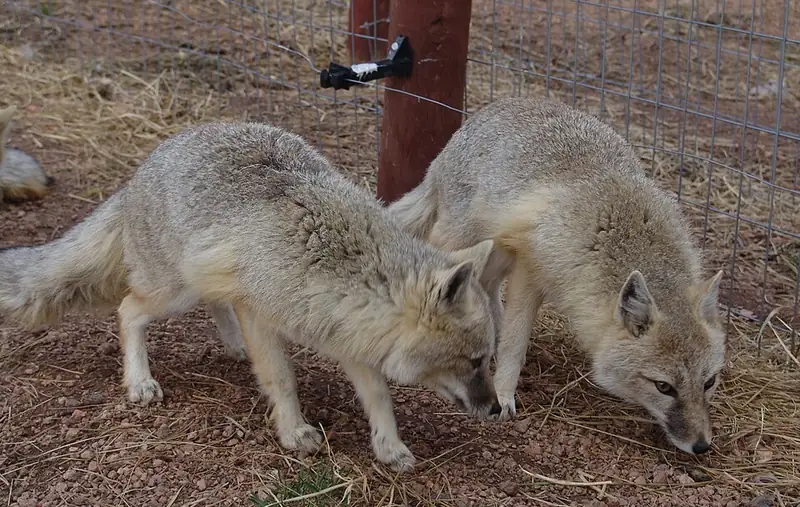 Mammal
 Swift fox
Vulpes velox
A cat-sized fox of the shortgrass prairie, wiped out of South Dakota for most of the twentieth century and reintroduced to Badlands starting in 2003.
-
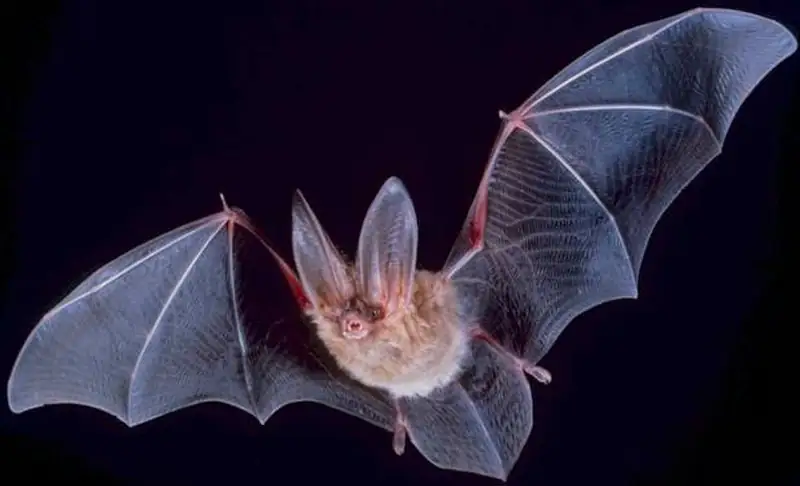 Mammal
 Townsend's big-eared bat
Corynorhinus townsendii
A soft brown bat with enormous curling ears that roosts in the cool lava-tube caves of Lava Beds and hunts moths in the dark.
-
 Mammal
 White-tailed deer
Odocoileus virginianus
The most common large mammal in eastern parks, running through the woods and waving a white tail like a flag when it bolts.
-
 Mammal
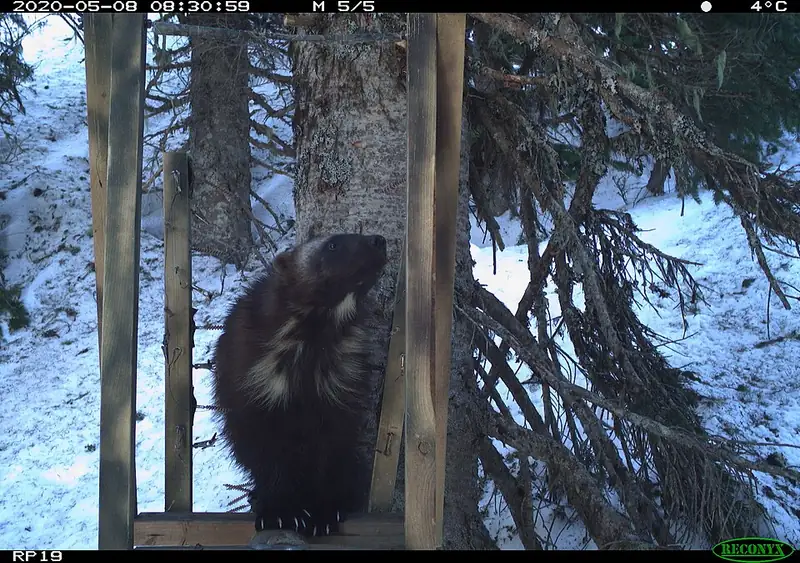
 Wolverine
Gulo gulo
The largest weasel-family member, so rare in Washington that a 2020 den at Mount Rainier was its first confirmed wolverine family in over a century.
-
 Mammal
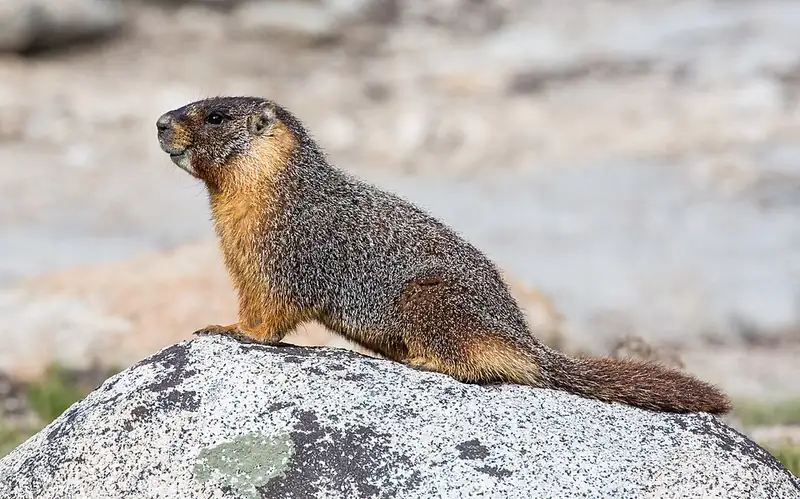
 Yellow-bellied marmot
Marmota flaviventris
A chubby, whistling ground squirrel that suns itself on high-country rocks at Rocky Mountain and Yosemite, and sleeps away most of the year.