Mountain lion
A tan, solitary big cat found from Glacier to Mesa Verde, called cougar, puma, or panther by region, and rarely seen at all.

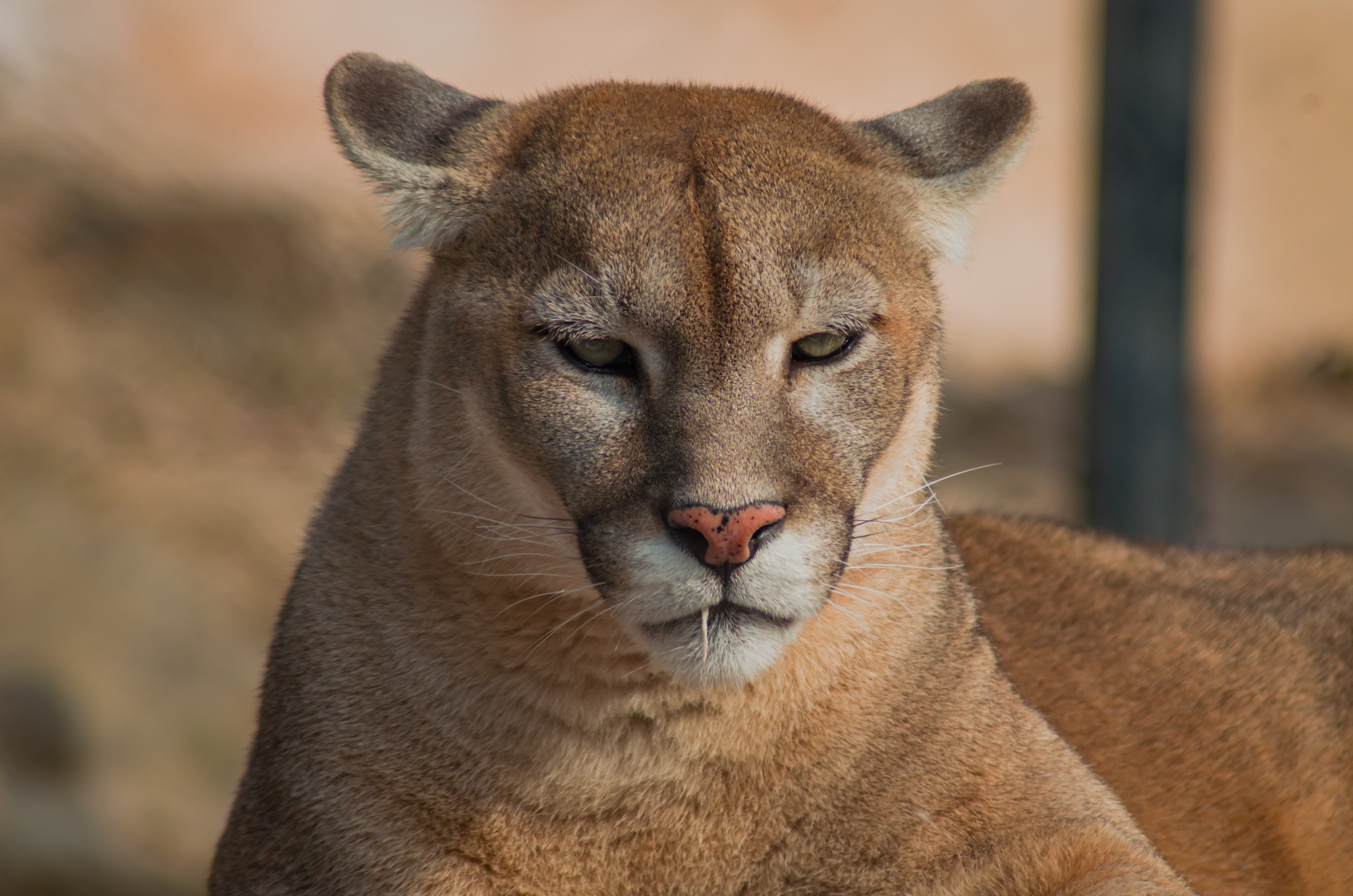
Mountain lion at a glance
Puma concolor PYOO-muh; Puma concolor is PYOO-muh KAHN-kuh-lor
- Type
- Mammal · cats
- Diet
- Carnivore
- Size
- Males weigh 145 to 170 pounds and run 6.5 to 7.5 feet long, nose to tail-tip — about as much as two grown men combined, and longer than a couch.
- Lifespan
- About 8 to 10 years for males and 12 to 14 years for females in the wild.
- Conservation
- Least concern
Eats elk, deer, marmots, porcupines
Mountain lions stalk and ambush elk and deer, killing with a bite to the base of the skull or throat, then feed on one carcass over three to four days, caching what's left between meals.
Should you worry?
Confrontations are very rare — even in Yellowstone, with a healthy population, few have ever been documented. If you meet one: stay in a group, pick up small children, make noise, and never run.
A half-eaten elk carcass turning up in the sagebrush, dragged under a deadfall and half-buried in dirt and pine needles, is a more likely find than the cat that made it. Cougars are solitary, tan, and built to disappear: adult males run 145 to 170 pounds and stretch 6.5 to 7.5 feet nose to tail-tip, longer than a couch, and Yellowstone’s population has held stable for decades — yet almost nobody sees one.
The carcass itself tells a story most visitors miss. A cougar kills with a single bite to the base of the skull, then feeds on that one animal for three or four days, hiding the remainder between meals. But it doesn’t always get to finish. Wolves and grizzly bears, hunting the same elk herds, will simply walk up and take over a cougar’s kill — in Yellowstone, wolves alone push cougars off about 6% of their elk carcasses. The biggest cat in the park still has to watch its dinner get stolen by animals it wouldn’t dare fight over an open meal.
Cougars vanished from Yellowstone almost entirely by the 1930s, hunted out under predator-control campaigns meant to protect livestock and game herds. Nobody reintroduced them. They came back on their own, recolonizing the park naturally by the early 1980s, decades before wolves returned with human help. So the next time a half-eaten carcass under some branches looks less like leftovers and more like evidence: it might be a cougar’s kill, or it might be a cougar’s kill that a wolf just finished for it.
Did you know?
- Cougar kittens weigh about a pound at birth and gain roughly a pound a week for their first eight to ten weeks.
- Young male cougars disperse 50 to 400 miles from where they were born to find their own territory; females move less far, 20 to 150 miles.
- Wolves and grizzly bears in Yellowstone regularly push cougars off their own kills, displacing them from about 6% of elk carcasses.
Common questions
Are mountain lions dangerous to people?
Attacks are extremely rare. Yellowstone has a stable, healthy cougar population and very few documented human confrontations. Stay in a group, make noise, and never run if you see one.
What do mountain lions eat?
Mostly elk and deer, plus smaller animals like marmots, porcupines, and grouse when they can catch them.
How big do mountain lions get?
Males run 145 to 170 pounds and 6.5 to 7.5 feet long including the tail. Females are smaller, 85 to 120 pounds.
Do other animals really steal a mountain lion's food?
Yes. Wolves and grizzly bears in Yellowstone regularly chase cougars off their own kills, which means the cat has to go hunt again sooner than it planned.
Where can you spot a mountain lion in a national park?
You almost never see the cat itself. What you're far more likely to find is a picked-over carcass, dragged under brush or covered with debris.