Mountain pine beetle
A beetle about the size of a grain of rice that tunnels under pine bark and can turn a mountainside red at Yellowstone, Glacier, and Rocky Mountain.

Mountain pine beetle at a glance
Dendroctonus ponderosae Dendroctonus ponderosae is den-DROCK-toh-nus pon-der-OH-see
- Type
- Invertebrate · beetles
- Diet
- Herbivore
- Size
- About 4 to 7.5 millimeters long (a quarter inch), close to the size of a single grain of rice.
- Lifespan
- About one to two years egg to adult, most of it spent as a larva under the bark; adults live only a few weeks after they emerge to attack a new tree.
- Conservation
- Not evaluated (native, not conservation-tracked)
Eats the inner bark (phloem) of pine trees
An adult female bores through the bark and lays eggs in a tunnel called a gallery, up to 30 inches long. Her larvae feed on the nutrient-rich inner bark for up to two years, cutting off the tree's flow of water and food.
Should you worry?
Harmless to people. It cannot bite or sting anyone and lives its whole life inside a tree. The only rule: don't peel bark off a live, standing pine to look for it.
The first sign is never the beetle. It’s a blob of hardened sap, rust-orange against gray bark, low on a lodgepole trunk along the road into Yellowstone’s northwest corner. That is a pitch tube, and it means a beetle the size of a grain of rice tried to bore through this tree’s bark, and the tree fought back by flooding the tunnel with resin.
Sometimes the tree wins. A healthy pine can drown a single attacker in pitch and seal the hole behind it. Mountain pine beetles instead attack together, many boring into the same tree in the same summer, and when enough get through, each female lays her eggs in a tunnel under the bark that can run two and a half feet long. Her larvae spend up to two years down there, eating the soft inner bark that carries the tree’s water and food, until there’s nothing left to carry it through.
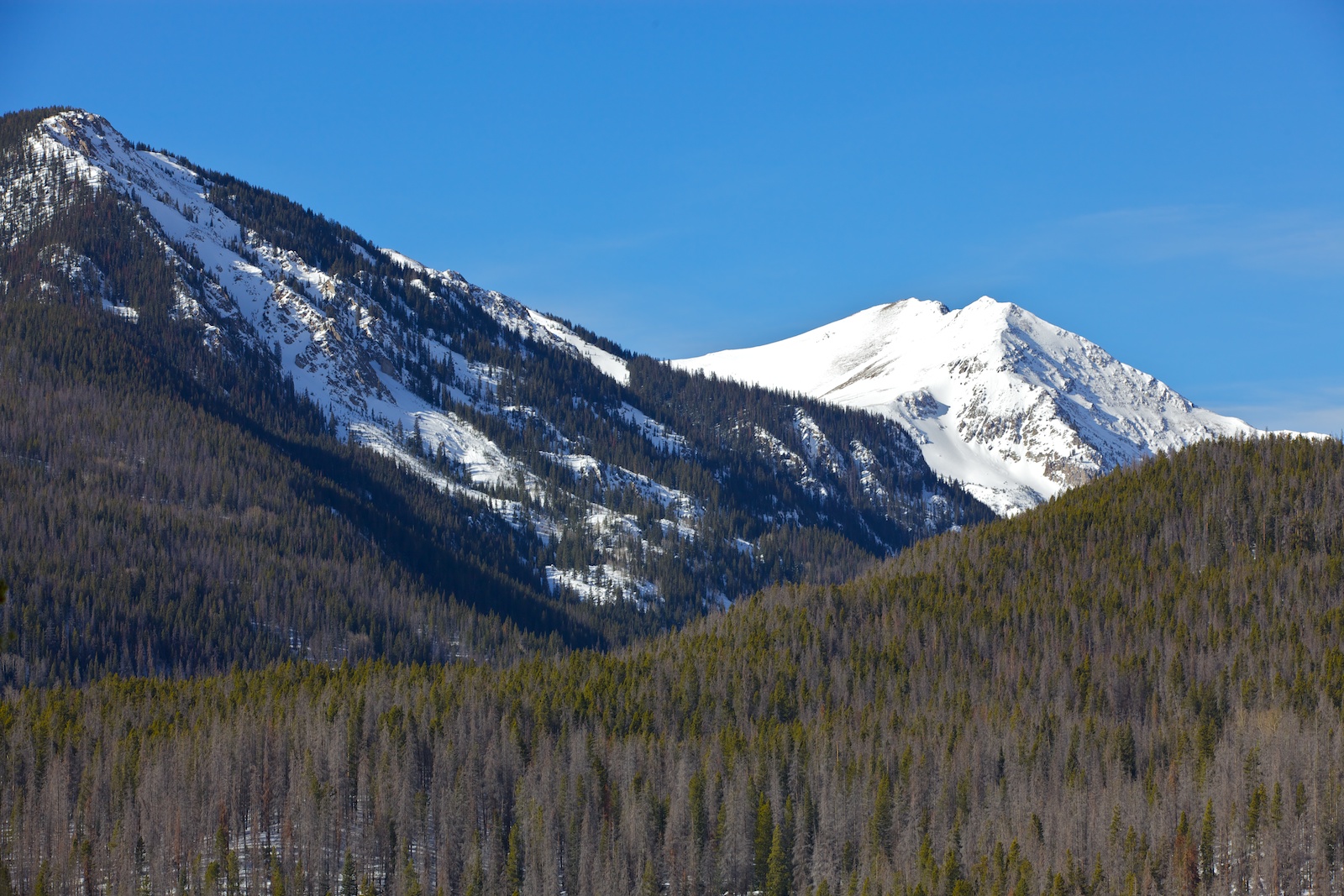
The tree doesn’t announce its own death. Its needles hold their green for most of a year after the beetles win, then fade to yellow, then to a rust-brown that shows up on a whole hillside at once, a full season late. A 2013 aerial survey found severe damage across nearly half of the whitebark pine in the Greater Yellowstone Ecosystem, one of the pressures that got that tree listed as federally threatened in 2023. Stop at the next red hillside and look for the pitch tubes low on the trunks. That fight happened last year.
Did you know?
- A red blob of dried sap on a pine trunk, called a pitch tube, marks the exact spot where a beetle tried to bore in and the tree fought back with resin.
- An animal the size of a rice grain can kill a full-grown pine, but only by attacking together with many other beetles boring into the same tree in the same summer.
- A tree that loses the fight doesn't turn red right away. Its needles fade from green to yellow to red-brown the following summer, so a rust-colored hillside is showing an attack from a year ago.
Common questions
Do mountain pine beetles bite people?
No. They spend their whole lives boring into pine trees, not people, and cannot hurt you.
Why are so many trees red or dead in the Rockies?
A red pine was probably attacked by mountain pine beetles the summer before. The beetles tunnel under the bark and cut off the tree's water and food until it dies.
Is the mountain pine beetle new, or has it always been here?
It is native to these mountains and has lived here a very long time, but warmer winters in recent years have let it survive and spread farther than usual.
What kind of trees does it attack?
Mostly lodgepole pine, and, when its numbers get very high, whitebark pine higher up the mountain too.
What eats a mountain pine beetle?
Woodpeckers chip through bark to eat adults and larvae, and checkered beetles and some flies hunt them under the bark. Nuthatches and other birds catch the beetles as they fly to a new tree.