Western tiger swallowtail
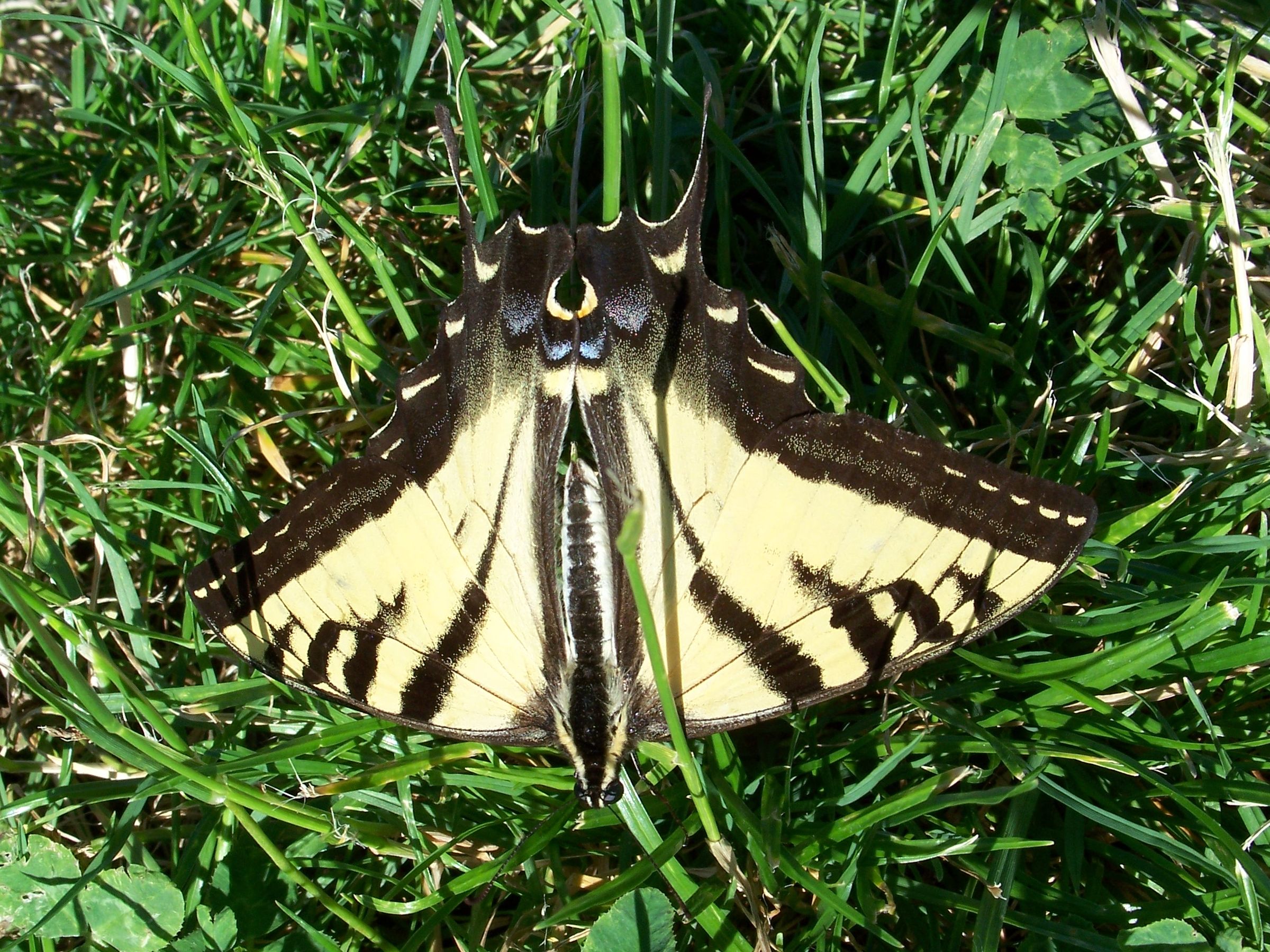
The big yellow-and-black butterfly of western streamsides whose caterpillar wears fake snake eyes and flips out a stinky orange horn when scared.
Western tiger swallowtail at a glance
Papilio rutulus Papilio rutulus is puh-PILL-ee-oh ROO-tuh-lus
- Type
- Invertebrate · butterfly
- Diet
- Herbivore
- Size
- Wings spread about as wide as your hand is long, roughly 3 to 4 inches across.
- Lifespan
- The adult butterfly lives only a few weeks. The whole cycle from egg to adult takes about a month in summer.
- Conservation
- Not formally assessed by IUCN; common and widespread in the West
Eats nectar, willow, cottonwood, and aspen leaves (as a caterpillar)
The adult sips flower nectar through a long coiled tongue and gathers at wet sand or mud to drink. The caterpillar eats the leaves of streamside trees like willow, cottonwood, and aspen.
Should you worry?
Completely harmless. It has no sting and no bite. The caterpillar's snake-eyes and smelly horn are all bluff, meant to startle birds, and cannot hurt you at all.
The big yellow butterfly drifting along a river at Mount Rainier is easy to name and easy to miss the best part of. Everyone sees the adult, hand-wide, banded in black like a tiger, tails trailing off the back wings as it works the streamside flowers. What almost nobody sees is what it was a few weeks earlier, when it was pretending to be a snake.
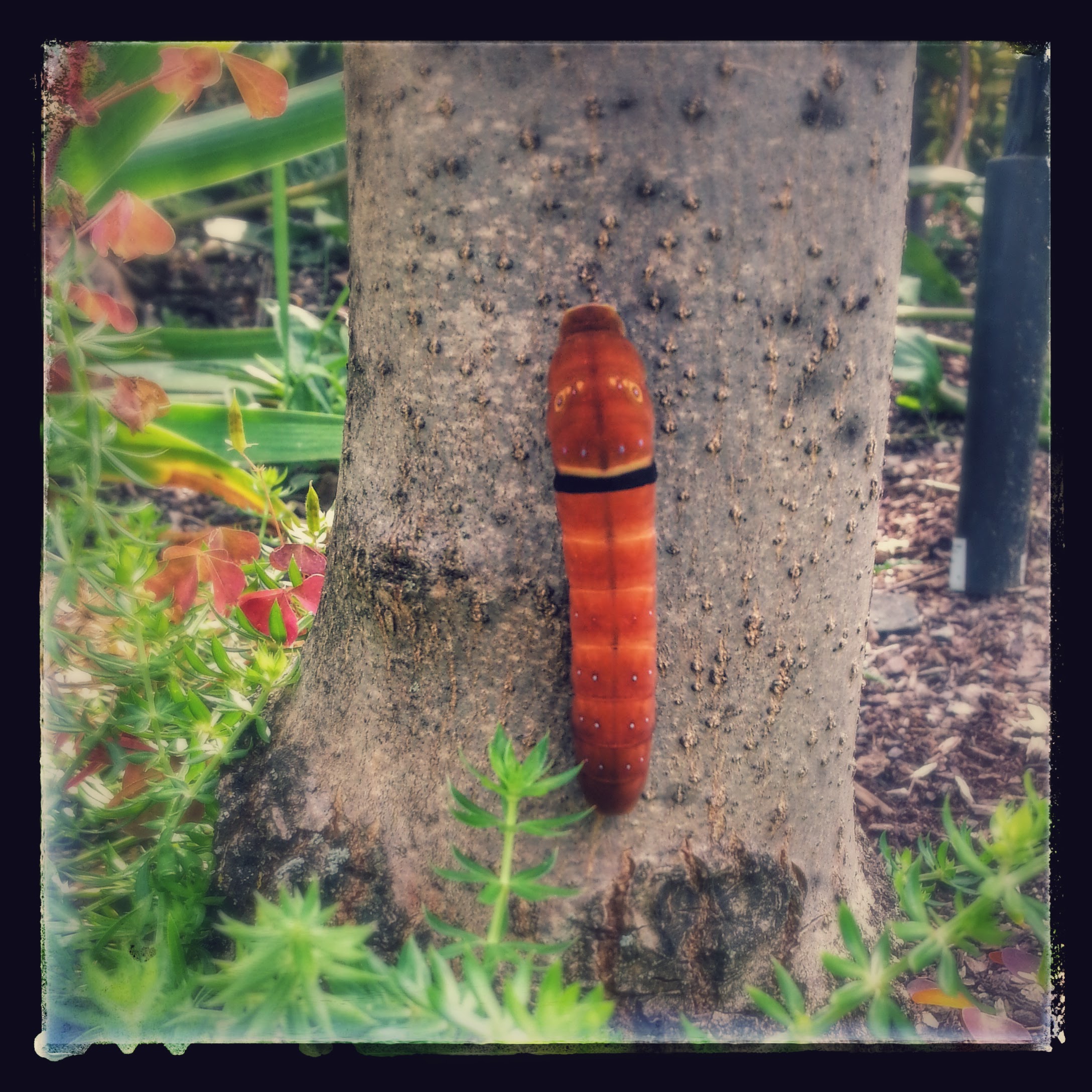
The caterpillar starts life as a lie. Newly hatched, it is brown and white and shaped like a fresh bird dropping, a thing no bird wants to eat. As it grows it turns leaf green and trades one disguise for another, swelling up front and growing two enormous fake eyes that stare out from behind its head. A bird coming in for a soft green caterpillar meets what looks like the face of a small snake and thinks better of it. If the eyespots are not enough, the caterpillar has one more trick. It flips out a bright orange forked gland from behind its head like a snake’s tongue, and it reeks, sharp and bitter, enough to send an attacker off.
None of it can hurt you. The eyes are paint, the horn is a bluff, and the whole show is aimed at birds, not people. When a tiger swallowtail crosses the trail on a warm afternoon, the easy yellow flash overhead spent its childhood impersonating a reptile in a willow, and pulled it off well enough to get here.
Did you know?
- The young caterpillar disguises itself as a bird dropping, then grows into a green caterpillar with two big fake eyespots that make it look like a small snake.
- When a caterpillar is threatened it flips out a bright orange forked gland called an osmeterium from behind its head, like a snake's tongue, and it smells bad enough to drive off attackers.
- Adults gather in groups at wet sand or mud to drink, a habit called puddling that lets them take up salts and minerals.
Common questions
Why does the caterpillar have big eyes?
They are fake. The two large eyespots make the green caterpillar look like the head of a small snake, which startles hungry birds into leaving it alone. It has no real eyes there at all.
What is the orange thing a swallowtail caterpillar sticks out?
It's a forked gland called an osmeterium. When the caterpillar is scared it flips it out like a snake's tongue, and it smells bad enough to drive off birds and bugs. It's all bluff and can't hurt you.
Where do you see western tiger swallowtails?
Along rivers, streams, and roadsides, especially where there are willows and cottonwoods for the caterpillars. Adults often gather to drink at wet sand and mud.