Army cutworm moth
A gray moth that migrates from Great Plains farm fields to high mountain talus, where grizzly bears flip rocks to eat it by the thousands each summer.
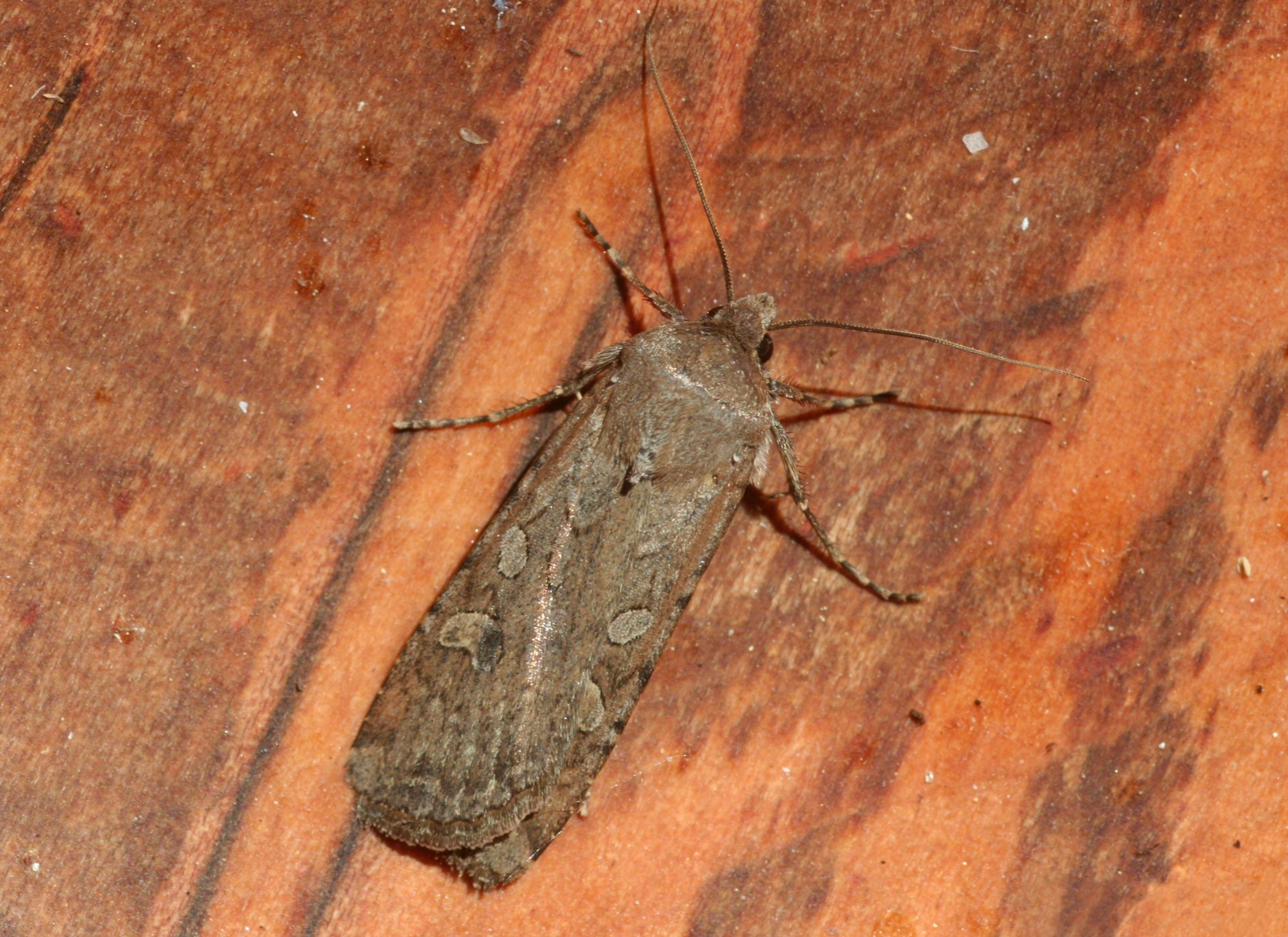

Army cutworm moth at a glance
Euxoa auxiliaris also called a miller moth; Euxoa auxiliaris is yoo-ZOH-uh awg-zil-ee-AIR-iss
- Type
- Invertebrate · moths
- Diet
- Herbivore
- Size
- A wingspan of about 1.5 to 2 inches, roughly as wide as two fingers held side by side.
- Lifespan
- About one year egg to death. The caterpillar overwinters and feeds into spring; the adult moth itself lives only a few months, from its early-summer migration to its death after mating in fall.
- Conservation
- Not evaluated (common and widespread across western North America)
Eats flower nectar as a moth, grass and crop leaves and roots as a caterpillar
As a caterpillar it feeds on plants at ground level through the winter and early spring. Once it becomes a moth, it feeds only on nectar, flying up into the mountains at night to drink from alpine flowers and hiding under rocks by day.
Should you worry?
Harmless. It cannot bite or sting. Millions can show up around mountain lights and porches during migration, which startles people more than it hurts anyone.
Above the treeline in Glacier, a grizzly bear is turning over rocks the size of footstools, one after another, working a talus slope like it’s flipping cushions for loose change. What it’s after is small enough to miss: a gray moth, wings folded, wedged into the cool dark under the rock. This is an army cutworm moth, and it flew here from a wheat field on the Great Plains, hundreds of miles east, to spend the summer hiding from the heat.
The moth’s whole strategy is timing. It feeds on nectar only at night, then tucks itself into the talus by day, and for as much as three months each summer the talus slopes of the Rockies hold enough of them that a grizzly can eat tens of thousands of them in a single day. At about eight calories per gram of fat, this small moth is one of the richest foods documented for grizzly bears in the Greater Yellowstone Ecosystem. A bear working a good moth slope for a month can pack away roughly half its whole year’s calories.
By fall the moths have mated and started to die. The bear moves on to the next slope, still flipping rocks, and the talus goes quiet under the first snow.
Did you know?
- The same insect has two names for two lives: army cutworm for the caterpillar that eats crops on the Great Plains, and miller moth for the dusty gray adult that shows up in mountain towns every spring.
- It migrates hundreds of miles, from farm fields in Kansas, Nebraska, Wyoming, and eastern Colorado up into alpine talus slopes in the Rockies.
- A grizzly bear can eat up to 60,000 of these moths in a single day, feeding almost only on moths for as long as three months each summer.
Common questions
Do army cutworm moths bite?
No. Adults only sip nectar from flowers and cannot bite or sting a person.
Why do grizzly bears eat moths?
The moths are packed with fat, about 8 calories per gram, one of the richest foods a bear can find before winter. A bear can eat tens of thousands in a single day.
Where do miller moths go in the summer?
They migrate from farm fields on the plains up into cool, high talus slopes in the Rockies, often above 10,000 feet, hiding under rocks by day and feeding on flowers at night.
Are army cutworm moths harmful to crops?
As caterpillars, yes. They can damage winter wheat and other crops on the Great Plains before they turn into moths and migrate away.