White-tailed ptarmigan
A small alpine grouse that turns pure white in winter and nearly vanishes against rock and snow above treeline in the Rockies.

White-tailed ptarmigan at a glance
Lagopus leucura TAR-mih-gun; Lagopus leucura is luh-GOH-pus loo-KYOOR-uh
- Type
- Bird · grouse
- Diet
- Herbivore
- Size
- North America's smallest grouse, about 12 inches long and under a pound, light enough that a bag of sugar outweighs it.
- Lifespan
- Typically around 5 years in the wild; the longevity record is 15 years.
- Conservation
- Least concern
Eats willow buds, leaves, seeds, berries, insects (summer)
It eats mostly buds, leaves, and seeds, leaning hard on willow shrubs, especially in winter when almost nothing else stays above the snow. In summer it adds insects, flowers, and berries.
Should you worry?
White-tailed ptarmigan are not dangerous. They sit so still and blend in so well that the real risk is stepping on one by accident, so walk carefully on rocky tundra trails and leave any bird you spot alone.
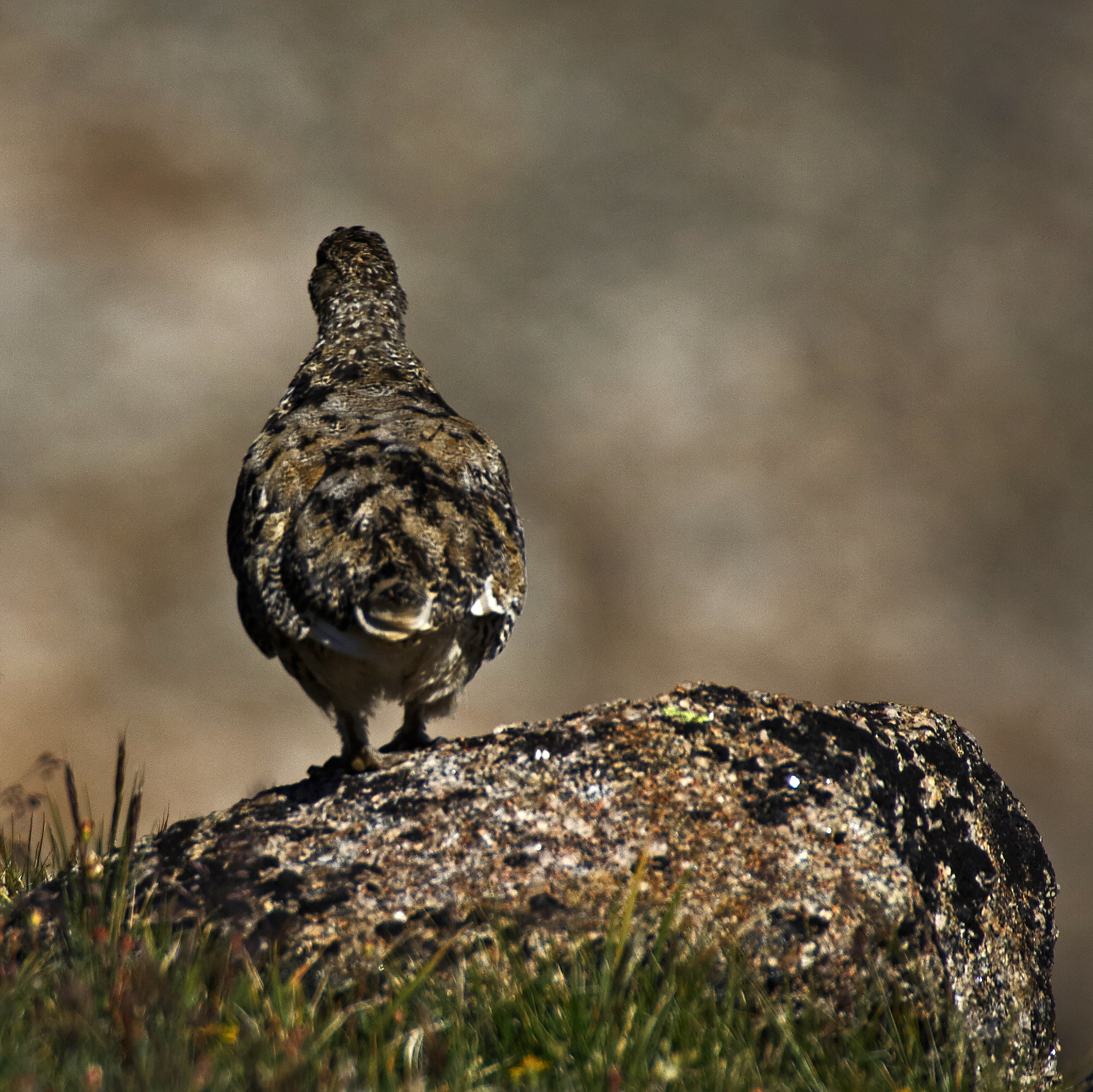
You could walk within a few feet of a white-tailed ptarmigan on a rockslide above treeline and never see it. Its feathers match whatever it happens to be standing on: mottled gray and brown against lichen-covered rock in summer, and by winter a coat so purely white it disappears against the first snowfield it steps onto.
The camouflage buys it safety from hawks and eagles; the feet solve the harder problem, which is walking on that snow at all. As the temperature drops, feathers grow out over its toes and its claws lengthen, turning each foot into a built-in snowshoe that spreads the bird’s weight instead of letting it sink.
It is the smallest grouse in North America, light enough that a bag of sugar outweighs it, and it gets through an alpine winter other birds abandon by walking rather than flying, saving what little energy it has. Next time the tundra trail looks empty, look again at the rocks before deciding nothing is there.
Did you know?
- A white-tailed ptarmigan's feathers change color three times a year, matching the rock, lichen, or snow around it so closely that it can be almost invisible a few feet away.
- In winter, feathers grow out over a ptarmigan's toes and its claws get longer, turning its feet into natural snowshoes that keep it from sinking into deep snow.
- It is the smallest grouse in North America, and it prefers walking to flying, saving energy in a habitat with brutal wind and cold.
Common questions
Why is a white-tailed ptarmigan so hard to see?
Its feathers change color to match the season, pure white in winter and mottled brown and gray in summer, so it blends into rock, snow, or lichen.
How does a ptarmigan walk on deep snow without sinking?
Feathers grow out over its toes in winter and its claws get longer, working like a pair of built-in snowshoes.
How big is a white-tailed ptarmigan?
It is the smallest grouse in North America, about 12 inches long and under a pound.
Where do you find white-tailed ptarmigan?
Above treeline in the alpine tundra, often near rocky ground or willow shrubs, in places like Rocky Mountain and Glacier National Parks.
What eats a white-tailed ptarmigan?
Prairie falcons, golden eagles, red foxes, and coyotes. A male stands watch, which lets his mate spend more time feeding.