Ochre sea star
The purple or orange five-armed star of Pacific tide pools whose appetite for mussels decides what everything else on the rock gets to be.
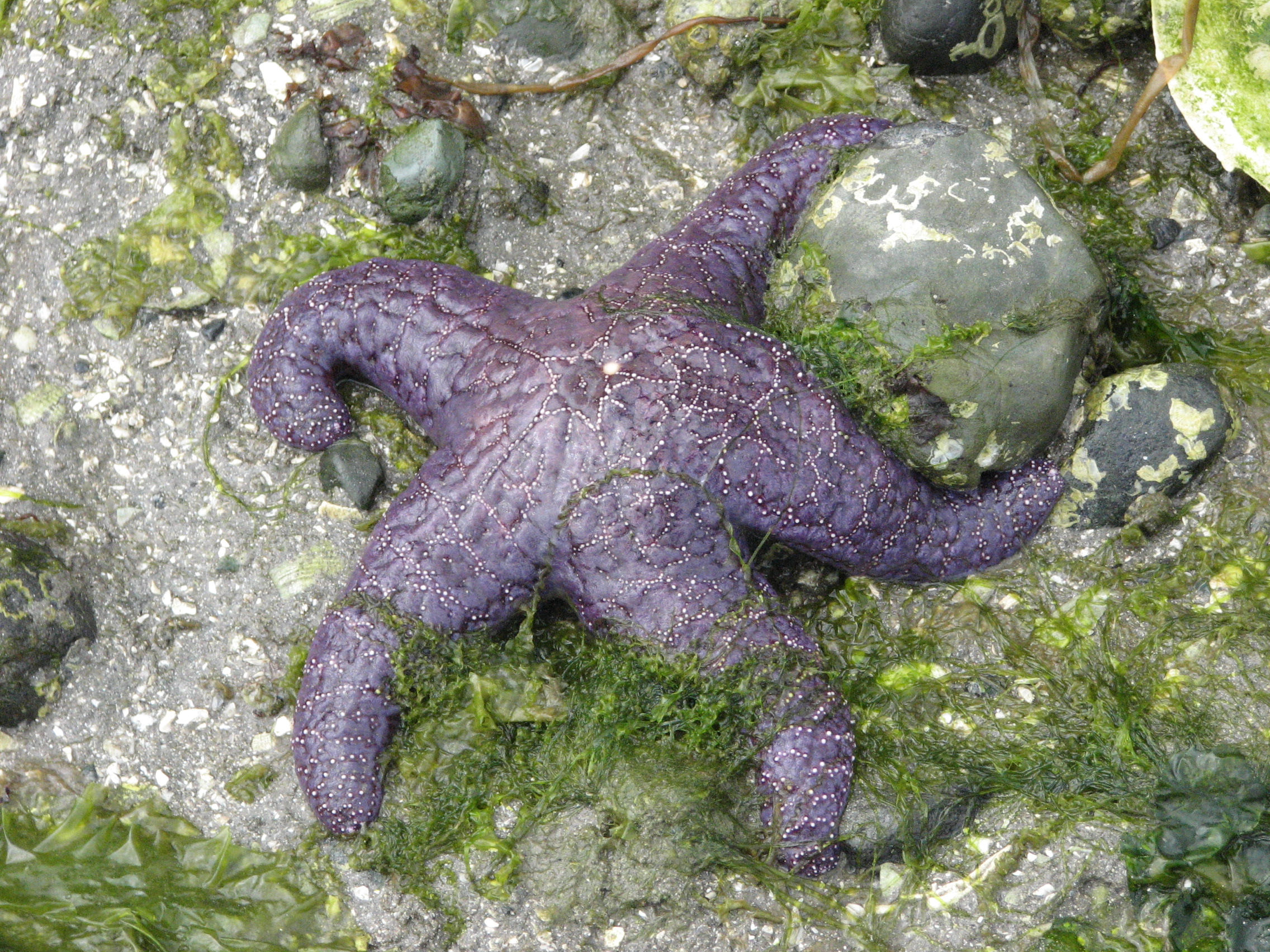

Ochre sea star at a glance
Pisaster ochraceus OH-ker SEE star; Pisaster ochraceus is py-ASS-ter oh-KRAY-see-us
- Type
- Invertebrate · sea star
- Diet
- Carnivore
- Size
- Arm tip to arm tip, about the width of a dinner plate, up to roughly 10 inches across.
- Lifespan
- Around 20 years in the wild.
- Conservation
- Not formally assessed by IUCN; hit hard by sea star wasting disease since 2013
Eats mussels, barnacles, snails, limpets
It humps over a mussel, grips the two shells with hundreds of tiny tube feet, pulls until the shell gapes a crack, then pushes its own stomach out through its mouth and into the gap to digest the mussel inside its own shell.
Should you worry?
Harmless to people. It cannot bite or sting. Its tube feet grip hard to the rock, so never pry one loose. Look in the tide pool and leave it stuck where it is.
Wedged into a crack on the rocks at Olympic’s outer coast, a purple sea star has both arms locked around a mussel and does not plan to let go. Hundreds of tiny tube feet grip the two shells and pull until a crack opens, and the star pushes its own stomach out through its mouth and into the gap, digesting the mussel where it sits. Mussels grow fast and crowd close, and left alone they would pave every inch of rock in a solid mat, squeezing out the barnacles, snails, anemones, and seaweed that need bare space to live. The ochre sea star eats enough of them to keep that from happening.
A biologist named Robert Paine proved it in the 1960s by doing something simple. He picked every ochre star off one stretch of Washington shore and threw them into the sea, over and over, for years. Within months the cleared rock filled with mussels, and one by one the other species disappeared until barely anything but mussels was left. The same shore with its stars still on it stayed crowded with life. That experiment gave science the word keystone, the single piece that holds the whole arch up.
Which is why the last decade has been frightening to watch. Starting in 2013, a wasting disease swept the coast and turned millions of these stars to mush, arms crawling off on their own before the body dissolved. On some shores nearly every one vanished. Kneel at a pool now and count the stars you can find, because the animal you are looking at is the one that decides what the rest of the rock gets to be.
Did you know?
- It eats by turning its stomach inside out, pushing it through its mouth and into a mussel shell to digest the animal in place.
- It is the original textbook example of a keystone species. When a scientist removed every one from a stretch of shore, mussels took over and most other tide-pool life vanished.
- Since 2013 a wasting disease has melted millions of them into goo along the coast, one of the largest marine die-offs ever recorded.
Common questions
Why is the ochre sea star important?
It eats mussels, and mussels would otherwise crowd out almost everything else on the rock. By keeping the mussels in check, one predator makes room for dozens of other tide-pool species. Scientists call it a keystone species.
What is killing the sea stars?
A sickness called sea star wasting disease. Since 2013 it has killed millions along the West Coast, making their arms twist off and their bodies dissolve. Scientists are still working out exactly why.
Can I pick up a sea star?
Please don't. Its tube feet grip the rock hard, and pulling one loose can injure it. It also breathes through its skin, so handling and dry air are dangerous to it.
What eats an ochre sea star?
Sea otters and gulls. It can pull in its tube feet and fold its spines over soft spots to protect itself.