North American porcupine
A slow, quill-covered rodent that climbs into the treetops at Theodore Roosevelt to eat twigs, and North America's second-largest rodent after the beaver.
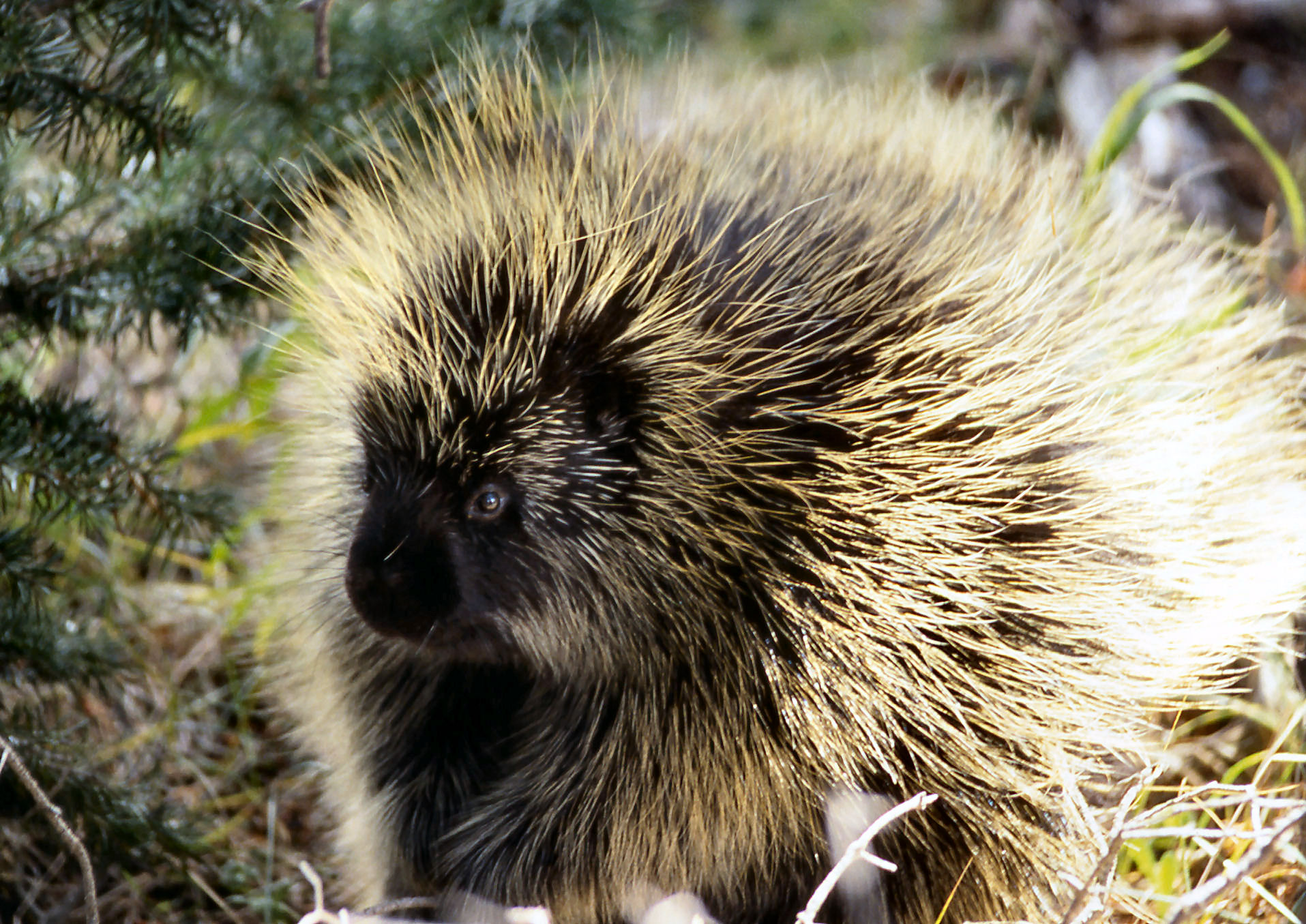

North American porcupine at a glance
Erethizon dorsatum POR-kyoo-pyne; Erethizon dorsatum is eh-RETH-ih-zahn dor-SAY-tum
- Type
- Mammal · rodents
- Diet
- Herbivore
- Size
- 25 to 31 inches long, 20 to 25 pounds (up to 30) — about the size and weight of a medium dog, but low, slow, and covered in roughly 30,000 quills.
- Lifespan
- Can live up to about 18 years in the wild.
- Conservation
- Least concern
Eats evergreen needles and inner bark in winter, buds, twigs, and leaves, berries and grasses
In winter it gnaws the inner bark and needles of conifers; once it warms up it climbs into the canopy to eat buds, twigs, and leaves.
Should you worry?
A porcupine cannot throw or shoot its quills, but they detach the instant something touches them, and the barbed tips work deeper into skin over time. Never touch or corner one; watch from a distance and keep dogs leashed.
Look up at Theodore Roosevelt, not down, and you might spot the reason a slow, nearly blind rodent has survived this long: forty feet overhead, wedged into a cottonwood fork, calmly stripping the twigs off a branch it climbed to reach. Porcupines are strong climbers despite being heavy-bodied and slow on the ground, and much of what they eat — buds, twigs, leaves — grows out of reach of anything that can’t get up there with them.
The real reason nothing hurries a porcupine is riding on its back: about 30,000 hollow, barbed quills, covering everything but its belly. It can’t throw them and can’t shoot them, whatever the old story says — they simply detach the instant something touches them, and the microscopic barbs on each tip make them brutal to pull back out. A young coyote or an off-leash dog that tries to bite one usually learns this exactly once, and often ends up with quills working deeper into its face for days afterward.
That’s a defense built on confidence, not speed, and it mostly works: a porcupine can live up to 18 years in the wild, longer than most animals its size, betting the whole time that nothing will risk a second try. So the porcupine ambling across a campground road at its own pace isn’t being careless. It’s just the one animal there that already knows how the fight ends.
Did you know?
- A porcupine carries about 30,000 hollow, barbed quills, made of keratin — the same material as human hair and nails — across everywhere but its belly.
- Porcupines cannot shoot their quills. The quills are loosely attached and detach on contact, then the barbed tips work deeper into whatever they're stuck in.
- At Theodore Roosevelt, porcupines are often spotted high in the tree canopy eating twigs — they're strong, if slow, climbers.
Common questions
Can porcupines shoot their quills?
No. A porcupine cannot throw or shoot its quills. They detach the moment something touches them, which can make it seem that way.
What do porcupines eat?
Tree bark and evergreen needles in winter, and buds, twigs, leaves, berries, and grasses once it warms up.
How many quills does a porcupine have?
About 30,000, covering its back, sides, and tail — but not its belly.
Are porcupines dangerous to dogs?
Very. A curious, inexperienced dog can end up with dozens of quills stuck in its face, and the barbed tips can work deeper into the skin over time. Keep dogs on a leash and away from porcupines.
Where do you see porcupines in national parks?
Look up. At Theodore Roosevelt they're often high in the tree canopy eating twigs, not on the ground.