Avalanche lily
A white mountain lily that blooms at the very edge of the melting snow, chasing the snowline uphill all summer as the drifts pull back.

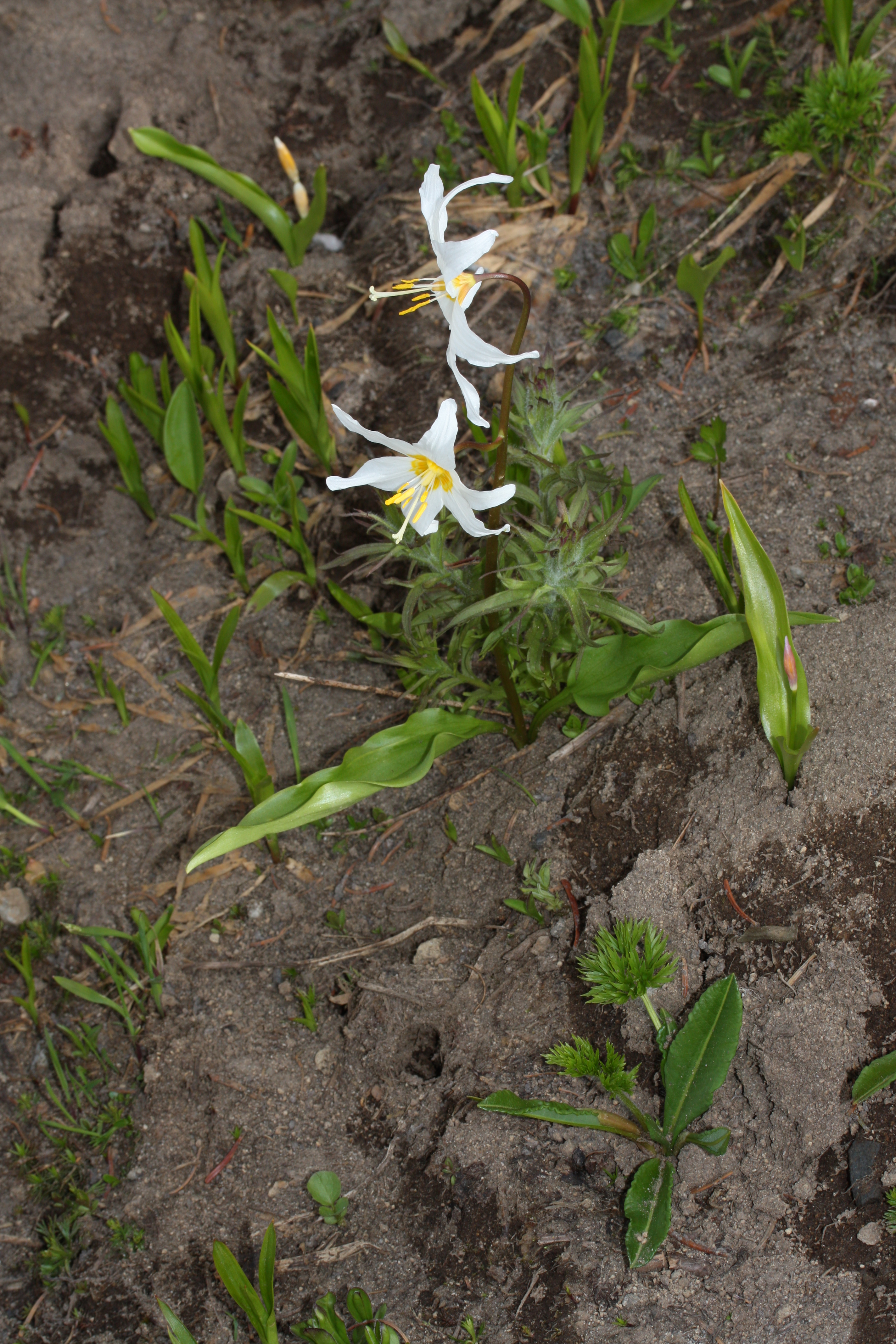
Avalanche lily at a glance
Erythronium montanum AV-uh-lanch LIL-ee; Erythronium montanum is err-ih-THROH-nee-um mon-TAH-num
- Type
- Plant · wildflower
- Diet
- Producer
- Size
- About ankle to shin high, roughly 6 to 10 inches, with one or two nodding white flowers.
- Lifespan
- A perennial that lives many years, returning from the same underground bulb each spring.
- Conservation
- Not formally assessed by IUCN; common in Pacific Northwest high meadows
A green plant that makes its own food from sunlight. It stores energy underground in a bulb through the long winter, then spends it all in a fast bloom the moment the snow melts off it.
Is it safe to touch?
Do not pick it or dig the bulb. Avalanche lilies grow in fragile high meadows that take a long time to recover, and picking the flower can kill the whole plant. Enjoy it in place and stay on the trail so the meadow survives.
The most impatient flower on the mountain does not wait for spring to arrive. It goes to meet it. As the deep snow of a Mount Rainier meadow finally begins to pull back in July, a ring of white lilies opens along the exact edge of the melt, nodding on ankle-high stalks in ground that was buried a week ago. Sometimes a flower does not even wait for the last snow to go, and pushes its stalk straight up through a thin final crust to bloom in the cold.
It can move that fast because it spent all winter getting ready underground. While the meadow lay under many feet of snow, the lily held its energy in a bulb, a packed little storehouse of food. The instant the snow clears and sunlight reaches the soil, it spends the whole store at once in a quick, early bloom, racing to flower and set seed in the short mountain summer before the snow returns.
Because the snow melts uphill as summer goes on, so does the flower. Walk the same slope in June and again in August and you will find the avalanche lilies blooming higher each time, a white tide climbing the mountain behind the retreating snow. Follow it up if you like, but leave every flower where it stands, because picking one kills the plant and these meadows are slow to grow back.
Did you know?
- It blooms right at the edge of melting snow, and sometimes pushes its flower stalk up through a thin last layer of snow to open in the cold.
- Because the snow melts uphill through the summer, you can follow the lily's bloom up a mountain, finding fresh flowers higher and higher as the weeks pass.
- Its underground bulb is a favorite food of black bears and ground squirrels, which dig them up after the plant blooms.
Common questions
Why is it called an avalanche lily?
Because it blooms in the high mountain meadows where avalanches run in winter, appearing right as the snow melts back in early summer.
How does it bloom so fast after the snow melts?
It stores energy all winter in an underground bulb. The moment the snow clears, it spends that stored food in a quick bloom, sometimes even pushing up through the last thin snow.
Can I pick one?
Please don't. Picking the flower can kill the plant, and these high meadows are slow to recover. Leave it for the next hiker and stay on the trail.