Pacific chorus frog
A two-inch frog that shifts between green and brown and calls the ribbit Hollywood dubs onto night scenes everywhere, from sea level to alpine ponds.
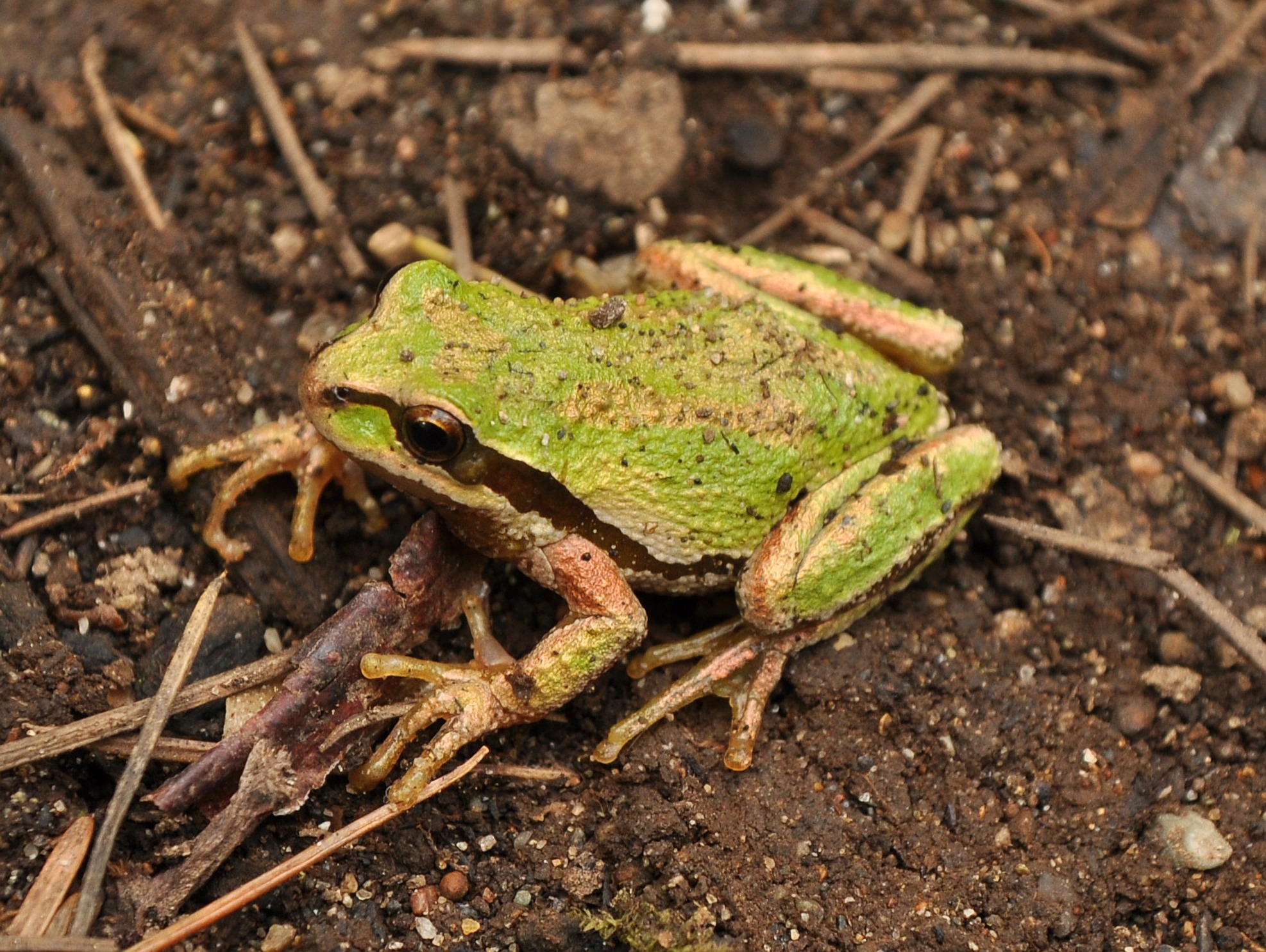

Pacific chorus frog at a glance
Pseudacris regilla puh-SIF-ik KOR-us frog; Pseudacris regilla is soo-DAK-riss reh-JILL-uh
- Type
- Amphibian · frog
- Diet
- Insectivore
- Size
- About 2 inches from nose to rump, roughly the length of an AA battery, one of the smallest frogs on the West Coast.
- Lifespan
- A few years in the wild. Wild lifespans are short and not well studied.
- Conservation
- Least concern
Eats spiders, beetles, flies, ants, small insects
It waits low in grass or brush and snaps up small invertebrates that come within reach. The biggest ones will take prey nearly their own size.
Should you worry?
Harmless. It cannot bite or sting in any way that matters. Its skin is thin, so sunscreen, bug spray, and hand lotion can hurt it. Look, don't handle, and if you must pick one up, wet your hands with plain water first.
The frog you have heard most in your life is probably one you have never seen. Every time a movie cuts to a swamp at night, a porch in the South, a jungle, a pond on another continent, the ribbit laid under the scene is almost always this one small West Coast frog, recorded near the studios in California and reused for decades. The bullfrogs and toads of the actual setting stay silent. The Pacific chorus frog gets the part.
Up close it is barely a mouthful, about as long as a large paperclip, with a dark mask running back through each eye. It calls from ditches, pond edges, and rainwater pools, and a spring chorus of males can fill a whole meadow loud enough to carry over a car engine. It also changes color, green to brown and back, over about ten minutes. The switch tracks light and moisture, not the leaf it happens to be sitting on, so the same frog can be grass-green at the pond in the morning and bark-brown in the litter by afternoon.
At Lava Beds it is the amphibian you are most likely to meet, turning up at the mouths of lava tubes and in pools no bigger than a boot print. So the next wet night in the tent, when a ribbit starts up from the dark just outside, listen for how small it is. The sound that stands in for every frog on Earth is coming from something that would sit on your thumb.
Did you know?
- It is the most commonly encountered amphibian at Lava Beds, turning up everywhere from lava-tube mouths to the smallest rainwater pools.
- Its range runs from sea level up past 10,000 feet, one of the broadest elevation spreads of any western frog.
- Despite the old name tree frog, it spends most of its time on the ground and in low plants, not up in trees.
Common questions
What does a Pacific chorus frog sound like?
A two-part ribbit or krek-ek. It is the same call used as the generic frog sound in countless movies and TV shows, because the species is so common on the West Coast.
Can Pacific chorus frogs really change color?
Yes. Over about ten minutes it can shift between green and brown, a change driven by light and moisture rather than by matching the color of a leaf or a rock.
Are Pacific chorus frogs dangerous to touch?
No, but the oils and sunscreen on your hands can hurt its thin skin, so it is best to look rather than handle it.
Where do you find Pacific chorus frogs in a park?
Almost anywhere damp: rainwater pools, pond edges, ditches, even puddles near lava-tube entrances, from the coast up into the mountains.
What eats a Pacific chorus frog?
Garter snakes are a known predator, along with bigger frogs, raccoons, opossums, fish, and birds. Fish eat its tadpoles, mosquitofish most of all. Some small water animals eat them too.