Kokanee salmon
A landlocked sockeye salmon that spends its whole life inside Crater Lake, turning bright red to spawn without ever swimming a mile toward the ocean.

Kokanee salmon at a glance
Oncorhynchus nerka koh-KAH-nee SAL-mun; Oncorhynchus nerka is on-koh-RING-kus NER-kuh
- Type
- Fish · salmon
- Diet
- Carnivore
- Size
- Rarely past about 14 inches, roughly a school ruler and a half, small next to the 18-to-30-inch ocean-going sockeye it split off from.
- Lifespan
- About 4 years, spent entirely in Crater Lake, then a single fall spawning run followed by death.
- Conservation
- Least concern (IUCN, at the sockeye species level); Crater Lake's kokanee are stocked, not native, and are not separately protected
Eats zooplankton, small water insects
A kokanee spends its life straining tiny drifting animals called zooplankton out of the open water, sometimes picking off small insects near the surface. It never leaves fresh water to feed at sea the way its sockeye relatives do.
Should you worry?
Completely harmless to people. Crater Lake has no size or catch limit on kokanee, so a family fishing with an adult and a state license can keep what they catch, using only non-organic artificial lures. The lake is reached only by the steep, 1.1-mile Cleetwood Cove Trail.
Crater Lake holds the bluest, clearest water in the country, and for most of its history not a single fish swam in it. The caldera filled with snowmelt and rain in a bowl with no river running in or out, so nothing could reach it. Every fish in that famous blue water today is there because a person carried it in. Starting in 1888, people hauled fish up to the rim and tipped them in, seven different kinds over the next fifty years. Only two held on. One of them is the kokanee.
A kokanee is a sockeye salmon that never goes to sea. Its ocean-going cousins hatch in fresh water, ride the rivers down to the Pacific, spend years growing fat in salt water, then fight their way back upstream to spawn and die. The kokanee skips the ocean entirely and lives its whole four years in the lake, feeding on clouds of drifting zooplankton. It stays smaller for it, rarely longer than a school ruler and a half.
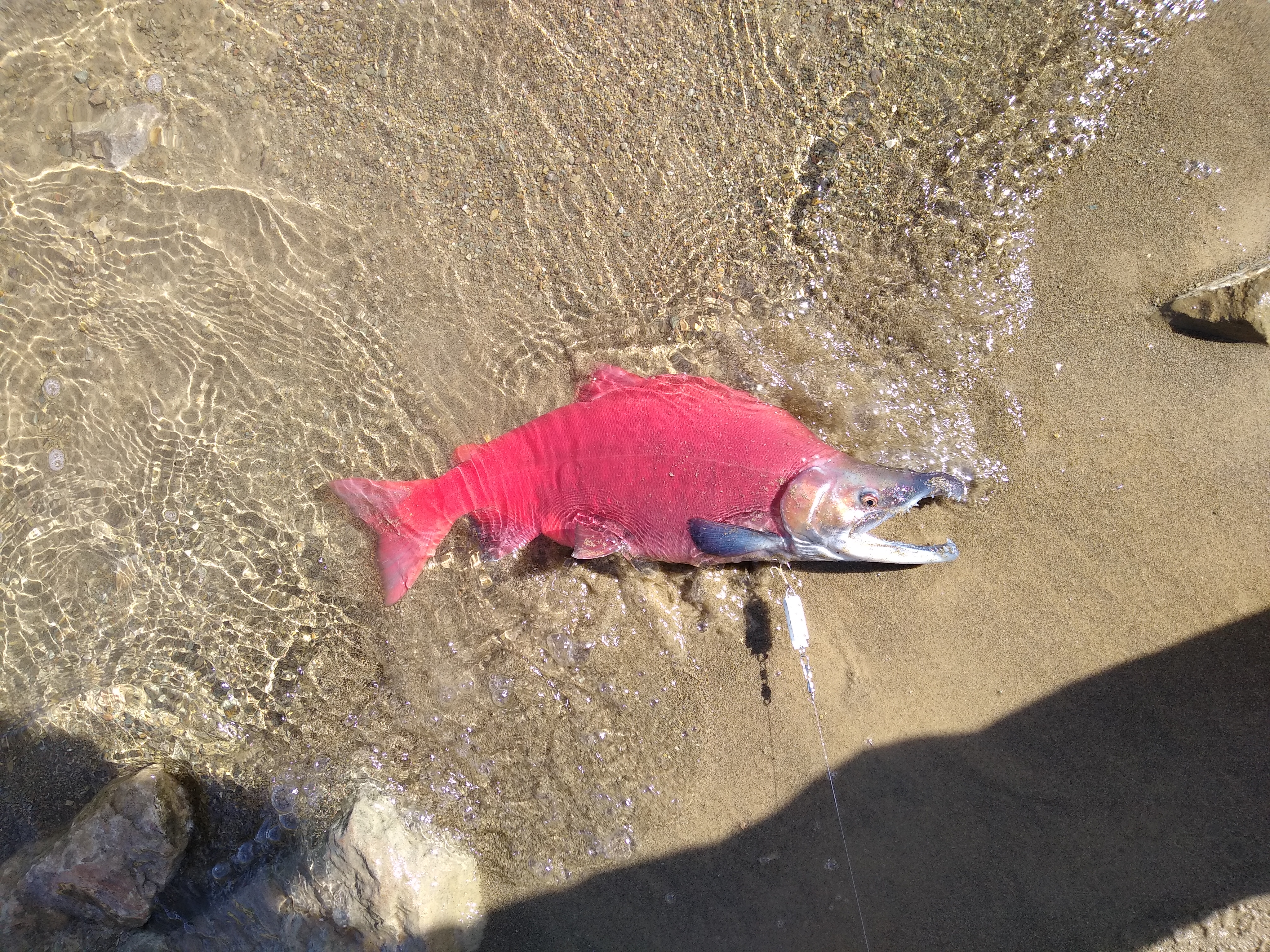
Then, in its last fall, it does the one thing that gives the whole story away. A kokanee that has never tasted salt water, never left the caldera, never seen a river, turns the same fire-engine red as a sockeye fresh from the sea, grows the same hooked jaw and humped back, and drives up a lake tributary to spawn. It is running an ancient set of instructions for an ocean it will never visit, in a lake that a person filled one bucket at a time.
Did you know?
- Crater Lake had no fish at all until 1888. Everything swimming in it today, kokanee included, arrived because someone carried it there in a bucket or a can.
- Of the seven fish species tried in the lake between 1888 and 1941, only two stuck: kokanee salmon and rainbow trout. The other five did not survive.
- A kokanee is the same species as an ocean-going sockeye, just a version that never leaves fresh water. It still turns bright red and grows a hooked jaw to spawn, exactly like its sea-run relatives.
Common questions
Are there fish in Crater Lake?
Yes, but they weren't always there. The lake had no fish at all until people started stocking it in 1888. Today kokanee salmon and rainbow trout are the two species that survived.
What is a kokanee salmon?
A landlocked sockeye salmon, the same species that normally swims to the ocean and back, except a kokanee spends its whole life in one lake and never sees salt water.
Why do kokanee turn red?
To spawn. Ocean-going sockeye turn bright red with a green head and a hooked jaw before spawning, and kokanee go through the identical color change even though they've never left the lake.
Can I fish for kokanee at Crater Lake?
Yes, with an adult and a valid license. There's no size or catch limit, but only non-organic artificial lures are allowed, and the lake is reached only by the steep Cleetwood Cove Trail.
What eats kokanee salmon?
Kokanee are a lake-dwelling form of sockeye salmon. For the species as a whole, bears and gulls eat adults, mostly in streams and rivers. Lake trout and mountain whitefish eat the young. Bald eagles, rainbow and cutthroat trout, and sculpins are known predators too.