Swift fox
A cat-sized fox of the shortgrass prairie, wiped out of South Dakota for most of the twentieth century and reintroduced to Badlands starting in 2003.

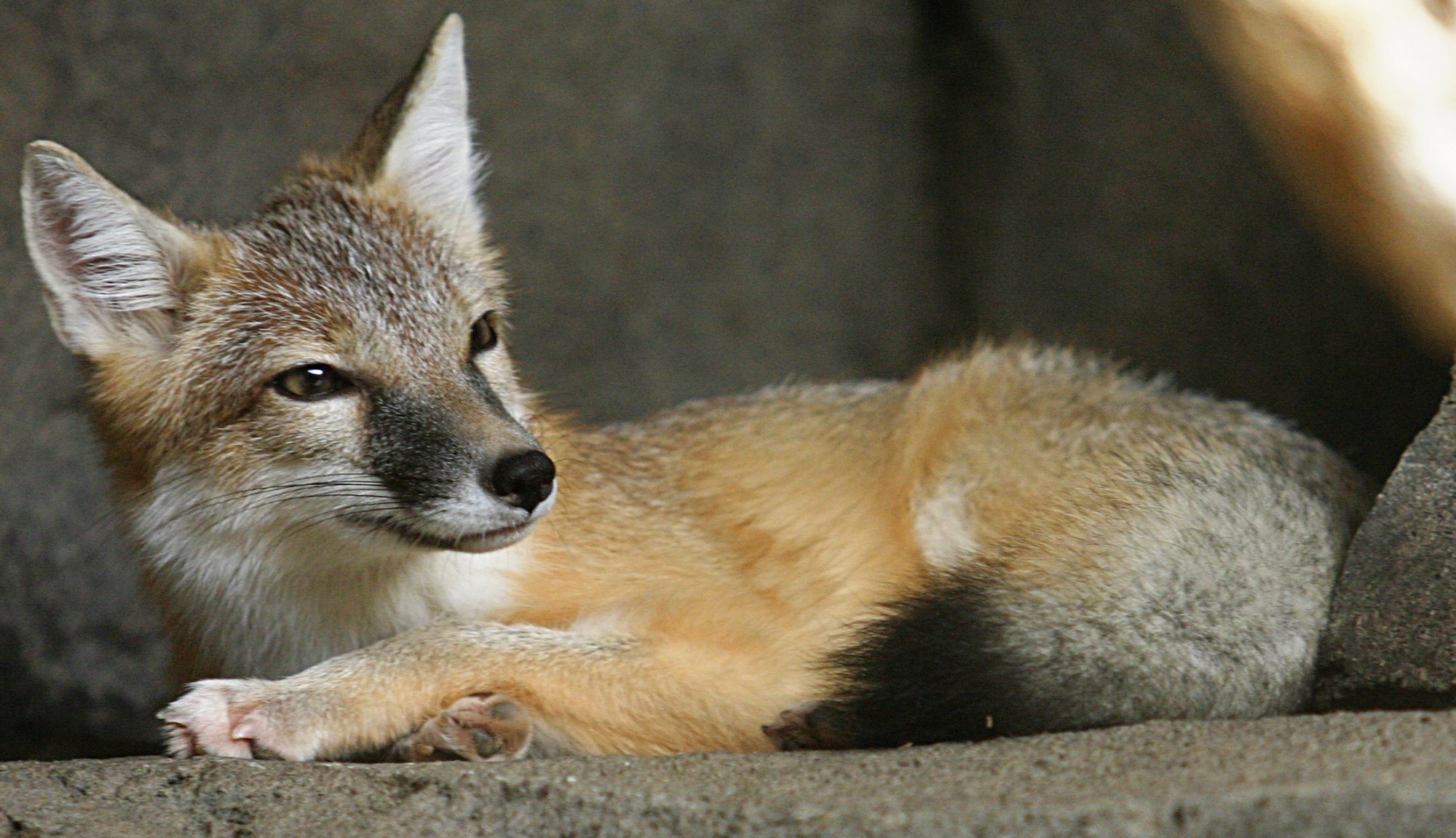
Swift fox at a glance
Vulpes velox swift fox; Vulpes velox is VUL-peez VEE-loks
- Type
- Mammal · dogs
- Diet
- Omnivore
- Size
- About 2 to 3 kilograms and 80 centimeters long nose to tail-tip — roughly the size of a house cat, and light enough that a badger or coyote can kill it.
- Lifespan
- About 3 to 6 years in the wild.
- Conservation
- Least concern
Eats mice, ground squirrels, rabbits, insects, berries and grasses
It hunts alone at night close to its den, catching small mammals, birds, and insects, and eats berries and grasses when meat is scarce.
Should you worry?
Harmless to people. Swift foxes are shy, mostly nocturnal, and rely on their den year-round, so the real risk is disturbing a den entrance. Leave burrows alone and keep dogs back.
A swift fox crossing the Badlands loop road at dusk moves so low and so fast that most drivers clock it as a shadow, not an animal barely heavier than a bag of sugar. It’s one of the smallest wild foxes in North America, about the size of a house cat, and it disappeared from South Dakota for most of the twentieth century — trapped, poisoned as a side effect of coyote and wolf control, and squeezed out as the shortgrass prairie it needed got plowed under.
Starting in 2003, biologists moved swift foxes from Colorado and Wyoming into Badlands to rebuild what had vanished. The park said yes to the fox; the ground underneath it was less sure. A researcher who spent years tracking the reintroduced population found survival low across the board — about 47% of pups and only 27% of yearlings and adults made it to the next year — and pointed to the terrain itself: the Badlands’ rugged buttes and canyons, she found, aren’t nearly as good a home for a den-dependent prairie sprinter as the smoother grassland just outside the park.
Twenty years on, the fox is still there, but not thriving the way a reintroduction success story is supposed to go. Biologists have since found fewer swift foxes in counties where they used to turn up reliably. A species this small loses every fight it can’t outrun, and the Badlands, it turns out, were easier to release a fox into than to actually build a fox a life in.
Did you know?
- Swift foxes are about the size of a house cat, one of the smallest wild fox species in North America.
- Biologists reintroduced swift foxes to Badlands starting in 2003, using animals moved from Colorado and Wyoming, after the species had disappeared from the area.
- A study tracking the reintroduced foxes found only about 27% of yearlings and adults survived a given year, and researchers said the park's rugged terrain suited them worse than the flatter grassland nearby.
Common questions
How big is a swift fox?
About the size of a house cat — 2 to 3 kilograms and roughly 80 centimeters long, nose to tail-tip. It's one of the smallest foxes in North America.
What do swift foxes eat?
Small mammals like mice and ground squirrels, rabbits, insects, and, when meat is scarce, berries and grasses.
Why were swift foxes reintroduced to Badlands?
They had disappeared from the area by the mid-1900s due to habitat loss and predator-poisoning campaigns, so biologists released foxes from Colorado and Wyoming starting in 2003 to rebuild a population.
Are swift foxes endangered?
Globally the IUCN lists them as least concern, but several states, including South Dakota, still track them as a species of conservation concern because local populations remain fragile.
Are swift foxes dangerous?
No. They're small, shy, and nocturnal, and avoid people entirely.
Where it lives
Where we got this
- USGS — Age-specific survival of a reintroduced swift fox population, Badlands National Park
- SDSU Extension — Swift Fox Status on South Dakota's Grasslands
- The Wildlife Society — Reintroduced foxes don't take completely to badlands
- Colorado Parks and Wildlife — Swift Fox species profile
- Animal Diversity Web (University of Michigan) — Vulpes velox