Eastern hellbender
A giant, wrinkly salamander that breathes through its skin and hides under rocks in cold, clean streams at Great Smoky Mountains and New River Gorge.
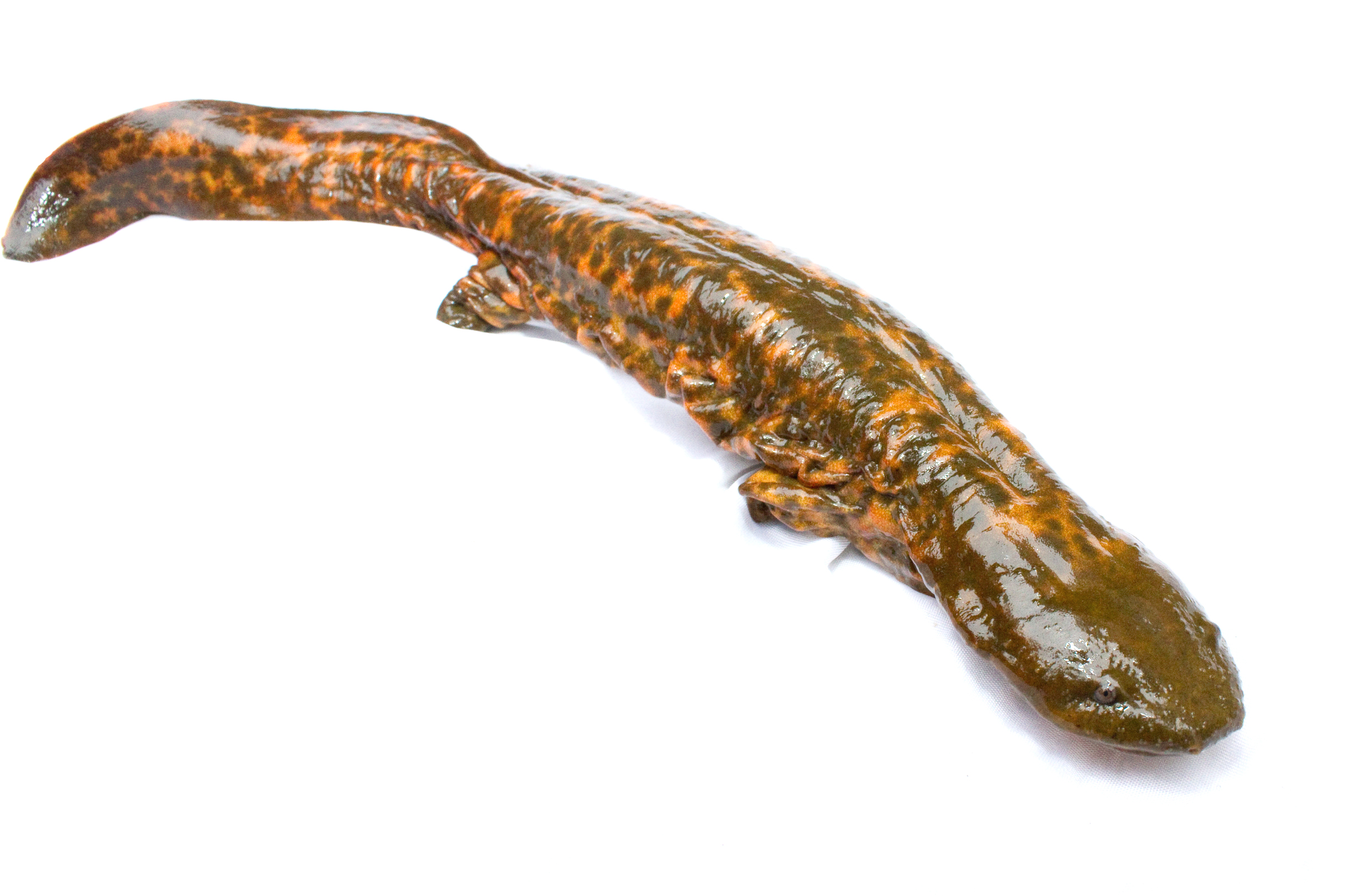

Eastern hellbender at a glance
Cryptobranchus alleganiensis HEL-ben-der; Cryptobranchus alleganiensis is krip-toh-BRANK-us al-uh-gay-nee-EN-sis
- Type
- Amphibian · salamander
- Diet
- Carnivore
- Size
- It grows up to about 2 feet long, close to the length of a baseball bat, which makes it the largest salamander in North America.
- Lifespan
- A long life for an amphibian, up to about 30 years in the wild.
- Conservation
- Vulnerable (IUCN); proposed for U.S. Endangered Species Act listing as Endangered in 2024
Eats crayfish, small fish, worms, water insects
It hunts at night, mostly for crayfish. It waits under a flat rock and sucks prey into its wide mouth with a fast gulp. It barely uses its eyes, feeling and smelling for food instead.
Should you worry?
A hellbender is completely harmless to people. An old myth says it is poisonous or that its slime is dangerous, and that is not true. It is the hellbender that needs protection from us. If you are wading or fishing and see one, do not lift the rocks it hides under, and if you catch one by accident, wet your hands and let it slip gently back into the water. Never take one home.
A hellbender is the largest salamander in North America, up to about two feet long, close to a baseball bat. It is built to disappear. It is flat and wrinkly, with loose folds of skin hanging along its sides, and it spends the day pressed under a big flat rock in a cold mountain stream. Those folds are not just for show. A hellbender breathes mostly through its skin, and the extra surface lets it pull more oxygen out of the water, which is why it can only live where a stream runs clean and cold and full of oxygen.
At night it hunts, mostly for crayfish. It barely uses its small eyes, feeling and smelling along the stream bottom instead, and when prey is close enough it opens its wide mouth and sucks the animal in with one fast gulp. For all its size it is shy, and for all its nicknames (“snot otter,” “mud devil,” “Allegheny alligator”), it would never bother a person. An old story that its slime is poisonous is simply not true.
If there is danger in the hellbender’s story, it runs the other way: the hellbender needs protection from us. Dirt washing into streams, warming water, and pollution have taken so many of its homes that most populations are shrinking, and in 2024 it was proposed for federal protection as an endangered species. Because it can only live in a healthy stream, finding one is good news about the water. So if you are wading and see one, leave its rocks where they are, and if you catch one by accident, wet your hands and let it slip gently back.
Did you know?
- A hellbender breathes mostly through its skin. The wrinkly, loose folds along its sides give it more surface to soak up oxygen from the water, so it needs streams that are clean and cold and rich in oxygen.
- People have given it wild nicknames like "snot otter," "mud devil," and "Allegheny alligator," but it is a shy salamander that hides under rocks and would never bother a person.
- A hellbender is a living water-quality test. Because it needs clean, cool, oxygen-rich streams, finding one is a good sign the stream is healthy, and losing them warns that the water is in trouble.
Common questions
Are hellbenders dangerous or poisonous?
No. That is an old myth. A hellbender cannot hurt you, and its skin and slime are harmless. It is a shy salamander that hides under rocks.
Why are hellbenders disappearing?
They need clean, cold, oxygen-rich streams, and dirt, warm water, and pollution wash their homes away. Across much of their range most populations are shrinking, which is why they were proposed for federal protection in 2024.
How big do hellbenders get?
Up to about 2 feet long, the largest salamander in North America. That is close to the length of a baseball bat.
What should I do if I find one while fishing?
Leave the rocks where they are, and if you catch one by accident, wet your hands and let it slide gently back into the water. Do not carry it around or take it home.
What eats an eastern hellbender?
Large fish eat hellbenders, mostly the young larvae. These include smallmouth bass, sculpins, and rainbow and brown trout. Adult hellbenders eat young hellbenders too.
Where we got this
- NPS — Amphibians incl. Hellbenders (Great Smoky Mountains)
- NPS — Amphibians incl. Hellbenders (New River Gorge)
- USFWS — Eastern Hellbender (Cryptobranchus alleganiensis alleganiensis)
- Federal Register — Proposed Endangered Species Status for Eastern Hellbender (Dec 13, 2024)
- IUCN Red List — Cryptobranchus alleganiensis (Vulnerable)
- Animal Diversity Web: Cryptobranchus alleganiensis