Greater sage-grouse
North America's largest grouse, dependent on sagebrush, known for the popping, booming display males perform on spring dancing grounds.
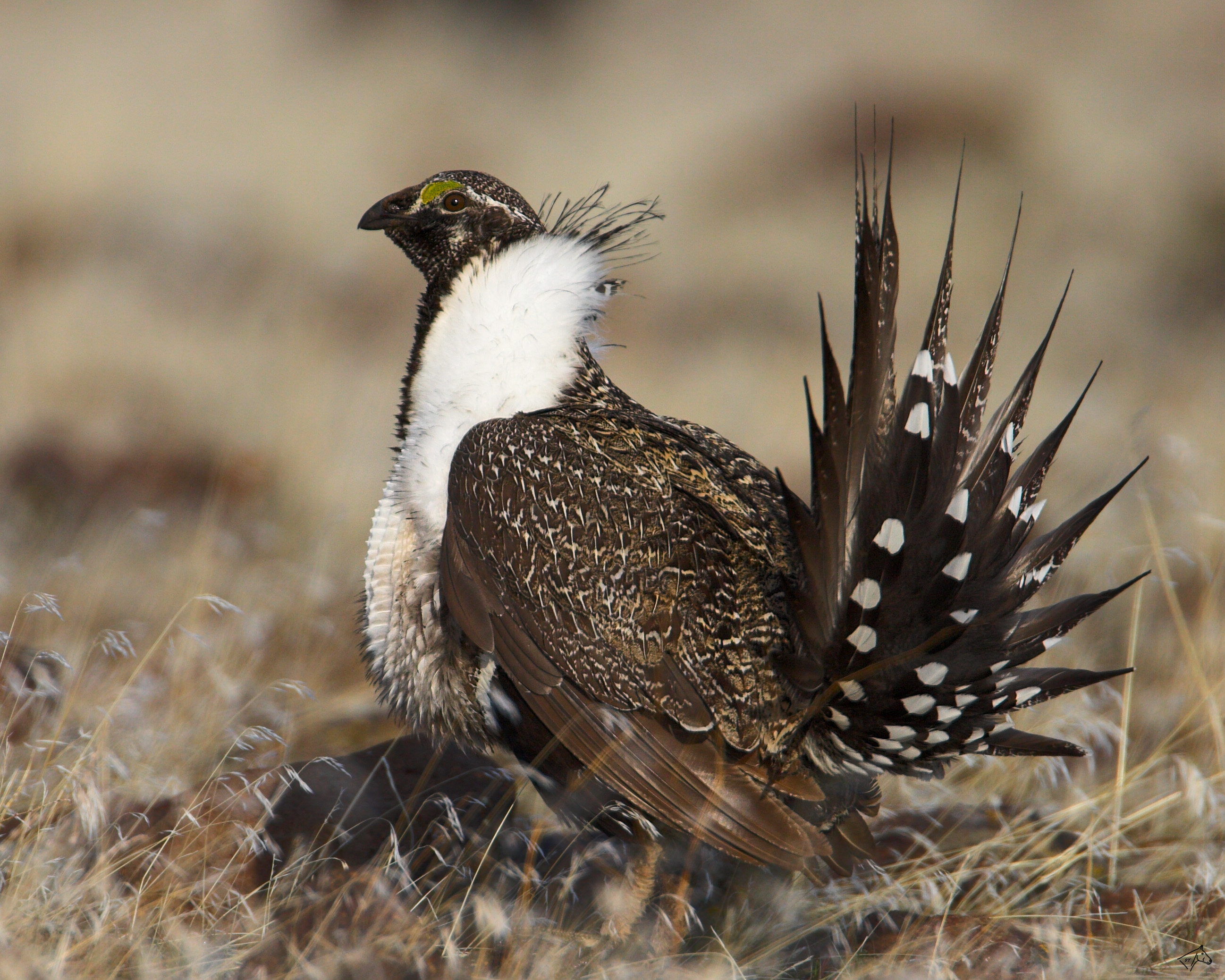

Greater sage-grouse at a glance
Centrocercus urophasianus SAYJ grows; Centrocercus urophasianus is sen-troh-SER-kus yoor-oh-fay-zee-AY-nus
- Type
- Bird · grouse
- Diet
- Herbivore
- Size
- Males can weigh up to 7 pounds and stretch 30 inches long, about the size of a chicken, making this the largest grouse in North America. Females are smaller, 2 to 4 pounds.
- Lifespan
- Not well known in the wild. In captivity they average about 7 years.
- Conservation
- Near threatened
Eats sagebrush leaves, forbs, insects (chicks)
Sagebrush leaves make up almost its whole winter diet, up to 99 percent, since the plant stays green above the snow when almost nothing else does. In spring and summer it adds flowering plants and, for chicks, insects.
Should you worry?
Sage-grouse are not dangerous. They are easily disturbed, especially on a lek at dawn, so watch quietly from a distance and never walk into a display ground.
Before the light comes up over a sagebrush flat, a low series of coos starts somewhere in the dark, followed by a wing-swish and then two sharp pops, like knuckles cracking through a loudspeaker. That is a male greater sage-grouse working a lek, a patch of open ground where he and a dozen other males have gathered to be looked at.
The pops come from a pair of yellow air sacs on his chest, inflated and released in the same motion, timed to a strut that drags his spiked tail feathers and puffs a white ruff around his neck. Females walk the lek watching every male do this, and most choose only one or two of them for the whole morning.
None of it works without sagebrush. The same plant hides the lek, feeds the chicks, and carries sage-grouse through winter almost single-handedly, up to 99 percent of what they eat once snow buries everything else. Since the late 1960s, their numbers have slipped about 2.3 percent a year on average as that sagebrush country keeps getting cut into smaller pieces.
Did you know?
- A male greater sage-grouse's mating call ends with two loud pops from its chest air sacs, audible from a quarter mile away across open sagebrush country.
- In winter, sagebrush leaves make up 99 percent of a sage-grouse's diet, one of the few birds that can live almost entirely on a single shrub.
- The U.S. Fish and Wildlife Service decided in 2015 that the species did not need Endangered Species Act protection, crediting conservation agreements covering about 90 percent of its breeding habitat.
Common questions
How big is a greater sage-grouse?
It is the largest grouse in North America. Males can weigh up to 7 pounds, about the size of a chicken.
What sound does a sage-grouse make?
Males make a series of wing swishes, low coos, and two loud pops from their chest air sacs, all part of a mating display on a lek.
What do sage-grouse eat?
Mostly sagebrush leaves, especially in winter when sagebrush can make up 99 percent of their diet.
Are sage-grouse endangered?
They are not listed under the Endangered Species Act, but their numbers have declined for decades as sagebrush habitat has shrunk, and biologists still watch them closely.
What eats a greater sage-grouse?
In Montana, golden eagles, prairie falcons, bobcats, and mink catch adults on the leks. Magpies, coyotes, and badgers raid nests, and ravens take eggs.