Giant sequoia
The largest tree on Earth by wood volume, growing only in scattered groves on the west slope of California's Sierra Nevada.
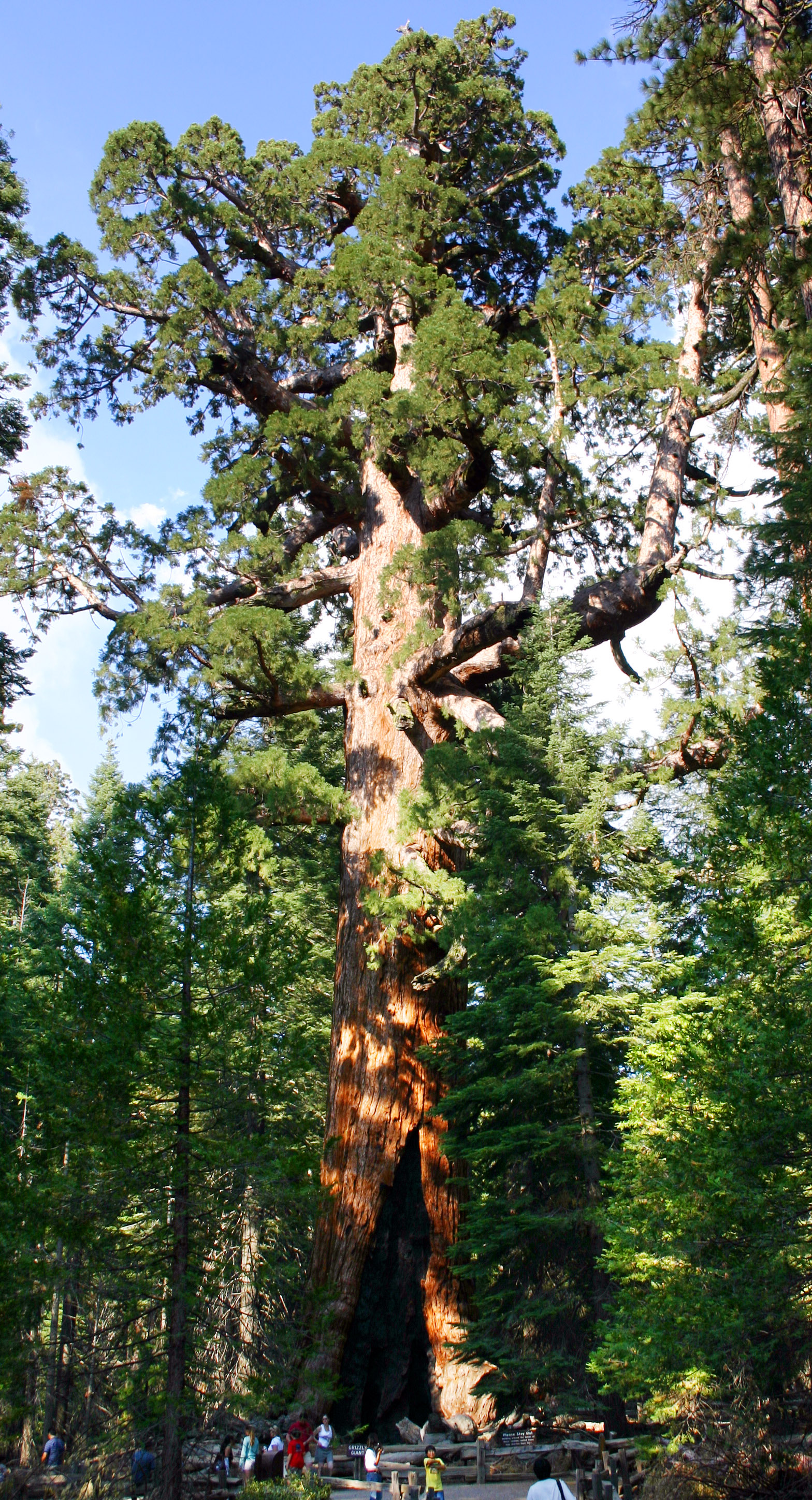

Giant sequoia at a glance
Sequoiadendron giganteum JY-ant seh-KWOY-uh; Sequoiadendron giganteum is seh-kwoy-uh-DEN-dron jy-GAN-tee-um
- Type
- Plant · tree
- Diet
- Producer
- Size
- The biggest one, General Sherman, is about 275 feet tall, roughly as high as a 27-story building. Its trunk is so wide that it would take more than a dozen kids holding hands to reach around the bottom.
- Lifespan
- One of the longest-living trees on Earth. Giant sequoias can live more than 3,000 years, and the oldest counted was around 3,200 years old.
- Conservation
- Endangered (IUCN)
Eats sunlight, water, carbon dioxide, soil nutrients, snowmelt
A giant sequoia makes its own food. Its needles use sunlight to turn water and carbon dioxide into sugar. In the mountains it drinks deep, pulling up snowmelt that soaks the ground each spring.
Is it safe to touch?
A giant sequoia is completely harmless. Nothing to grab or sting. The care goes the other way: their roots spread out just under the surface and are easily crushed, so stay on the trail and never build fires near them.
The giant sequoia is the biggest tree on Earth, not the tallest but the largest by the sheer amount of wood it holds. The champion, a tree named General Sherman in Sequoia National Park, stands about 275 feet high, roughly as tall as a 27-story building, and carries around 52,000 cubic feet of wood, enough to fill a large swimming pool many times over. Its trunk is so wide at the base that it would take more than a dozen kids holding hands to reach around it. Giant sequoias grow only in scattered groves on the west slope of California’s Sierra Nevada, including groves at Sequoia, Kings Canyon, and Yosemite. Like all green plants they make their own food, their needles turning sunlight, water, and carbon dioxide into sugar, and in the mountains they drink deep from the snowmelt that soaks the ground each spring.
The strangest thing about the biggest tree on Earth is where it starts. A sequoia seed is about the size of a flake of oatmeal, something you could barely feel in your hand, and it needs fire to get going. Heat from a passing fire dries and opens the cones so the seeds fall, and it clears the shady ground and burns away competing plants so the seedlings get sunlight and bare soil. The grown trees are built to take the flames: their reddish bark can be a couple of feet thick, spongy, and slow to burn. A giant sequoia has a long run at it: some live more than 3,000 years, and the oldest one ever counted was around 3,200 years old.
The southern Sierra where these trees grow is the homeland of the Monache, Tübatulabal, Owens Valley Paiute, Yokuts, and Newe (Western Shoshone) peoples. The giant sequoia is now listed as Endangered on the IUCN Red List, its few groves at risk from hotter, more severe fires. A sequoia will not hurt a visitor, but a visitor can hurt it: the roots spread out just under the surface and crush easily, so stay on the trail and never build a fire near one.
Did you know?
- General Sherman is not the tallest tree, but it is the biggest. It holds more wood than almost any other single tree alive, about 52,000 cubic feet, enough to fill a large swimming pool many times over.
- Giant sequoias actually need fire. The heat opens their cones and clears the ground so seeds can sprout, and their thick, spongy bark protects the grown trees from the flames.
- A sequoia seed is tiny, about the size of a flake of oatmeal. It is hard to believe the biggest tree on Earth starts from something you could barely feel in your hand.
Common questions
What is the biggest tree in the world?
A giant sequoia named General Sherman, in Sequoia National Park. It is not the tallest tree, but it holds more wood than any other, about 52,000 cubic feet.
How old can a giant sequoia get?
More than 3,000 years. The oldest one counted was around 3,200 years old, older than almost anything else alive.
Why do giant sequoias need fire?
Fire opens their cones so seeds fall out, and it clears the ground so those seeds can grow. Their thick bark keeps the big trees safe from the flames.
What is the difference between a giant sequoia and a coast redwood?
They are cousins. Coast redwoods are the tallest trees. Giant sequoias are the biggest around, growing in the mountains instead of by the sea.