Coastal giant salamander
The largest terrestrial salamander in North America, a foot-long forest hunter that eats mice and other salamanders and can bark when it is grabbed.

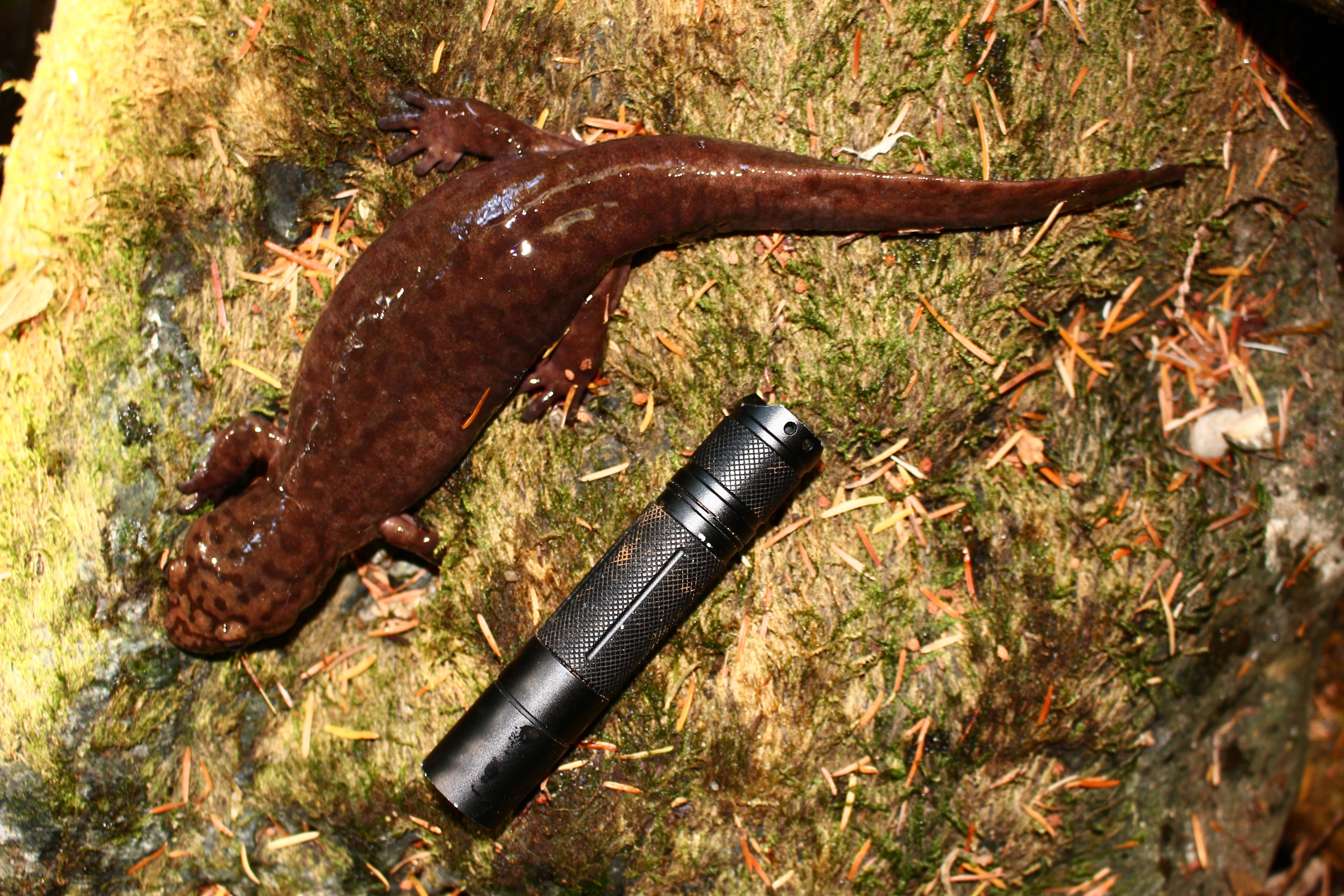
Coastal giant salamander at a glance
Dicamptodon tenebrosus COAST-ul GY-unt SAL-uh-man-der; Dicamptodon tenebrosus is dy-KAMP-toh-don ten-eh-BROH-sus
- Type
- Amphibian · salamander
- Diet
- Carnivore
- Size
- Up to about 13 inches long, close to the length of a standard sheet of notebook paper, the largest salamander that lives on land in North America.
- Conservation
- Least concern
Eats mice, insects, worms, slugs, small snakes, other salamanders
It sits and waits in leaf litter or a stream eddy, then lunges to grab anything it can overpower and fit in its mouth, from worms and slugs up to mice, small snakes, and other salamanders, including its own species.
Should you worry?
It can't poison you, but it can deliver a surprisingly painful bite if you pick one up and it feels threatened. Look, don't grab. Its skin is delicate and easily damaged by sunscreen, bug spray, or dry hands.
Something under a streamside log at Redwood can bark, and it is not a dog, a bird, or anything else you’d expect to hear make that sound in a forest. That is not an exaggeration for effect. The coastal giant salamander is the largest salamander that lives on land anywhere in North America, up to 13 inches of mottled brown and tan muscle, and it is one of the very few salamanders on Earth able to make a sound at all. Grab one and it can produce a sharp bark or rattling squeak, a trick that would be strange from any amphibian and is stranger still from one whose entire family is otherwise mute.
Size and voice both point at the same fact: this is not the harmless bug-eater most people picture when they hear “salamander.” It sits still in leaf litter or a quiet stream eddy, an ambush predator waiting for something to wander close, and then lunges. Worms and slugs are on the menu, but so are mice, small snakes, and other salamanders, sometimes even other coastal giant salamanders. A larva that never leaves the water can grow just as large without ever losing its feathery gills, becoming a permanent water-dwelling adult content to keep hunting from the stream bed instead of the bank.
Picking one up is possible and, for a kid crouched by a cold Pacific Northwest creek, tempting. It will not poison anyone the way the newts sharing its streams can, but a foot-long ambush predator with a genuine bite does not enjoy being handled, and its thin skin bruises and dries out fast in human hands. The better move is the one that also gets the better look: put the log back where it was, crouch at the water’s edge, and wait to see if anything under the next rock decides to bark.
Did you know?
- A coastal giant salamander can grow up to 13 inches long, making it the largest salamander that lives on land anywhere in North America.
- It eats mice, small snakes, and other salamanders, not just the bugs and worms most salamanders stick to.
- Squeeze or threaten one and it may bark or squeak at you, a rare trick among salamanders, whose relatives are almost all silent.
Common questions
Do coastal giant salamanders bite? Are they poisonous?
They are not poisonous, but they do bite. Pick one up and it can give a surprisingly painful bite. Look, don't grab; its skin is also easily hurt by sunscreen, bug spray, or dry hands.
Do coastal giant salamanders really bark?
Yes. If one is grabbed or feels threatened it can make a sharp bark or squeak, which is unusual since almost no other salamander can make sound at all.
What does a coastal giant salamander eat?
Worms, slugs, and insects, but also mice, small snakes, and other salamanders. It's large enough to eat small vertebrates, not just bugs.
Is it dangerous to pick one up?
It can't poison you, but it can bite hard enough to hurt, and handling can damage its delicate skin. Look, don't grab.
Where would I actually find one?
In and along cold, clear, fast-moving forest streams, usually under rocks or logs within about 50 meters of the water.
Where it lives
Where we got this
- NPS — Amphibians of Mount Rainier National Park ("yelp"-like call, size, diet — direct species account)
- NPS — Amphibians of North Cascades National Park (Pacific giant salamander, same genus, range context)
- California Herps — Dicamptodon tenebrosus (largest terrestrial salamander, diet, range incl. Del Norte/Humboldt counties; confirms species absent from Olympic Peninsula)
- IUCN Red List — Dicamptodon tenebrosus (Least Concern)