Western painted turtle
A smooth-shelled turtle with red-striped legs that basks on logs in northern lakes and survived being nearly frozen as a hatchling.
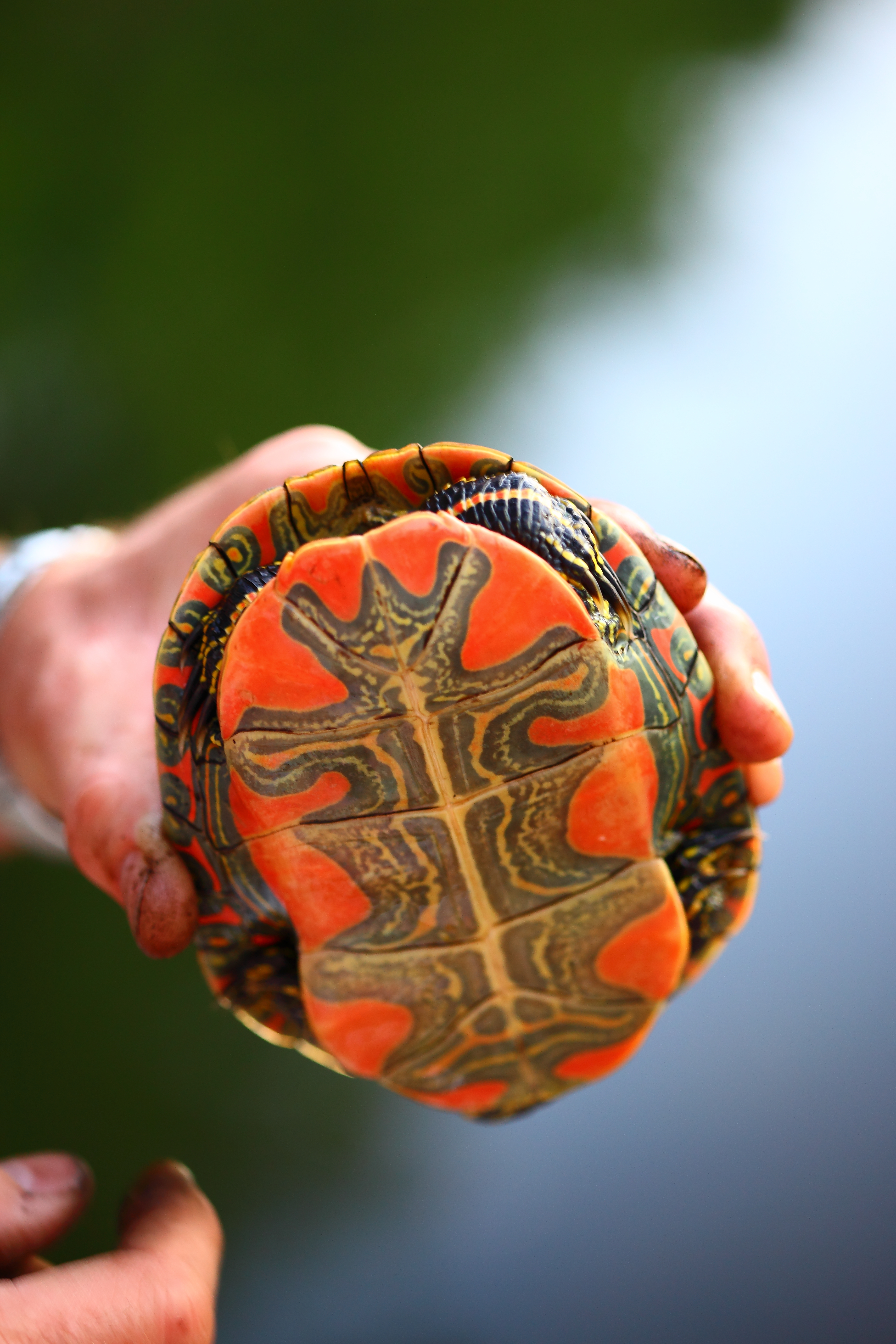

Western painted turtle at a glance
Chrysemys picta bellii KRY-suh-miss PIK-tuh BEL-ee-eye
- Type
- Reptile · turtles
- Diet
- Omnivore
- Size
- Shells run about 4 to 10 inches long, roughly the size of a dinner plate at the largest; females grow bigger than males.
- Lifespan
- Often 30 to 40 years in the wild.
- Conservation
- Least concern
Eats pond weeds, algae, insects, tadpoles, small fish, snails
It forages slowly underwater, snapping up plants and slow-moving animals with a sharp-edged beak — it has no teeth.
Should you worry?
Harmless. It will slide off its log and vanish into the water long before anyone gets close. Watch from the bank — don't chase one into the water or try to pick one up, since a startled turtle may bite or scratch in self-defense.
Six turtles line a half-sunk log at the edge of a Glacier lake like cars parked at a curb, necks stretched toward the sun, and not one of them looks up as you walk past. A western painted turtle spends a lot of a summer day exactly like this: still, warm, unbothered, the red stripes down its legs the brightest thing in the water. It’s easy to mistake the whole scene for laziness.
It is not. Six months before this log, most of these turtles were eggs hatching in a shallow nest, then hatchlings staying put through a winter that should have killed them. Instead of digging down to warmer ground, they do something stranger: they empty their guts of anything that could seed an ice crystal, and their whole body stays liquid down to roughly -4°C — about 25 degrees Fahrenheit — without ever freezing solid. Adults handle the same problem differently, sinking into pond mud once the water drops below 50°F and going weeks without a breath of air. The turtle basking today either survived that trick as a hatchling or is still living it as an adult somewhere under the ice come November.
At Glacier, this is one of only three reptile species confirmed in the entire park, which makes the log worth a second look. Keep your distance and the whole row stays put; get too close and every one of them drops into the water within a second, gone before the ripples reach the bank.
Did you know?
- A hatchling western painted turtle can survive its body staying unfrozen down to about -4°C (25°F) by purging its gut so nothing inside it can trigger ice to start forming.
- Once pond water drops below about 50°F, adults sink into the mud at the bottom and can go weeks without breathing air.
- It is one of only three confirmed reptile species in all of Glacier National Park.
Common questions
Are painted turtles dangerous to touch?
No. They're shy and will swim away rather than confront a person; a startled one might scratch or nip if handled, so it's best to just watch from the bank.
How do painted turtles survive winter?
Adults bury themselves in mud underwater and barely breathe for weeks; hatchlings that stay in the nest over winter survive by staying unfrozen even below the normal freezing point, a trick called supercooling.
Where do you see painted turtles?
Basking on logs, rocks, or the bank of a pond or slow stream, usually in a row, ready to slip into the water fast if startled.
What do painted turtles eat?
Both plants and small animals — pond weeds and algae along with insects, tadpoles, and little fish.
What eats a western painted turtle?
Raccoons, otters, mink, and foxes eat painted turtles and their eggs. At the first sign of danger a turtle slides into the water or pulls into its shell.