Common collared lizard
A bright, big-headed lizard with two black neck bands that can sprint on its back legs like a tiny dinosaur across the slickrock at Arches and Canyonlands.
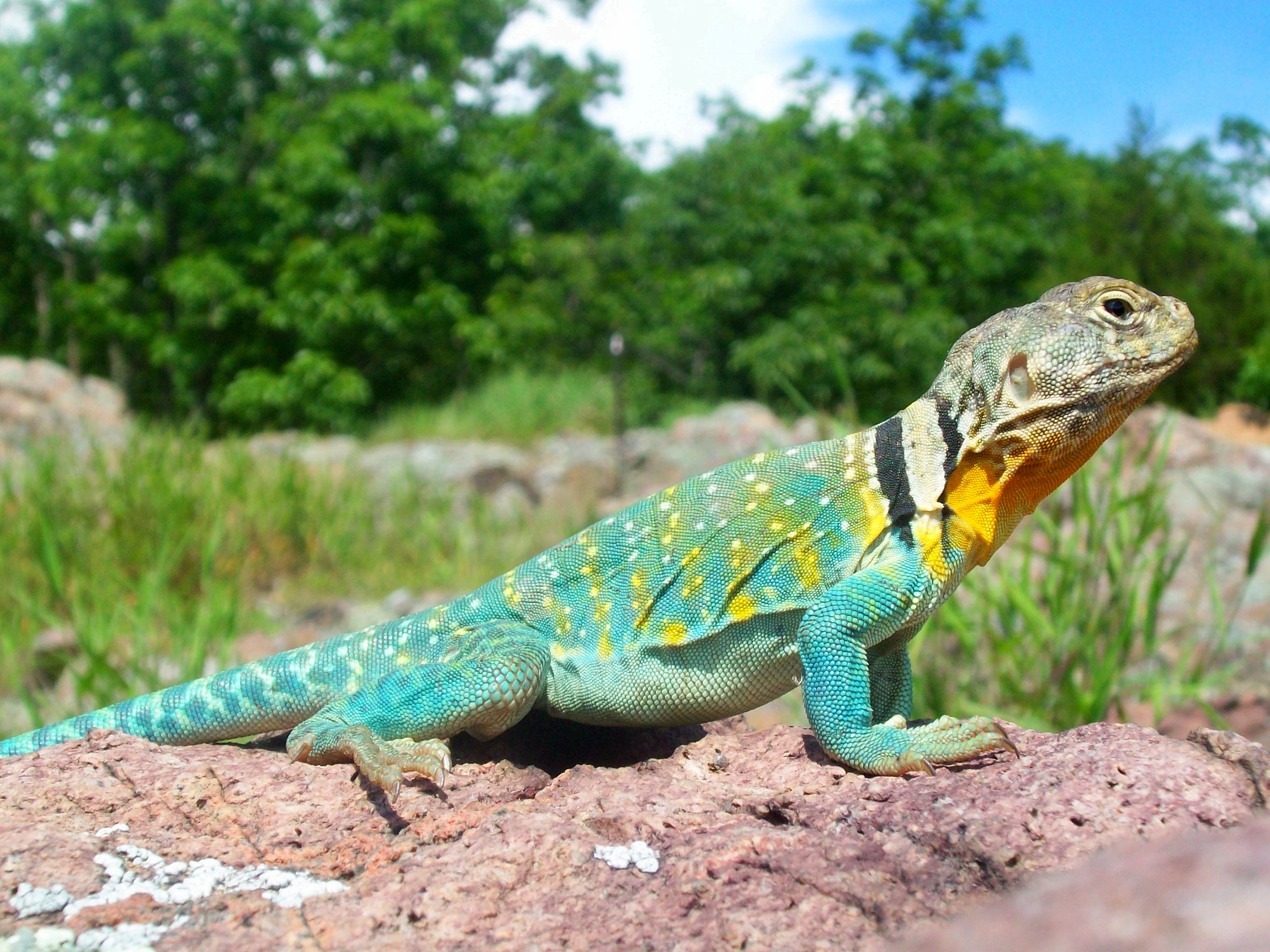

Common collared lizard at a glance
Crotaphytus collaris kuh-LARD LIZ-erd; Crotaphytus collaris is kroh-TAF-ih-tus kuh-LAIR-iss
- Type
- Reptile · lizard
- Diet
- Carnivore
- Size
- From nose to the tip of its long tail it is about 8 to 14 inches, close to the length of a school ruler, though the body itself is only about the size of your hand.
- Lifespan
- Around 5 to 8 years in the wild.
- Conservation
- Least concern
Eats grasshoppers, beetles, spiders, smaller lizards
It is a daytime hunter that sits on a high rock, watches for movement, then dashes out to grab insects and even smaller lizards. It has strong jaws for its size and can crunch hard-shelled beetles.
Should you worry?
This lizard is not dangerous. It has no venom, and it would much rather run than fight. If you grabbed one it could give a pinch with its strong jaws, so the polite rule is look, do not grab. Watch it bask on a rock, and if you get too close it will blur away, sometimes running upright on its back legs.
On a warm morning a collared lizard picks the highest rock it can find and sits there in full sun, big-headed and still, watching. The two black bands around its neck are the “collar” that names it, and in spring a male turns brilliant: green or blue-green in the body with a gold head, colors that show off to females and warn off other males. The females stay plainer. From that perch the lizard warms up and keeps an eye on a wide patch of slickrock, waiting for the next insect to move.
When something moves, it goes. A collared lizard is a daytime hunter that dashes off its rock to grab grasshoppers, beetles, and spiders, and it has strong enough jaws for its size to crunch a hard-shelled beetle or take a smaller lizard. Pushed to real speed, it does the thing that makes people stop and stare: it rears up and sprints on just its two back legs, tail streaming behind for balance, so that a foot-long lizard crossing the rock looks for a moment like a tiny running dinosaur.
It is harmless to people. There is no venom, and its whole plan when a person gets close is to blur away rather than fight. Grab one and it might give a pinch with those strong jaws, which is reason enough for the easy rule: look, don’t grab. Watch it bask, and see how close you can get before it decides you are too close and vanishes across the stone.
Did you know?
- A collared lizard can run on just its two back legs when it needs speed, tail out for balance, so it looks like a tiny running dinosaur crossing the rock.
- The males turn brilliant colors in spring, often green or blue-green with gold heads, while the two black bands around the neck give the lizard its name, the "collar."
- It likes to perch on top of a boulder in full sun, both to warm up and to watch a wide patch of ground for the next insect to wander by.
Common questions
Are collared lizards poisonous, and do they bite?
No, they are not poisonous or venomous, and they are harmless to people. If you tried to hold one its strong jaws might pinch, so just watch it and let it be.
Can a collared lizard really run on two legs?
Yes. When it needs to move fast it rears up and sprints on its back legs, tail streaming behind, a little like a tiny dinosaur.
Why are the males so colorful?
Bright spring colors, often green with a gold head, help males show off to females and warn off other males. The females are plainer.
What do collared lizards eat?
Insects like grasshoppers and beetles, spiders, and even smaller lizards. They hunt in the daytime from a sunny perch.
How long do collared lizards live?
Around 5 to 8 years in the wild.