Engelmann prickly pear
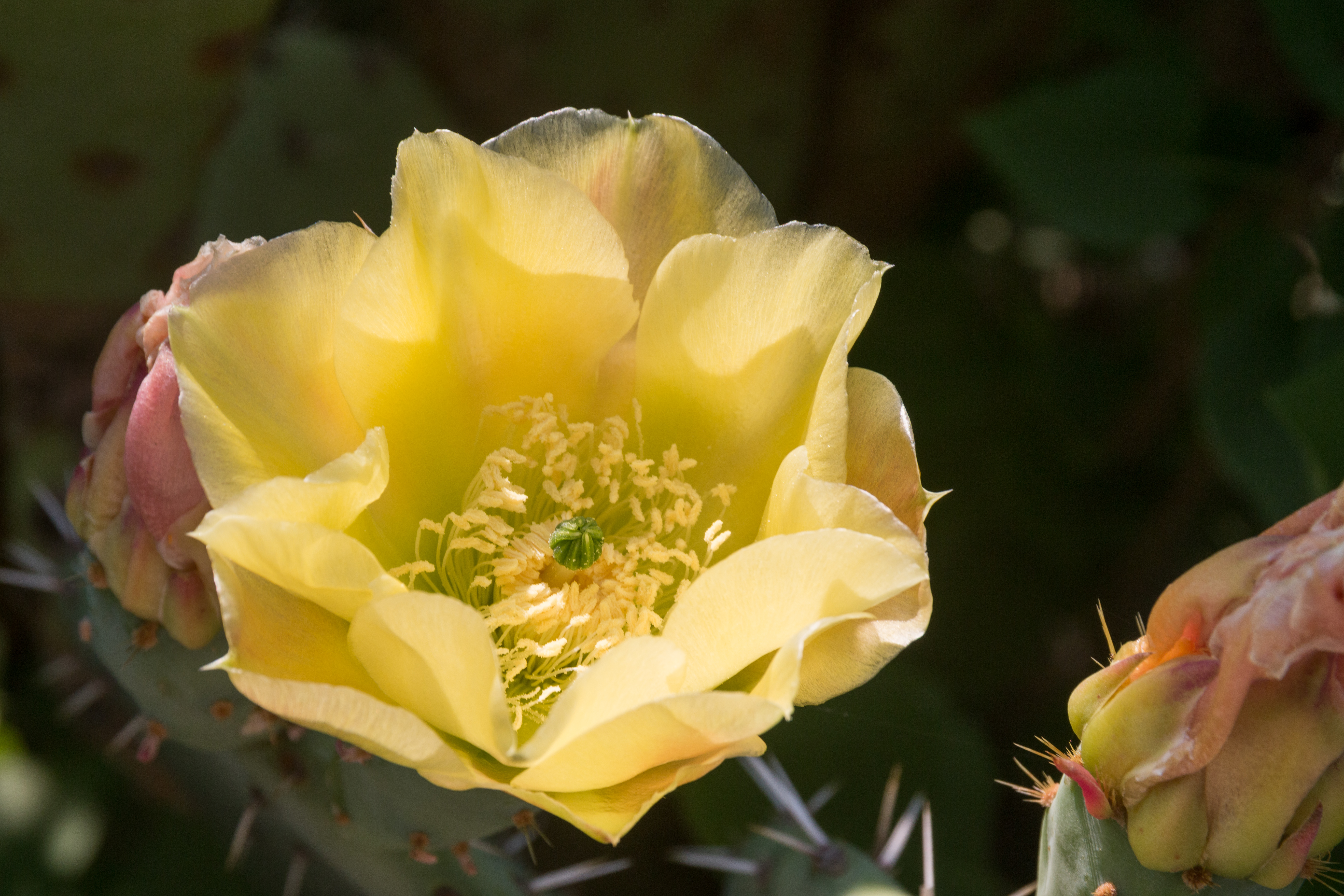
A wide, flat-padded cactus of the southwestern deserts, spreading in low clumps with yellow flowers and purple fruit at Big Bend, Saguaro, and Arches.

Engelmann prickly pear at a glance
Opuntia engelmannii ENG-el-man PRIK-lee pair; Opuntia engelmannii is oh-PUN-shuh eng-el-MAN-ee-eye
- Type
- Plant · cactus
- Diet
- Producer
- Size
- It grows in a clump usually about 3 to 5 feet tall and often wider than it is high, roughly the size of a small couch tipped on end. Each pad is about as big as a dinner plate.
- Lifespan
- Several decades for a healthy desert clump, growing new pads year after year.
- Conservation
- Least Concern
Eats sunlight, rainwater, carbon dioxide, soil nutrients
A prickly pear makes its own food by photosynthesis. Its flat green pads work like leaves, catching sunlight to turn water and carbon dioxide into sugar, and the thick pads also store water to get the plant through dry spells.
Is it safe to touch?
This cactus has two kinds of spines. The long, stiff ones are easy to see, but it also has tiny, hair-like barbed spines called glochids that come off at a touch and are very hard to pull out of skin. The rule is look, do not touch. Do not pick the pads or fruit without an adult and gloves.
The Engelmann prickly pear is the wide, flat-padded cactus that spreads in low clumps across the southwestern deserts, at Big Bend, Saguaro, and Arches, its pads about the size of a dinner plate and its spring flowers a bright yellow that ripens into purple fruit. A clump usually grows about 3 to 5 feet tall and often wider than it is high, roughly a small couch tipped on end. The flat green pads are the surprising part. They are not leaves at all but sections of stem, and they do the plant’s whole job of photosynthesis, catching sunlight to turn water and carbon dioxide into sugar. The pads also store water, which is how the cactus lives through the long dry stretches between desert rains. The real leaves shrank down long ago into the spines.
Those spines come in two kinds, and the small ones are the trouble. The long, stiff spines are easy to see and avoid. Hiding among them are glochids: tiny, barbed, hair-like spines that come loose at the lightest touch and lodge in skin, where they are very hard to pull out. That is why even a pad that looks smooth can leave fingers stinging for a long time. The safe rule is look, do not touch, and never pick a pad or a fruit without an adult and gloves.
People do eat this cactus, carefully. The purple fruit, called a tuna, is cooked into jelly and candy, and the young pads, trimmed of spines and called nopales, are eaten like a vegetable across the Southwest and Mexico. The Engelmann prickly pear is common across its desert range and listed by the IUCN as Least Concern.
Did you know?
- A prickly pear's flat green pads are not leaves, they are actually its stem. The pads do the plant's food-making and store water, while the real leaves shrank down long ago into the spines.
- The tiny barbed spines, called glochids, are the sneaky part. They are small as hairs and come loose at the lightest touch, which is why even a cactus that looks smooth can leave your fingers stinging.
- People eat prickly pear. The purple fruit, called a tuna, is made into jelly and candy, and the young pads, called nopales, are cooked and eaten like a vegetable across the Southwest and Mexico.
Common questions
Can you eat prickly pear cactus?
Yes. The purple fruit, called a tuna, becomes jelly and candy, and the young pads, called nopales, are cooked as a vegetable. An adult removes the spines first.
Why do prickly pear spines hurt so much?
Besides the long spines, the cactus has tiny barbed hairs called glochids. They come off at a touch and are very hard to pull out, so it is best not to touch the plant at all.
Are the flat pads leaves?
No. The pads are really part of the stem. They make food and store water. The plant's old leaves shrank into the sharp spines long ago.
Where does the Engelmann prickly pear grow?
In the deserts of the Southwest, including Big Bend, Saguaro, and Arches, usually in low, spreading clumps of flat pads.
What do I do if prickly pear spines stick someone?
Even the tiny glochids can break the skin. Wash the spot well with soap and plenty of running water. Any break in the skin can get infected, so see a doctor if red streaks, swelling, or pus show up.