Quaking aspen
A white-barked mountain tree whose flat-stemmed leaves shiver in the lightest breeze, turning whole hillsides gold each fall.

Quaking aspen at a glance
Populus tremuloides KWAY-king ASS-pen; Populus tremuloides is POP-yoo-lus trem-yoo-LOY-deez
- Type
- Plant · tree
- Diet
- Producer
- Size
- A grown aspen is about 20 to 50 feet tall, roughly as high as a two- to four-story building, with a slender trunk you could wrap your arms around.
- Lifespan
- A single aspen trunk usually lives about 100 to 150 years, but the shared root system it grows from can be far older. A famous Utah aspen colony called Pando is thought to be thousands of years old.
- Conservation
- Least Concern
Eats sunlight, water, carbon dioxide, soil nutrients
An aspen makes its own food by photosynthesis in its round, trembling leaves. Even its greenish-white bark can photosynthesize, which helps the tree keep making food in winter after the leaves fall. A whole stand of aspens often shares one connected root system underground.
Is it safe to touch?
Quaking aspens are harmless. No spines, no poison. You can safely stand under one and watch the leaves shiver. Please do not carve into the soft white bark, though. The cuts turn into black scars the tree carries for the rest of its life.
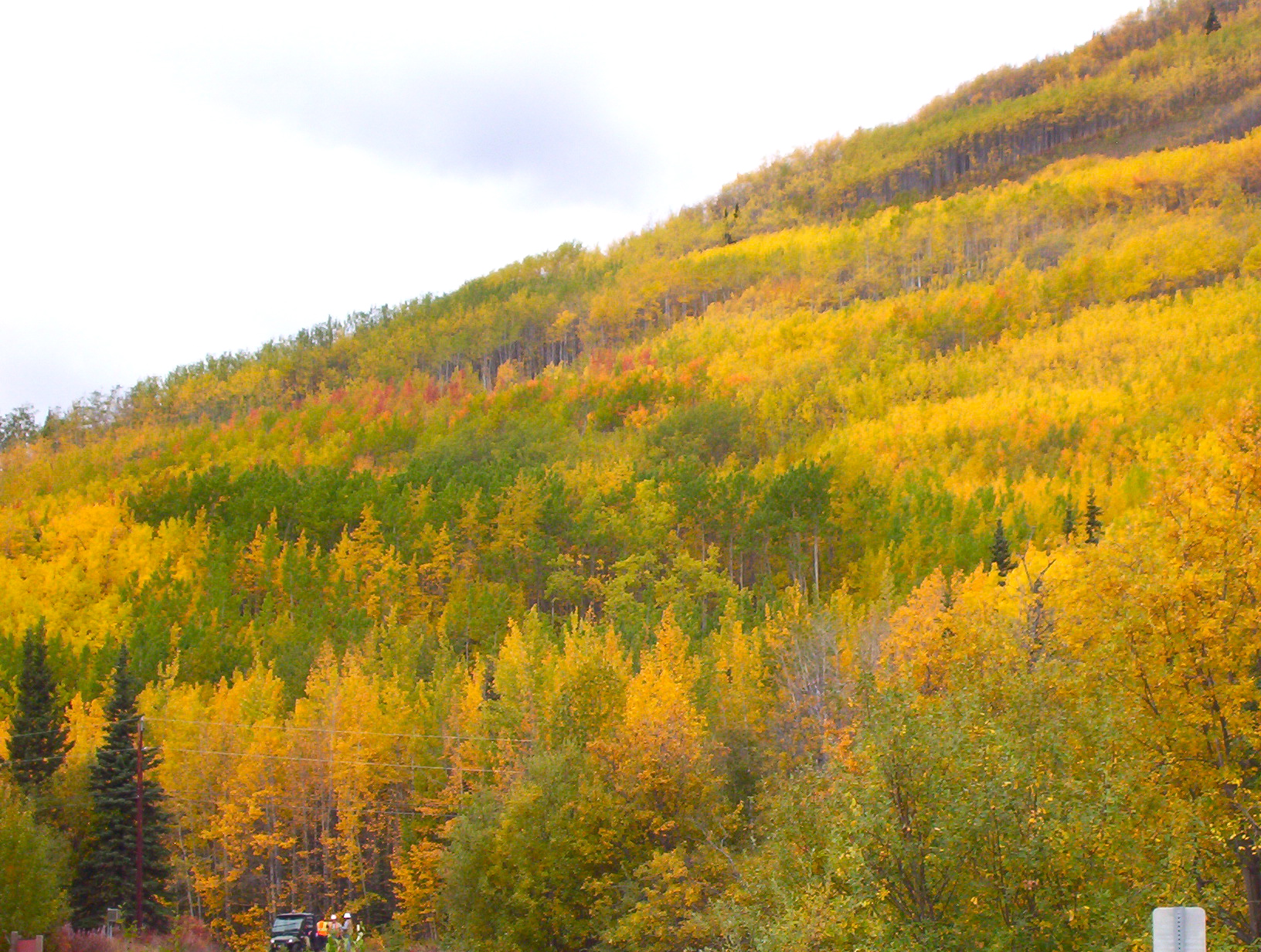
The quaking aspen is the white-barked mountain tree whose leaves never seem to hold still. Each round leaf hangs from a flat stem that twists at the smallest push of air, so a whole tree shimmers and whispers in a breeze too light to feel on your skin. That trembling gives the tree its name. Aspens grow across the mountain West, including at Rocky Mountain, Grand Teton, and Great Basin, and in fall their leaves stop making green food color and turn gold, painting entire hillsides at once. Like every green plant the aspen makes its own food by photosynthesis, but it has an extra trick: even its smooth, greenish-white bark can photosynthesize, so the tree keeps making a little food through winter after the leaves drop.
A stand of aspens is often not many trees but one. The trunks grow up from a single shared root system spreading underground, which means all the trees in a patch can be one connected plant, clones of each other that leaf out together and turn color together. That is why a mountainside can shift from green to gold in patches, each patch a separate colony. A single aspen trunk usually lives 100 to 150 years, but the roots it grows from can be far older. A colony in Utah named Pando covers more than 100 acres with tens of thousands of trunks sharing one root system, is thought to be thousands of years old, and may be one of the heaviest living things on Earth.
Aspen is common across its range and listed by the IUCN as Least Concern. The tree is harmless: no spines, no poison, safe to stand beneath and watch the leaves flicker. The one thing not to do is carve the bark. The soft white surface scars black wherever it is cut, and the tree carries those marks for the rest of its long life.
Did you know?
- Aspen leaves quake because of their stems. Each leaf hangs from a flat stem that twists in the wind, so the whole tree seems to shimmer and whisper in even a light breeze.
- A group of aspens is often really one giant living thing. The trunks grow up from a single shared root system, so all the trees in a stand can be one connected plant that turns color together in fall.
- A Utah aspen colony named Pando may be one of the heaviest living things on Earth. It covers more than 100 acres with tens of thousands of trunks, all sharing the same roots.
Common questions
Why do aspen leaves shake?
Each leaf hangs on a flat stem that twists easily, so the leaves flutter and shimmer in even a light breeze. That is how the tree got the name quaking aspen.
Is a group of aspens one tree or many?
Often it is really one. The trunks grow up from a single shared root system, so a whole stand can be one connected living thing.
How old can aspens get?
A single trunk lives about 100 to 150 years, but the shared roots underneath can be thousands of years old. The Pando colony in Utah is one of the oldest known.
Why do aspens turn gold in fall?
As the days shorten, the leaves stop making green food color, and the yellow underneath shows through. Whole hillsides of connected aspens change at once.
Where it lives
- Black Canyon of the Gunnison National Park
- Craters of the Moon National Monument and Preserve
- Fossil Butte National Monument
- Glacier National Park
- Grand Teton National Park
- Great Basin National Park
- Isle Royale National Park
- Rocky Mountain National Park
- Sequoia National Park
- Wind Cave National Park
- Yellowstone National Park
- Yosemite National Park
- Zion National Park