Fly agaric
The storybook red mushroom with white spots, found in northern conifer and birch woods. It is joined to tree roots and poisonous to eat.

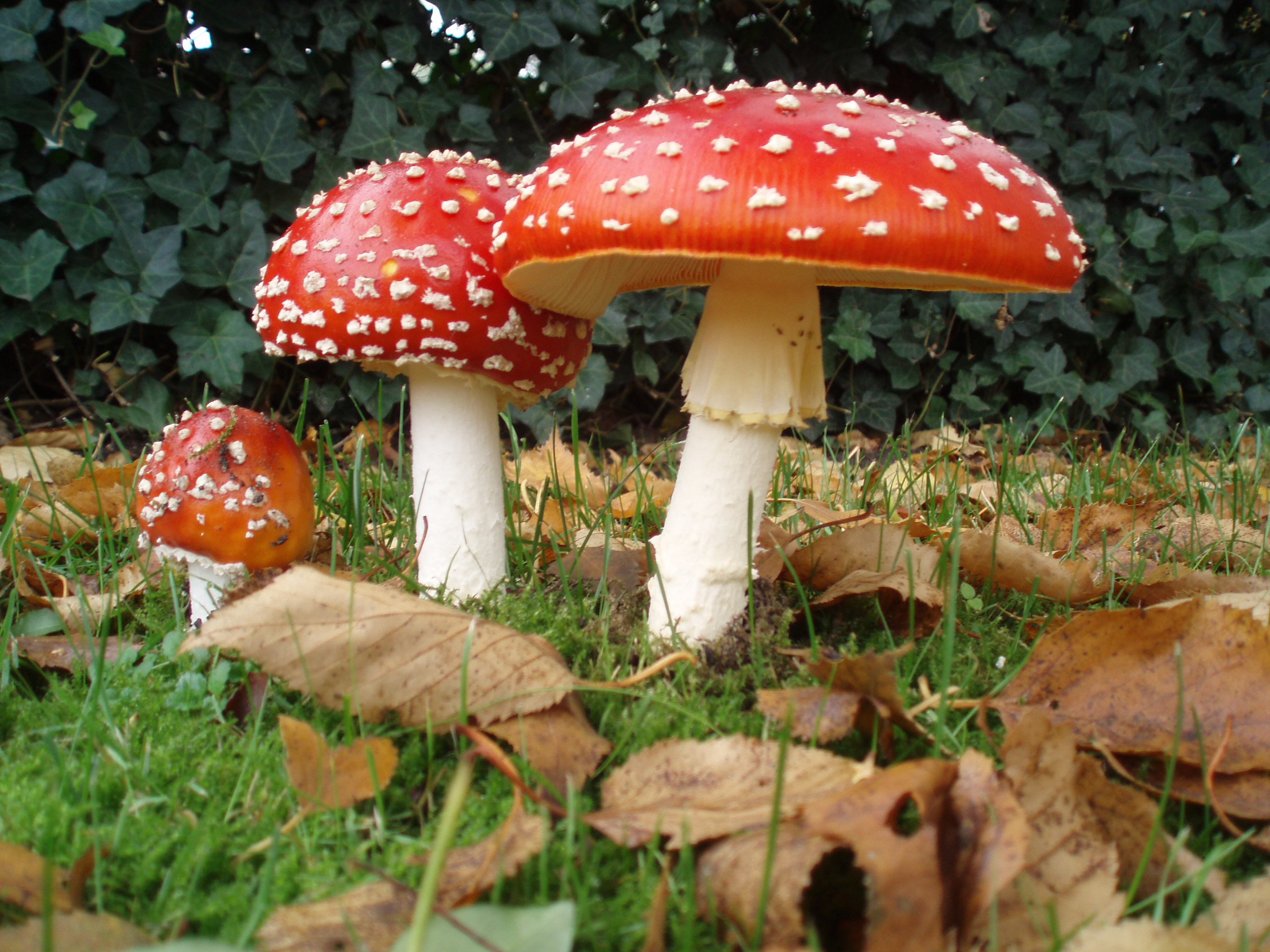
Fly agaric at a glance
Amanita muscaria fly AG-uh-rik; Amanita muscaria is am-uh-NEE-tuh mus-KAIR-ee-uh
- Type
- Fungus · mushroom
- Diet
- Other
- Size
- A full-grown red cap can be about 4 to 8 inches across (10 to 20 cm), roughly the size of a small dinner plate.
- Lifespan
- The underground threads can live for years. The red cap lasts only about a week before it softens and collapses.
- Conservation
- Not evaluated (not on the IUCN Red List; common and widespread)
Eats sugars traded from birch, pine, and spruce roots
Fly agaric lives as a hidden web of threads (a mycelium) wrapped around the roots of birch, pine, and spruce trees. The fungus and the tree feed each other: the fungus passes water and minerals to the tree, and the tree passes sugar back to the fungus. The red cap is just the part that pushes up to spread spores.
Is it safe to touch?
Poisonous if eaten. Fly agaric holds chemicals called ibotenic acid and muscimol that can make a person sick, with an upset stomach, sleepiness, and confusion. It is rarely deadly, but no one should ever eat it. The safe rule for every wild mushroom is the same: you can look, but never taste. Wash your hands after touching one.
Fly agaric is the mushroom from the storybooks: a domed cap of bright fairy-tale red, flecked all over with white, standing on a pale stalk in a northern forest. Like the chanterelle, though, the red cap is only the visible fruit of something larger and hidden. The real fungus is a web of threads wound around the roots of birch, pine, and spruce, trading water and minerals to the trees for sugar the trees make from sunlight. The cap simply pushes up out of the ground to scatter its dust-fine spores.
A couple of its oldest facts explain its name and its looks. The “fly” comes from a folk trick of breaking the cap into a dish of milk to stun houseflies. The white spots are not really part of the cap at all. They are torn flakes of a thin skin that wrapped the young mushroom, and a hard rain can wash them off, so an older fly agaric can look plain red. It also travels with trees: when people plant pines and birches in new places, the fungus can ride along on the roots and appear far from home.
For all that charm, this is a mushroom to admire and not touch to your mouth. Fly agaric holds chemicals called ibotenic acid and muscimol, and eating it makes a person sick: upset stomach, sleepiness, confusion. Though rarely, it can even be deadly. Touching one does no harm; tasting one does. The rule that covers every wild mushroom covers this one too: you can look, but never taste, and wash your hands afterward.
Did you know?
- Its name comes from an old trick: people would break the cap into a dish of milk to stun houseflies, so it became the "fly" mushroom.
- Fly agaric travels with trees. When people plant pines and birches in new places, the fungus can ride along on the roots and pop up far from where it started.
- The white spots are not part of the cap. They are leftover flakes of a skin that wrapped the young mushroom, and rain can wash them off, so older caps can look plain red.
Common questions
Is the red mushroom with white dots poisonous?
Yes. Fly agaric can make you sick if you eat it. Look, but never taste it.
Can I touch a fly agaric?
Touching it is not dangerous. Just don't eat it, and wash your hands afterward.
Why is it red with white spots?
The bright red may warn animals to stay away, and the white spots are leftover bits of the skin that covered the young mushroom.
Does fly agaric hurt the trees it grows near?
No, it helps them. It trades water and minerals with the tree roots in exchange for sugar.
What do I do if someone eats a wild mushroom?
Call Poison Control right away at 1-800-222-1222. Its poison specialists work with mushroom experts to find out which mushroom it was. If treatment is needed, they work with the emergency room too.