Mountain goat
A white, shaggy climber with black horns that lives on the steepest crags and pumice fields high on Mount Rainier, where almost nothing else can walk.
We saw it Our family spotted this one at Mount Rainier National Park in July 2026.

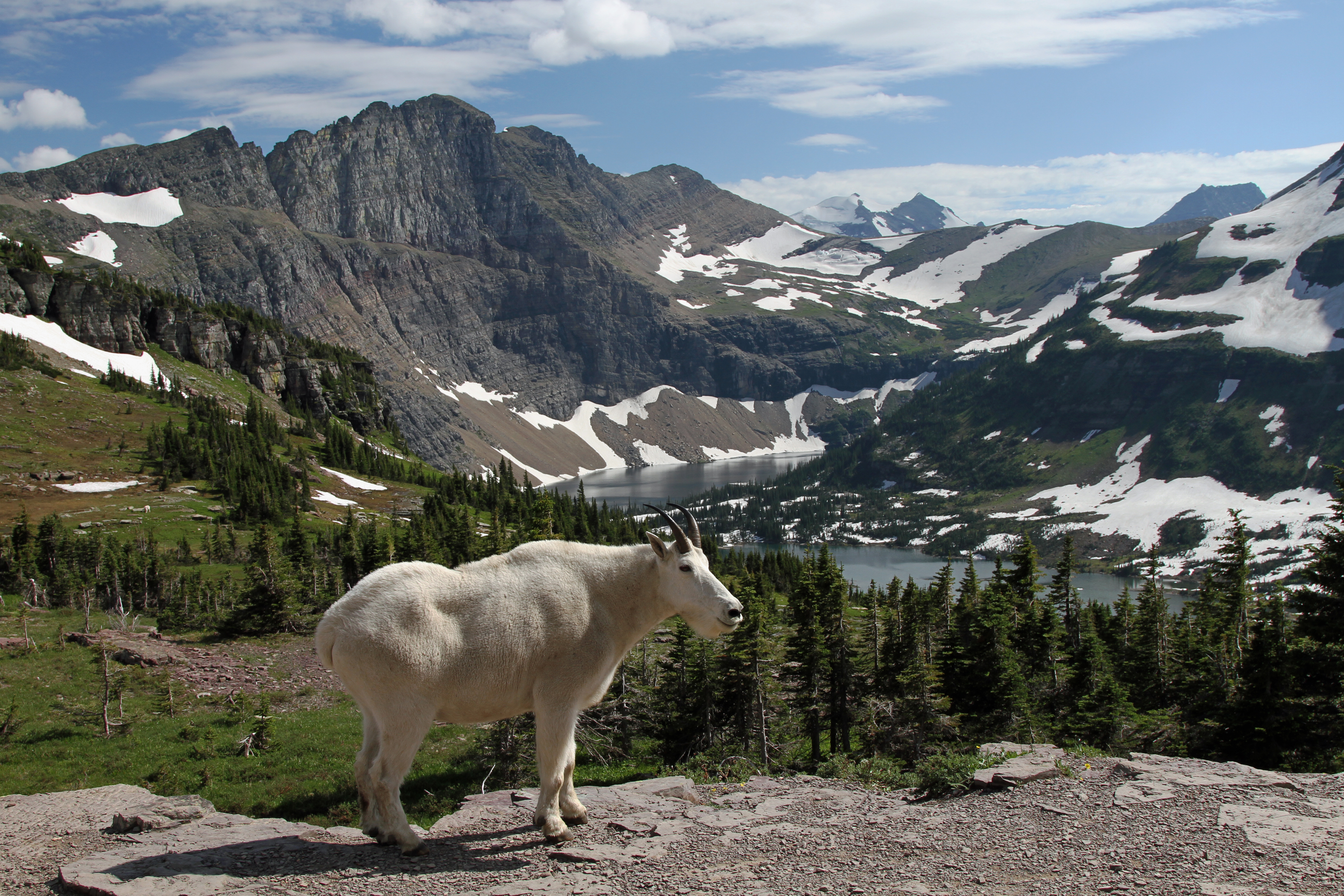
Mountain goat at a glance
Oreamnos americanus MOWN-tin goat; Oreamnos americanus is or-ee-AM-nos uh-mair-ih-KAY-nus
- Type
- Mammal · hoofed mammal
- Diet
- Herbivore
- Size
- About 3 to 3.5 feet tall at the shoulder and, in a big billy, up to around 300 pounds, with a thick white coat and a beard. Both males and females grow short, sharp black horns about 8 to 10 inches long.
- Lifespan
- Often around 12 to 15 years in the wild.
- Conservation
- Least concern. (Note: mountain goats are native to the Cascades at Mount Rainier, unlike the introduced goats once removed from Olympic.)
Eats grasses, sedges, mosses, lichens, low shrubs, wildflowers
A mountain goat grazes the tough plants of the high country, grasses, sedges, mosses, lichens, and low shrubs that grow among the rocks above the trees. It eats nearly anything green it can reach on the cliffs, and in summer it will visit mineral licks to get the salt its body needs.
Should you worry?
A mountain goat looks calm but is a large wild animal with sharp horns, so keep your distance, at least 50 yards, and never get between a goat and its kid. Goats crave salt and have been known to approach hikers for sweat and urine, so if one comes close, back away and give it room, and always pee well off the trail on rock or snow so goats are not lured to the path. Never feed or crowd one for a photo.
Look up at the steep rock and pumice high above the meadows at Paradise or Sunrise on Mount Rainier and you may spot what looks like a small white dot that moves. It is a mountain goat, a shaggy white climber with a beard and a pair of short, sharp black horns, standing on ground where almost nothing else can walk. Both the males, called billies, and the females, called nannies, grow those slim black horns, and both wear a thick white coat that sheds in ragged clumps each summer.
A mountain goat is one of the best climbers on Earth. Each hoof has a hard outer rim around a soft, rubbery pad that grips bare rock like a climbing shoe, and its two toes can spread apart, so the goat can balance on a ledge no wider than its foot and cross cliffs far too steep for a person. It is not really a goat at all. Despite the name, its closest relatives are more like antelope, and it is the only animal of its kind in North America. By staying up on the crags near the glaciers, it keeps out of reach of most predators, which simply cannot follow it there.
For all its calm, a mountain goat is a large wild animal with sharp horns, so a person should keep at least fifty yards back and never step between a goat and its kid. Goats crave salt, and they have learned that people carry it in sweat and urine, so one may wander close along the trail. If that happens, back away and give it room, and always go to the bathroom well off the path, on rock or snow, so goats are not drawn to the trail. Scan the high cliffs and snowfields for those small white dots, and watch them pick their way across ground no person could follow.
Did you know?
- It is one of the best climbers on Earth. Each hoof has a hard rim around a soft, rubbery pad that grips rock like a climbing shoe, and the two toes can spread apart, so a mountain goat can stand on a ledge no wider than its foot and climb slopes far too steep for a person.
- It is not really a goat at all. Despite the name, the mountain goat's closest relatives are antelope-like animals. It just happens to look and act like a goat on the high cliffs.
- It stays up where few animals can follow. By living on the steepest crags and pumice fields near the glaciers, the mountain goat keeps away from most predators, which simply cannot reach it. Its thick white coat keeps it warm through the mountain winter, then sheds in ragged clumps each summer.
Common questions
How does a mountain goat climb such steep cliffs?
Its hooves have a hard outer rim and a soft, grippy pad, and the toes spread apart, so it can balance on tiny ledges and grip bare rock.
Is it really a goat?
Not exactly. It is called a goat and looks like one, but its closest relatives are more like antelope. It is the only animal of its kind in North America.
Why do goats come near hikers?
They want salt. Sweat and urine are salty, so goats sometimes approach people and trails. Back away, keep your distance, and pee far off the trail on rock or snow.
Are mountain goats dangerous?
They are usually shy, but they are big and have sharp horns. Stay at least 50 yards back, never get between a nanny and her kid, and never feed one.
Where will I see one at Mount Rainier?
High up on the crags and pumice above the meadows, near Paradise and Sunrise. Scan the cliffs and snowfields; they often look like small white dots that move.
Where it lives
Where we got this
- NPS — Hoofed Mammals of Mount Rainier (nimble climbers; subalpine to alpine range)
- NPS — Mountain Goat Resource Brief (natural history; hoof structure, salt-seeking, safety)
- Washington Dept. of Fish & Wildlife — Mountain goat (Cascades native range)
- Animal Diversity Web — Oreamnos americanus (size, horns, lifespan)