Great Basin bristlecone pine
The oldest known single living tree on Earth, a twisted, high-mountain pine that grows in the thin, cold air of Great Basin National Park.

Great Basin bristlecone pine at a glance
Pinus longaeva BRIS-el-kone pine; Pinus longaeva is PY-nus lon-JEE-vuh
- Type
- Plant · tree
- Diet
- Producer
- Size
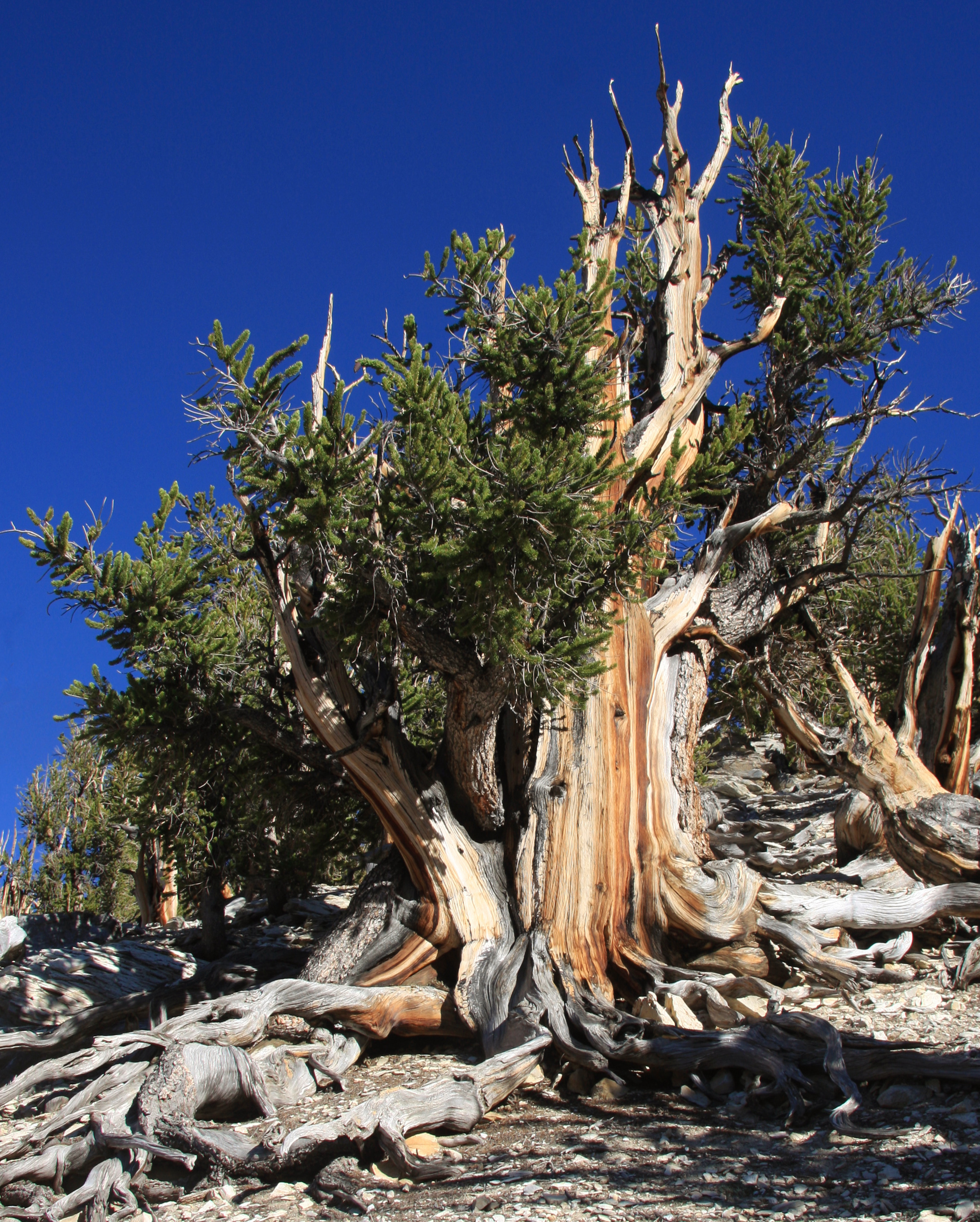
- Bristlecones are not tall. Most stand around 15 to 30 feet, shorter than the trees in a city park, but their trunks grow thick, gnarled, and twisted by the wind.
- Lifespan
- The oldest known single tree on Earth. A bristlecone named Methuselah is more than 4,800 years old, older than the Egyptian pyramids.
- Conservation
- Least Concern
Eats sunlight, snowmelt, carbon dioxide, thin mountain soil
A bristlecone pine makes its own food by photosynthesis in its short, stiff needles. It grows on cold, rocky mountaintops with little water and poor soil, so it builds new wood very slowly, sometimes adding barely any thickness in a whole year.
Is it safe to touch?
A bristlecone pine cannot hurt you. The needles are stiff but not dangerous. These trees are extremely old and fragile, though, so the rule is stay on the trail, do not climb on the trees or the dead wood, and take nothing. A branch that looks like a dead stick may be thousands of years old.
The Great Basin bristlecone pine is the oldest known single living tree on Earth. One of them, named Methuselah, is more than 4,800 years old. It was already a grown tree when the first pyramids went up in Egypt, and it is still alive today, its exact spot kept secret so no one harms it. Bristlecones grow high on cold, rocky mountaintops with thin air, little water, and poor soil, including in the groves of Great Basin National Park. They are not tall trees. Most stand only 15 to 30 feet, shorter than the trees in a city park, but their trunks are thick, gnarled, and twisted by centuries of wind.
The bristlecone lives so long partly by doing very little. Its short, stiff needles make food by photosynthesis, but the tree builds new wood so slowly that in a hard year it may add almost no thickness at all. When water runs short it simply gives up parts of itself, letting whole sections die back so a thin strip of living bark can keep a few green branches going. An ancient bristlecone can be mostly bare, weathered wood with just a ribbon of life running up one side. Its wood is dense and full of resin, which fights off rot, insects, and disease, so even the dead parts stay standing for thousands of years.
The species is common enough across its high, dry range that the IUCN lists it as Least Concern. The care a bristlecone needs is about its age, not any danger it poses. It cannot hurt anyone, but a single careless step can. A branch that looks like a plain dead stick may be thousands of years old, so keep to the trail, stay off the trees and the fallen wood, and take nothing.
Did you know?
- A bristlecone pine named Methuselah has been alive for more than 4,800 years. It was already a grown tree when the first pyramids were built in Egypt.
- Bristlecones live so long partly by growing slowly and giving up. Parts of the tree die back to save water, so an ancient bristlecone can be mostly dead wood with just a thin strip of living bark keeping a few green branches alive.
- The tough, dense wood and the tree's own resin help it resist rot, insects, and disease, which is one reason a bristlecone can keep standing for thousands of years.
Common questions
What is the oldest tree in the world?
A Great Basin bristlecone pine named Methuselah, more than 4,800 years old. Its exact spot is kept secret to protect it.
How does a tree live thousands of years?
Bristlecones grow very slowly, let parts of themselves die to save water, and have tough wood that resists rot and bugs. All of that helps them last.
How tall do bristlecone pines get?
Not very tall, usually about 15 to 30 feet. They grow twisted and thick rather than tall, shaped by the cold mountain wind.
Can I touch or climb a bristlecone pine?
Please do not. These trees are thousands of years old and easily hurt. Stay on the trail and look, so the next family can see them too.