Brook trout
A small, wormy-patterned native fish with red spots ringed in blue, the only trout that truly belongs in the cold high streams of the Smokies and Shenandoah.
What we saw At Rocky Mountain in September 2026 we saw brook trout in the water near Bear Lake.
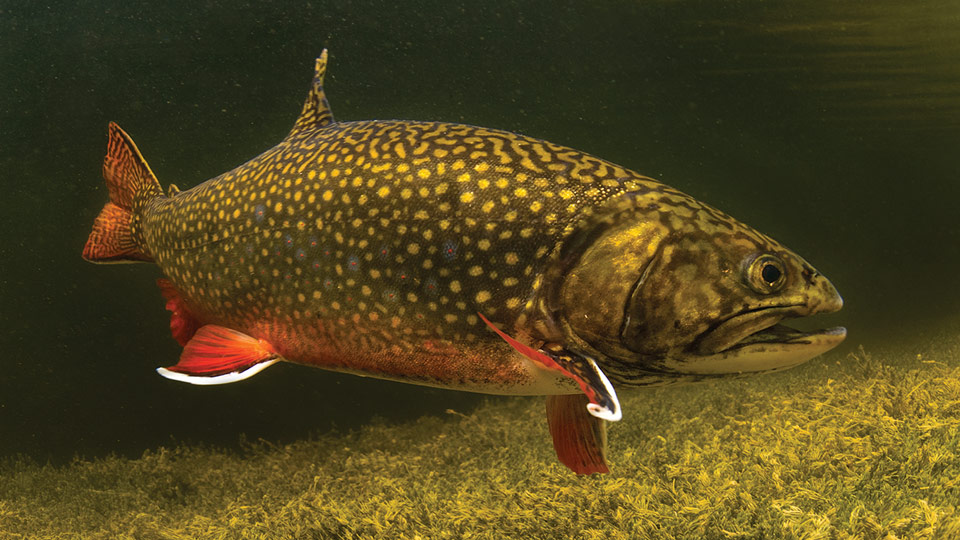

Brook trout at a glance
Salvelinus fontinalis BROOK TROWT; Salvelinus fontinalis is sal-vuh-LY-nus fon-tih-NAL-iss
- Type
- Fish · trout
- Diet
- Carnivore
- Size
- In the small, cold mountain streams where it lives, a brook trout is usually only about 6 to 9 inches long, close to the length of a pencil.
- Lifespan
- Short, around 3 to 6 years in the wild.
- Conservation
- Least concern (IUCN); native southern Appalachian populations are much reduced and are a local conservation concern
Eats water insects, flying insects, worms, small fish
It holds in the cold current and grabs food as it drifts by, mostly insects both underwater and on the surface. In small mountain streams it takes whatever the water brings.
Should you worry?
A brook trout is completely harmless. It is the fish that needs our care. In the Smokies it is the only native trout, and it has lost most of its old streams to non-native trout and warm water. If you fish with an adult, follow the park rules, keep the fish wet, handle it gently and briefly, and let it go. Never move fish between streams.
A brook trout in a mountain stream is small, usually six to nine inches, about a pencil, and beautifully marked: a dark back covered in pale, worm-like squiggles, and sides dotted with red spots that each wear a small blue halo. No other trout in these streams looks quite like it, which is a lucky thing, because the pattern is how you know you are looking at the one trout that truly belongs here. It holds in the cold current and takes food as the water brings it past, mostly insects from below the surface and above.
There is a naming trick worth knowing: the brook trout is not really a “true” trout at all. It is a char, a cousin of trout and salmon, which is part of why its markings look different from the rainbow and brown trout a person might catch nearby. And in the Great Smoky Mountains, it is the only trout that is native. The rainbows and browns were all brought in later, from other places.
Those newcomers are much of the reason the brook trout now lives where it does. Pushed out of the lower, warmer streams by non-native rainbow and brown trout, the native brookie hangs on mostly in the highest, coldest water, above about three thousand feet. So this is another fish that needs protection from us rather than the other way around. If you fish for one with an adult, follow the park’s rules, keep it wet, handle it briefly, and let it go. Never move a fish from one stream to another.
Did you know?
- The brook trout is not really a "true" trout at all. It is a kind of char, a cousin of trout and salmon, which is why its markings, pale wavy lines on a dark back, look different from other trout.
- In the Great Smoky Mountains it is the only native trout, and today it survives mostly in the highest, coldest streams, above about 3,000 feet, after being pushed out of lower waters by non-native rainbow and brown trout.
- Its back is covered in worm-like squiggles called vermiculation, and its sides carry red spots each ringed by a small blue halo, a pattern you can use to tell it from other trout.
Common questions
Are brook trout dangerous?
No, they are harmless. This fish needs protection from us, not the other way around. If you catch one, keep it wet and let it go gently.
Why is the brook trout special in the Smokies?
It is the only trout that is truly native there. Rainbow and brown trout were brought in later, so the brook trout is the original mountain-stream fish.
Where do brook trout live in the park?
Mostly in the highest, coldest streams, above about 3,000 feet. Non-native trout and warmer water pushed them out of the lower streams.
How do I tell a brook trout from other trout?
Look for pale worm-like squiggles on a dark back and red spots each ringed with a small blue halo. No other trout in these streams looks quite like that.
What eats brook trout?
In Shenandoah National Park, northern water snakes eat more brook trout than any other natural predator. Mink, kingfishers, herons, and the occasional otter eat them too.