Joshua tree
A spiky, branching yucca of the Mojave Desert, the plant that gives Joshua Tree National Park its name and its strange, arm-waving skyline.
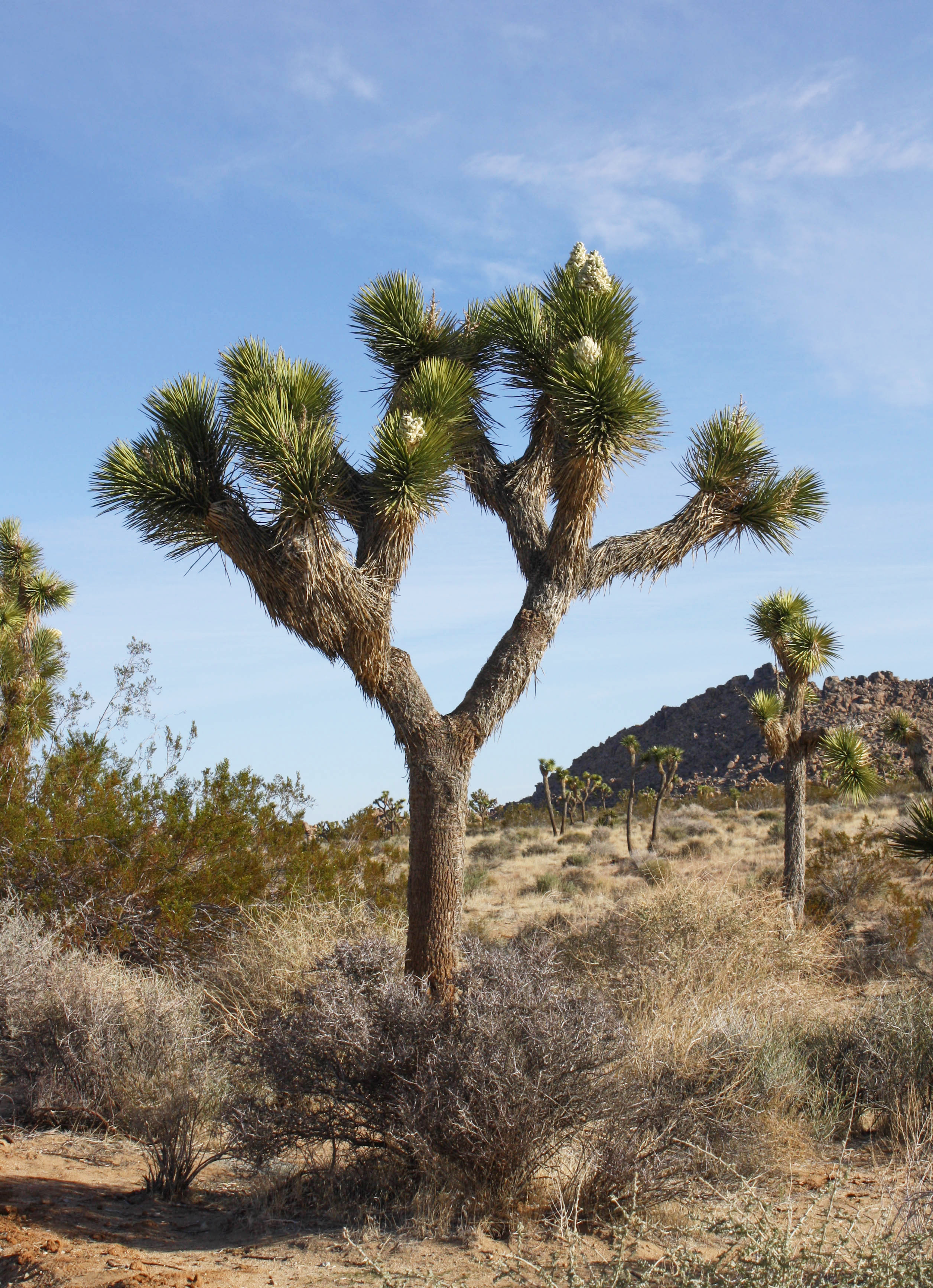

Joshua tree at a glance
Yucca brevifolia JOSH-oo-uh tree; Yucca brevifolia is YUK-uh brev-ih-FOH-lee-uh
- Type
- Plant · tree
- Diet
- Producer
- Size
- A tall Joshua tree stands about 30 to 40 feet high, roughly as tall as a three-story house. It grows slowly, only an inch or two taller each year.
- Lifespan
- Often around 150 years, and some are thought to reach several hundred years old.
- Conservation
- Least Concern
Eats sunlight, rainwater, carbon dioxide, soil nutrients
A Joshua tree makes its own food. Its stiff, spiky leaves catch sunlight and turn water and carbon dioxide into sugar. Its deep, wide roots pull up the little rain the desert gets and store water in a thick trunk and branches.
Is it safe to touch?
The leaves end in hard, sharp points like little daggers, so the rule is look, do not grab. A poke can scratch or draw blood. Stay on the trail, keep your hands off the leaf tips, and never climb one. In California these trees are protected by law.
The Joshua tree is the plant that gives Joshua Tree National Park its name and its strange, arm-waving skyline. A tall one stands about 30 to 40 feet high, roughly as tall as a three-story house, and grows slowly, adding only an inch or two a year. It is not really a tree at all. It is a giant yucca, a relative of the lilies and agaves, that happens to build a woody trunk and stand tall. Its stiff, spiky leaves catch sunlight and turn water and carbon dioxide into sugar, and its deep, wide roots pull up the little rain the Mojave Desert gets and store water in the thick trunk and branches.
The Joshua tree cannot make seeds on its own. It depends on the yucca moth, the only insect that pollinates its creamy spring flowers. A female moth gathers pollen, carries it to another flower, and pushes it in on purpose, then lays her eggs inside. When the eggs hatch, the moth’s babies eat some of the tree’s developing seeds, but not all of them, so both the moth and the tree get what they need. Neither one can survive without the other. It is one of the tightest partnerships between a plant and an animal anywhere in the desert.
The Joshua tree is listed as Least Concern on the IUCN Red List, but scientists worry about its future because the desert is getting hotter and drier, which makes it harder for young trees to get started. In 2023 California passed the Western Joshua Tree Conservation Act to keep people from cutting the trees down or moving them. For a visitor the danger runs one way: each leaf ends in a hard, sharp point like a little dagger that can scratch or draw blood, so look, do not grab, stay on the trail, and never climb one.
Did you know?
- The Joshua tree is not really a tree at all. It is a giant yucca, a relative of the plants in the lily and agave family, with a woody trunk that lets it grow tall like a tree.
- Joshua trees and one kind of moth need each other to survive. The yucca moth is the only insect that pollinates the flowers, and in return the moth's babies eat some of the tree's seeds. Neither one can make it without the other.
- Scientists worry about the Joshua tree's future because the desert is getting hotter and drier. California passed a law in 2023, the Western Joshua Tree Conservation Act, to protect the trees from being cut down or moved.
Common questions
Is a Joshua tree really a tree?
Not exactly. It is a giant yucca, related to lilies and agaves, but it grows a woody trunk and stands tall like a tree, so people call it one.
Are Joshua trees dangerous?
Only their leaf tips. Each leaf ends in a hard, sharp point that can poke or scratch, so look but do not grab, and stay on the trail.
How did the Joshua tree get its name?
Settlers named it long ago. The exact story is uncertain, but the name has stuck for well over a hundred years.
Why are people trying to protect Joshua trees?
The desert is getting hotter and drier, which is hard on the trees. California passed a law in 2023 to keep people from cutting them down or moving them.
What do I do if a Joshua tree leaf pokes someone?
Wash the spot well with soap and plenty of running water. Any break in the skin can get infected, so watch it and see a doctor if red streaks, swelling, or pus show up.
Where it lives
Where we got this
- NPS — Joshua Trees (Joshua Tree National Park)
- NPS — Insects: the yucca moth and Joshua trees (Joshua Tree)
- California Dept. of Fish and Wildlife — Western Joshua Tree Conservation Act
- IUCN Red List — Yucca brevifolia (Least Concern, taxon 117423077)
- USDA PLANTS — Yucca brevifolia
- Poison Control: Skin problems from outdoor plants