Bigleaf maple
A Pacific Northwest maple with the largest leaves of any maple, often draped in moss and ferns in the rainforests of Olympic and North Cascades.

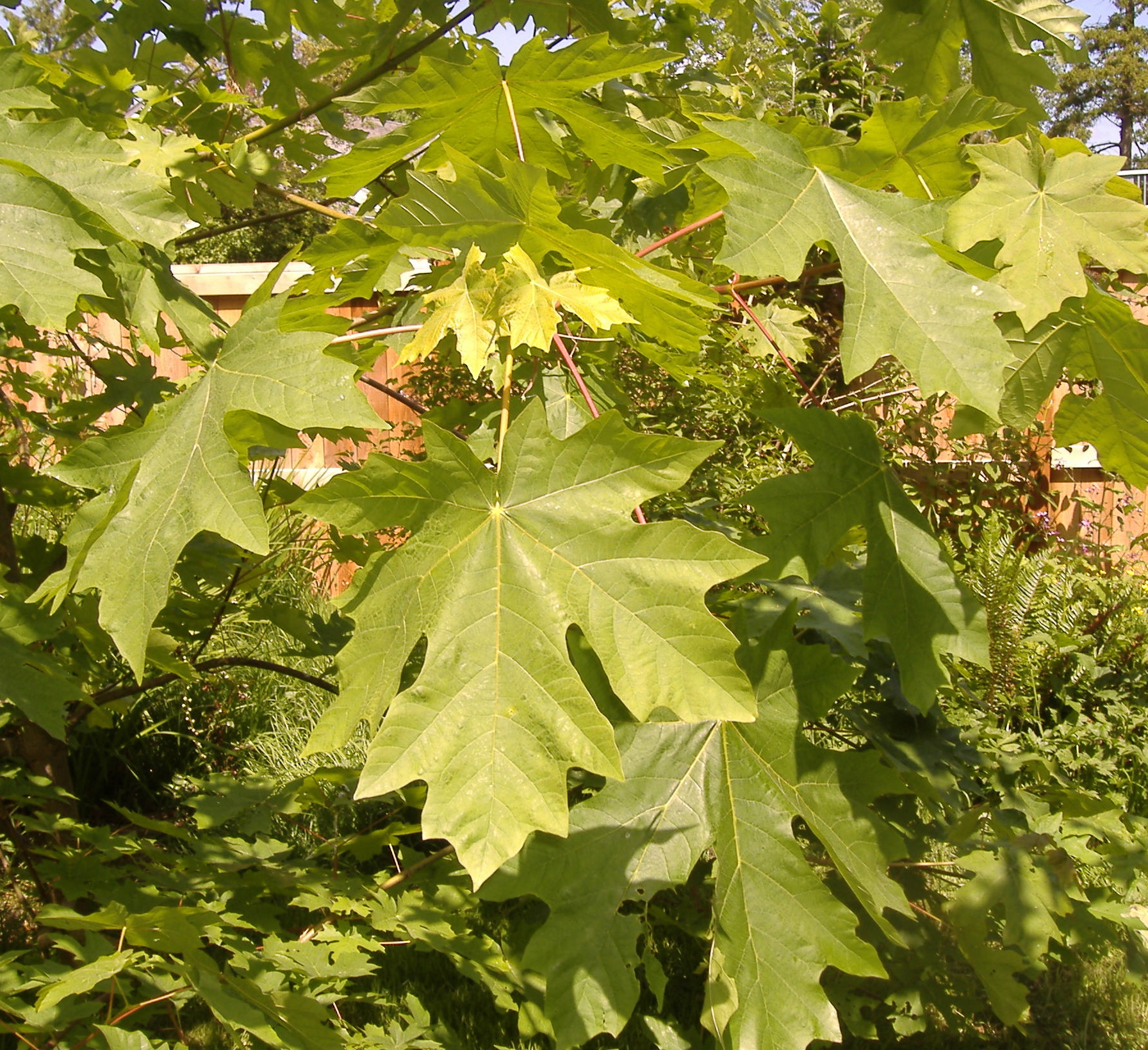
Bigleaf maple at a glance
Acer macrophyllum BIG-leaf MAY-pul; Acer macrophyllum is AY-ser mak-roh-FIL-um
- Type
- Plant · tree
- Diet
- Producer
- Size
- A grown bigleaf maple stands about 50 to 100 feet tall, as high as a five- to ten-story building. Its leaves are the biggest of any maple, up to about a foot across, roughly the size of a dinner plate.
- Lifespan
- Often around 200 years, and some live even longer in a healthy forest.
- Conservation
- Least Concern
Eats sunlight, rainwater, carbon dioxide, soil nutrients
A bigleaf maple makes its own food by photosynthesis. Its huge leaves catch a lot of sunlight, which helps in the shady, wet forest where it grows, and its roots pull up plenty of water from the rainy Pacific Northwest ground.
Is it safe to touch?
A bigleaf maple is completely harmless. No spines, no poison. The big leaves are fun to catch in fall and hold up like a mask. Just do not pull moss or ferns off the trunk, since whole tiny gardens of plants live up there.
The bigleaf maple lives up to its name: it grows the largest leaves of any maple in the world, single leaves up to about a foot across, roughly the size of a dinner plate and big enough to hold in front of your face like a mask. It is a Pacific Northwest tree, standing about 50 to 100 feet tall, as high as a five- to ten-story building, and it grows at Olympic and North Cascades. Like every green plant it feeds itself by photosynthesis, and those giant leaves are part of the plan. They catch a lot of light in the shady, wet forest, while the roots pull up plenty of water from the rainy Northwest ground.
In the wettest forests, like the Hoh Rain Forest at Olympic, a bigleaf maple becomes a tree covered in other plants. Mosses, licorice ferns, and more grow right on its bark and along its branches, so much that a single maple can look shaggy and green from trunk to crown, a hanging garden held up in the air. Those perching plants are epiphytes, the same trick Spanish moss uses far to the south: they root on the tree without harming it, drinking from the rain and damp instead of the maple’s sap.
The tree can live around 200 years, sometimes longer in a healthy forest, and the IUCN lists it as Least Concern. Its sap can be boiled into syrup like a sugar maple’s, though it takes so much sap for so little syrup that it is more a fun experiment than a real harvest. A bigleaf maple is harmless to be around, with no spines and no poison. The one thing worth leaving alone is the moss and ferns on the trunk, because whole small gardens of living things depend on staying put up there.
Did you know?
- The bigleaf maple has the largest leaves of any maple in the world. A single leaf can be about a foot wide, big enough to hold in front of your face like a mask.
- In wet forests like the Hoh Rain Forest at Olympic, a bigleaf maple can be shaggy with life. Mosses, licorice ferns, and other plants grow right on its bark, turning the whole tree into a hanging garden.
- Bigleaf maple sap can be boiled down into syrup, just like the sugar maples of the East. It takes a lot of sap to make a little syrup, so it is more of a fun experiment than a big harvest.
Common questions
Why is it called bigleaf maple?
Because it has the biggest leaves of any maple. A single leaf can be about a foot across, roughly the size of a dinner plate.
Why are bigleaf maples covered in moss?
They grow in very wet forests, so mosses and ferns can grow right on the bark. The tree becomes a home for a whole garden of smaller plants.
Can you make syrup from a bigleaf maple?
Yes. Its sap can be boiled into syrup like a sugar maple's. It takes a lot of sap for a little syrup, so it is mostly done for fun.
How big does a bigleaf maple get?
About 50 to 100 feet tall, as high as a five- to ten-story building, with a wide, spreading crown of enormous leaves.