Yellowstone brine fly
A small fly that lives in Yellowstone's hot runoff channels, walking on water close to the boiling point that would kill almost anything else.
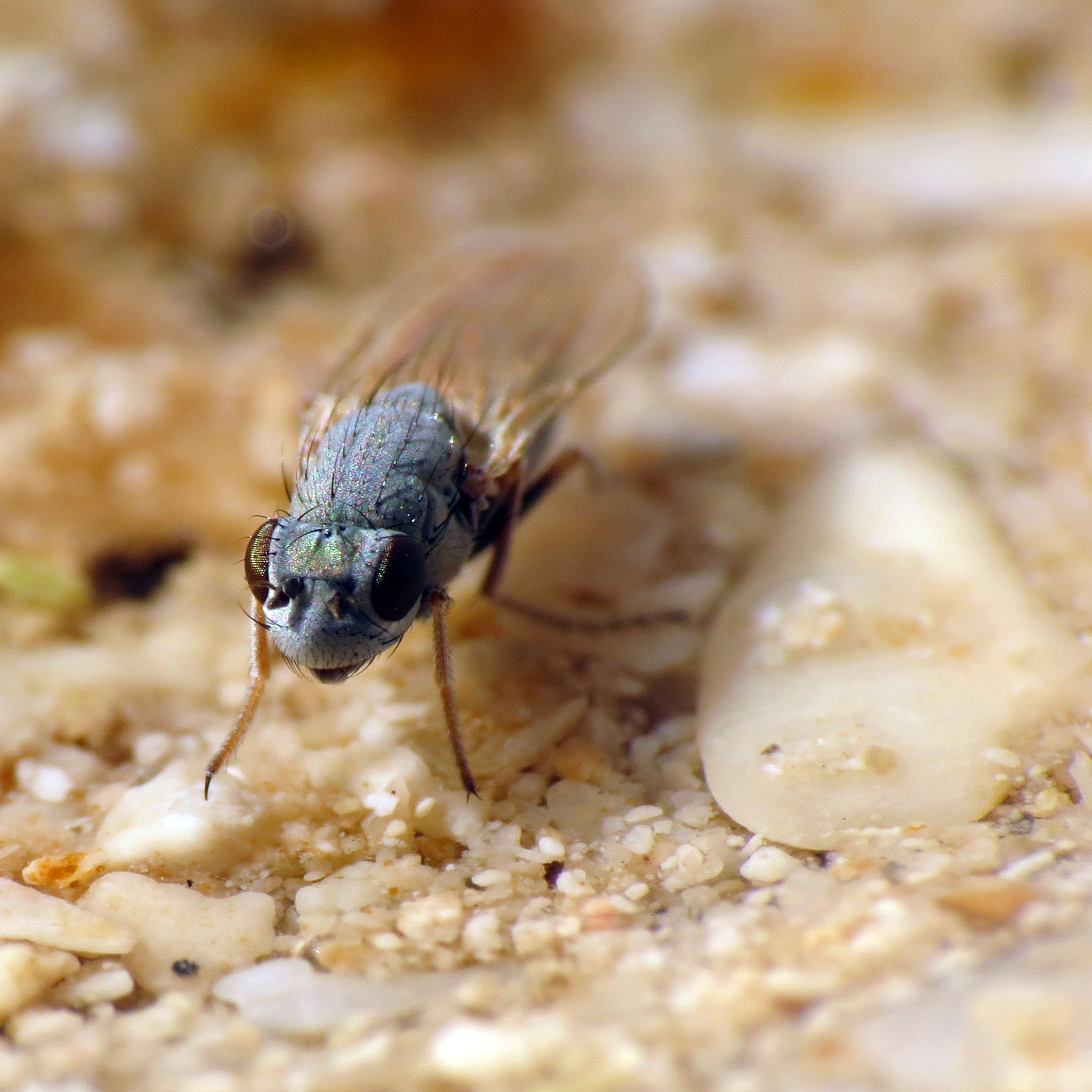

Yellowstone brine fly at a glance
Ephydra bruesi Ephydra bruesi is EF-ih-druh BROOZ-eye
- Type
- Invertebrate · flies
- Diet
- Other
- Size
- A small fly, only a few millimeters long, about the size of a gnat.
- Lifespan
- Not documented in detail for this species; most small flies in this family complete egg to adult in a few weeks during the warm months.
- Conservation
- Not evaluated (no IUCN or federal status; common where thermal runoff stays warm)
Eats mats of heat-loving cyanobacteria and algae in the runoff channels
Both the maggot-like larvae and the adult flies live and feed directly on the algal-bacterial mats that carpet the bottom of Yellowstone's thermal runoff channels, grazing them down the way a herd grazes a field.
Should you worry?
Harmless. It cannot bite or sting. It never leaves the water's edge, so the real rule near a thermal feature is the boardwalk rule: stay on the trail, because the water that lets this fly thrive can scald a person in seconds.
Lean over the boardwalk rail at the edge of a hot spring’s runoff channel, and the water looks alive: a moving, shifting dark patch that turns out to be hundreds of small flies, walking on the surface film and crawling over a slick mat of algae. This is the Yellowstone brine fly, and the water under its feet can run 109 degrees Fahrenheit, hot enough to scald a person’s skin in seconds.
The fly can stand heat past that mark, too. When the water runs hotter than even its own body can take, it traps a thin film of air around itself, a bubble it wears like a diving suit, and keeps grazing the mat of heat-loving algae and bacteria that carpets the channel bottom. A 1970s survey of these exact runoff channels confirmed this fly living here, sharing the warm, alkaline water with a second brine fly, Paracoenia turbida.
A heat-tolerant hunting beetle, the wetsalts tiger beetle, digs its burrow at the edge of the same kind of channel and preys on brine flies that wander close, but the fly has no need to come to shore. It grazes the mat in water that would put almost anything else out of commission within seconds. Watch the dark patch shift and re-form on the water, and keep your own hand on the rail.
Did you know?
- This fly can survive water at 109°F, hot enough to scald human skin in seconds, by trapping a thin layer of air around its body like a tiny wetsuit.
- It lives alongside a hungry neighbor at Yellowstone's hot springs: the wetsalts tiger beetle, a heat-tolerant hunting beetle found nowhere else, preys on brine flies at the water's edge.
- Scientists confirmed this exact species living in Yellowstone's thermal spring effluents in the 1970s, one of at least three brine fly species documented there.
Common questions
How hot is the water this fly lives in?
It can survive water up to 109°F (43°C), and even hotter for short stretches by trapping a bubble of air around its body.
What does the Yellowstone brine fly eat?
It grazes on the mats of heat-loving algae and bacteria that grow on the bottom of the park's warm runoff channels.
Does the Yellowstone brine fly bite?
No. It has no reason to bite people and stays at the water's edge, feeding on microbial mats.
Why do you see so many flies near Yellowstone's hot springs?
The warm water and thick mats of algae give this fly food and a warm home almost nothing else can survive in, so it can build up in large numbers right along the runoff channel.
What eats Yellowstone brine flies?
Wetsalts tiger beetles hunt them at the hot springs. The beetle larvae wait in burrows and grab passing brine flies, and the adult beetles chase down both flies and fly larvae.
Where it lives
Where we got this
- USGS — Wildlife in Yellowstone National Park's Thermal Basins
- USGS — Hot springs and cool beetles: insects in Yellowstone go to extremes
- Collins, N.C. (1977). Mechanisms Determining the Relative Abundance of Brine Flies (Diptera: Ephydridae) in Yellowstone Thermal Spring Effluents. The Canadian Entomologist 109(3).
- Wiegert, R.G. and Mitchell, R. (1973). Ecology of Yellowstone thermal effluent systems. Hydrobiologia 41:251-271.