American pasqueflower
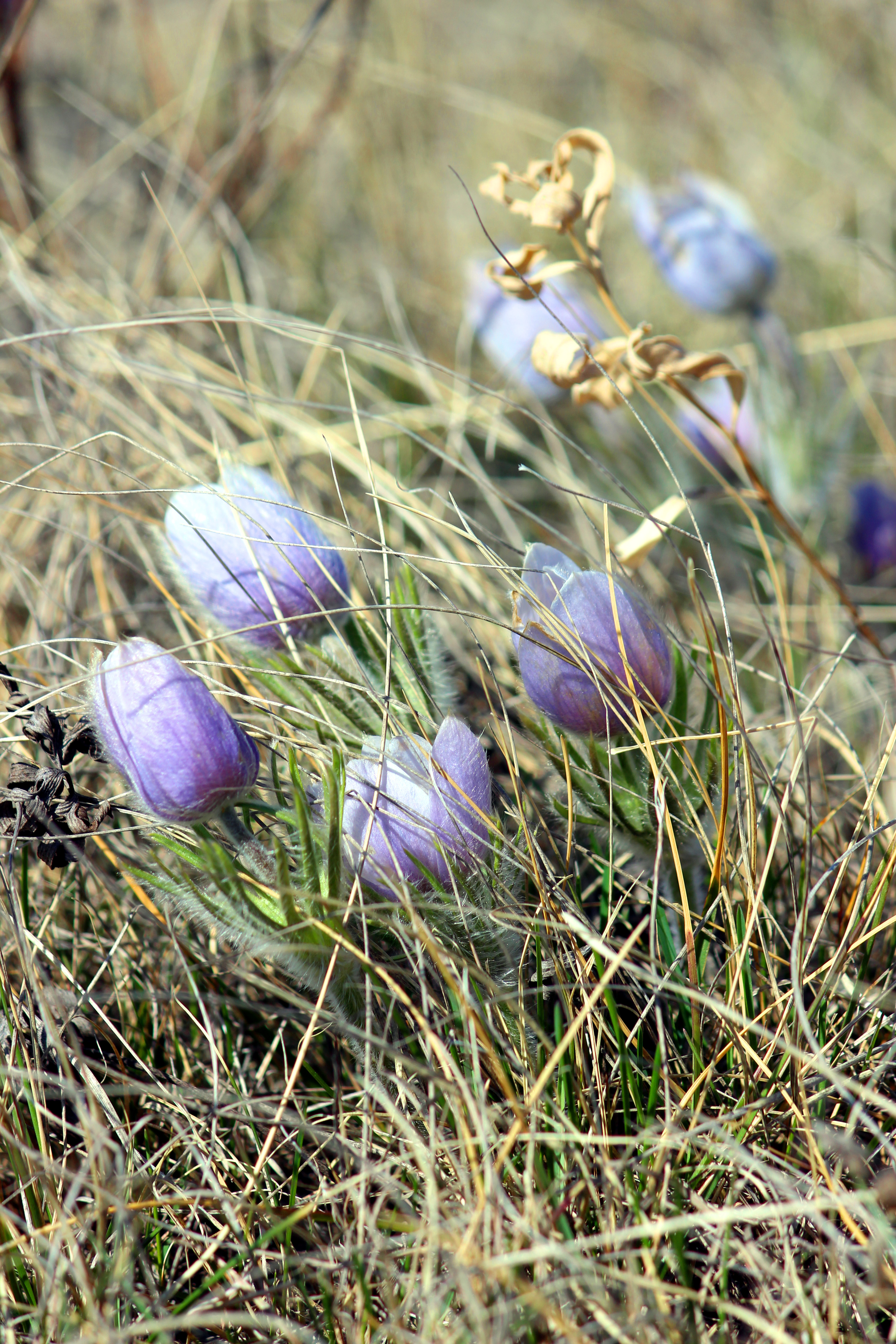
A furry, purple-blue prairie flower that beats the grass out of the ground each spring, blooming before almost anything else is green.

American pasqueflower at a glance
Pulsatilla patens ssp. multifida PASK-flower; Pulsatilla patens is pul-suh-TIL-uh PAY-tenz
- Type
- Plant · wildflower
- Diet
- Producer
- Size
- Low to the ground, one furry flower per stem, opening before the surrounding prairie grass has greened up.
- Conservation
- Not federally listed. Its own USFWS field description notes it is usually found only on sod that has never been broken, so it depends on undisturbed native prairie and grassland.
Eats sunlight, water, soil nutrients
Photosynthesizes through deeply divided leaves. The whole plant — stem, leaves, and flower buds — is covered in fine, silvery hairs.
Is it safe to touch?
Every part of this plant is poisonous to eat, and the fresh sap can blister skin. Treat it like every wild flower in a park: look, don't pick, and never put any part of a wild plant in your mouth.
Snow can still be sitting in the shade when the first pasqueflower opens. At Theodore Roosevelt National Park, NPS names it plainly: the first wildflower to bloom each year, in April, ahead of the more than 400 other plant species the park counts, most of which wait for June or July. Its cup-shaped bloom is a pale, silvery purple-blue, and the whole plant — stem, leaves, buds — is covered in fine hairs, so it looks almost frosted even on a warm afternoon.
Finding one tells you something about the ground under your boots. USFWS describes the pasqueflower as usually growing only on sod that has never been broken — prairie that has never been plowed. A field of corn or wheat won’t have it. A hayfield might not either. It grows on ground that has stayed grass, root to root, since before anyone farmed it.
So a single furry, purple flower coming up through last year’s dead grass in April is doing two things at once: announcing spring before anything else bothers to, and marking a patch of prairie that was never turned over. Kneel down next to one and you’re looking at both an early flower and a small, standing fact about the dirt.
Did you know?
- At Theodore Roosevelt National Park, the pasqueflower is the first wildflower to bloom each spring, in April.
- USFWS describes it as usually growing only on sod that has never been broken — ground that has never been plowed.
- Its stems, leaves, and flower buds are covered in fine, silvery hairs, visible even from a few steps away.
Common questions
When does the pasqueflower bloom?
Early. NPS says it's the first wildflower to bloom at Theodore Roosevelt National Park each year, in April, ahead of the park's main wildflower season in June and July.
Why is it covered in fuzz?
Its stem, leaves, and flower buds are covered in fine, silvery hairs, which is one of the easiest ways to identify it in the field.
Where does the pasqueflower grow?
USFWS describes it as usually found only on sod that has never been broken — ground that has never been plowed — which makes it a sign of undisturbed native prairie.
Can you pick or eat a pasqueflower?
Look, don't pick, and don't eat any part of it. That is the rule for every wild flower in a park, and it protects both you and the plant.
What do I do if someone eats pasqueflower or gets the sap on their skin?
If any part is swallowed, call Poison Control at 1-800-222-1222. If sap gets on skin, wash it off quickly with plenty of running water.