Snowshoe hare
A forest hare whose coat flips from brown to white on a clock set by daylight, not by snow, and whose oversized feet work like actual snowshoes.

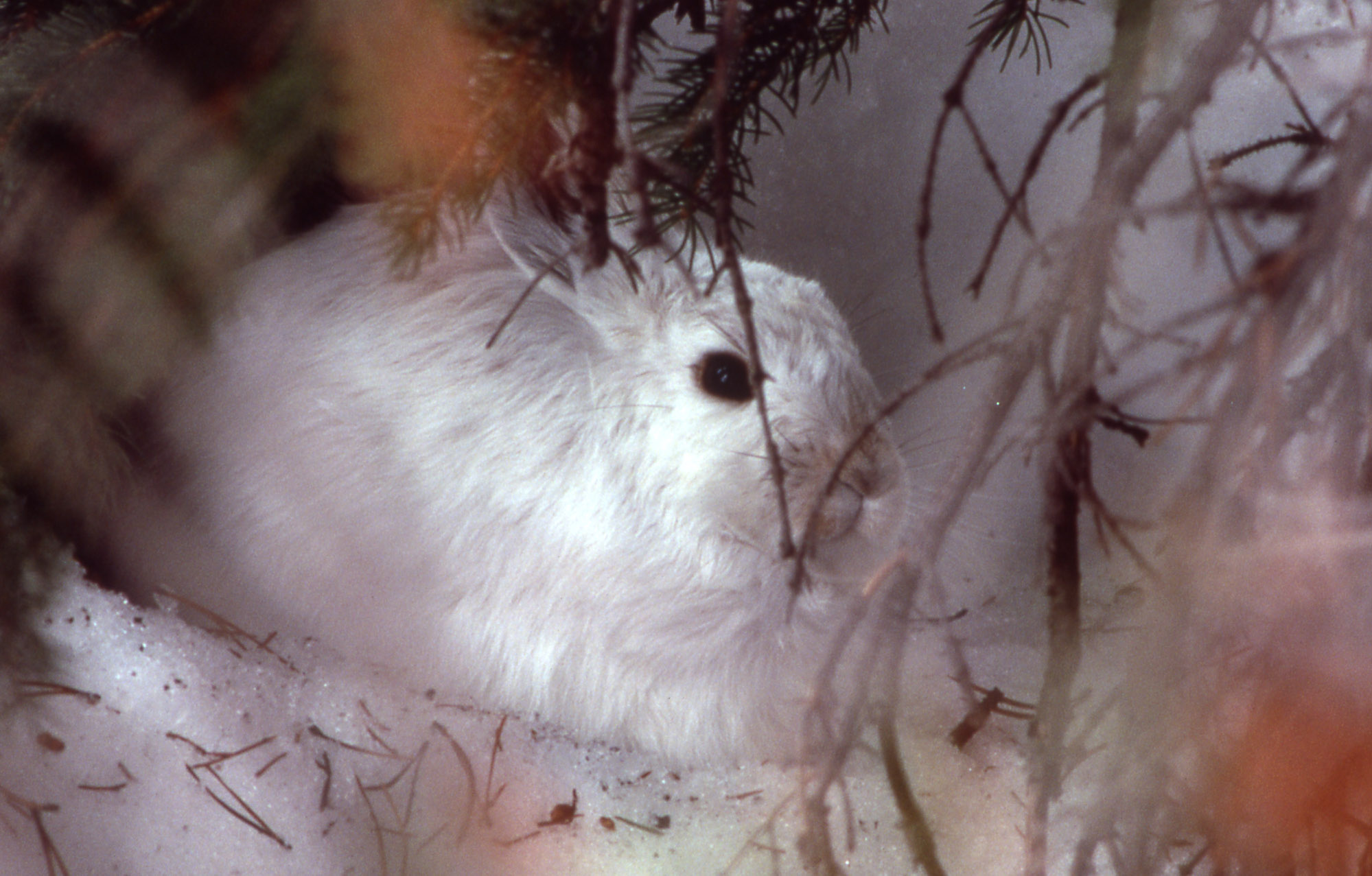
Snowshoe hare at a glance
Lepus americanus LEE-puss uh-MER-ih-KAY-nus
- Type
- Mammal · lagomorph
- Diet
- Herbivore
- Size
- About as long as a grown-up's arm from elbow to fingertips (16 to 20 inches), weighing about as much as a bag of sugar (2.5 to 4 pounds). Its hind feet alone can stretch nearly 6 inches, wide enough to spread its weight over snow the way a real snowshoe does.
- Lifespan
- Most live only a year or two in the wild; a few reach about 5 years.
- Conservation
- Least concern
Eats grasses, leaves, berries, twigs, bark, buds, conifer needles in winter
In summer a hare grazes on grass, leaves, and berries. Once snow buries the ground, it switches to twigs, bark, and buds, and it re-eats its own soft droppings once to squeeze extra nutrition out of that tough, fibrous winter diet.
Should you worry?
None. Snowshoe hares are shy plant-eaters that freeze or bolt at the first sign of a person. The only rule is to leave the animal alone and not chase it out of cover.
Somewhere along a shaded trail in North Cascades or Rainier’s subalpine forest, a patch of brown fur explodes out of the understory before you’ve registered it as an animal at all: a snowshoe hare, gone. Look closer at the ones that hold still and the feet give it away first, oversized and already going pale even in late summer, built to spread its weight over snow the way an actual snowshoe does.
The color change that gives the hare its name doesn’t wait for snow. It runs on daylight: as the hours of light shrink each fall, a hormonal signal tells the hare’s body to swap brown hair for white, and the reverse happens as days lengthen in spring. For thousands of years that clock lined up with the snowpack closely enough. It doesn’t always anymore. A warm winter with a late, thin snow season can leave a hare fully white against bare brown dirt for days or weeks, and every fox, owl, and lynx nearby can see exactly where the mismatch is standing.
That mismatch is also why the lynx, one of the hare’s main predators, tracks the hare’s own population booms and busts almost exactly, just a year or so behind. Watch long enough on a quiet trail and both halves of that old relationship are somewhere in the same patch of woods, one waiting on the other’s numbers to catch up.
Did you know?
- A snowshoe hare's molt runs on an internal clock set by day length, not by the weather, which is why a warm, low-snow winter can leave a hare bright white against bare brown dirt.
- Its huge hind feet work exactly like the snowshoes people strap on, spreading its weight so it doesn't sink into deep snow the way a fox or a person would.
- Snowshoe hare numbers rise and crash in a roughly 10-year boom-and-bust cycle, and the Canada lynx population follows the same rhythm a year or so behind, since lynx depend on hares for most of their food.
Common questions
Are snowshoe hares dangerous to kids?
No. They're shy plant-eaters that run at the first sign of a person. Just don't chase one out of the bushes it's hiding in.
Why do snowshoe hares turn white in winter?
Shortening daylight, not cold or snow, triggers the molt. That means a hare can turn white before snow falls or stay white after it melts.
What do snowshoe hares eat?
Grass, leaves, and berries in summer; twigs, bark, and buds once snow covers the ground in winter.
Why are snowshoe hares important to lynx?
Canada lynx depend on hares for most of their food, so when hare populations crash roughly every 10 years, lynx numbers crash too, a year or so later.
How big are a snowshoe hare's feet?
Its hind feet can stretch nearly 6 inches long, wide enough to spread its weight over snow like a built-in snowshoe.