Common raven
A big, glossy-black problem-solver that rolls and tumbles over the cliffs of Grand Canyon, Arches, and the desert parks, watching for its next meal.
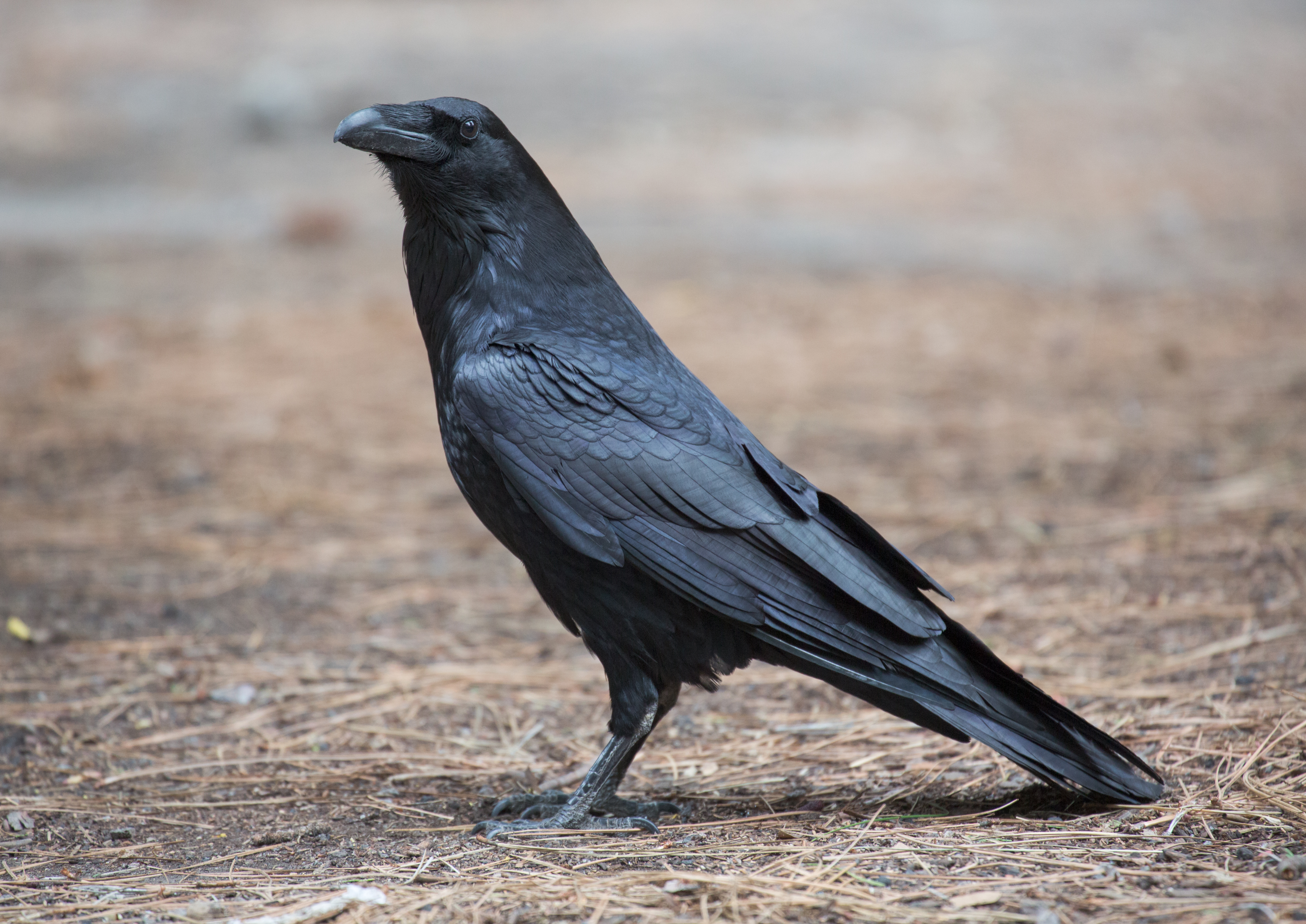
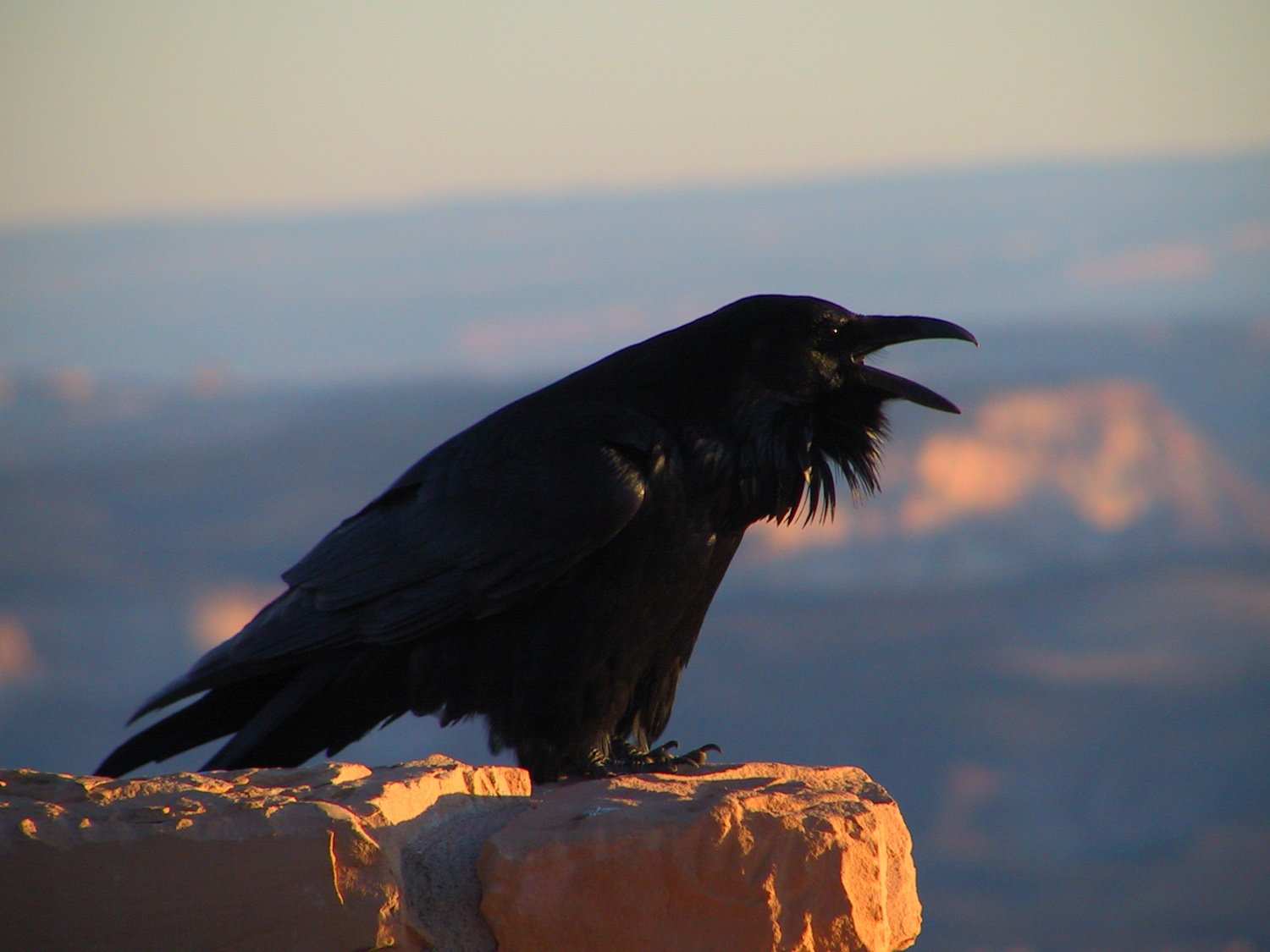
Common raven at a glance
Corvus corax RAY-vun; Corvus corax is KOR-vuss KOR-aks
- Type
- Bird · corvid
- Diet
- Omnivore
- Size
- A raven's wings stretch more than 3 feet across, about as wide as a car door is tall, and it is much bigger than the crow it is often confused with.
- Lifespan
- Often 10 to 15 years in the wild, and some live longer.
- Conservation
- Least concern
Eats dead animals, insects, eggs, berries, seeds, human food scraps
A raven eats almost anything it can find. It scavenges dead animals, catches insects and small creatures, follows wolves to leftover kills, and hides extra food to eat later.
Should you worry?
A raven will not hurt you, but it is bold and clever enough to unzip a backpack, open a cooler, or grab a sandwich the moment you look away. Keep your food closed and packed, and never feed one. Fed ravens learn to raid campsites and cars.
The common raven is the big black bird watching you from the rock. Its wings span more than three feet, it is much larger than the crow people mix it up with, and it carries a heavy bill and a shaggy ruff of throat feathers. In flight, look at the tail: a raven’s comes to a point like a wedge, while a crow’s is cut straight across like a fan, and the raven’s voice is a deep croak instead of a caw.
It is one of the smartest birds alive. Ravens solve puzzles, “count” to about seven, and on some thinking tasks young ravens hold their own against adult chimpanzees. They also play: sliding down snowbanks, dropping sticks in the air and diving to catch them, rolling and tumbling in the wind for no reason anyone can find but fun. And they eat nearly anything: dead animals, insects, eggs, berries, and whatever falls out of a cooler.
That last part is where the trouble is. A raven is bold and clever enough to unzip a backpack, work open a cooler latch, or lift a sandwich the second you turn your head. A fed raven learns to raid campsites and cars and teaches the others, so the rule at Arches or Death Valley is simple: keep your food closed and packed, and never hand a raven a bite.
Did you know?
- Ravens are some of the smartest birds alive. In tests they can "count" to about seven and solve puzzles, and young ravens do about as well as adult chimpanzees on some thinking tasks.
- Ravens play. They slide down snowbanks, drop sticks in midair and catch them, and roll and tumble in the wind just for fun.
- To tell a raven from a crow, watch the tail in flight. A raven's tail comes to a point like a wedge, while a crow's tail is straight across like a fan. A raven's croak is also deeper than a crow's caw.
Common questions
Are ravens dangerous to kids?
No, but they are sneaky about food. A raven will grab an unwatched snack or open a pack. Keep your food closed and do not feed them.
What is the difference between a raven and a crow?
A raven is bigger, croaks in a deeper voice, and has a wedge-shaped tail. A crow is smaller, caws, and has a fan-shaped tail.
How smart are ravens?
Very. They can solve puzzles, "count" to about seven, and hide food to find later. Some tests put young ravens near adult chimpanzees.
Is a raven an omnivore? What does it eat?
Yes, a raven is an omnivore. It eats almost anything, from dead animals and insects to eggs, berries, and dropped french fries. That is why they hang around campgrounds and parking lots.
What eats a common raven?
Very little. Adults are rarely preyed on. Golden eagles, great horned owls, and coyotes are among the few animals seen attacking nests and young ravens.
Where it lives
- Arches National Park
- Black Canyon of the Gunnison National Park
- Craters of the Moon National Monument and Preserve
- Death Valley National Park
- Glacier National Park
- Grand Canyon National Park
- Grand Teton National Park
- Great Basin National Park
- Great Sand Dunes National Park and Preserve
- Isle Royale National Park
- Joshua Tree National Park
- Mesa Verde National Park
- Rocky Mountain National Park
- Sequoia National Park
- Yellowstone National Park
- Yosemite National Park
- Zion National Park