Eastern chipmunk
A busy striped ground squirrel that stuffs seeds into stretchy cheek pouches and hides them in an underground pantry.
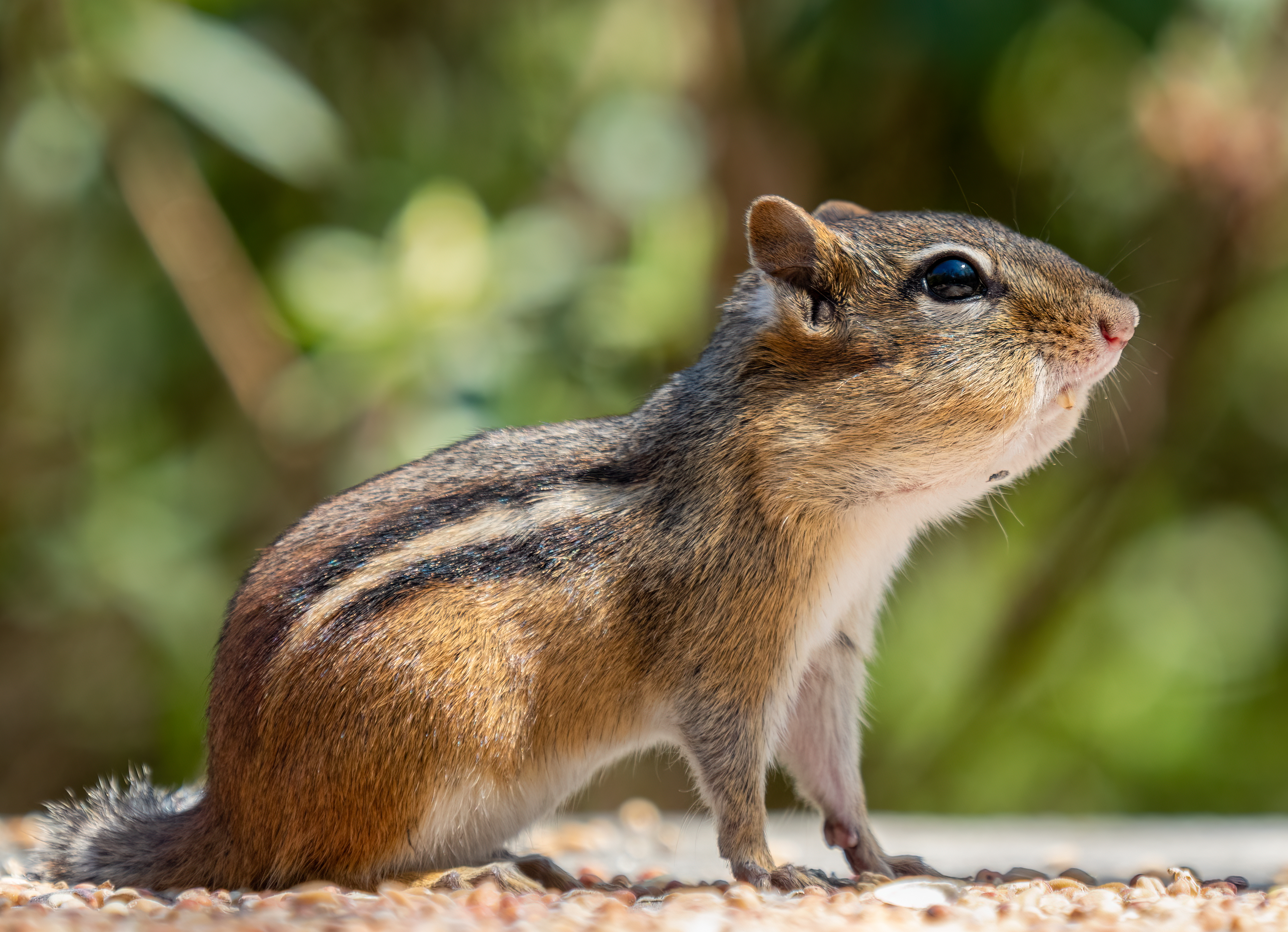

Eastern chipmunk at a glance
Tamias striatus eastern chipmunk is EE-stern CHIP-munk; Tamias striatus is TAM-ee-as stry-AY-tus
- Type
- Mammal · squirrel (rodent)
- Diet
- Omnivore
- Size
- Body about the length of a dollar bill, plus a tail, about 10 inches total. It weighs a bit more than a chocolate bar (about 3 to 4 ounces).
- Lifespan
- Most survive less than 2 years; the lucky few reach 8.
- Conservation
- Least concern (IUCN); not listed under the U.S. Endangered Species Act
Eats acorns, beechnuts, seeds, berries, insects, earthworms, mushrooms
A chipmunk fills its stretchy cheek pouches to the brim and carries a whole load at once to a burrow with food-storage rooms. It caches food all year and especially hard in early autumn, then wakes through the winter to snack on what it buried, instead of fattening up to hibernate.
Should you worry?
There is no real danger, just one rule: don't hand-feed wildlife. A chipmunk's teeth can bite if it feels trapped. Enjoy the stuffed cheeks from a couple of feet away and keep your snacks packed.
Through the fence line at a Cuyahoga trailhead, five quick inches of stripes cross the path, pause, and vanish. What you saw, if you got the look, was not a single animal but a moving face: the chipmunk’s cheeks were so stuffed with seeds that its head was wider than its shoulders. That is the eastern chipmunk doing its main job. It does not store winter fat the way a bear does; it stores groceries. It packs its cheeks to the brim, sprints to a burrow, and dumps the load into one of several underground food rooms, then goes back for more, all year and especially hard in early autumn.
The reason it needs a pantry is that it doesn’t truly hibernate. A chipmunk sleeps very deeply in winter, but the sleep is a light, waking sort, and on any mild day it rouses to snack on the stash it made while the sun was high. That is also why the burrow has rooms: one nest, plus several separate pantries, all connected by tunnels that can run 30 feet. A chipmunk building that palace is one of the busiest animals you’ll ever watch for two minutes.
See the cheeks, hear the chip-chip call, and leave the seed stash alone. From a couple of feet away a chipmunk is a tiny, whirring lesson in planning ahead, and the only rule is that your snacks stay in your pack.
Did you know?
- Chipmunks don't really hibernate. They sleep very deeply in winter but wake on mild days to snack on the stash they buried themselves.
- A chipmunk's burrow is a maze of tunnels up to about 30 feet long, with separate rooms just for storing food.
- A chipmunk can stuff its cheeks so full that its face looks twice its normal width, carrying a whole meal's load in one trip.
Common questions
Why do chipmunks' cheeks get so big?
They are built-in grocery bags. A whole load of seeds fits in each cheek, on either side of the mouth.
Do chipmunks hibernate?
Sort of. They sleep very deeply in winter but wake up on warm days to eat from the stash in their burrow.
Where do chipmunks live?
Underground, in a burrow made of a nest room plus separate food pantries.
Are chipmunks squirrels?
Yes. They are ground squirrels, in the same family as tree squirrels.
What eats an eastern chipmunk?
Most daytime hunters. Hawks, weasels, foxes, bobcats, coyotes, raccoons, and pet cats and dogs all catch chipmunks.