Bald eagle
The white-headed fish hawk that is the national bird of the United States, common along the lakes of Voyageurs and the coasts of Olympic and Katmai.
We saw it Our family spotted this one at Olympic National Park in July 2026 and at Glacier National Park in August 2026.
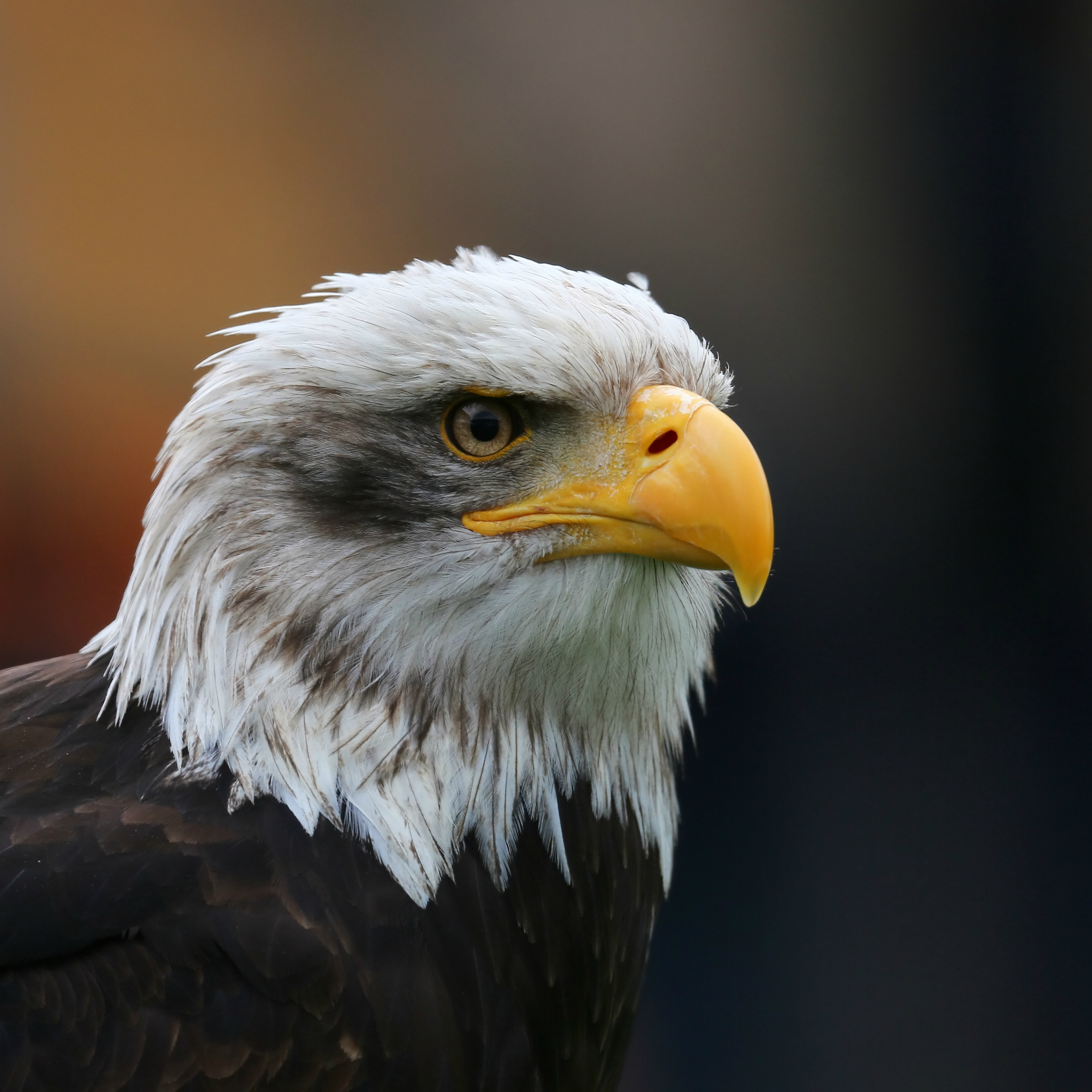

Bald eagle at a glance
Haliaeetus leucocephalus bald EE-gul; Haliaeetus leucocephalus is hal-ee-ay-EE-tus loo-ko-SEF-uh-lus
- Type
- Bird · raptor
- Diet
- Carnivore
- Size
- Its wings stretch about 6 to 8 feet across, close to the height of a tall grown-up lying down. A big female weighs up to about 14 pounds, like a large house cat.
- Lifespan
- Around 20 to 30 years in the wild.
- Conservation
- Least concern
Eats fish, ducks, gulls, small mammals, carrion
A bald eagle mostly catches fish, swooping down to grab them out of the water with its feet. It will also steal food from other birds and eat animals that are already dead.
Should you worry?
A bald eagle will not come after you. It hunts fish and keeps its distance from people. If you find a nest, stay well back so the parents do not feel crowded, and never feed an eagle or leave fish scraps out for one.
The bald eagle is not bald, and the name is older than it looks. Its head is covered in bright white feathers; the word “balde” once meant white, not hairless, so the name really says white-headed eagle. A grown one is unmistakable: dark body, snow-white head and tail, a heavy yellow hook of a beak. Its wings can span eight feet, about the height of a tall grown-up laid out on the floor.
Mostly it is a fisherman. A bald eagle drops out of a snag over the water, throws its feet forward, and snatches a fish off the surface without landing. When fishing is slow it is not too proud to eat something already dead, or to chase a smaller bird and steal what it caught. A pair builds the biggest tree nest of any bird in the world, adding sticks year after year until the thing can weigh a ton.
They very nearly disappeared. Through the middle of the 1900s a pesticide called DDT built up in the fish the eagles ate and thinned their eggshells until the eggs broke under the parents’ own weight. The country banned DDT, the eagles slowly came back, and in 2007 they were taken off the endangered list. Along the lakes of Voyageurs you can watch one work the shoreline again.
Did you know?
- A bald eagle's nest is the biggest tree nest in the world. A pair adds sticks year after year until the nest can weigh a ton or more, as heavy as a small car.
- Bald eagles are not really bald. Their heads are covered in white feathers. The old word "balde" once meant white, not hairless.
- Bald eagles almost vanished in the 1900s because of a poison called DDT that thinned their eggshells. After DDT was banned they came back, and in 2007 they were taken off the endangered list.
Common questions
Are bald eagles dangerous to kids?
No. They hunt fish and stay away from people. Just keep your distance from their nests and never try to feed one.
Why are they called bald eagles if they have feathers?
Their heads are covered in white feathers. Long ago "balde" meant white, so the name really means "white-headed eagle."
Is a bald eagle a carnivore? What does it eat?
Yes, a bald eagle is a carnivore. It eats mostly fish it snatches out of the water. They also eat ducks, gulls, and animals that are already dead, and they sometimes steal food from other birds.
How big is a bald eagle's nest?
Huge. It can grow wider than a kiddie pool and weigh a ton, the heaviest tree nest of any bird in the world.
What eats a bald eagle?
Grown bald eagles are rarely preyed on. The eggs and chicks are at risk. Ravens, crows, magpies, gulls, raccoons, black bears, bobcats, and wolverines take them.
Where it lives
- Acadia National Park
- Badlands National Park
- Black Canyon of the Gunnison National Park
- Craters of the Moon National Monument and Preserve
- Everglades National Park
- Glacier National Park
- Grand Teton National Park
- Great Basin National Park
- Great Sand Dunes National Park and Preserve
- Isle Royale National Park
- Katmai National Park and Preserve
- Lava Beds National Monument
- Mesa Verde National Park
- North Cascades National Park
- Olympic National Park
- Rocky Mountain National Park
- Voyageurs National Park
- Wind Cave National Park
- Yellowstone National Park
- Zion National Park