Craters of the Moon National Monument and Preserve

We came here as a detour on the drive west out of Idaho Falls, and it is the strangest ground we have stood on. Calvin Coolidge set it aside in 1924 as a weird and scenic landscape peculiar to itself, and a century later the National Park Service still uses his phrase, because nobody has improved on it.
What is now called Craters of the Moon is part of the homelands of the Shoshone-Bannock people, the eastern and western bands of the Northern Shoshone together with the Bannock, or Northern Paiute, whose own government sits at Fort Hall. NPS records more than 5,000 worked stone artifacts here, hunting blinds and rock shelters, and stone circles it describes in the present tense as a connection the Shoshone-Bannock maintain with this land today. The detail our children have not stopped repeating: lava tubes that hold ice year-round were used to store meat, and NPS says the constant cool temperature preserved it much like a modern freezer.
The lava is young. Eight eruptive periods ran from roughly 15,000 to 2,100 years ago along the Great Rift, a crack about 53 miles long, and the most recent flow is about 2,100 years old. Eruptions have averaged roughly every 2,000 years, which is why USGS says plainly that the field will erupt again, probably within the next few centuries.
There are two kinds of lava underfoot and the park teaches the words with their Hawaiian pronunciations: pahoehoe (pah-hoy-hoy), which means ropy, smooth and coiled like poured batter that stiffened; and aa (ah-ah), which means hard on the feet, and which NPS compares to walking on millions of cups and saucers stacked in a loose pile. Cinder cones are the loud opening of an eruption, built as cinders pile around a vent. Spatter cones are the quiet ending, when the lava goes thick and pasty and globs of it plop into a heap. Both are here, a few minutes apart on the same road.
The best thing you can teach a child here costs nothing and takes one look. Older flows carry more plant life, so you can set two side by side and say which came first. That is not a party trick: NPS says geologists use it to date the flows, and the Triple Twist Tree is the worked example, cored at more than 1,350 years and therefore younger than the lava it stands on. Lichens go first, at one to two millimetres a year.
For short legs, the order that worked for us. Devils Orchard Nature Trail is half a mile, fully paved and accessible, 39 feet of climb, and its signs carry the Indigenous interpretation. The Spatter Cones take ten or fifteen minutes. Inferno Cone is only four tenths of a mile but climbs 164 feet of loose cinder at a grade that will find your calves, and the summit at 6,181 feet gives 360 degrees over the Great Rift and the Snake River Plain, with the Tetons 100 miles east on a clear day. NPS warns it can be hazardous in high winds, and we can confirm the wind. Tree Molds Trail is two miles round trip with the molds a full mile in, the holes left where a flow knocked down and burned trees, taking their shape as it cooled.
The caves need planning. Only Indian Tunnel and Dewdrop are open, the permit is free but every adult must collect it in person, and the screening is stricter than families expect: anything that has been in any other cave is barred, even washed. That is white-nose syndrome, a fungus that has killed millions of bats. It is worth the trouble, because eleven bat species are documented here, three quarters of the hibernating bats found are Townsend’s big-eared, and most of southern Idaho’s known maternity-roost caves are inside this monument.
One more thing to tell the kids on the loop road. In August 1969, one month after Apollo 11 landed, four astronauts flew into Arco, Alan Shepard, Edgar Mitchell, Joe Engle and Eugene Cernan, and walked this lava to learn enough volcanic geology to describe what they would see on the moon. They were pilots, not geologists. The park was teaching them how to look.
Practical notes. The loop is about seven miles, roughly nine with the spurs, and usually closes by mid-November and reopens mid-April. Entry is $20 a vehicle and free under 16. Water is only at the visitor center and campground. The dark rock can reach 170°F, so hike early and save the caves for the afternoon, and leave the dog in the car park: there are no pets on any trail, partly because the lava burns paws.
Wild things at Craters of the Moon National Monument and Preserve
See all 40 →-
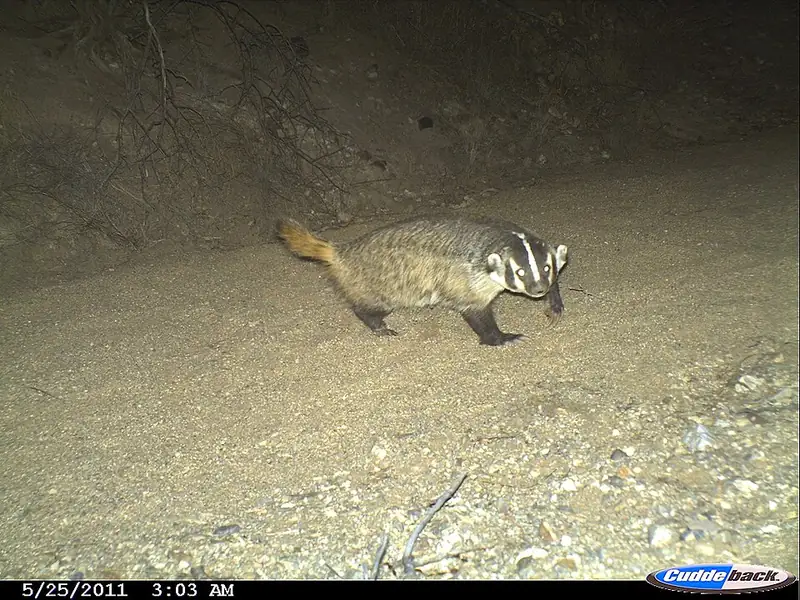 Mammal
 American badger
Taxidea taxus
A short, wide-bodied digger with a white-striped face, common on the grasslands of Yellowstone and Badlands, that can vanish underground in minutes.
-
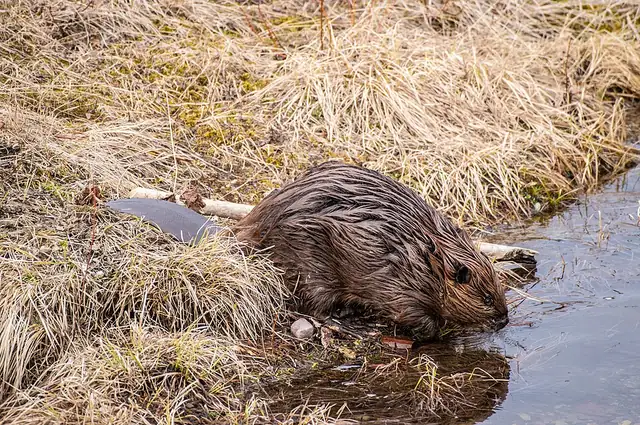 Mammal
 American beaver
Castor canadensis
North America's largest rodent, a keystone species whose dams reshape whole streams at Yellowstone, Glacier, and ten other parks along the route.
-
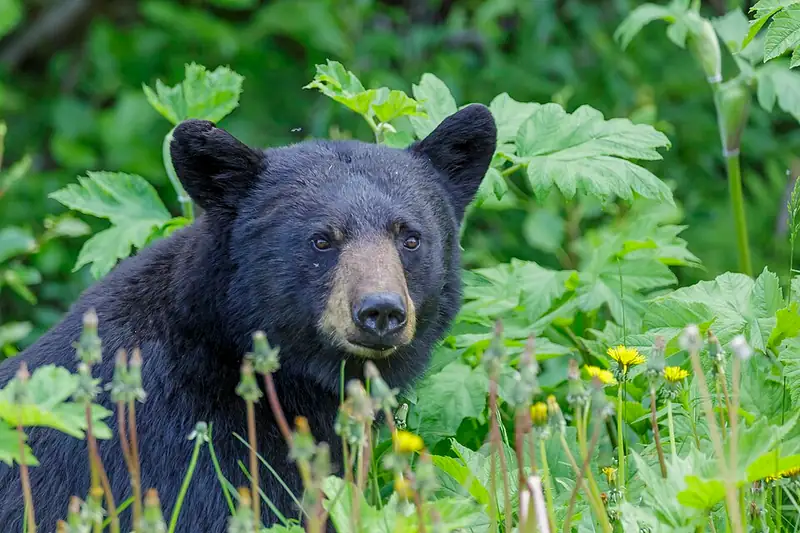 Mammal
 American black bear
Ursus americanus
The bear you're most likely to meet east of the Rockies, a strong tree-climber that eats mostly plants and comes in black, brown, or cinnamon.
-
 Mammal
 American pika
Ochotona princeps
A small round cousin of the rabbit that lives in mountain rock piles at Rocky Mountain, Mount Rainier, and North Cascades, and never sleeps through winter.
-
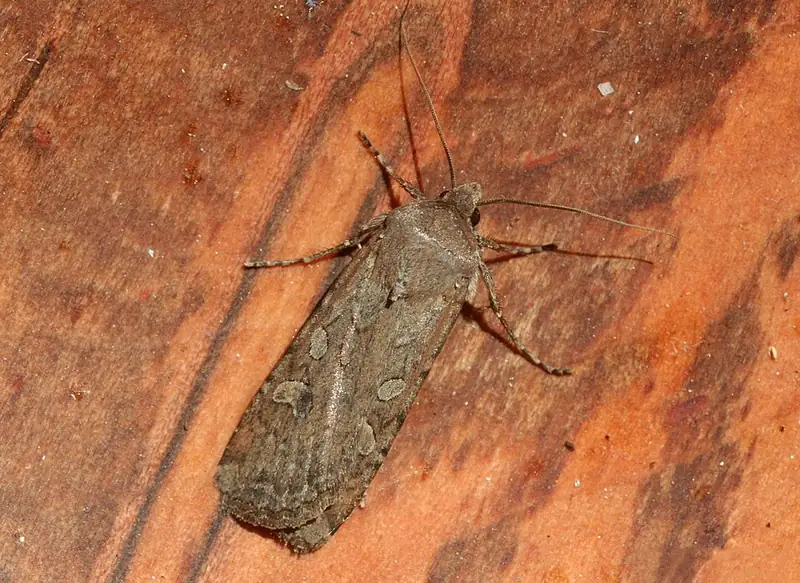 Invertebrate
 Army cutworm moth
Euxoa auxiliaris
A gray moth that migrates from Great Plains farm fields to high mountain talus, where grizzly bears flip rocks to eat it by the thousands each summer.
-
 Bird
Bird Bald eagle
Haliaeetus leucocephalus
The white-headed fish hawk that is the national bird of the United States, common along the lakes of Voyageurs and the coasts of Olympic and Katmai.