CO
Mesa Verde National Park
The first U.S. national park made for the works of people: Ancestral Puebloan cliff dwellings on a Colorado tableland.
Established
We drove from Socorro on the 18th and stopped in Farmington for van chores and dinner at the Olive Garden. Very fancy. We reached Morefield Campground in the early evening.
Mesa Verde is not a rock-and-trail park. It is the first national park the country set aside for the works of people rather than scenery, signed by Theodore Roosevelt in 1906, and nearly the whole place is an archaeological preserve. The land is the homeland of the Ancestral Pueblo people, who lived on this mesa for 700 years and built into these alcoves before the end of the 1200s. The park’s affiliated tribes include the Hopi, the Pueblo communities (21 traditional communities speaking six different languages), and the Ute Mountain Ute, whose land adjoins the park. Ranchers documented Cliff Palace in 1888.
Tickets decide the shape of a visit. Cliff Palace, Balcony House, and Long House are ranger-guided only. Book them on recreation.gov. Balcony House is the adventurous tour: a 32-foot ladder, a crawl tunnel, and a 65-foot climb out. You do not need a ticket for the rest of the park: the Mesa Top Loop and the Far View Sites loop walk through centuries of building without a ladder, and the Spruce Tree House overlook is a short paved walk behind the museum, though the dwelling itself is closed to entry.
From our visit
- We arrived on the last night of services. On the morning of the 19th a ranger came around the loop and told us the loop, the dump station, the showers, the laundry, the store, and the restaurant were closing. We stayed on in the Pueblo campground, which is tent-only, with a basic bathroom, water, and trash. Teddy came in with full water and clean tanks, so we were set for a few more days.
- The museum film first. The film follows the Indigenous cultures who trace their roots to Mesa Verde. We watched it before we walked anywhere.
- Petroglyph Point was the panel that landed. We had seen petroglyphs twice before on this trip. This was the third site and the first where the figures looked made rather than old. NPS rates the trail Very Challenging: unmaintained, with steep edges, loose rock, and scrambling, including a 100-foot climb to the mesa top. It is not an easy walk for a child. From the mesa top we could see out to the mountains above Telluride, already snow capped. There were others I could not name.
- Balcony House, then Cliff Palace, in one afternoon. Both ranger-led tours were careful with the Ancestral Pueblo story and told it with grace. What the tour buys is that care, plus the rooms themselves. The free loop shows you the alcoves from across the canyon. The tour puts you inside one. Balcony House comes first, with the ladder and the crawl tunnel. Cliff Palace is the larger site. Big asked a lot of questions, because his schoolwork is tied to the park visits.
- Junior Rangers, and the deer from the day before. At the visitor center after the tours, Big and Little were sworn in as Junior Rangers. The center has life-size scenes of Ancestral Pueblo life and artifacts on display. The day before, walking back to the lot after Petroglyph Point, we found a family of mule deer standing in the parking lot.
We left Mesa Verde for Ouray over Red Mountain Pass. The drive was perilous. It rained, and it snowed at elevation.
I
Basic info
- Established
- 1906
- Area
- 52,485 acres
- Visitors (2023)
- 463,130
- Elevation
- 6,900–8,572 ft
- Designation
- National Park (1906)
- Designation
- UNESCO World Heritage Site (1978)
II
Logistics
Before you go
- Getting there
- The entrance is on US Highway 160 between Mancos and Cortez, Colorado, about 35 miles west of Durango. Plan for 21 more miles (about 45 minutes) of steep, winding road to the first cliff dwelling view. NPS
- How many days
- In summer, NPS points you to the cliff dwelling overlooks along Mesa Top Loop and Cliff Palace Loop. Ranger-guided tours are the only way into most cliff dwellings, and they need advance reservations. The 2026 tour season runs May 4 to October 21, and Wetherill Mesa is open May 22 to October 21. Wetherill Mesa, on the west side, can take all day on its own, drive time included. NPS
- Entrance fee
- Entry costs $30 per private vehicle from May 1 to October 22 for 7 days, and $20 the rest of the year (2026). An America the Beautiful pass covers entry. NPS
- Pets
- Leashed pets (6 feet or shorter) may use roads, parking lots, paved areas on Mesa Top Loop and Park Point, and Wetherill Mesa trails except those into Step House and Long House (2026). Other trails, ancestral sites, and buildings are closed to pets, and Morefield Campground has a kennel. NPS
Seasons
Spring
- Cliff-dwelling tours phase in through April and May. Crowds stay light.
- Cool on the mesa, sometimes snow at the higher overlooks. Wildflowers come up in the canyons below.
- A good window if you want the sites without the July crush. Confirm which tours are running before you book a long drive in.
Summer
- All ranger tours running and the peak crowd. Afternoon thunderstorms are common, and tours pause for lightning. Cliff Palace tickets sell out fast.
- Warm on the mesa, into the 90s °F down in the canyons.
- Book tickets at 8 a.m. MDT 14 days ahead. Start early. The Cliff Palace meeting point is about 45 minutes past the entrance station.
Fall
- The balance season, until services wind down in the third week of October. Tours still run, crowds thin, and the cottonwoods turn gold in the canyon bottoms. Nights get cold.
- Warm days, cold nights, the first snows possible by late October.
- Often the best family window: the tours are still open and the lots are calmer than midsummer, but check the closing dates before you plan a late-October trip.
Winter
- Cliff-dwelling tours do not run. The Mesa Top Loop and the Chapin Mesa Archeological Museum stay open when weather allows; snow can close roads. Wetherill Mesa Road is closed for the season.
- Cold and quiet, with snow on the mesa.
- No cliff-dwelling tours, but the Mesa Top Loop and Far View Sites read the whole 600-year story on your own clock.
Mesa Verde National Park with kids
Mesa Verde is a reading park before it is a hiking park: the point is to look at what people built into these alcoves and to keep your hands off the stone. The sites that need tickets and ladders are the headline, but a family can see most of the park with no ticket at all by driving the Mesa Top Loop and walking the Far View Sites loop. Of the ranger tours, NPS lists Cliff Palace as the more doable one for kids. Balcony House adds a 32-foot ladder, a 12-foot crawl tunnel, and a 60-foot cliff climb. The single best thing for making a tour land with a kid is the Chapin Mesa museum first.
- Go through the Chapin Mesa Archeological Museum before any cliff-dwelling tour. Rangers and the dossier both say it is what makes the tour mean something to a kid.
- Cliff Palace is the tour NPS lists as more accessible than Balcony House: about 100 ft of climbing on four ladders, generally workable for kids around 5 and up.
- Balcony House is the physical-challenge tour (32-ft ladder, 12-ft crawl tunnel, 65-ft cliff climb) with posted claustrophobia and heights warnings. Not advised for the youngest.
- No-ticket, no-ladder wins: the 6-mile Mesa Top Loop, the 0.75-mile Far View Sites loop, and the Spruce Tree House overlook behind the museum.
- Two booklet tracks at the visitor center, Junior Ranger and the more advanced Junior Archeologist, so an older and a younger kid can each work at their own level.
- Do not touch the walls or plaster. Skin oils degrade the surface permanently. This is the core lesson of the park.
Accessibility
The Mesa Top Loop is the accessible heart of the park: a 6-mile paved drive with short paved spurs to each overlook, doable with a stroller or limited mobility, no ticket required. Far View Sites is a flat graded loop. The Spruce Tree House overlook behind the Chapin Mesa museum is a short paved walk. Every ranger-guided cliff-dwelling tour involves ladders and is not stroller- or wheelchair-accessible. Altitude is a real factor: the park runs from about 6,900 to 8,572 ft, and day-one headaches are common.
- Mesa Top Loop: 6-mile paved drive, short paved spurs to twelve overlooks, the best no-ladder way to read the whole timeline.
- Spruce Tree House overlook: a short paved walk behind the Chapin Mesa museum. The dwelling itself has been closed to entry since October 2015 for rockfall hazard, with no reopening announced.
- Far View Sites: a flat 0.75-mile graded loop through mesa-top surface pueblos, no ladders, no ticket.
- All cliff-dwelling tours (Cliff Palace, Balcony House, Long House) require ladders and are not accessible. Strollers are useless on every tour.
- Altitude tops out at 8,572 ft at Park Point. Expect day-one headaches and pace the first afternoon accordingly.
Things you can't miss
Natural places
Cliff Palace↗
The largest cliff dwelling in North America, about 150 rooms and 23 kivas set into a sandstone alcove, built by Ancestral Pueblo people between roughly AD 1190 and 1280 per NPS. Ranger-guided tour only, ticketed on Recreation.gov at $8 a person, released 14 days ahead at 8:00 a.m. MDT and gone fast in July. The walk descends and re-climbs about 100 ft on four ladders. Balcony House is the more adventurous of the two. Ranchers Richard Wetherill and Charlie Mason documented it in 1888.
Mesa Top Loop Drive↗
A 6-mile paved self-guided loop on Chapin Mesa, free and open year-round when weather allows, with short paved spurs to twelve overlooks. The stops trace about 600 years of Ancestral Puebloan building in order, from below-ground pithouses to mesa-top masonry pueblos to the cliff dwellings across the canyon. Per NPS it needs no ticket and no ladders, which makes it the stroller-friendly way to read the whole timeline in an afternoon and the fallback for any day a ticketed tour sells out. Square Tower House, the tallest standing structure in the park, shows from one overlook.
Spruce Tree House (view only)↗
The third-largest dwelling in the park, about 130 rooms and 8 kivas and one of the best preserved, per NPS. It has been closed to entry since October 2015 because of rockfall hazard from the alcove arch, and NPS says it will stay closed for the foreseeable future, with no reopening announced. That closure is the single most common Mesa Verde trip-planning error: many families arrive expecting to walk in. The overlook behind the Chapin Mesa Archeological Museum is a short paved walk, which makes this the easiest cliff dwelling to see with no ticket and no ladders.
Far View Sites↗
A cluster of Ancestral Puebloan surface villages on the mesa top (Far View House, Pipe Shrine House, Coyote Village, Megalithic House, and a dry-laid reservoir), occupied roughly AD 900 to 1300 before and during the move into the cliff alcoves. A flat 0.75-mile self-guided loop on a graded path reaches them, per NPS, with no ladders and no ticket. It is the clearest place to see what a village looked like before the cliff dwellings, the context that makes the dwellings land for a kid.
Long House (Wetherill Mesa)↗
The second-largest cliff dwelling in the park, a wide row of masonry rooms along a sandstone ledge on Wetherill Mesa, per NPS. Ranger-led and summer-only, reached by a drive of about 75 minutes from the entrance station, with far smaller crowds than Chapin Mesa. Wetherill Mesa is open May 22 to October 21, 2026: the gate opens at 8:30 a.m., last entry is 2 p.m., and all visitors must exit by 4 p.m. The quieter alternative to the Cliff Palace crowd for a family willing to make the longer drive.
Nearby attractions
Chapin Mesa Archeological Museum↗
A small in-park museum built in 1923, with dioramas and artifact cases that interpret Ancestral Puebloan life, per NPS. Open year-round on reduced winter hours, free, with the Spruce Tree House overlook just behind it. Going through here before a cliff-dwelling tour is the single thing rangers and the dossier most recommend for making the tour mean something to a kid. Some dioramas date to the 1930s and carry mid-century framing the museum and rangers now contextualize.
Ute Mountain Tribal Park↗
Ute Mountain Ute land adjoining Mesa Verde to the south, where the cliff dwellings are toured only with a Ute guide, by reservation, from the visitor center near Towaoc. This is the one place that puts a living Ute voice next to the ancient sites, with far smaller crowds than the national park. The land was Ute before the 1906 park boundary was drawn and remains Ute today. Tours involve ladders and unpaved trails. Confirm the current season and kid-age guidance directly with the Tribe before planning.
Places to stay
Far View Lodge↗
The only non-camping bed inside the park, on a mesa about 15 miles in from the entrance at roughly 8,250 ft, per NPS. No TVs in the rooms, and private balconies face the canyon country. Open April 17 to October 18, 2026, reserved through the concessioner Aramark and booked well ahead for summer. It is the closest bed to the cliff-dwelling tours, which matters because the meeting points are a long drive from any town outside the park.
Morefield Campground↗
The only campground in the park, 267 sites about 4 miles inside the entrance station, run by Aramark. Tent and RV sites, some with hookups, plus a camp store, gas, and a coin laundry in Morefield Village in season. Open April 24 to October 18, 2026, with winter closure October 19 at 10 a.m.; primitive camping with no services runs through October 25, the store closes for the season at noon on October 20, the kennel closes that day, and the Knife Edge Café is closed for the season. Mule deer and wild turkey move through the loops at dawn. The realistic base for a family doing two or three days of tours, and a short walk from the flat Knife Edge Trail for an evening overlook.
Viewpoints and camping
Park Point↗
At 8,572 ft, the highest point in the park, topped by a fire lookout and reached by a short paved path from the parking area, per NPS. On a clear day the sight lines reach the Four Corners country, the La Plata and San Juan Mountains, and Shiprock to the south. This is the orientation stop that shows a kid the shape of the whole tableland and where the canyons cut it, before you drop down to the dwellings.
Soda Canyon Overlook↗
A flat 1.2-mile round-trip trail to a canyon-rim overlook that looks across to Balcony House in its alcove, per NPS. No ladders, no ticket, and no fee beyond entry. This is the way to see a cliff dwelling across the canyon for a family that skips the strenuous Balcony House tour, an easy walk that still ends at a real dwelling view rather than just a rim.
Trails worth the time
Petroglyph Point Trail↗
A 2.4-mile loop that ends at a large Ancestral Pueblo petroglyph panel, the one front-country trail at Mesa Verde where Big and Little can see rock art up close (do not touch it, since skin oils degrade the surface). NPS rates it Very Challenging: unmaintained, with a narrow passage, stone stairs, steep edges, loose rock, and scrambling required. The panel sits at 1.4 miles, then the route climbs a 100-foot cliff back to the mesa top, so treat it as older-kid territory. Self-register at the Chapin Mesa museum trailhead. Like every day trail here, it requires registration because nearly the whole park is an archaeological preserve.
Knife Edge Trail↗
An easy, mostly flat 2-mile round-trip from the Morefield Campground area that follows the bed of the old 1914 entrance road along the cliff edge to a sunset overlook of Montezuma Valley, per NPS. No ladders and no climbing, which makes it the easiest family walk in the park with a view payoff and the natural thing to do straight from the campground in the evening. Self-register at the trailhead.
Our pick for food and drink
Metate Room↗
The only sit-down dinner inside the park, at Far View Lodge about 15 miles in, run by the concessioner Aramark. The menu is Southwest and Pueblo-influenced (corn, beans, squash, chiles), the one in-park kitchen that ties its food to the foodways of the descendant Pueblo communities. Serves dinner April 17 to October 18, 2026, with the lodge, reservations through Aramark. The realistic dinner after a late tour without the drive back to Cortez.
Our pick for things to do nearby
Junior Ranger and Junior Archeologist↗
Two booklet tracks from the Visitor and Research Center, a standard Junior Ranger and a more advanced Junior Archeologist, per NPS, so an older and a younger kid can each work at their own level on the same trip. The Junior Archeologist book leans into reading sites and respecting them (no touching plaster, why looting matters), which is the core lesson of this park, and it is earnable with no ticketed tour using the museum and the Mesa Top Loop. A summer Night Sky program runs in season. Mesa Verde is a certified International Dark Sky Park.
Common questions
- When should we go with kids?
- September or early October. The ranger tours are still running, the lots are calmer than midsummer, and the cottonwoods turn gold in the canyons. In 2026 the tour season runs May 4 to October 21, and services wind down in the third week of October, so a late-October trip means self-guided sites only.
- What closes in October?
- The ranger-led cliff-dwelling tours stop after October 21, the last day of the 2026 season, and Wetherill Mesa closes the same day. Far View Lodge and the Metate Room run April 17 to October 18, 2026. Morefield Campground runs April 24 to October 18 and closes for the winter on October 19 at 10 a.m.; primitive camping with no services continues through October 25, the store closes for the season at noon on October 20, the kennel closes that day, and the Knife Edge Café is closed for the season. The entrance fee also drops from $30 to $20 per vehicle on October 23. On our stay, a ranger came round the loop on the morning of the 19th and told us the gas pump, laundry, showers, and dump station would close with the season; those four are a ranger's word to us, not a posted schedule.
- How do we get cliff-dwelling tickets?
- On recreation.gov, $8 per person, ages 3 and up. Tickets are released 14 days ahead at 8:00 a.m. MDT and sell out fast. There are no walk-up sales and no waiting list: the 2026 tours are reservation-only. Cancelled tickets reappear on recreation.gov until two hours before tour time. July is a race for the release minute; October is a race for the last tours of the season.
- Which tour works for our kids?
- Cliff Palace is the one NPS lists as more accessible: about 100 ft of climbing on four ladders, generally workable for kids around 5 and up. Balcony House is the physical-challenge tour, with a 32-ft ladder, a 12-ft crawl tunnel, and a 65-ft cliff climb, and posted claustrophobia and heights warnings. If you skip the ticketed tours entirely, the Mesa Top Loop and Far View Sites still show the whole story.
- Can we still see Spruce Tree House?
- From the overlook only. It has been closed to entry since October 2015 for rockfall hazard, and NPS says it will stay closed for the foreseeable future, with no reopening announced. The overlook behind the Chapin Mesa museum is a short paved walk and the easiest cliff dwelling to see with no ticket and no ladders.
- Where do we sleep and eat inside the park?
- Far View Lodge is the only non-camping bed in the park, about 15 miles in. It runs April 17 to October 18, 2026, and the Metate Room serves dinner over the same dates. Morefield Campground, 267 sites about 4 miles inside the entrance, is the only campground; it runs April 24 to October 18, 2026, with primitive camping through October 25. Aramark runs both, plus two casual cafes. Everything else is in Cortez or Mancos.
- Anything about altitude or cell service?
- The park runs from about 6,900 to 8,572 ft. Day-one headaches are common, so drink water and pace the first afternoon. Cell service is spotty to none across most of the park. Download maps and save your tour tickets to your phone before you drive in.
- Why is it called Mesa Verde National Park?
- Mesa Verde is Spanish for green table. The land is not a true flat mesa: it tilts gently south, which geologists call a cuesta.
- Do we need a reservation to visit Mesa Verde National Park?
- To go into any cliff dwelling except Step House on Wetherill Mesa, you need a reservation on a ranger-led tour. Book it on Recreation.gov 14 days ahead, starting at 8 a.m. MDT (2026). Tours run May 4 to October 21 in 2026 and fill early. Anyone under 18 must come with an adult.
Wild things at Mesa Verde National Park
See all 38 →-
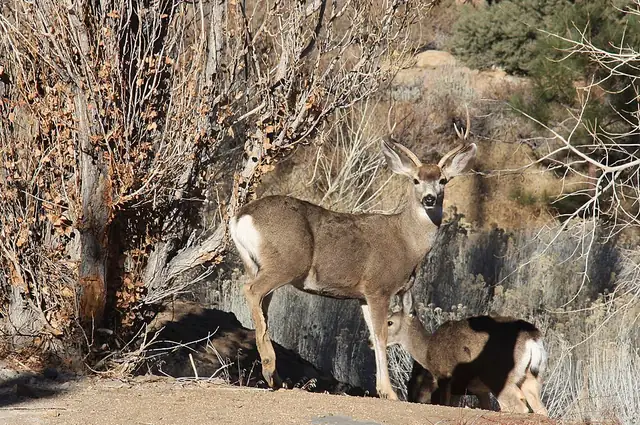 Mammal We saw it
Mule deer
Odocoileus hemionus
A western deer named for its big mule-like ears, common on canyon rims and in desert washes in Grand Canyon, Zion, Yosemite, Arches, Canyonlands, and Saguaro.
-
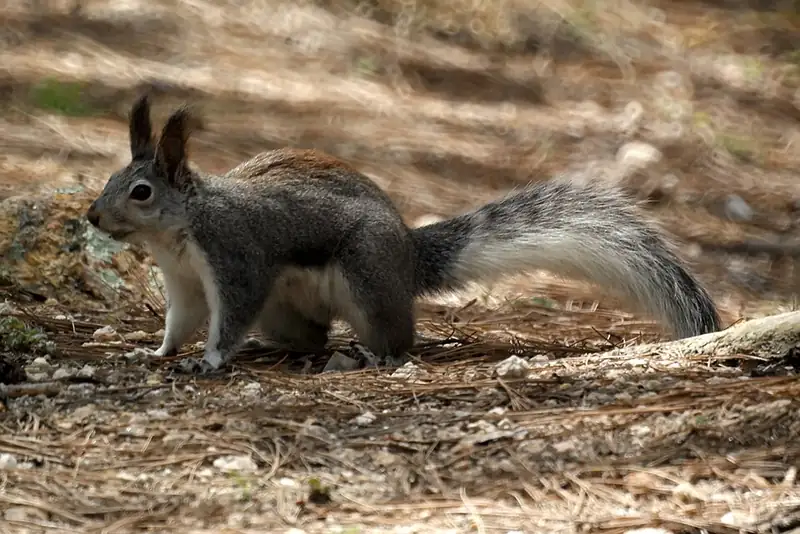 Mammal
Abert's squirrel
Sciurus aberti
A tasseled-eared squirrel of ponderosa pine forests at Mesa Verde, Rocky Mountain, and Great Sand Dunes, nicknamed the scrabbit.
-
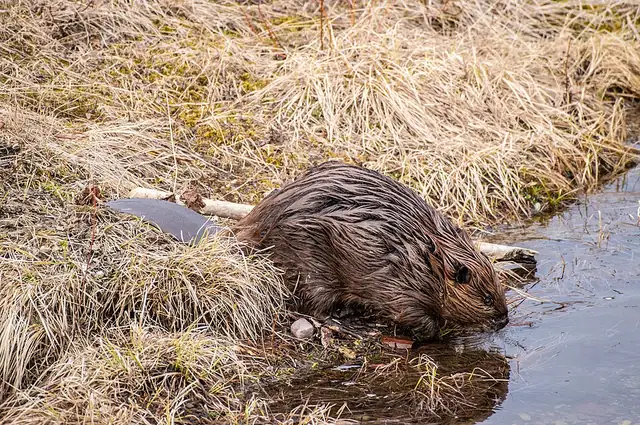 Mammal
American beaver
Castor canadensis
North America's largest rodent, a keystone species whose dams reshape whole streams at Yellowstone, Glacier, and ten other parks along the route.
-
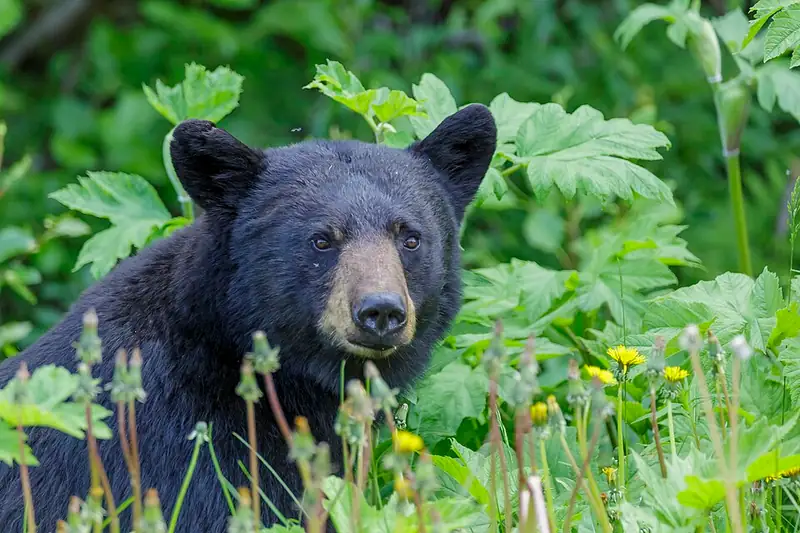 Mammal
American black bear
Ursus americanus
The bear you're most likely to meet east of the Rockies, a strong tree-climber that eats mostly plants and comes in black, brown, or cinnamon.
-
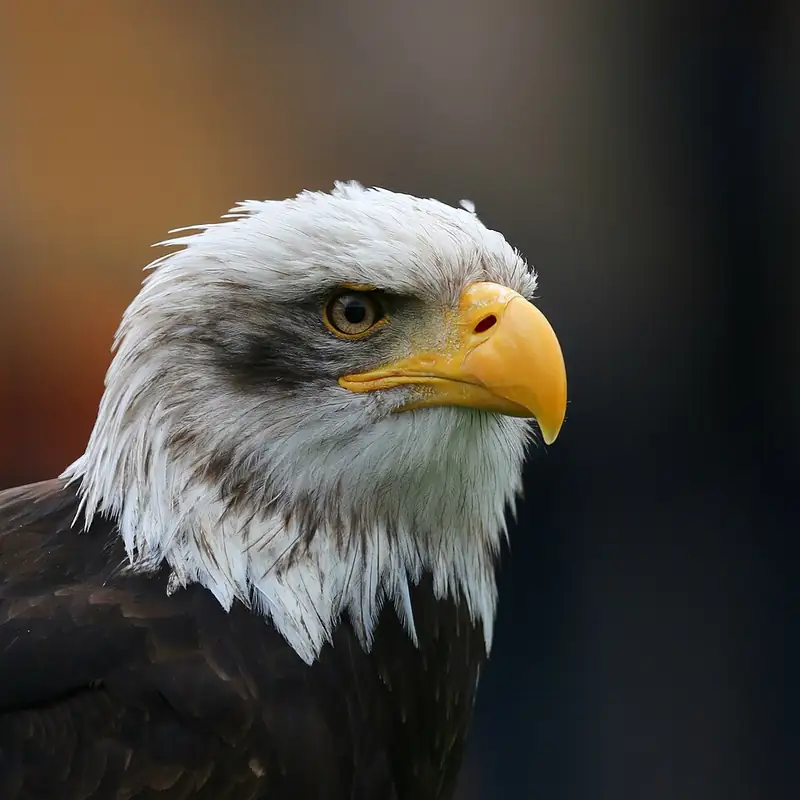 Bird
Bald eagle
Haliaeetus leucocephalus
The white-headed fish hawk that is the national bird of the United States, common along the lakes of Voyageurs and the coasts of Olympic and Katmai.
-
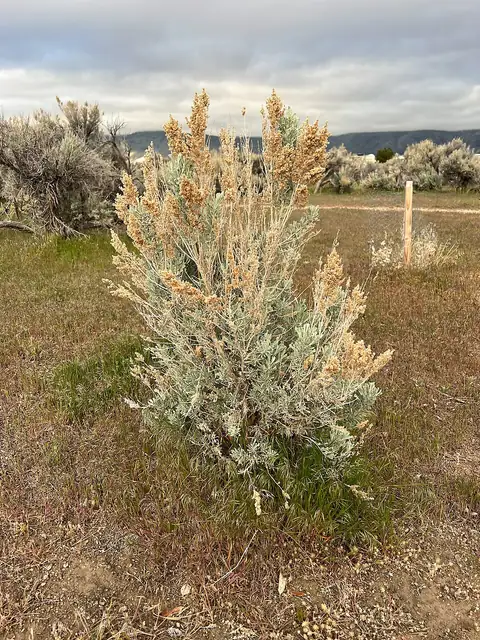 Plant
Big sagebrush
Artemisia tridentata
The silver-leaved, sharp-smelling evergreen shrub of the high desert West, and the main food of the greater sage-grouse nearly all year.
III
History
Who shaped this place
Indigenous nations
- Hopi Tribe — The Hopi Tribe is one of the descendants the park names of the people who built and lived at Mesa Verde. NPS says their ancestors carried the mesa's architecture, artistic motifs, and farming practices down to the Little Colorado River and up onto the Hopi Mesas, and the Tribe runs the Hopi Cultural Center.
- Pueblos of New Mexico — NPS names the pueblos of New Mexico as direct descendants of the people who built and lived at Mesa Verde. The park says their ancestors carried the mesa's architecture, artistic motifs, and farming practices to villages along the Rio Grande and the Little Colorado. NPS says the Pueblo and Hopi people are 21 traditional communities speaking six different languages across New Mexico, Arizona, and Texas.
- Ute Mountain Ute Tribe — The Ute Mountain Ute Tribe manages the Ute Mountain Tribal Park, which protects Ancestral Pueblo and Ute history on land adjoining the park, and NPS says much of the Mesa Verde area remains part of Ute Mountain Ute tribal lands. The Ute people call themselves Nuuchiu, and Mesa Verde was one of their hunting and gathering grounds.
- Southern Ute Indian Tribe — The Southern Ute Tribe is one of three Ute governments NPS names at Mesa Verde, and it runs the Southern Ute Cultural Center and Museum, which the park points visitors to for Ute history and culture. Mesa Verde was one of the Ute hunting and gathering grounds.
- Navajo Nation (Dine) — Diné members of Mesa Verde's Cultural Resources Department worked as a stabilization crew to protect the structures of the park. NPS places the park just southwest of the northern boundary of the traditional Diné homeland, which runs across northeast Arizona, northwest New Mexico, and southeast Utah.
- Jicarilla Apache Nation — NPS names the Jicarilla Apache of northern New Mexico as one of the two Apache tribes that used Mesa Verde as hunting and gathering land. The tribe operates the Jicarilla Arts and Crafts Museum, and Apache peoples traded across this region for hides, meat, horns, arrowheads, and woven baskets.
- Ute Indian Tribe of the Uintah and Ouray Reservation — The Ute Indian Tribe of the Uintah and Ouray Reservation is the Utah Ute government, and NPS says the Ute were mountain people who moved between the high country in summer and the low country in winter, following the animals and the plants. Mesa Verde was one such ground.
- Mescalero Apache Tribe — NPS lists the Mescalero Apache of central New Mexico among the 27 associated Pueblos, Tribes, and Nations for whom Mesa Verde is a special and sacred place.
Advocates
- Lucy Peabody↗ — Preservation campaigner, called the Mother of Mesa Verde
Split from Virginia McClurg over whether the cliff dwellings should be a state park under women's-club stewardship or a federal national park. Peabody worked directly with Washington and with Edgar Lee Hewett, and her version, a federal national park, is what passed in 1906.
- Virginia McClurg↗ — Colorado Springs journalist, campaigning from the late 1880s
Founded the Colorado Cliff Dwellings Association, a women's preservation society modeled on the Mount Vernon Ladies' Association. She preferred state-park status under women's-club control and opposed federal management on principle, which split the movement.
- Edgar Lee Hewett — Archaeologist and drafter of the Antiquities Act framework
Worked for the Bureau of American Ethnology and the Archaeological Institute of America, served as the primary congressional advocate for Mesa Verde, and drafted the framework that became the Antiquities Act of 1906, signed 21 days before the park.
- The Wetherill family — Mancos ranchers, 1888 onward
Richard Wetherill and Charlie Mason documented Cliff Palace in 1888, and the family ran the first amateur excavations and hosted Nordenskiold in 1891. Later Hewett-era archaeology recast them as plunderers.
Detractors
- Boundary negotiators and the Ute land exchange — 1906 establishment
The park boundary deliberately excluded Ute Mountain Ute reservation land, and the congressional negotiations exchanged Ute land for other federal land. Many Ute consider the transaction unequal to this day.
- Colorado cattle and timber interests — Early 1900s
Some local cattle and timber interests opposed the park boundary, viewing federal protection of the mesa as a constraint on grazing and logging.
Timeline
Cliff Palace documented
On December 18, 1888, ranchers Richard Wetherill and his brother-in-law Charlie Mason rode out after stray cattle and found Cliff Palace. They documented it. They did not discover it. The Ancestral Pueblo people built it. NPS writes on its people page: "When people left Mesa Verde, that was not the end of the story, either of the place or the people."
Nordenskiold's scientific survey
The Swedish scholar Gustaf Nordenskiold made the first systematic study of the dwellings in 1891 and published The Cliff Dwellers of the Mesa Verde in 1893. His removal of artifacts to Sweden was legal at the time and remains a touchpoint in repatriation debates today.
Mesa Verde National Park established
President Theodore Roosevelt signed the Act of June 29, 1906, creating Mesa Verde, the first U.S. national park set aside to preserve the works of people rather than scenery or wildlife. It came 21 days after the Antiquities Act, whose campaign Mesa Verde helped drive. Lucy Peabody and Virginia McClurg led the years-long preservation push.
UNESCO World Heritage Site
Mesa Verde was inscribed on the UNESCO World Heritage List in 1978 for the cliff dwellings and the record of Ancestral Puebloan life on the mesa.
Wildfires reshape the mesa
The Long Mesa, Bircher, and Pony fires of 2002 and 2003 burned roughly half the park across two summers. The burns destroyed historic CCC-era infrastructure and, as the brush cleared, exposed thousands of previously unrecorded archaeological sites.
Spruce Tree House closed to entry
Spruce Tree House, the third-largest dwelling and one of the best preserved, was closed to entry in October 2015 because of rockfall hazard from the alcove arch. NPS says it will stay closed for the foreseeable future, with no reopening announced. It stays viewable from the overlook behind the Chapin Mesa museum. Many trip planners still arrive expecting to walk in.