SD
Wind Cave National Park
One of the longest caves on Earth under the largest natural mixed-grass prairie in the park system, in the Black Hills of South Dakota.
Established
We were second in line on the visitor center concrete at 7:05, fifty-five minutes before the door opened, because about half of each day’s cave tickets are sold at that counter and the couple ahead of us had walked up at nine the previous morning and found nothing left. That morning is its own story, written up in second in line at 7:05. The structured sections below are the homework we did before we drove in: which tour to book, what the prairie drive actually shows you, and the logistics that catch families off guard. The ticket line is the part the homework missed.
We finished a stretch in Custer, looked at what came next, and found Wind Cave a thirty-minute drive from the house we had been sitting in the whole time. Elk Mountain Campground, the only campground in the park, had sites open a few days out in September, which is not true of much else in this stretch of the country. We booked two nights, drove in on a Monday, and left for Badlands on Tuesday afternoon.
The park is two things stacked on each other. Underground there are 167 miles of mapped passage as of 2024, all of it folded under 1.25 square miles of land — you could walk across the entire surface above the cave in under an hour — and the Park Service says less than ten percent of it has been found. They know that from the wind at the entrance: the cave breathes as the outside air pressure changes, and how much air moves tells you how much room is down there to hold it. The ceilings carry reddish-brown boxwork, calcite fins standing out in a honeycomb with the rock between them dissolved away, which the NPS says is rarely found anywhere else. Above all of that sits the largest remaining tract of natural mixed-grass prairie in the park system, with a bison herd descended from animals returned here in 1913.
We took two tours, the Natural Entrance and Garden of Eden, both led by the same ranger. Natural Entrance runs about 300 stairs down and an elevator back up. Garden of Eden is roughly 150 stairs with the elevator in both directions, which is why we had planned on it for Big and Little in the first place. The second tour repeated the first and added things the ranger had not said the first time. Big went down the three hundred stairs ahead of me and did not hold the rail.
This is Lakota land, and the emergence account is not a panel at the entrance here — the ranger told it while we were standing inside the cave. The cave is Oniya Oshoka, “where the earth breathes inside,” and Maka Oniye, “breathing earth,” and in the account the park publishes the first people and the first bison, the Pte Oyate, came up into this world through the natural opening, a hole about ten inches wide. The Black Hills (He Sapa) were home long before the Bingham brothers heard wind at that opening in 1881, and in 1980 the Supreme Court held in United States v. Sioux Nation that the United States took this land in violation of the Fifth Amendment. Big and Little met the cave as a place of origin before they met it as geology. The ranger arranged that order, not us.
Two things shape the budget and the day. Wind Cave charges no entrance fee; only the tours cost, $16 for an adult and $8 for a child on Natural Entrance, $14 and $7 on Garden of Eden. About half of each day’s tickets go on sale at the counter when the doors open at eight, and the rest are booked ahead on Recreation.gov. The second thing is supplies: there is no food in the park and little cell service, so the cooler gets packed and the tank gets filled in Hot Springs, about 11 miles south, before you turn in. The cave holds 54 °F year-round, so the fleeces ride along even in September.
Big and I made a plan on the way out. Train with a local grotto, which is what a caving club calls itself, come back, and survey passage nobody has walked. He wants to be the one holding the tape. A bison was, aptly, standing against the boundary sign when we drove north toward Badlands.
I
Basic info
- Established
- 1903
- Area
- 33,924 acres
- Visitors (2024)
- 489,399
- Elevation
- 3,600–5,013 ft
- Designation
- National Park (1903)
II
Logistics
Before you go
- Getting there
- The visitor center is 11 miles north of Hot Springs, South Dakota, off US Highway 385. From Rapid City, take SD Highway 79 south about 50 miles to US 385, and do not trust GPS for the visitor center. NPS
- How many days
- Cave tour tickets go on sale at 8:00 a.m. at the visitor center, with some sold ahead on Recreation.gov (2026). If your tour is hours away, NPS suggests a hike, a scenic drive, or wildlife watching first. It has no day-by-day plan. NPS
- Entrance fee
- There is no entrance fee (2026). Cave tours cost extra, and interagency passes do not cover them. NPS
- Pets
- Leashed pets (6 feet or shorter) may use the grassy areas by the visitor center, Elk Mountain Campground, the Prairie Vista Trail, and the Elk Mountain Campground Trail (2026). Cave tours, ranger programs, buildings, other trails, and the backcountry are closed to pets, and NPS lists the B.A.R.K. Ranger rules. NPS
Seasons
Spring
- Quiet and cool. Bison calves arrive on the prairie, and the cave-tour menu is still narrow before the summer schedule opens.
- 30s to 60s °F up top, with late snow possible. The cave holds a steady 54 °F year-round, so a fleece is needed underground in any season.
- Calving season on the prairie and short lines for the Garden of Eden and Natural Entrance tours.
Summer
- Peak season. About three-quarters of the year's visits fall between May and September, and the full tour menu runs, including the summer-only Candlelight Tour.
- 80s °F on the prairie with afternoon thunderstorms; lightning is a real hazard on Rankin Ridge. The cave stays 54 °F.
- Book cave tours ahead on Recreation.gov. The 54 °F cave is a cool break from the prairie heat.
Fall
- The strongest season. The bison rut peaks in early September and the elk bugle from mid-September into October.
- 40s to 70s °F. Cottonwoods turn gold along the creek bottoms.
- Wildlife is moving and the crowds thin. Bring a jacket for cool mornings on the Highway 385 wildlife drive.
Winter
- Quietest months. The cave-tour menu shrinks to the tours the historic elevator and Natural Entrance can support; check status before counting on a tour.
- Teens to 40s °F with snow. The prairie is open and the park is nearly empty.
- Good wildlife viewing on empty roads, but confirm which cave tours are running with the NPS before you drive in.
Wind Cave National Park with kids
Wind Cave is two parks stacked on top of each other: 167 miles of known cave as of 2024, folded under just 1.25 square miles of land, and the largest tract of natural mixed-grass prairie in the National Park System on top of it. The cave is the headline, but the tours are ranger-led ticketed programs with stairs, not walk-up trails, and the tickets are the hard part of the day. The park charges no entrance fee; only the cave tours cost, and there is no food service inside the park, so cave-tour days run on a packed cooler. Treat the park as one stop in a cluster rather than a destination on its own: from a base around Custer you can reach Wind Cave, Custer State Park next door, the Mammoth Site in Hot Springs, Reptile Gardens and Mount Rushmore up Highway 16, all inside an hour's drive. Wind Cave itself is about 30 minutes from Custer.
- Cave tours are the bottleneck, not the park. About half of each day's tickets sell on Recreation.gov from 120 days out to 2 days before; the rest are first-come at the visitor center that morning, and the NPS warns they often sell out soon after the doors open at 8:00 am. We were second in line at 7:05 am on a Tuesday in mid-September, and the couple ahead of us had tried at 9:00 am the day before and been turned away. Arrive before the doors open, not at them. The Garden of Eden Tour (1 hour, 150 stairs, elevator both ways) has the most relaxed age limits and is the best fit for small kids.
- The cave holds 54 °F year-round. Pack a fleece for every tour, even in July.
- The prairie rattlesnake is the only venomous snake in the park, and the NPS says they turn up in rocky ground and in the prairie dog towns, which is exactly where a kid wants to stand for a better look. Watch from the road shoulder, look before stepping off it, and give any snake a wide berth.
- Junior Ranger and the national Junior Cave Scientist booklets turn the prairie drive and the cave into a guided scavenger hunt; grab them at the visitor center.
- Prairie dog towns along Highway 385 are the easiest wildlife stop: pull over, stay by the car, and watch. Bison range to the road shoulders and the parking lot; stay 25 yards back.
- There is no food in the park and limited cell service. Pack lunch and water before you arrive; the nearest meals are in Hot Springs, about 11 miles south.
Accessibility
The Garden of Eden Tour uses the historic elevator down and back instead of the long stairways the Natural Entrance and Fairgrounds tours require, which makes it the most accessible way into the cave when the 1934 elevator is running. Above ground, the prairie wildlife drive on Highway 385 and Highway 87 is a windshield experience: bison, pronghorn, and prairie-dog towns sit right at the road. Surface trails are short but unimproved.
- Garden of Eden Tour: roughly 150 stairs with the elevator both ways, the least strenuous tour. The 1934 elevator periodically goes out of service and can cancel tours, so confirm status with the NPS first.
- Natural Entrance Tour (~300 stairs) and Fairgrounds Tour (~450 stairs) are real work for the legs and better for older kids.
- The Highway 385 / Highway 87 wildlife drive needs no hiking: bison, pronghorn, and prairie-dog towns line the road.
- Prairie Vista and Rankin Ridge are unimproved prairie trails; confirm current surface with the NPS before promising stroller access on Prairie Vista.
Things you can't miss
Natural places
Wind Cave (Oniya Oshoka)↗
The cave is Oniya Oshoka, "where the earth breathes inside," and Maka Oniye, "breathing earth," to the Lakota: a foundational site in the emergence account, where the first people and the first bison, the Pte Oyate, came up from below. In settler terms it is one of the longest and most complex caves on Earth. The NPS counts 167 miles of known cave as of 2024, packed under just 1.25 square miles of land, which is the fact worth saying out loud on the drive in: the whole thing folds up beneath a patch of prairie you could walk across in half an hour. Airflow studies at the entrances suggest only about 10 percent of the cave has been found, with more than 3,000 unchecked leads. The NPS called it the sixth-longest cave in the world in 2019 and the third-longest in the United States in 2021; the rank moves as crews survey. It holds a steady 54 °F year-round, so a fleece comes on every tour. The delicate needle-like frostwork grows where passages carry above-average airflow.
Boxwork↗
Reddish-brown calcite fins that intersect into open-ended boxes lining the cave's ceilings and walls, formed when calcite veins in old fractures outlasted the limestone around them. The NPS describes boxwork as rarely found elsewhere in the world; the base dossier's figure that Wind Cave holds roughly 95 percent of the world's known boxwork is unverified against the current NPS page and best treated as a claim to confirm. The Fairgrounds Tour is the most boxwork-rich walk; the Natural Entrance Tour passes it too. None of it is visible from the surface.
Mixed-grass prairie and the bison herd↗
Above the cave, the park protects more than 33,000 acres of the mixed-grass prairie the NPS calls the largest remaining tract of natural mixed-grass prairie in the National Park System. The bison herd descends from 14 animals brought from the New York Zoological Park in 1913 and is one of the few genetically pure, brucellosis-free herds on public land, a source herd for InterTribal Buffalo Council transfers to tribal lands. In Lakota cosmology these are the Pte Oyate who emerged from this cave. Stay 25 yards back; the herd ranges to the road shoulders and the visitor-center lot.
Prairie dog towns↗
Black-tailed prairie dog colonies line Highway 385 and Highway 87, and they are the easiest wildlife stop with kids: pull over, stay in or beside the car, and watch from a distance. Prairie dogs are a keystone species here, and bison, pronghorn, and reintroduced black-footed ferrets all depend on the towns. The roadside often looks exactly like the picture, a bison standing in the middle of an active town.
Rankin Ridge↗
The high point of the park at 5,013 ft per the base dossier (an elevation worth re-checking against a current NPS page), reached by a 1-mile loop that climbs to a fire-lookout tower with a view across the southern Black Hills uplift. From the tower you can read the whole shape of the park above ground in one turn. Afternoon lightning is a real hazard up top in summer.
Nearby attractions
Custer State Park (Wildlife Loop Road)↗
Custer State Park adjoins Wind Cave on the north, and together the two hold a large block of the Black Hills (He Sapa) that the 1980 Supreme Court decision found was taken from the Sioux Nation. The 18-mile Wildlife Loop Road carries one of the largest publicly owned bison herds in the country, plus the roadside "begging burros." It needs a South Dakota state-park entrance license, separate from fee-free Wind Cave; confirm the current vehicle fee with South Dakota Game, Fish and Parks.
The Mammoth Site, Hot Springs↗
In Hot Springs, about 11 miles south of the park, and not an NPS unit: a private nonprofit that built a roof over the hole it studies. The mechanism is the reason to go. In the late Ice Age a sinkhole here filled with warm water from the area hot springs, which made it a natural trap; animals walked in and could not get back out. The version told on site adds the part that makes it click for kids: the basin shelved in gently at the lip and its walls were slick shale, so a mammoth could wade in after the green winter feed and then find nothing to climb. A construction crew leveling ground for a housing development hit the first tusk in June 1974. Nothing has been carted off to a museum since: over 60 mammoths (58 Columbian, 3 woolly) and at least 87 other late Ice Age animals lie where they fell, under elevated walkways, with the dig still running. The site puts the fossils at roughly 190,000 to 140,000 years old.
Reptile Gardens↗
A private reptile zoo at 8955 South Highway 16, south of Rapid City, on the road to Mount Rushmore. Budget for a half day rather than a stop: our visit ran about five hours and did not feel padded. The scheduled shows are the spine of it. At the snake handling show Big and Little each petted a python and got close to a rattlesnake through glass; at the bird show a vulture, a barn owl, and a merlin flew, and the barn owl spent most of its stage time refusing to stay on the perch. The two-level Sky Dome holds the reptile collection and a tropical Safari Room, and there is a walk-under bubble in a black-tailed prairie dog town, which is the same species you have been watching from the car at Wind Cave. Reptile Gardens calls itself the largest reptile zoo in the world; that is the zoo's claim, not a verified count. Open roughly from the first Saturday of March through the end of November, with hours that shift by season.
Our pick for places to stay
Elk Mountain Campground↗
The only campground inside the park, about a mile from the visitor center, 63 sites where ponderosa pine meets open prairie. Sites go on Recreation.gov from May through September 30, including same-day bookings; off season only sites 15 through 35 stay open, at half fee once the water is shut off. It is cashless, card or digital payment only. Two things earn the mile. The loop roads are quiet enough for an evening bike ride, and the amphitheater runs free ranger programs: nightly talks of 30 to 45 minutes from late May into early September, and the Elk Bugling Program from mid to late September, where a ranger presents at the amphitheater and then everyone caravans out in their own cars to listen for the bulls. Plan on company. About 30 other groups drove out with us on a mid-September night, and the elk stayed silent the whole time, which the ranger filled with questions and answers instead.
Our pick for viewpoints and camping
Highway 385 wildlife drive↗
US Highway 385 and Highway 87 cross the park's prairie, and this is the surface "viewpoint" most visitors actually use, since many Wind Cave visits are wildlife drives between Custer State Park and Hot Springs. Bison, pronghorn, and prairie-dog towns sit along the shoulders. Drive slowly: the bison have the right of way and the prairie-dog towns are right at the road. No fee.
Trails worth the time
Rankin Ridge Nature Trail↗
The best surface payoff per mile in the park: a 1-mile loop with interpretive stops that climbs to the fire-lookout tower and a view across the southern Black Hills (elevation and gain are worth confirming against a current NPS page). Full sun and exposure on the ridge, with afternoon lightning a real summer hazard.
Prairie Vista Nature Trail↗
The flat prairie loop closest to the visitor center, about a mile through prairie-dog-town country, and the realistic walk with younger kids when the cave-tour stairs are too much. Mostly level; confirm the current surface with the NPS before promising stroller access. The view across the grass is the bison-and-prairie-dog scene the trail crosses.
Things to do nearby
Garden of Eden cave tour↗
The shortest and easiest tour into Oniya Oshoka: about an hour, roughly 150 stairs, with the historic 1934 elevator down and up. It has the most relaxed age limits of the menu, which makes it the realistic first cave tour with younger kids. The cave is 54 °F year-round, so a fleece is needed. Book on Recreation.gov up to 120 days ahead, and check NPS status first: the elevator can be out of service, which limits or cancels tours.
Natural Entrance and Fairgrounds cave tours↗
The two longer walks. The Natural Entrance Tour (about 1.25 hours, near 300 stairs) descends past the original breathing hole; the Fairgrounds Tour (about 1.5 hours, near 450 stairs) is the most boxwork-rich route. Both are real work for the legs and better for older kids. Closed-toe shoes and a walk across biosecurity mats to guard against white-nose syndrome in bats. Tickets on Recreation.gov.
Common questions
- Do we need a reservation for the cave tours?
- The cave tours are the thing to plan around. About half of each day's tickets sell on Recreation.gov from 120 days out to 2 days before the tour; the other half are held for first-come sale at the visitor center that morning, and the NPS warns those often sell out soon after the doors open at 8:00 am. We were second in line at 7:05 am on a Tuesday in mid-September; the couple ahead of us had tried at 9:00 am the day before and been turned away, and that morning was their last chance before moving on. Camping ran the other way for us: we booked Elk Mountain Campground a few days out with no trouble. That was shoulder season. Sites are reservable May through September 30, and a June or July visit deserves a real reservation rather than the same luck.
- Is there an entrance fee?
- No. Wind Cave is one of the few national parks with no entrance fee. Only the cave tours cost money.
- When was Wind Cave National Park established?
- On January 9, 1903, when President Theodore Roosevelt signed the act that made it the eighth national park and the first to protect a cave, per the NPS. Nobody founded the cave itself. To the Lakota it is the place of emergence, where the first people and the first bison came up into this world, in the account the park publishes. In 1881, Tom and Jesse Bingham claimed to have discovered the natural opening.
- Which cave tour is best with kids?
- The Garden of Eden Tour is the easy one: 1 hour, a quarter mile, 150 stairs, elevator down and up, and the most relaxed age limits. The Natural Entrance Tour runs 1 hour 15 minutes over 300 stairs; the Fairgrounds Tour runs 1 hour 30 minutes over 450 stairs, including one flight of 89 going up. If your kids can take the stairs, consider two tours in one day instead of picking. We did the Natural Entrance and the Garden of Eden back to back and drew the same ranger both times, which turned out to be the point: the second pass caught what slid by on the first, and the kids asked better questions the second time because they already knew the shape of the place. The Candlelight and Wild Cave tours have firm minimum ages (8 and 16) and are booked by phone, not online.
- How cold is the cave?
- A steady 54 °F year-round, even in July. Bring a fleece for every tour, plus closed-toe shoes. Expect a walk across biosecurity mats that guard against white-nose syndrome in bats.
- Where do we see the bison and prairie dogs?
- Along Highway 385 and Highway 87 through the park. Prairie-dog towns sit right at the road shoulders, and the bison herd ranges to the pavement and the visitor-center lot. Stay in or beside the car, keep 25 yards from bison, and drive slowly: the herd has the right of way.
- Where do we get food and gas?
- Not in the park. There is no in-park dining and limited services, so pack a cooler and fill the tank in Hot Springs (about 11 miles south) or Custer (about 25 to 30 minutes north) before you arrive. Hot Springs also has a small natural-foods grocery, Earth Goods on Jennings Avenue, which is where we restocked snacks on the way in. Cell service is spotty across most of the park.
- Where do we camp or sleep?
- Elk Mountain Campground is the only campground inside the park, about a mile from the visitor center, 63 sites where ponderosa pine meets open prairie. It is open year-round, but the shape of it changes: sites are reservable on Recreation.gov from May through September 30, and off season only sites 15 through 35 stay open, at half fee once the water is shut off. It is cashless, card or digital payment only. The amphitheater runs free ranger programs, nightly talks from late May into early September and the Elk Bugling Program from mid to late September. There is no in-park lodge; motels are in Hot Springs to the south and Custer to the north.
- Why is it called Wind Cave National Park?
- Wind blew out of the cave's small first opening on clear days and blew in as a storm came near. An early Wind Cave guide describes it in a memoir the NPS publishes.
- Do we need a reservation to visit Wind Cave National Park?
- The park needs no entrance pass, but cave tours need tickets (2026). About half the tickets sell on Recreation.gov up to two days ahead, and the other half sell at the visitor center the same day. Tours often sell out March through October. The Candlelight and Wild Cave tours require reservations.
Wild things at Wind Cave National Park
See all 36 →-
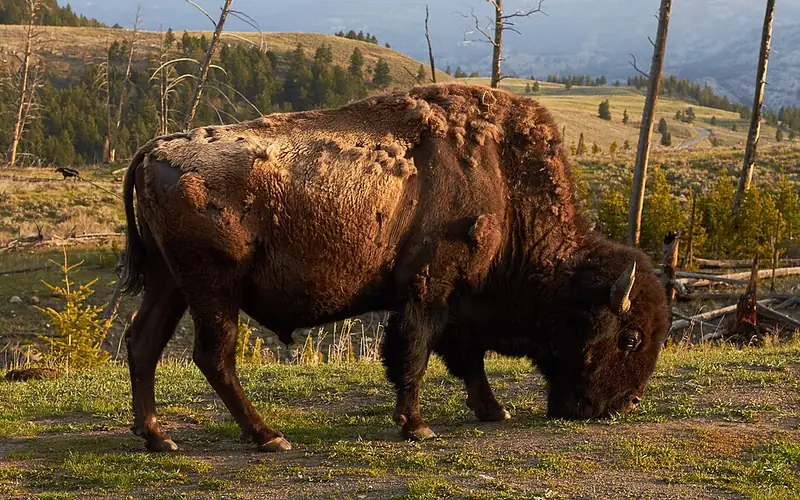 Mammal We saw it
 American bison
Bison bison
The biggest land animal in North America, a shaggy grazer of the plains you can watch cross the road in Yellowstone.
-
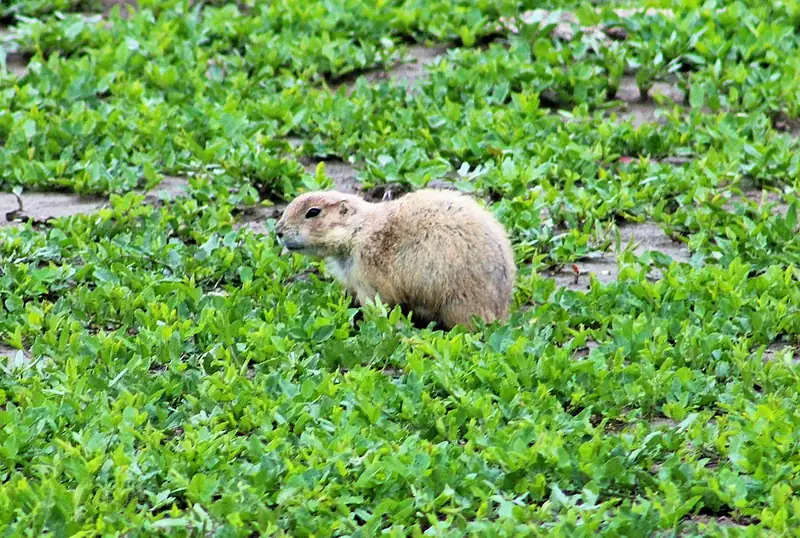 Mammal We saw it
 Black-tailed prairie dog
Cynomys ludovicianus
A burrowing ground squirrel, not a dog. Its towns along Theodore Roosevelt's scenic loop mow the grass short and pull bison and pronghorn in to graze.
-
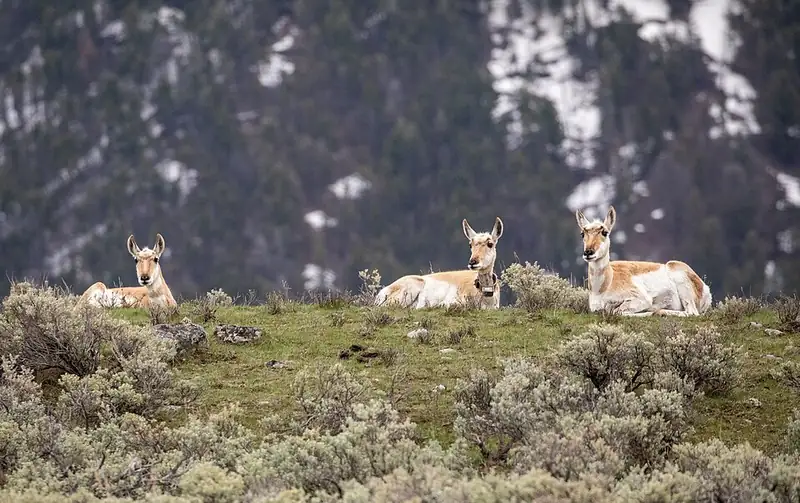 Mammal We saw it
 Pronghorn
Antilocapra americana
North America's fastest land mammal, seen in Yellowstone's northern range and at Lava Beds, built to outrun a predator that went extinct 12,000 years ago.
-
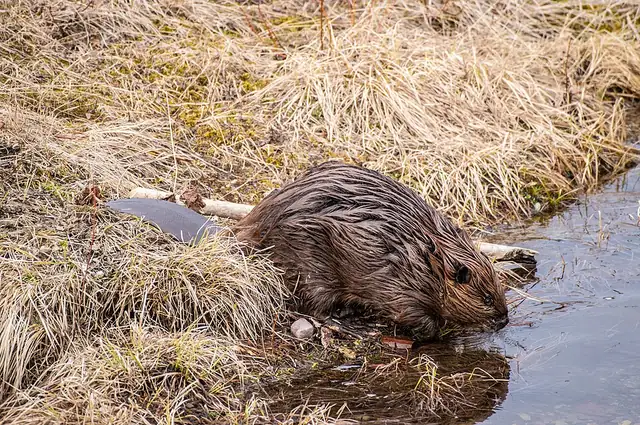 Mammal
 American beaver
Castor canadensis
North America's largest rodent, a keystone species whose dams reshape whole streams at Yellowstone, Glacier, and ten other parks along the route.
-
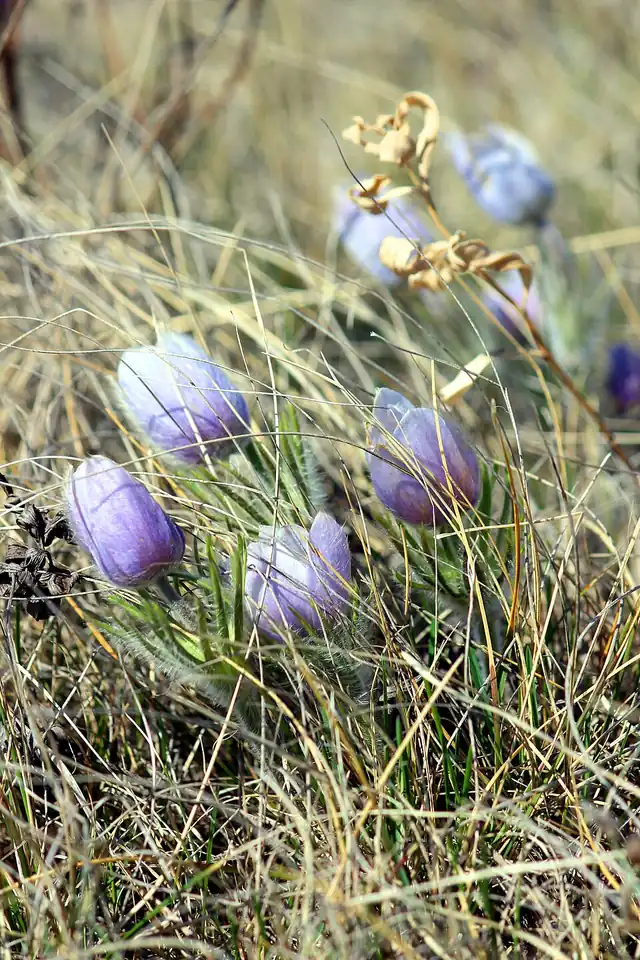 Plant
Plant American pasqueflower
Pulsatilla patens ssp. multifida
A furry, purple-blue prairie flower that beats the grass out of the ground each spring, blooming before almost anything else is green.
-
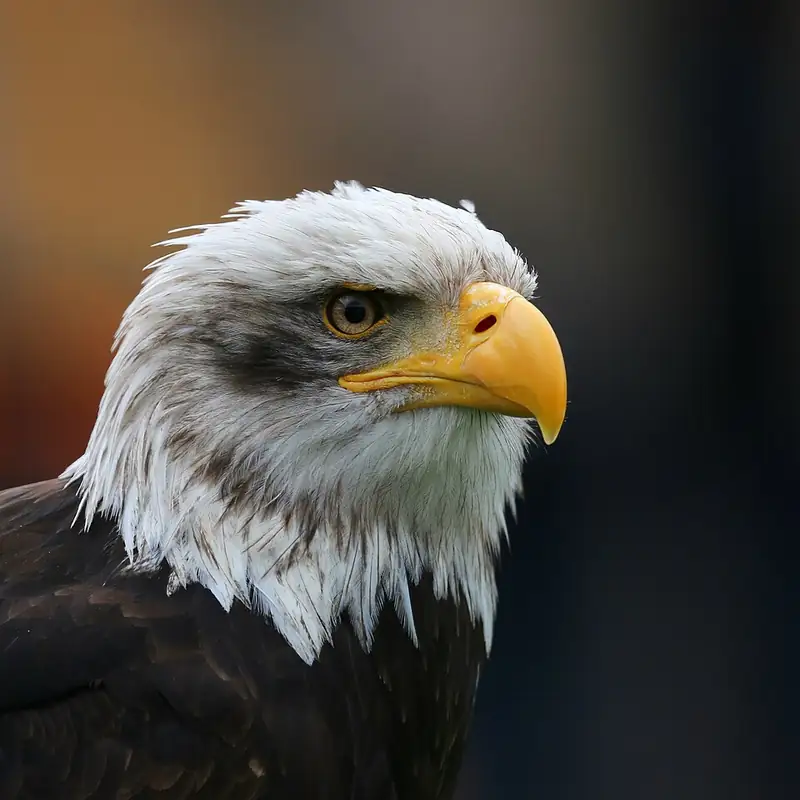 Bird
Bird Bald eagle
Haliaeetus leucocephalus
The white-headed fish hawk that is the national bird of the United States, common along the lakes of Voyageurs and the coasts of Olympic and Katmai.
III
History
Who shaped this place
Indigenous nations
- Oglála Lakȟóta (Oglala Sioux Tribe) — Pine Ridge, the Tribe's home since 1889, covers 3,500 square miles of southwestern South Dakota and northwestern Nebraska, more than twice the size of Rhode Island, and the Tribe counts more than 52,000 members. Its own account dates Pine Ridge to the Great Sioux Reservation created by the 1868 Fort Laramie Treaty, and names the loss of the Black Hills, where this park stands, as a continuing point of contention.
Advocates
- Alvin McDonald↗ — Cave explorer and diarist, 1890-1893
Began exploring Wind Cave at sixteen, mapping roughly 8 to 10 miles of passage by candlelight and keeping a meticulous diary that survives in the NPS museum collection. He died of typhoid in 1893 at age 20, a decade before the park was created.
- Theodore Roosevelt↗ — President, signed the 1903 act
Signed the Act of January 9, 1903 establishing Wind Cave as the first national park created to protect a cave. He also co-founded the American Bison Society, which returned bison to the park's prairie in 1913.
- Richard F. Pettigrew & Robert J. Gamble — South Dakota senators
Senators Richard F. Pettigrew and Robert J. Gamble championed federal protection of the cave in Congress after the General Land Office voided the competing private claims as fraudulent.
Detractors
- Competing claimants: the McDonald and Stabler families — 1890s land disputes
The McDonald and Stabler families filed competing claims to the cave in the 1890s. Both lost when the General Land Office voided the claims as fraudulent, since cave passages could not be patented as agricultural land. The dispute pushed the land toward federal reservation.
- United States annexation of the Black Hills — 1877 onward
The 1877 federal taking of the Black Hills, after the 1874 Custer Expedition found gold, was the precondition that allowed the cave to be claimed at all. The 1980 Supreme Court decision found this a Fifth Amendment taking; it did not undo the underlying loss of Lakota land.
Timeline
Settlers hear wind at the natural opening
Tom and Jesse Bingham are the first to leave a written record of the cave, drawn by wind whistling through the small natural hole. The Black Hills (He Sapa) were Lakota home long before, and the cave's place in Lakota cosmology predates any settler account of it.
Alvin McDonald begins mapping by candlelight
Sixteen-year-old Alvin McDonald began exploring and mapping the cave for the South Dakota Mining Company, keeping a meticulous diary. He died of typhoid in 1893 at age 20. His diary survives in the NPS museum collection.
Wind Cave National Park established
President Theodore Roosevelt signed the Act of January 9, 1903 (32 Stat. 765), creating Wind Cave National Park, the first national park anywhere created to protect a cave. It predates the National Park Service itself, established in 1916.
Bison return to the prairie
The American Bison Society transferred 14 bison (7 bulls, 7 cows) from the New York Zoological Park to Wind Cave, one of the foundational bison reintroductions on U.S. public land. In the Lakota emergence account these are the Pte Oyate, the Buffalo Nation, who emerged from this cave.
CCC builds the roads and the elevator
Civilian Conservation Corps Company 2754 built much of the park road system and the historic elevator building at the cave entrance between 1934 and 1942.
Game preserve merged into the park
The Wind Cave Game Preserve, established in 1912 under the Bureau of Biological Survey, was merged into the national park, joining the surface prairie and its wildlife to the cave below.
Supreme Court finds the Black Hills were taken
In United States v. Sioux Nation of Indians, 448 U.S. 371 (1980), the Supreme Court found the United States had taken the Black Hills from the Sioux Nation in violation of the Fifth Amendment. The Sioux Nation has declined the compensation and continues to assert the land.