Animals & Plants of Fossil Butte National Monument
The 26 animals, plants, and fungi you can find at Fossil Butte National Monument, with sizes, diets, and whether you should worry. See the full park guide at Fossil Butte National Monument.
Fossil Butte is best known for fish that died about 52 million years ago, but the sagebrush hills above the fossil beds are alive with animals today. Pronghorn and mule deer graze the slopes, greater sage-grouse and western meadowlarks work the sagebrush, and moose turn up along the wetter draws. Quaking aspen and Douglas-fir hold the cooler north slopes.
Common questions
Which Fossil Butte animals need the most room?
At Fossil Butte National Monument, give space to Moose, Mountain lion, Coyote, Pronghorn, and Mule deer. Moose: A moose looks slow and gentle, but it is one of the most dangerous animals to crowd. Mountain lion: Confrontations are very rare — even in Yellowstone, with a healthy population, few have ever been documented. Coyote: Coyotes almost always run from people. Pronghorn: Not a real worry: pronghorn keep their distance from people on their own. Mule deer: Mule deer look calm and tame, but they are wild animals with sharp hooves, and bucks have antlers in fall. (per NPS species pages).
What do the Fossil Butte animals eat?
At Fossil Butte National Monument, the most interesting eaters are Moose, Mountain lion, Golden eagle, and Clark's nutcracker. Moose eats willow, aspen leaves, twigs, water plants, pond weeds. Mountain lion eats elk, deer, marmots, porcupines. Golden eagle eats rabbits, hares, ground squirrels, marmots, ptarmigan. Clark's nutcracker eats pine seeds, whitebark pine seeds, insects, berries, small animals. (per NPS species pages).
Which Fossil Butte species has the strangest true fact?
The strangest true thing about Fossil Butte National Monument: Big sagebrush: Fossil Butte National Monument alone has eight different kinds of sagebrush growing within its boundary. Moose: The moose is the biggest deer on Earth. On Isle Royale a grown moose stands over six feet tall at the shoulder and weighs close to 1,000 pounds, the largest animal on the island. (per NPS species pages).
Anything here that bites?
Keep away
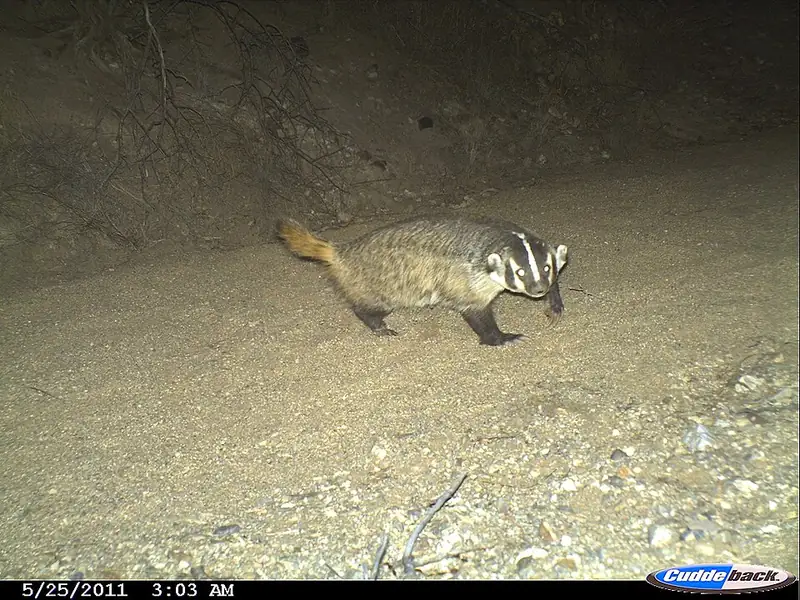
- American badger: Badgers would rather dig away than fight and avoid people entirely.
- Coyote: Coyotes almost always run from people.
- Moose: A moose looks slow and gentle, but it is one of the most dangerous animals to crowd.
- Mountain lion: Confrontations are very rare — even in Yellowstone, with a healthy population, few have ever been documented.
- Mule deer: Mule deer look calm and tame, but they are wild animals with sharp hooves, and bucks have antlers in fall.
- Pronghorn: Not a real worry: pronghorn keep their distance from people on their own.
Don't touch or eat
- North American porcupine: A porcupine cannot throw or shoot its quills, but they detach the instant something touches them, and the barbed tips work deeper into skin over time.
Bites if handled
- Golden eagle: A golden eagle will not come after a person.
- Golden-mantled ground squirrel: None.
- Greater short-horned lizard: Not dangerous.
- Little brown bat: Very low risk.
- Red-tailed hawk: None.
- Western terrestrial garter snake: Essentially harmless.
Everything else on this page is harmless. What each group means.
-
 Mammal
 American badger
Taxidea taxus
A short, wide-bodied digger with a white-striped face, common on the grasslands of Yellowstone and Badlands, that can vanish underground in minutes.
-
 Plant
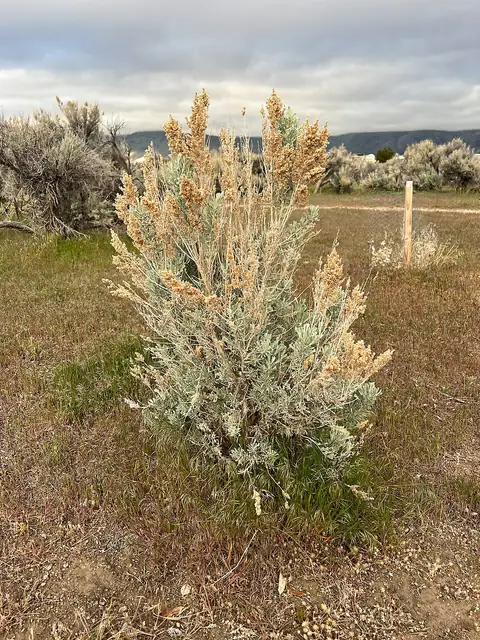
Plant Big sagebrush
Artemisia tridentata
The silver-leaved, sharp-smelling evergreen shrub of the high desert West, and the main food of the greater sage-grouse nearly all year.
-
 Bird
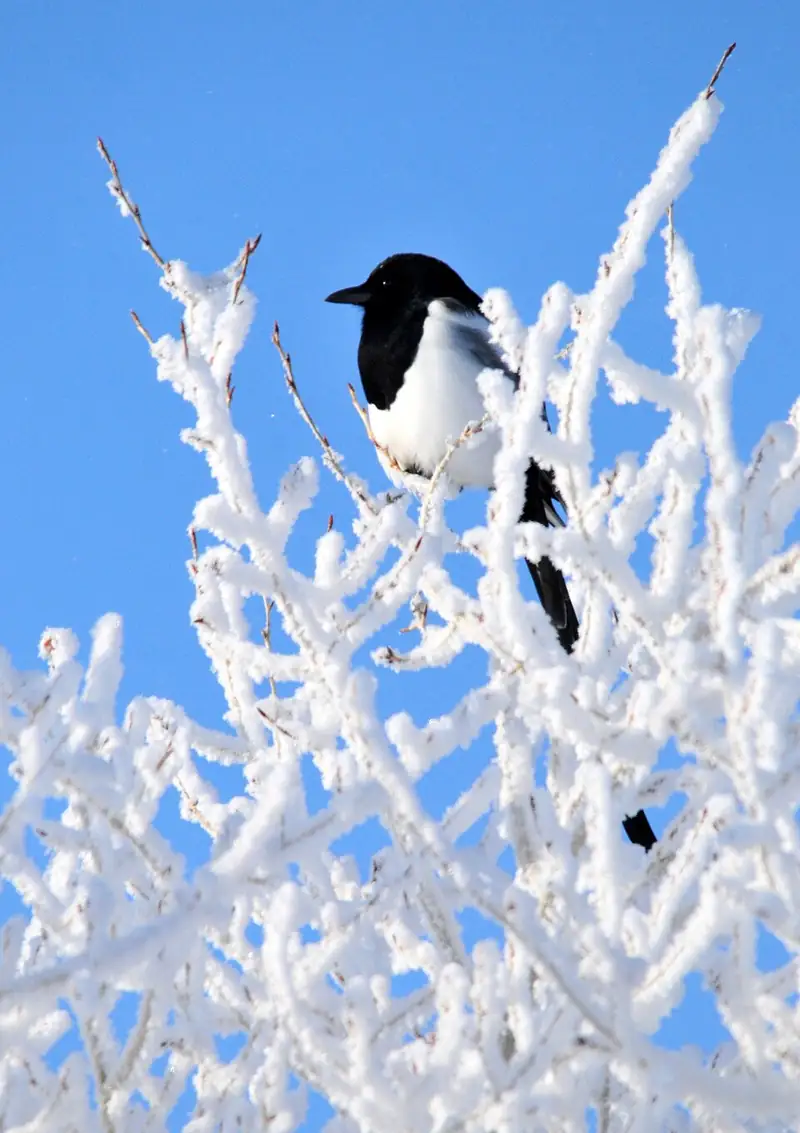
Bird Black-billed magpie
Pica hudsonia
A black-and-white corvid with a tail as long as its body, common on fences and roadsides across the northern Rockies and Great Plains.
-
 Amphibian
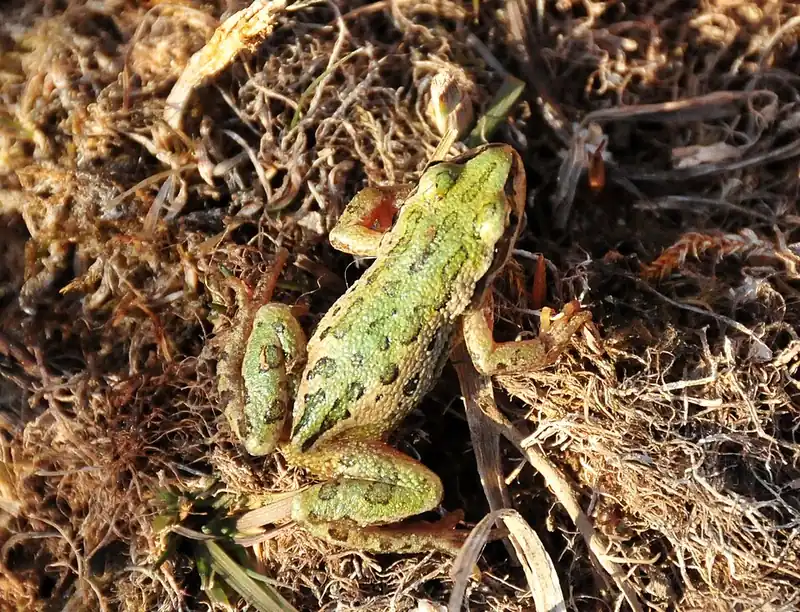
 Boreal chorus frog
Pseudacris maculata
A finger-sized frog whose spring trill fills Rocky Mountain wetlands, and whose cells can freeze solid and still wake up.
-
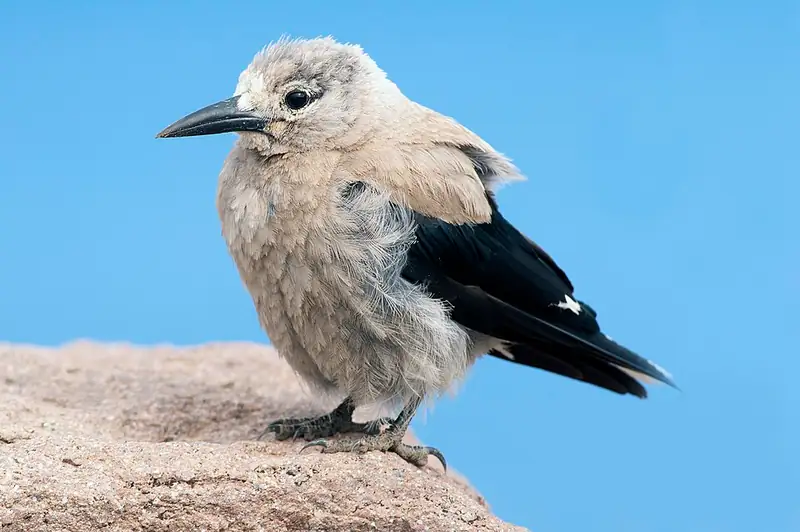 Bird
Bird Clark's nutcracker
Nucifraga columbiana
A pale-gray, black-winged cousin of the crow that hides tens of thousands of pine seeds each fall and remembers where to find them again.
-
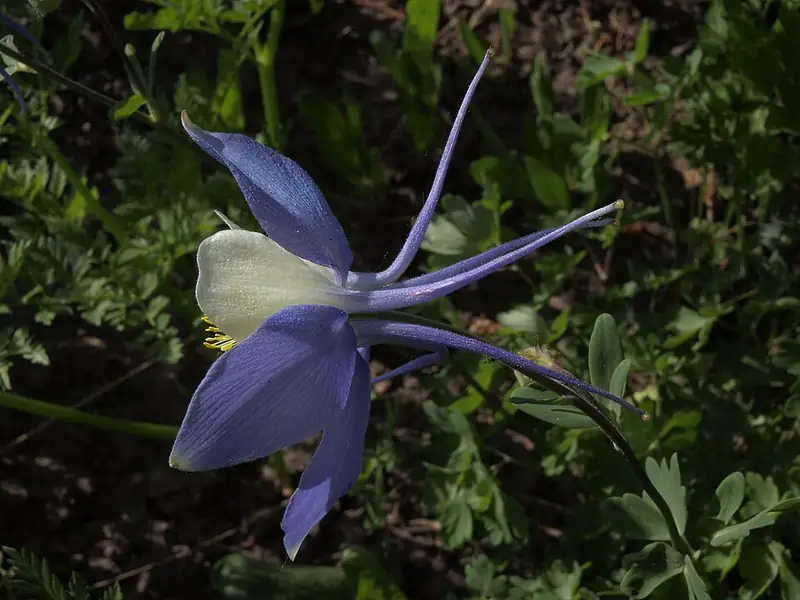 Plant
Plant Colorado blue columbine
Aquilegia coerulea
Colorado's blue-and-white state flower, its long spurs full of nectar that only a hawkmoth's tongue can reach.
-
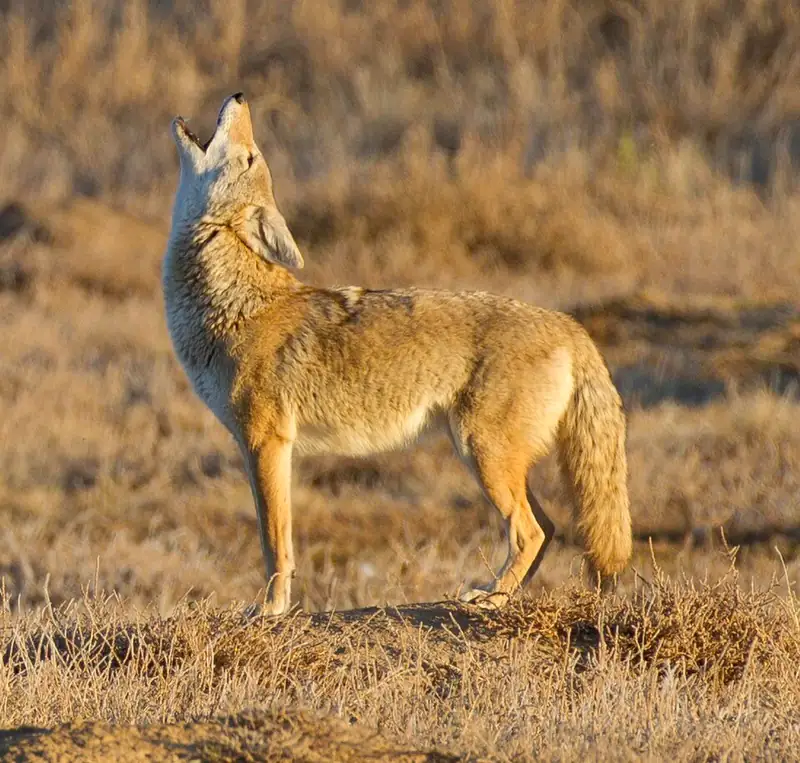 Mammal
 Coyote
Canis latrans
The wild dog you're most likely to hear at a national park — a coyote, at home in the desert, the mountains, and the edges of towns.
-
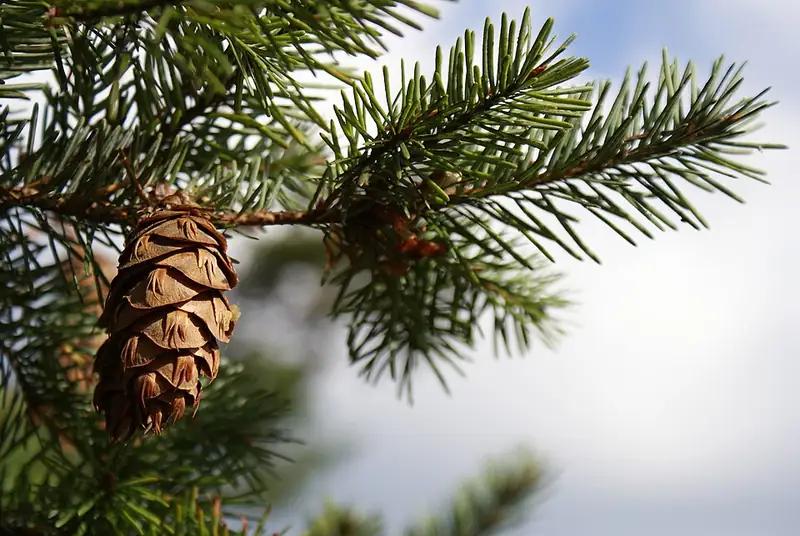 Plant
Plant Douglas-fir
Pseudotsuga menziesii
One of the tallest trees on Earth, not actually a true fir, whose cones carry little three-pointed flaps a Native story calls the tails and legs of hiding mice.
-
 Plant
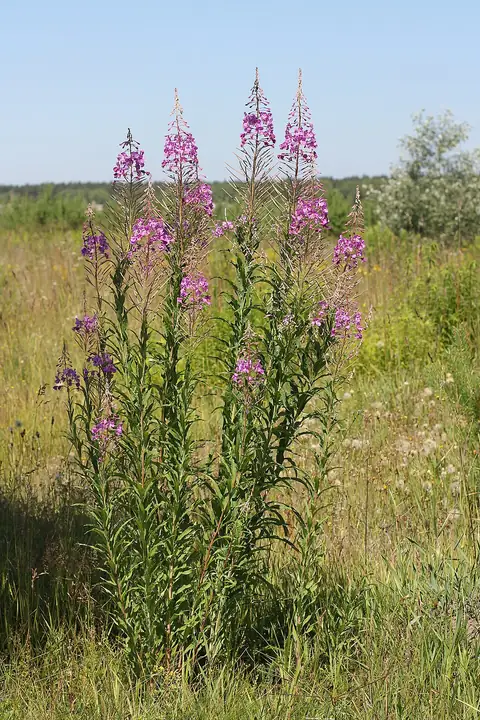
Plant Fireweed
Chamerion angustifolium
A tall pink-purple wildflower that is often the first color to return to a burned mountainside.
-
 Bird
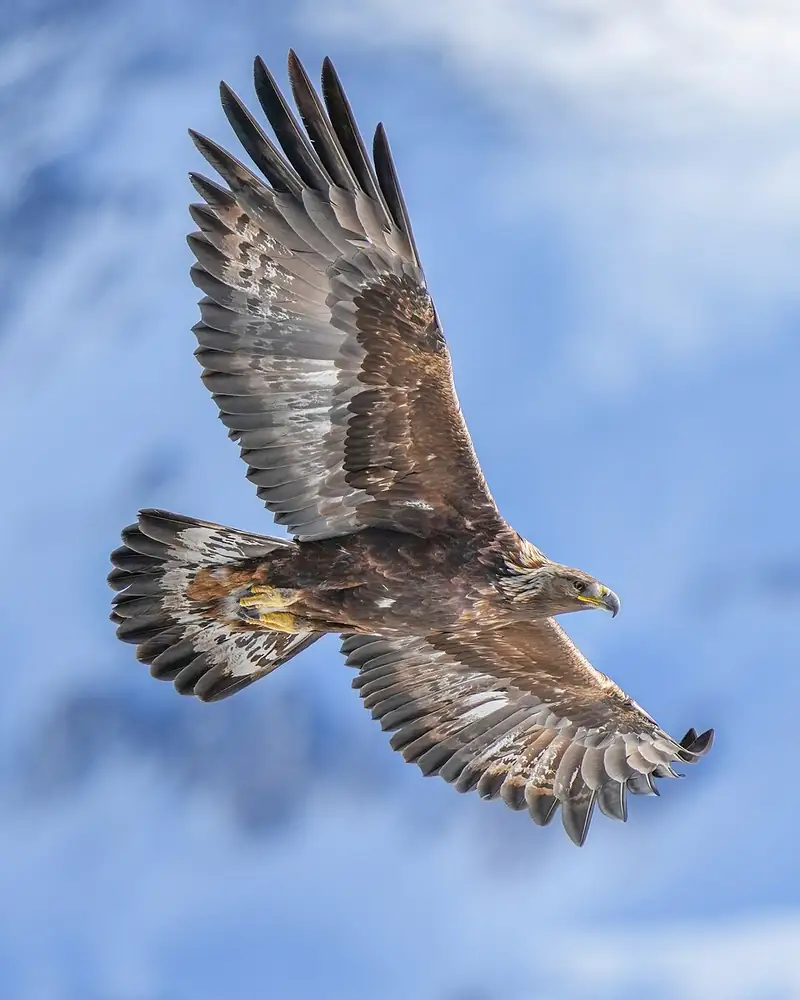
Bird Golden eagle
Aquila chrysaetos
A dark brown eagle with golden neck feathers that hunts rabbits and hares across open country, nesting on cliffs in Denali, Death Valley, and Great Basin.
-
 Mammal
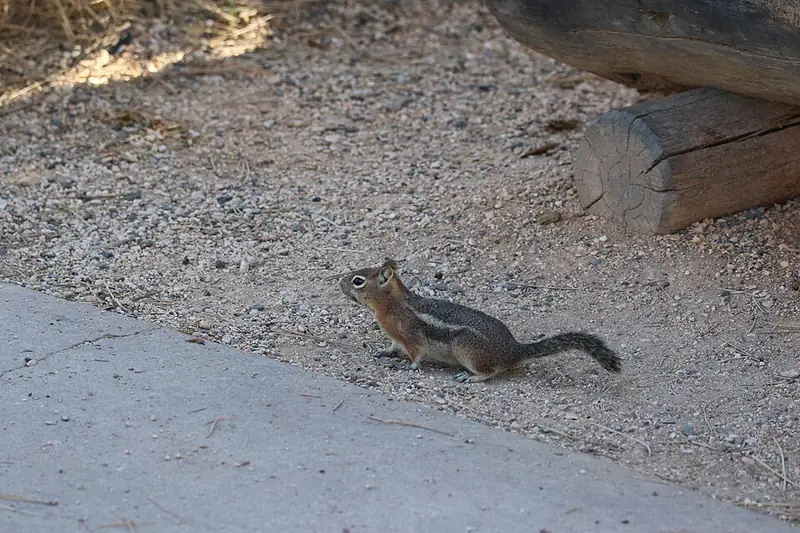
 Golden-mantled ground squirrel
Callospermophilus lateralis
A chipmunk-lookalike ground squirrel with a reddish-gold head and shoulders and no face stripes, common on rocks and trailsides from Glacier to Mesa Verde.
-
 Bird
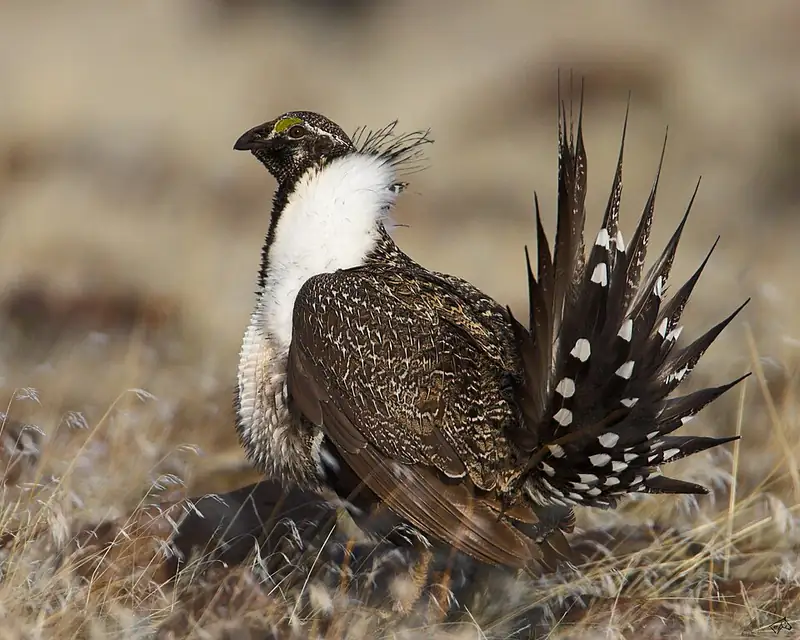
Bird Greater sage-grouse
Centrocercus urophasianus
North America's largest grouse, dependent on sagebrush, known for the popping, booming display males perform on spring dancing grounds.
-
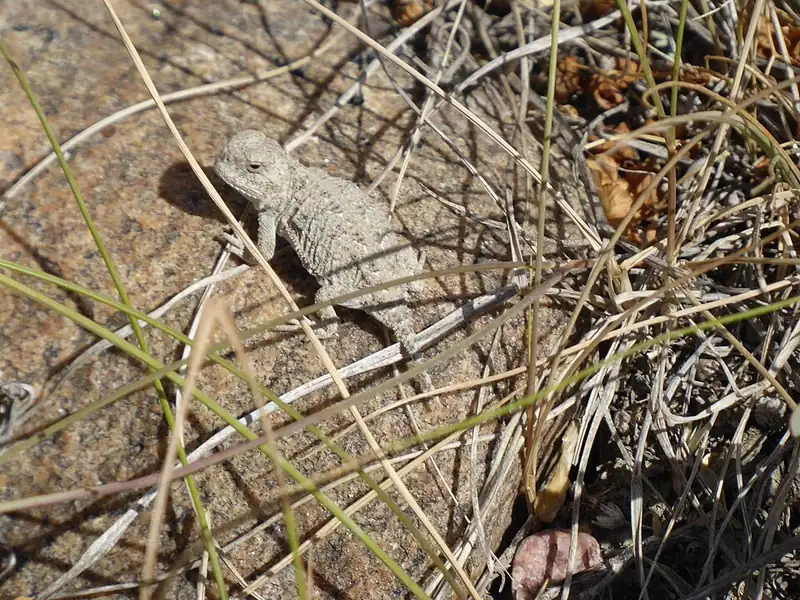 Reptile
 Greater short-horned lizard
Phrynosoma hernandesi
A flat, spiky, dirt-colored lizard, sometimes called a horned toad, that can squirt blood from its eyes at a coyote and gives birth to live young.
-
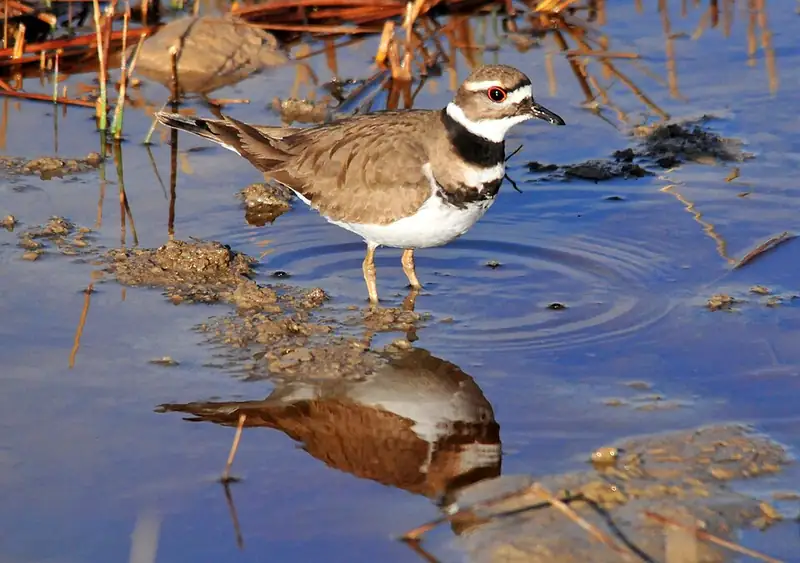 Bird
Bird Killdeer
Charadrius vociferus
A shorebird that lives nowhere near a shore. At Badlands we never saw one. We heard it call its own name across the campground.
-
 Mammal
 Little brown bat
Myotis lucifugus
A tiny brown flyer that hunts insects over water at dusk and sleeps in caves and barns, eating half its own weight in bugs each night.
-
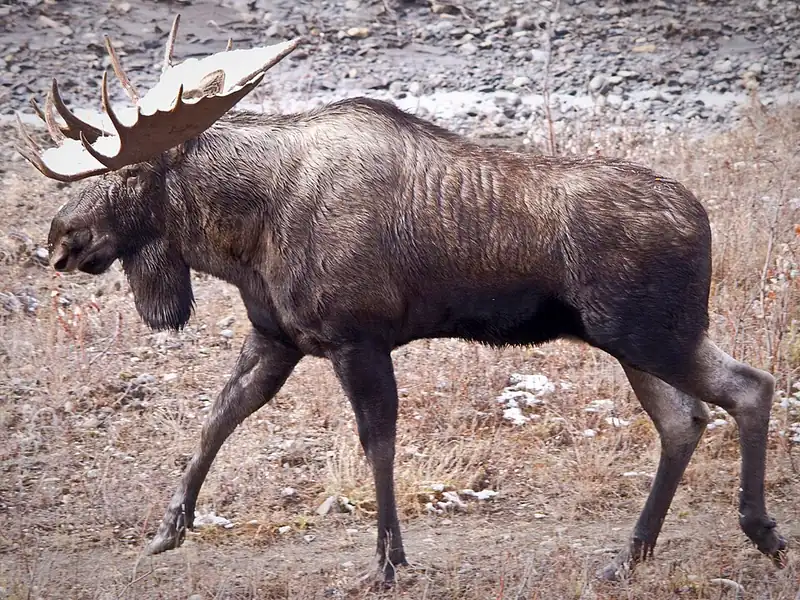 Mammal
 Moose
Alces alces
The largest deer in the world, a long-legged giant you might see wading in ponds at Grand Teton, Isle Royale, Denali, or Rocky Mountain.
-
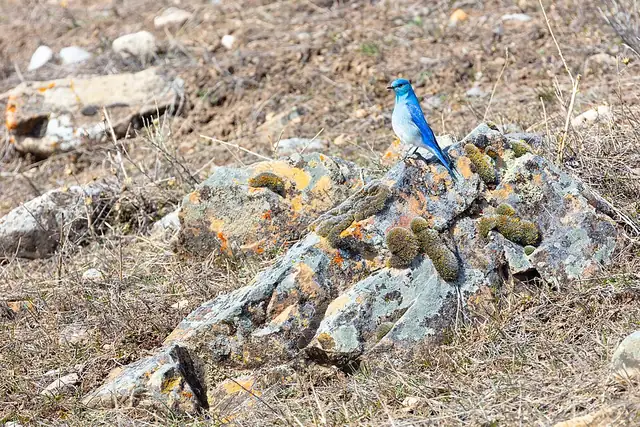 Bird
Bird Mountain bluebird
Sialia currucoides
A sky-blue thrush of high, open country, the only bluebird seen regularly above 5,000 feet, nesting in lava-rock crevices at Craters of the Moon.
-
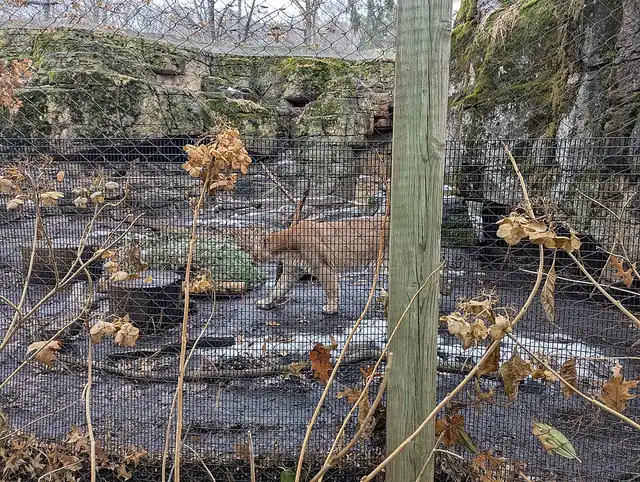 Mammal
 Mountain lion
Puma concolor
A tan, solitary big cat found from Glacier to Mesa Verde, called cougar, puma, or panther by region, and rarely seen at all.
-
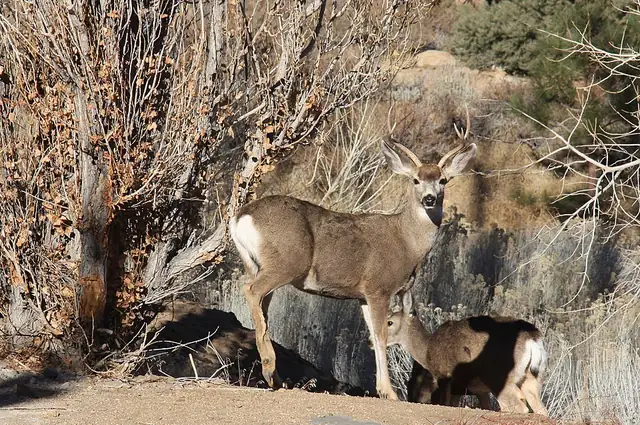 Mammal
 Mule deer
Odocoileus hemionus
A western deer named for its big mule-like ears, common along canyon rims and desert washes in Grand Canyon, Zion, Yosemite, and Saguaro.
-
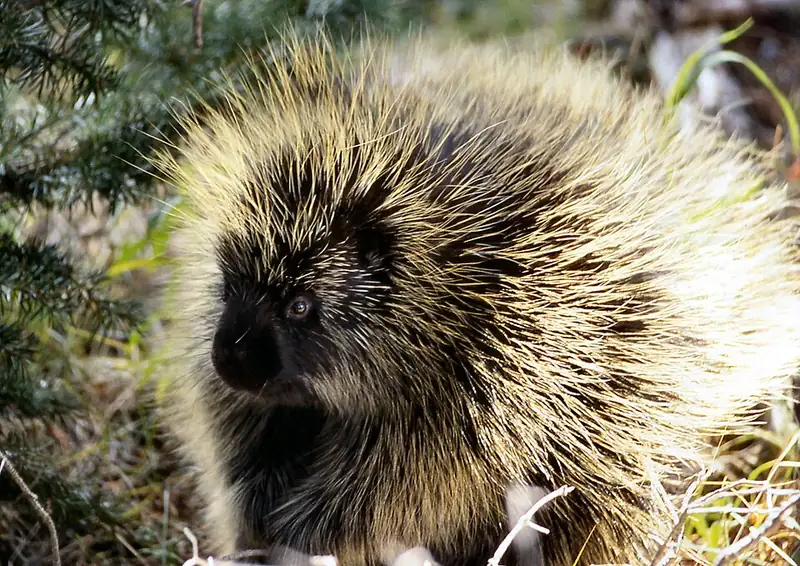 Mammal
 North American porcupine
Erethizon dorsatum
A slow, quill-covered rodent that climbs into the treetops at Theodore Roosevelt to eat twigs, and North America's second-largest rodent after the beaver.
-
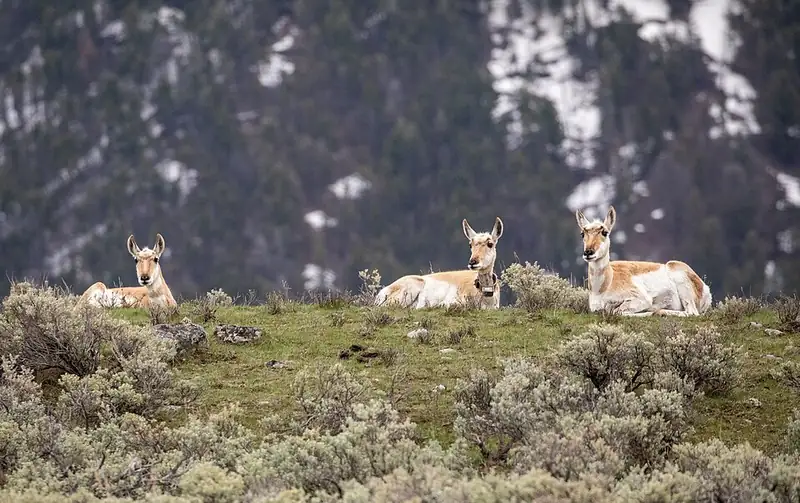 Mammal
 Pronghorn
Antilocapra americana
North America's fastest land mammal, seen in Yellowstone's northern range and at Lava Beds, built to outrun a predator that went extinct 12,000 years ago.
-
 Plant
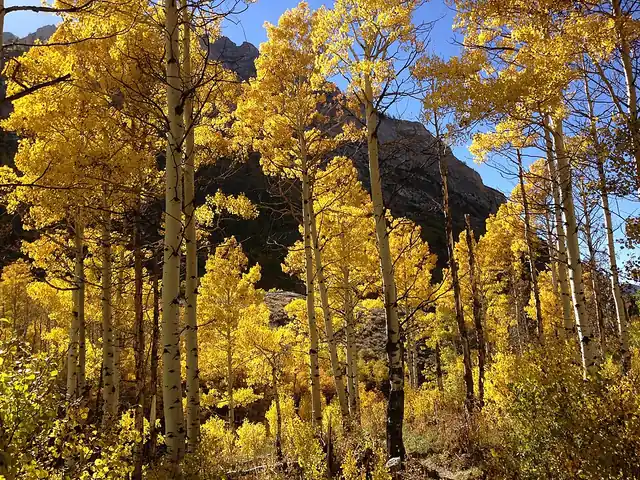
Plant Quaking aspen
Populus tremuloides
A white-barked mountain tree whose flat-stemmed leaves shiver in the lightest breeze, turning whole hillsides gold each fall.
-
 Bird
Bird Red-tailed hawk
Buteo jamaicensis
The hawk most often recorded in Yellowstone. We watched a hawk take a pika near the Roosevelt cabins and could not tell you which hawk it was.
-
 Bird
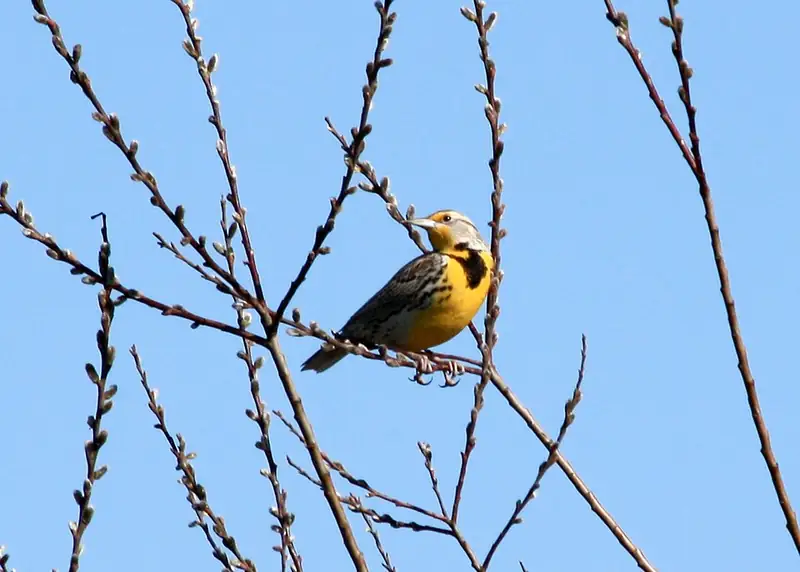
Bird Western meadowlark
Sturnella neglecta
A grassland songbird with a yellow throat and a black V on its chest, the state bird of Montana, Wyoming, and North Dakota.
-
 Reptile
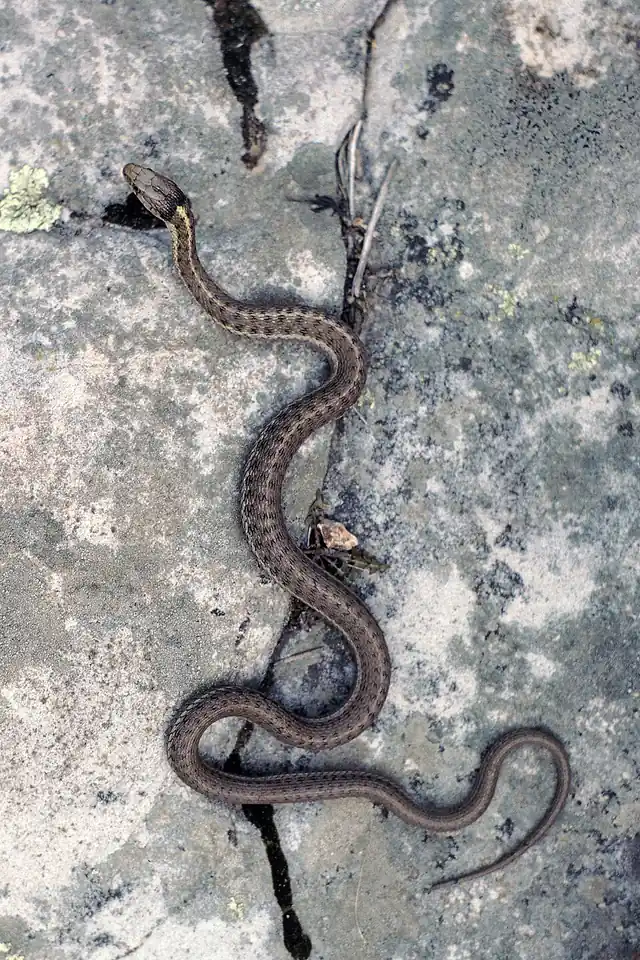
 Western terrestrial garter snake
Thamnophis elegans
A slim, striped snake found from stream banks to talus slopes across ten of these parks, and the most commonly seen reptile in several of them.
-
 Plant
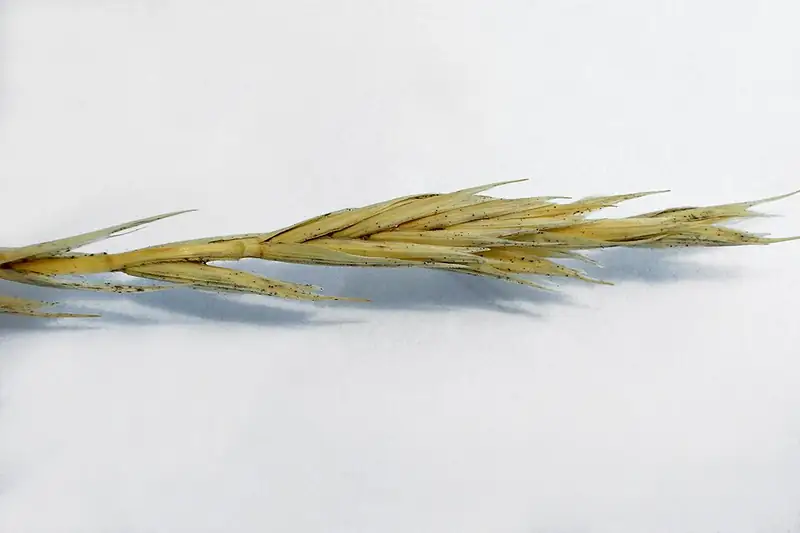
Plant Western wheatgrass
Pascopyrum smithii
A blue-green prairie grass whose underground rhizomes weave a tough sod — the official state grass of North and South Dakota.