Mammals of Fossil Butte National Monument
The 9 mammals of Fossil Butte National Monument. Their profiles carry sizes, diets, and whether you should worry.
Common questions
Which Fossil Butte National Monument mammals demand distance from a kid?
American badger, Coyote, Golden-mantled ground squirrel, Little brown bat, and Moose carry a rule worth reading. American badger: Badgers would rather dig away than fight and avoid people entirely. Coyote: Coyotes almost always run from people. Golden-mantled ground squirrel: None. Little brown bat: Very low risk. Moose: A moose looks slow and gentle, but it is one of the most dangerous animals to crowd. 4 more species carry a rule worth reading. (per NPS species pages).
What do Fossil Butte National Monument mammals eat?
American badger eats ground squirrels, pocket gophers, small rodents, ground-nesting bird eggs. Coyote eats mice, rabbits, lizards, insects, fruit, whatever it can find. Golden-mantled ground squirrel eats fungi, seeds, nuts, buds, roots, bird eggs, insects, carrion. Little brown bat eats midges, mosquitoes, mayflies, caddisflies, moths, beetles. 5 more species have menus worth reading. (per NPS species pages).
The strangest true thing about Fossil Butte National Monument's mammals.
American badger: A badger needs to eat about two ground squirrels or pocket gophers a day to keep its weight up, so it is almost always digging. Coyote: A coyote's yip-howl can sound like a whole pack when it's only one or two animals — the sound bounces and doubles. (per NPS species pages).
-
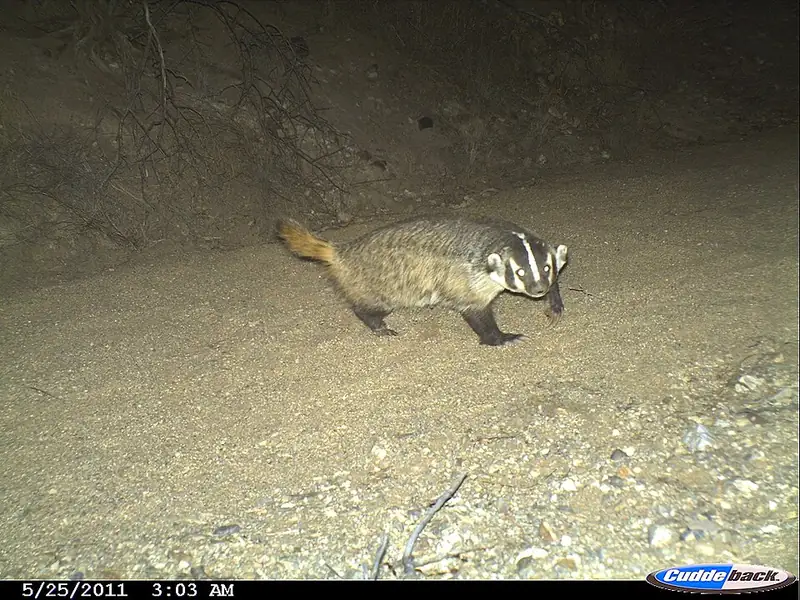 Mammal
American badger
Taxidea taxus
A short, wide-bodied digger with a white-striped face, common on the grasslands of Yellowstone and Badlands, that can vanish underground in minutes.
-
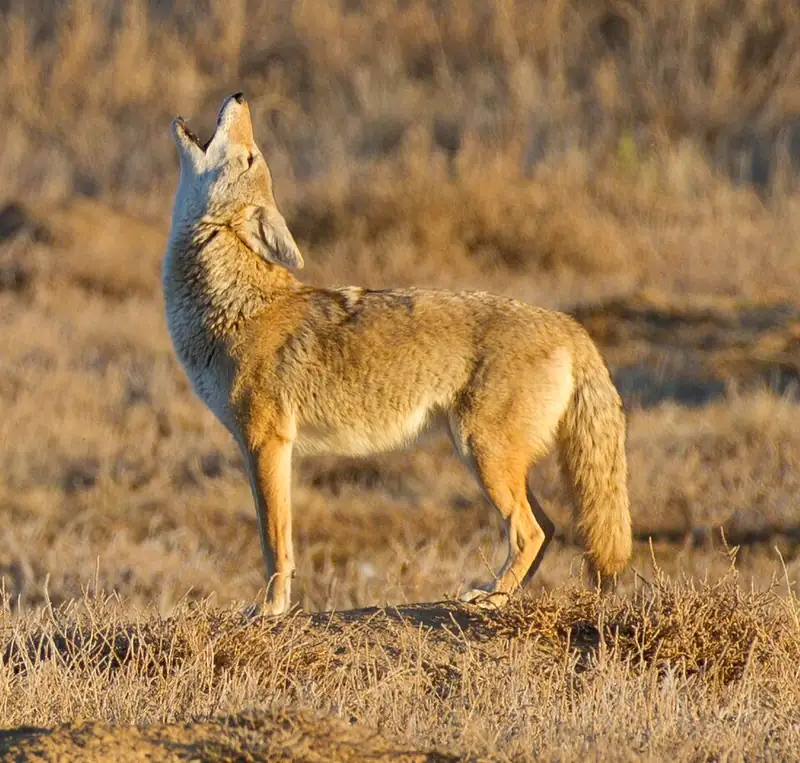 Mammal
Coyote
Canis latrans
The wild dog you're most likely to hear at a national park — a coyote, at home in the desert, the mountains, and the edges of towns.
-
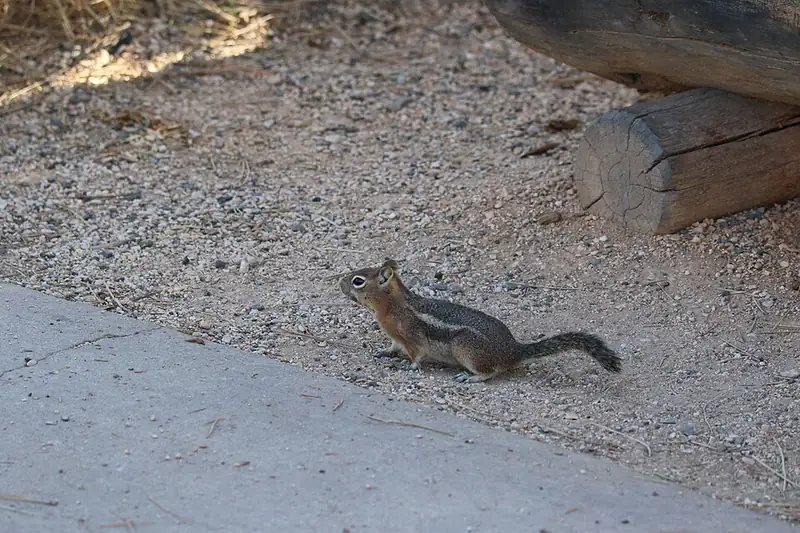 Mammal
Golden-mantled ground squirrel
Callospermophilus lateralis
A chipmunk-lookalike ground squirrel with a reddish-gold head and shoulders and no face stripes, common on rocks and trailsides from Glacier to Mesa Verde.
-
 Mammal
Little brown bat
Myotis lucifugus
A tiny brown flyer that hunts insects over water at dusk and sleeps in caves and barns, eating half its own weight in bugs each night.
-
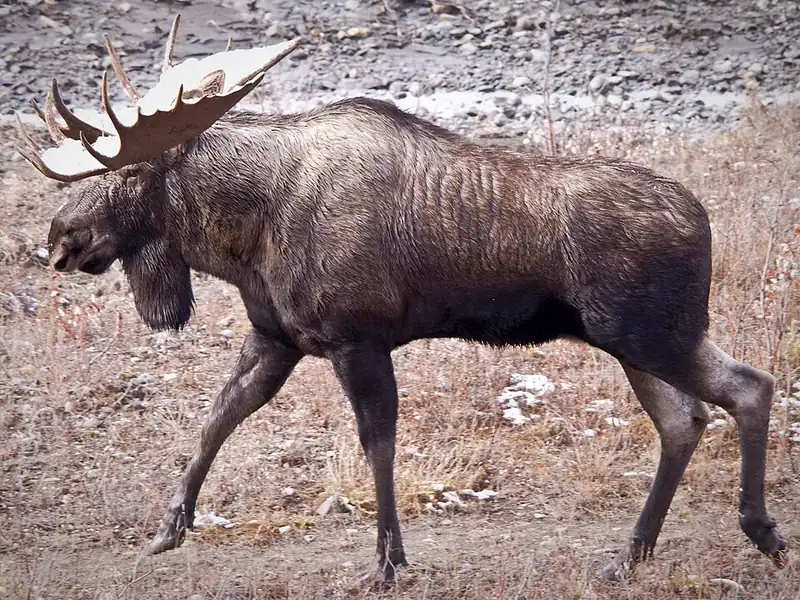 Mammal
Moose
Alces alces
The largest deer in the world, a long-legged giant you might see wading in ponds at Grand Teton, Isle Royale, Denali, or Rocky Mountain.
-
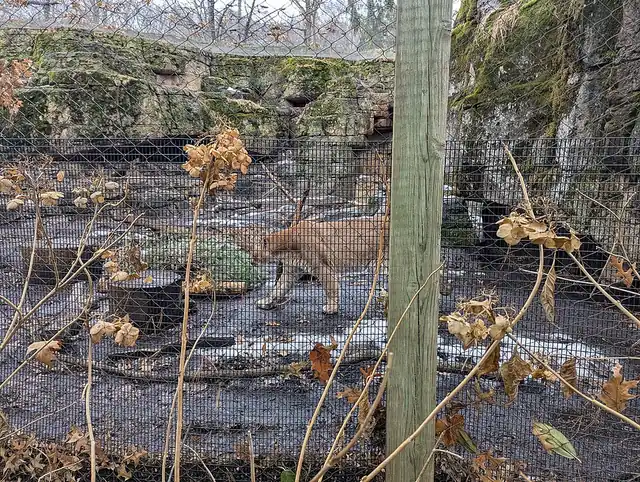 Mammal
Mountain lion
Puma concolor
A tan, solitary big cat found from Glacier to Mesa Verde, called cougar, puma, or panther by region, and rarely seen at all.
-
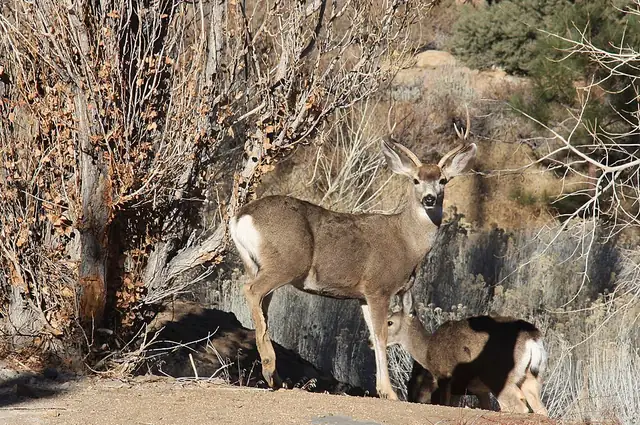 Mammal
Mule deer
Odocoileus hemionus
A western deer named for its big mule-like ears, common on canyon rims and in desert washes in Grand Canyon, Zion, Yosemite, Arches, Canyonlands, and Saguaro.
-
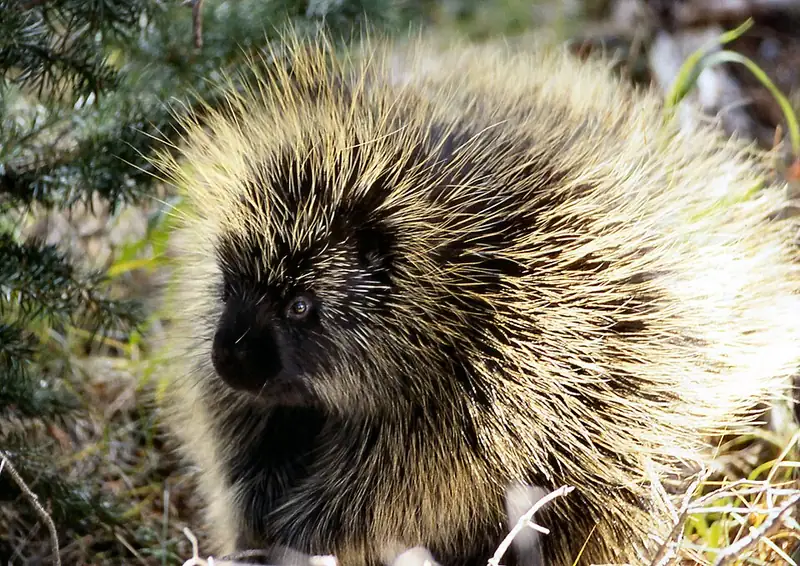 Mammal
North American porcupine
Erethizon dorsatum
A slow, quill-covered rodent of the canyon country at Arches and Canyonlands, and the second-largest rodent in North America after the beaver.
-
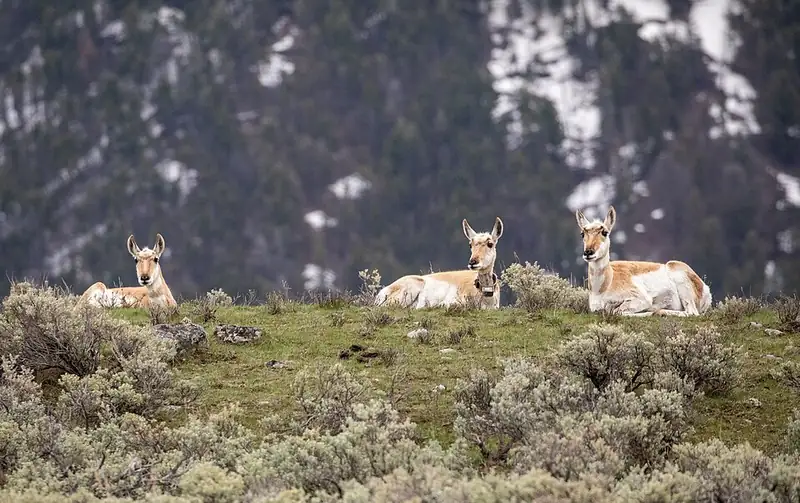 Mammal
Pronghorn
Antilocapra americana
North America's fastest land mammal, seen in Yellowstone's northern range and at Lava Beds, built to outrun a predator that went extinct 12,000 years ago.