Plants of Fossil Butte National Monument
The 6 plants of Fossil Butte National Monument. Each carries a fun fact and a note on whether a kid should worry about it.
Common questions
Which Fossil Butte National Monument plants demand distance from a kid?
Big sagebrush, Colorado blue columbine, Douglas-fir, Fireweed, and Quaking aspen carry a rule worth reading. Big sagebrush: Harmless to touch. Colorado blue columbine: Harmless to touch or smell. Douglas-fir: Completely safe. Fireweed: Some people eat the young shoots or make tea from the leaves, though there's no need to pick it in a park. Quaking aspen: Quaking aspens are harmless. 1 more species carry a rule worth reading. (per NPS species pages).
What do Fossil Butte National Monument plants eat?
Big sagebrush eats sunlight, water, soil nutrients. Quaking aspen eats sunlight, water, carbon dioxide, soil nutrients. (per NPS species pages).
The strangest true thing about Fossil Butte National Monument's plants.
Big sagebrush: Fossil Butte National Monument alone has eight different kinds of sagebrush growing within its boundary. Colorado blue columbine: Its five spurs are shaped to fit a hawkmoth's long tongue. Some hawkmoths carry a proboscis up to 4 inches long, reaching nectar no bee can get to. (per NPS species pages).
-
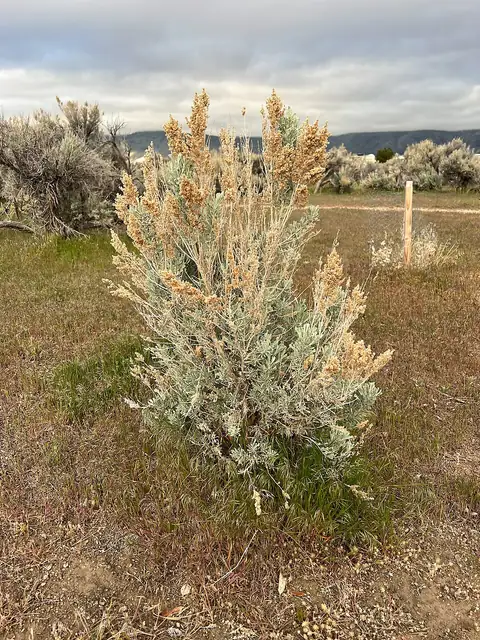 Plant
Big sagebrush
Artemisia tridentata
The silver-leaved, sharp-smelling evergreen shrub of the high desert West, and the main food of the greater sage-grouse nearly all year.
-
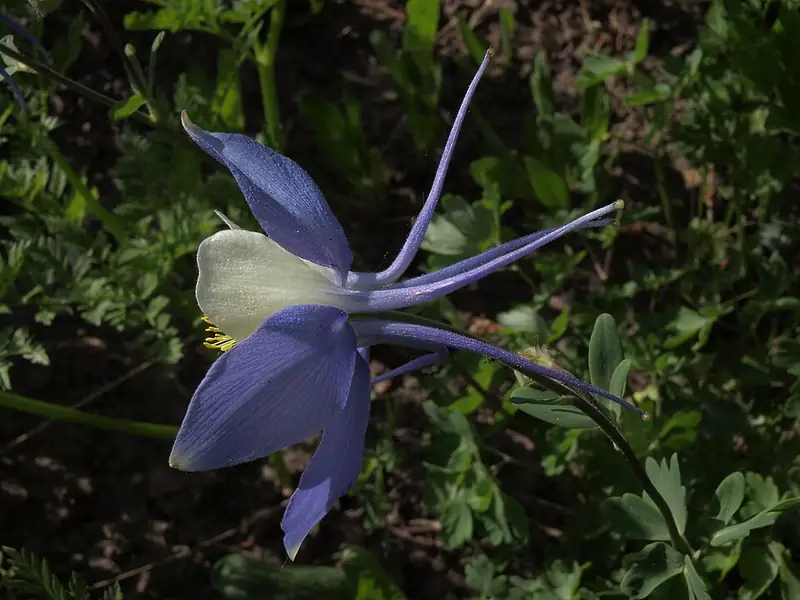 Plant
Colorado blue columbine
Aquilegia coerulea
Colorado's blue-and-white state flower, its long spurs full of nectar that only a hawkmoth's tongue can reach.
-
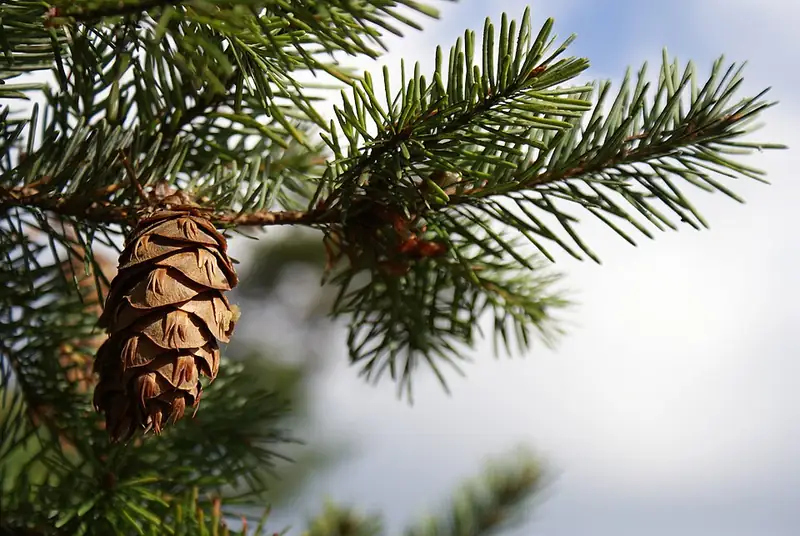 Plant
Douglas-fir
Pseudotsuga menziesii
One of the tallest trees on Earth, not actually a true fir, whose cones carry little three-pointed flaps a Native story calls the tails and legs of hiding mice.
-
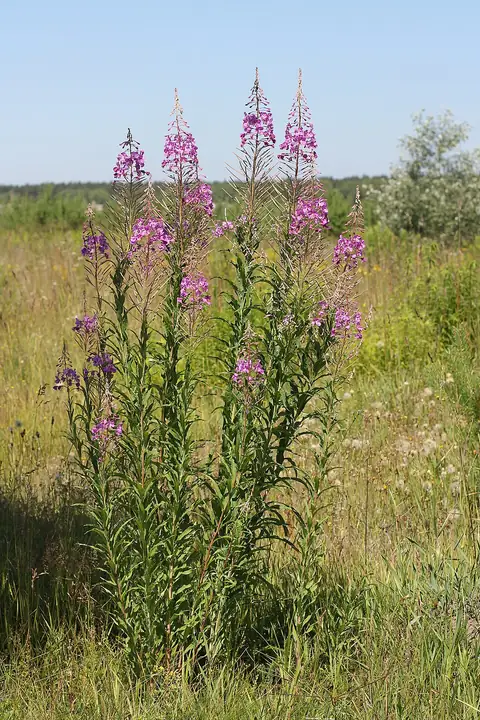 Plant
Fireweed
Chamerion angustifolium
A tall pink-purple wildflower that is often the first color to return to a burned mountainside.
-
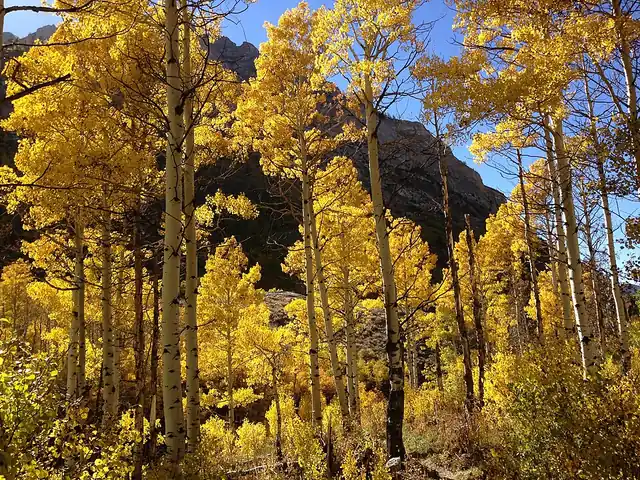 Plant
Quaking aspen
Populus tremuloides
A white-barked mountain tree whose flat-stemmed leaves shiver in the lightest breeze, turning whole hillsides gold each fall.
-
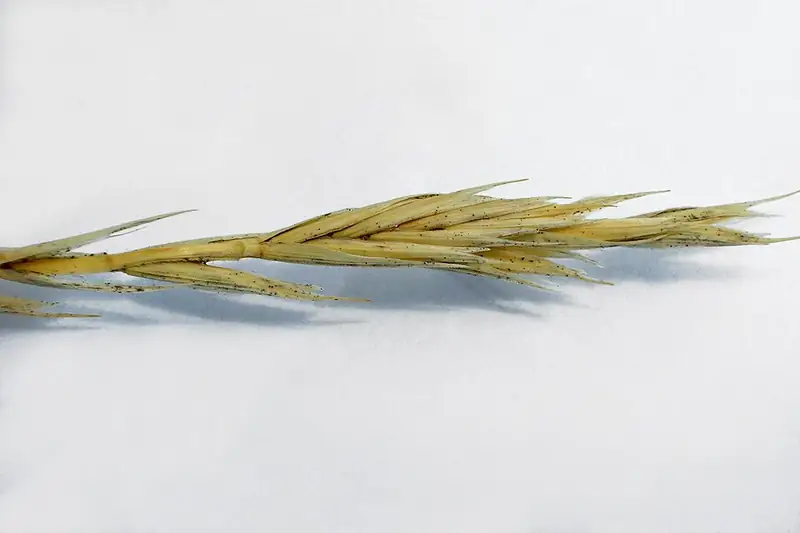 Plant
Western wheatgrass
Pascopyrum smithii
A blue-green prairie grass whose underground rhizomes weave a tough sod — the official state grass of North and South Dakota.