Reptiles of Fossil Butte National Monument
The 2 reptiles of Fossil Butte National Monument: Greater short-horned lizard and Western terrestrial garter snake.
Common questions
Which Fossil Butte National Monument reptiles demand distance from a kid?
Greater short-horned lizard and Western terrestrial garter snake carry a rule worth reading. Greater short-horned lizard: Not dangerous. Western terrestrial garter snake: Essentially harmless. (per NPS species pages).
What do Fossil Butte National Monument reptiles eat?
Greater short-horned lizard eats ants, beetles, bees, grasshoppers. Western terrestrial garter snake eats earthworms, insects, small amphibians, fish, rodents. (per NPS species pages).
The strangest true thing about Fossil Butte National Monument's reptiles.
Greater short-horned lizard: A greater short-horned lizard can squirt blood out of the corners of its eyes at a coyote or fox that gets too close — a taste so unpleasant to canines that many let go and back off. Western terrestrial garter snake: Cornered, a western terrestrial garter snake will empty its musk glands and smear the smelly mixture over itself and its attacker rather than rely on biting. (per NPS species pages).
-
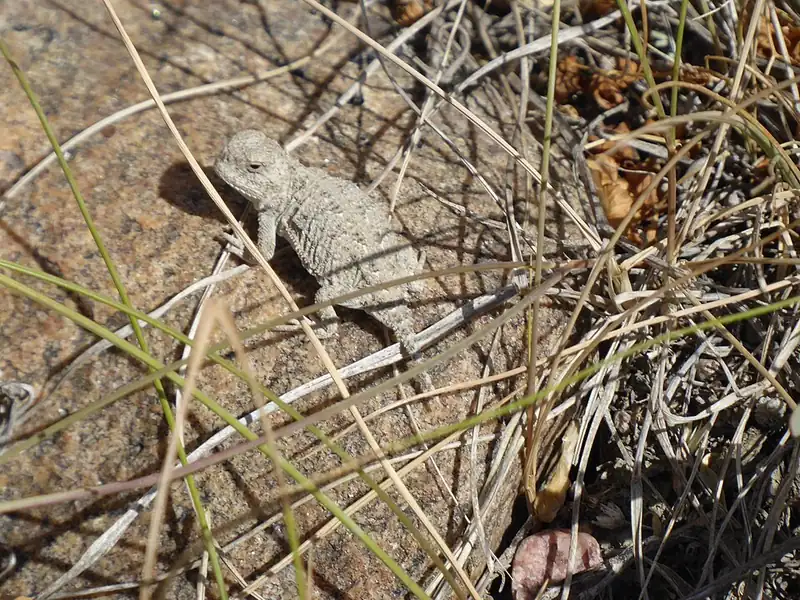 Reptile
Greater short-horned lizard
Phrynosoma hernandesi
A flat, spiky, dirt-colored lizard, sometimes called a horned toad, that can squirt blood from its eyes at a coyote and gives birth to live young.
-
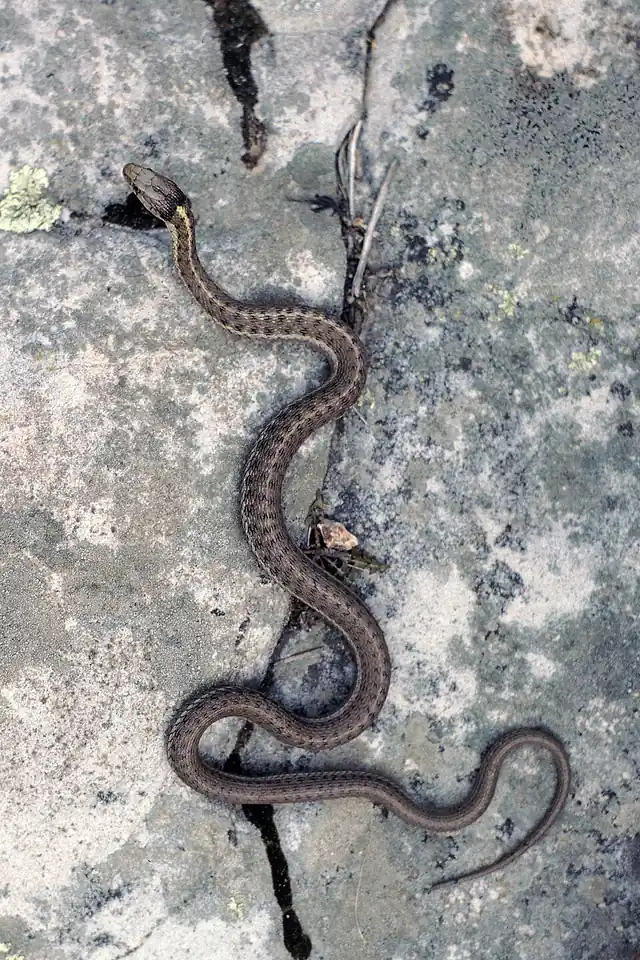 Reptile
Western terrestrial garter snake
Thamnophis elegans
A slim, striped snake found from stream banks to talus slopes across ten of these parks, and the most commonly seen reptile in several of them.