Hopi Tribe
A nation today
Background
Twenty-two representatives sit in the Hopi Tribal Council, drawn from the villages of Upper Moenkopi, Bakabi, Kykotsmovi, Sipaulovi, the First Mesa Consolidated Villages of Walpi, Sitchumovi and Tewa, and Mishongnovi. The villages of Shungopavi, Oraibi, Hotevilla and Lower Moenkopi have no representative on the council at present. Each representative serves a two-year term, chosen either by community election or by appointment from the village leader the Tribe calls the kikmongwi. The council was established on December 19, 1936, with the adoption of the Hopi Constitution and By-Laws, which places all power in the Tribal Council while limiting the chairman, vice chairman and judicial branch. The reservation covers more than 1.5 million acres in Coconino and Navajo counties, and the Tribe counts twelve villages across three mesas. It says the Hopi have lived in Hopitutskwa since time immemorial. The Hopi Cultural Preservation Office sits inside the Department of Natural Resources and is charged with representing Hopi cultural interest inside and outside the reservation, including the newly acquired ranches, work that requires the input of the villages, clans and religious societies.
Visit and learn
Tribal lands have their own laws. Check the nation's site before you visit.
Parks on its homelands
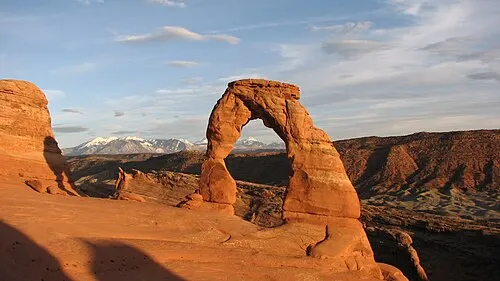
Arches National ParkArches sits on the northern edge of Ancestral Pueblo country, and NPS names the Hopi Mesas among the places where the descendants of those builders live today. The park's own history page says few dwellings have been found inside Arches, so the people who farmed the Four Corners probably came through in season. Source
 Canyonlands National Park
A sovereign nation in northeastern Arizona, the Hopi Tribe holds a reservation of more than 1.5 million acres made up of 12 villages on three mesas, and the Tribe says the Hopi have lived in Hopitutskwa since time immemorial. Source
 Grand Canyon National Park
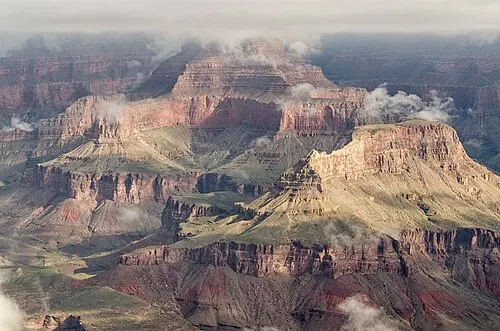
The first gallery inside Desert View Watchtower was painted by Fred Kabotie, a Hopi from Second Mesa. Source
 Mesa Verde National Park
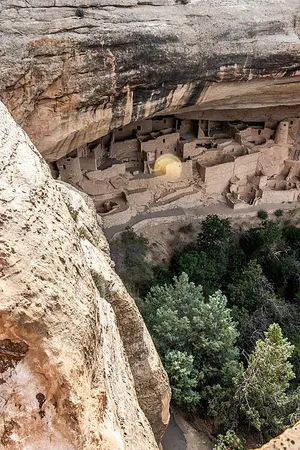
The Hopi Tribe is one of the descendants the park names of the people who built and lived at Mesa Verde. NPS says their ancestors carried the mesa's architecture, artistic motifs, and farming practices down to the Little Colorado River and up onto the Hopi Mesas, and the Tribe runs the Hopi Cultural Center. Source
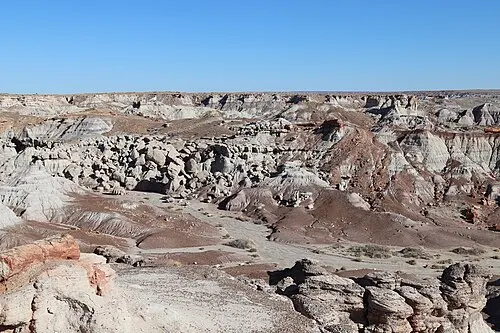 Petrified Forest National Park
When Mary Colter remodeled the Painted Desert Inn in 1948, she hired the Hopi artist Fred Kabotie to paint its lunch room and dining room. One wall carries his mural of two young Hopi men on a 230-mile round trip from their home to Zuni Salt Lake, a route that passed through what is now this park. Source
Programs
Wildlife and Ecosystems Management Program
The program manages wildlife, woodland, forestry and wetland habitat on the reservation, split between a Wildlife Management Unit and an Ecosystems Management Unit. Its goals follow the 2011 Hopi Pötskwanait, revised in November 2011, and it works under Tribal Ordinances 47 and 48 on woodlands and wildlife, the Integrated Resource Management Plan adopted in May 2001 and the Integrated Woodlands Management Plan adopted in 2006. The wildlife unit writes hunting regulations for deer and elk and for furbearers, issues beaver dam fishing permits, runs big game, furbearer and non-game surveys and teaches hunter education. The ecosystems unit issues commercial and non-commercial wood permits, monitors woodlands, keeps a woodlands inventory and tracks harvests on the new lands.
Hopi Cultural Preservation Office archaeology and research
The office's archaeology function works under the Archaeological Resources Preservation Act of 1979, with pages for archaeological cultural resources monitoring fieldwork, an archaeological cultural resources survey and a cultural resources inventory request form. It also publishes research protocols and a statement of purpose on intellectual property rights, arguing that stories, music and designs have been taken and sold by people outside the Tribe without permission.
Hopi Code of Laws and Rules of Civil Procedures
The Judicial Branch publishes the approved Hopi Code of Laws, adopted as H-086-2012, together with the Hopi Rules of Civil Procedure, and both documents are posted on the Tribe's site.
Hopi Tutuveni
The Tribe's own services list it as the Hopi Tutuveni Newspaper, with back issues posted as PDF and individual articles carried online. Items are datelined Kykotsmovi, Arizona.
Affiliations
Arches National Park ethnographic overview
Arches ran an ethnographic overview with the Bureau of Applied Research in Anthropology at the University of Arizona, and lists the Tribe among the participants, with the Pueblo of Zuni, the Southern Ute Indian Tribe, the Ute Indian Tribe-Uintah and Ouray, the Paiute Indian Tribe of Utah and the Kaibab Band of Paiute Indians. NPS says the results give staff a baseline assessment of the tribes' connections to the park and will inform management decisions, exhibits and programs for visitor education.
Mesa Verde National Park
Mesa Verde counts 27 associated Pueblos, Tribes and Nations and names the Hopi among the direct descendants of the people who built and lived in the communities at the park. NPS records that their ancestors carried the mesa's architecture, artistic motifs and farming practices down to the Little Colorado River and up onto the Hopi Mesas. Twenty-one Pueblo and Hopi communities hold those traditions across three states today.
Grand Canyon National Park
The Hopi Tribe's name is on Grand Canyon's list of eleven tribes with historic connections to the lands and resources now found inside the park.
Great Sand Dunes National Park and Preserve
Great Sand Dunes lists the Hopi among its affiliated tribes, and says those tribes share their traditional knowledge and culture with park staff through consultation and with the public through park programs.
Sources
- https://www.govinfo.gov/content/pkg/FR-2026-01-30/html/2026-01899.htm
- https://www.hopi-nsn.gov/tribal-government/
- https://www.hopi-nsn.gov/
- https://www.hopi-nsn.gov/tribal-services/department-natural-resources-2/hopi-cultural-preservation-office/
Checked September 2026.