Animals & Plants of Canyonlands National Park
The 12 animals, plants, and fungi you can find at Canyonlands National Park, with sizes, diets, and whether you should worry. See the full park guide at Canyonlands National Park.
Canyonlands is four districts of mesa, canyon, and river, with pinyon-juniper woodland on the mesa tops of the Island in the Sky. Bighorn sheep and mule deer cross the rims, coyotes and bobcats hunt below them, and common ravens and canyon wrens call from the cliffs. Collared lizards, Utah juniper, and claret cup cactus live on the rocky ground.
Turn this into a game: Play Canyonlands National Park Bingo →Anything here that bites?
Keep away
- Bighorn sheep: Bighorn sheep are shy and would rather climb away than come near you.
- Bobcat: Very low.
- Coyote: Coyotes almost always run from people.
- Mountain lion: Confrontations are very rare — even in Yellowstone, with a healthy population, few have ever been documented.
- Mule deer: Mule deer look calm and tame, but they are wild animals with sharp hooves, and bucks have antlers in fall.
Don't touch or eat
- Claret cup cactus: This cactus is covered in stiff spines, so the rule is look, do not touch.
- North American porcupine: A porcupine cannot throw or shoot its quills, but they detach the instant something touches them, and the barbed tips work deeper into skin over time.
Bites if handled
- Black-tailed jackrabbit: Harmless.
- Common collared lizard: This lizard is not dangerous.
Everything else on this page is harmless. What each group means.
-
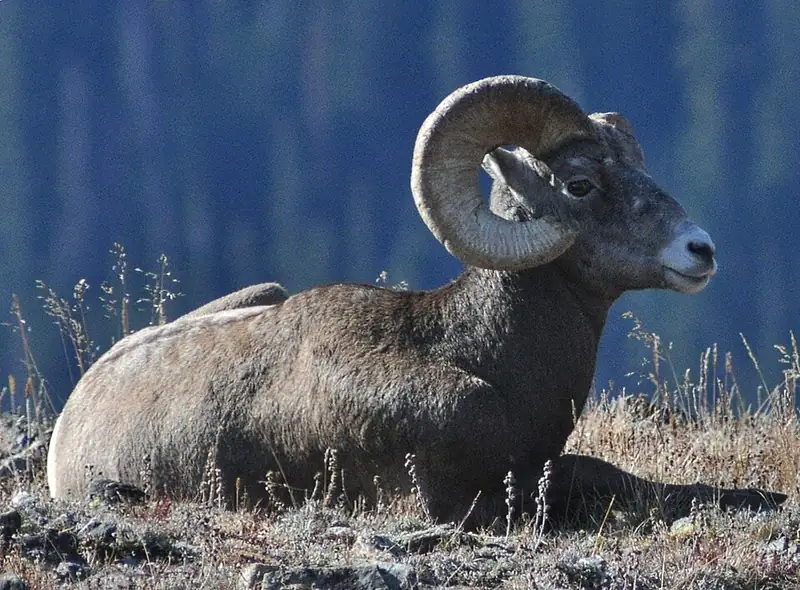 Mammal
Bighorn sheep
Ovis canadensis
A wild sheep of cliffs and canyons, where rams carry heavy curled horns and both sexes cross steep rock other animals can't.
-
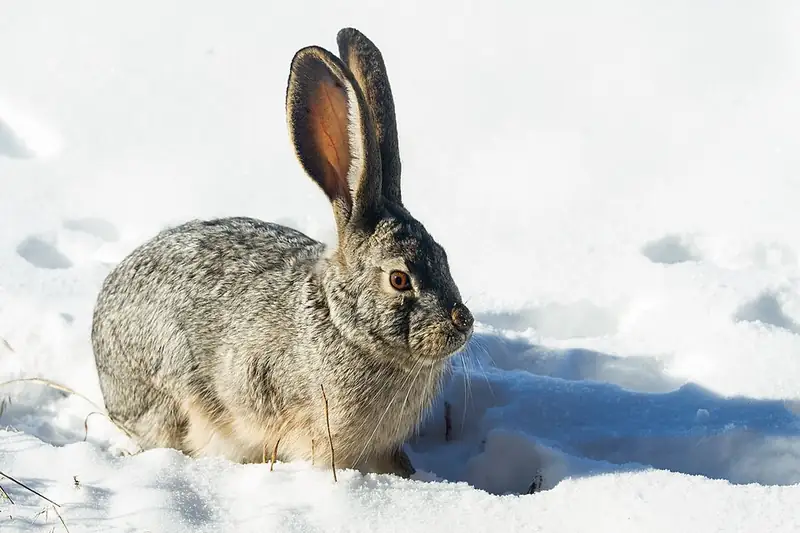 Mammal
Black-tailed jackrabbit
Lepus californicus
A big-eared hare of Joshua Tree, Lava Beds, Arches, and Canyonlands that dumps body heat through those ears and outruns coyotes in zigzags at 40 miles an hour.
-
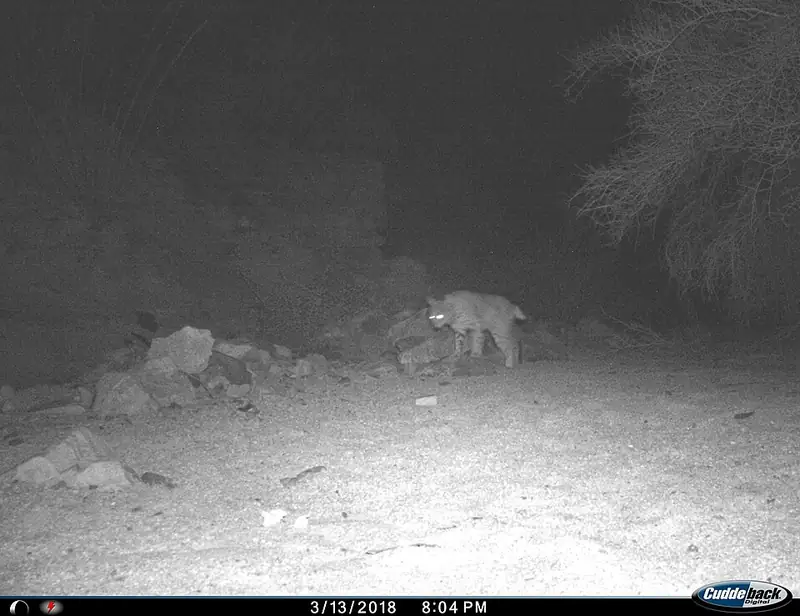 Mammal
Bobcat
Lynx rufus
A small wildcat about twice the size of a house cat, common but rarely seen, that can bring down prey many times its own weight.
-
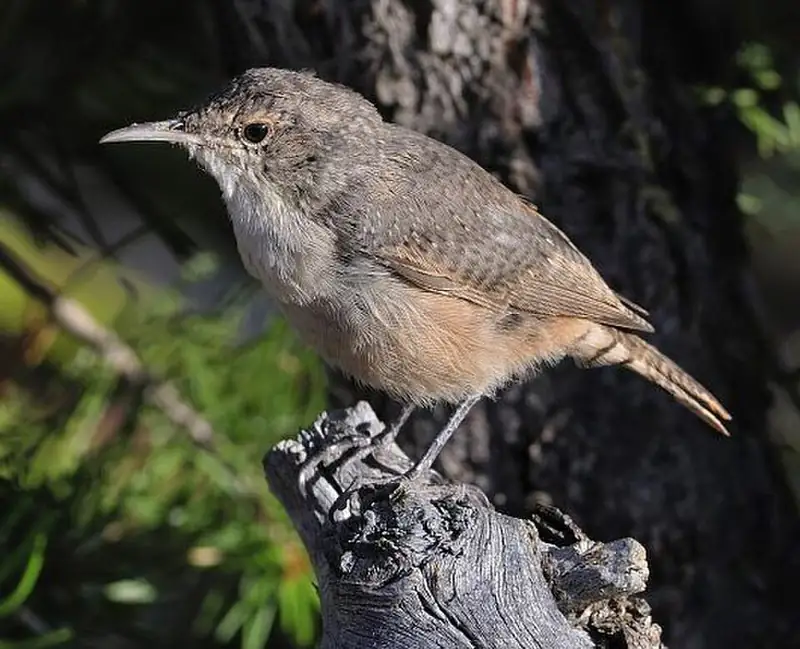 Bird
Canyon wren
Catherpes mexicanus
A small, rusty-brown songbird of canyon cliffs at Black Canyon, Arches, and Canyonlands, far more often heard than seen.
-
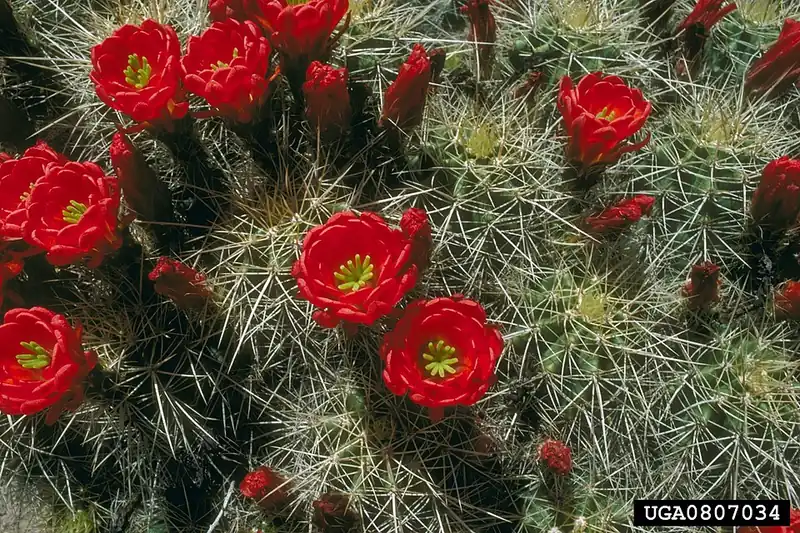 Plant
Claret cup cactus
Echinocereus triglochidiatus
A low, mounding desert cactus that bursts into bright red, cup-shaped flowers each spring on rocky ground across the Southwest.
-
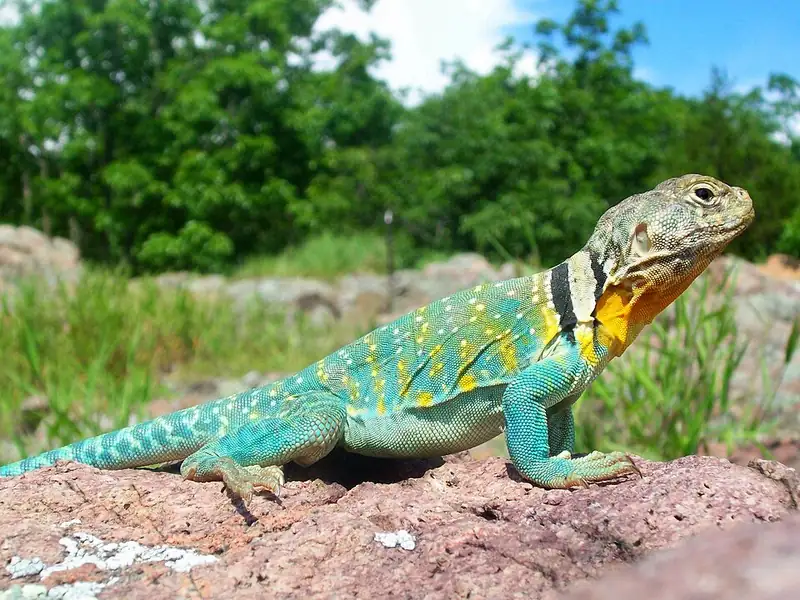 Reptile
Common collared lizard
Crotaphytus collaris
A bright, big-headed lizard with two black neck bands that can sprint on its back legs like a tiny dinosaur across desert rock.
-
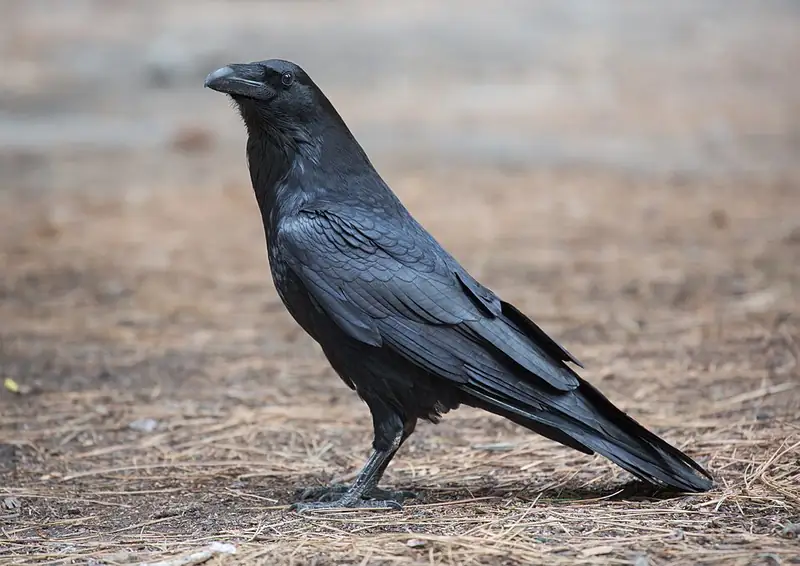 Bird
Common raven
Corvus corax
A big, glossy-black problem-solver that rolls and tumbles in the wind over the cliffs of Grand Canyon, Arches, and Canyonlands.
-
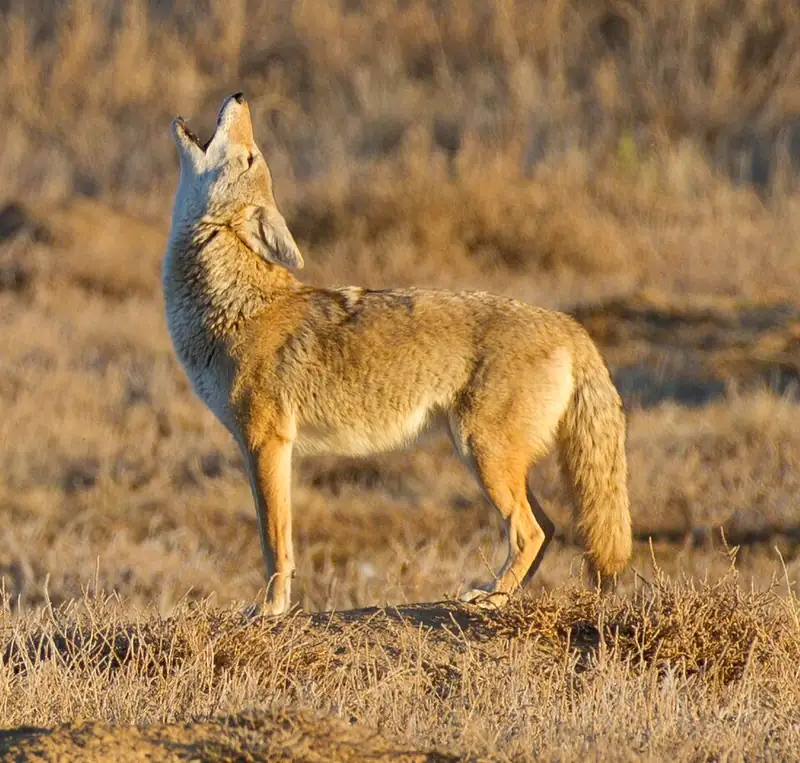 Mammal
Coyote
Canis latrans
The wild dog you're most likely to hear at a national park — a coyote, at home in the desert, the mountains, and the edges of towns.
-
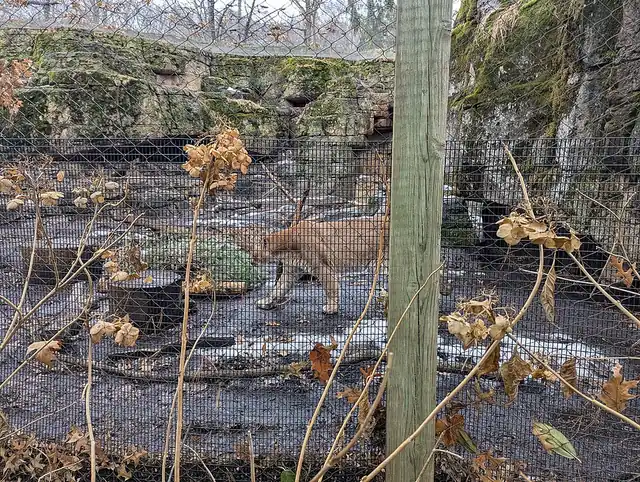 Mammal
Mountain lion
Puma concolor
A tan, solitary big cat found from Glacier to Mesa Verde, called cougar, puma, or panther by region, and rarely seen at all.
-
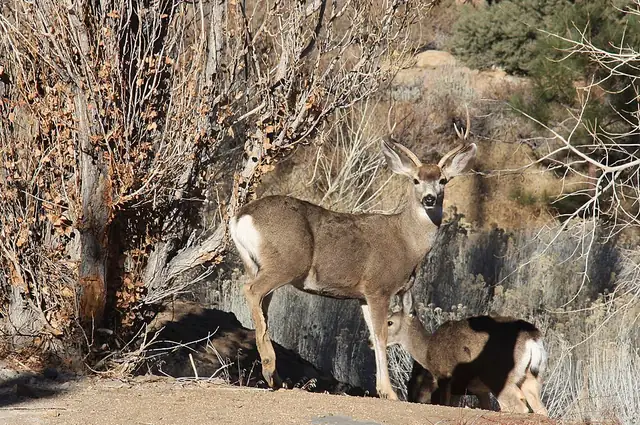 Mammal
Mule deer
Odocoileus hemionus
A western deer named for its big mule-like ears, common on canyon rims and in desert washes in Grand Canyon, Zion, Yosemite, Arches, Canyonlands, and Saguaro.
-
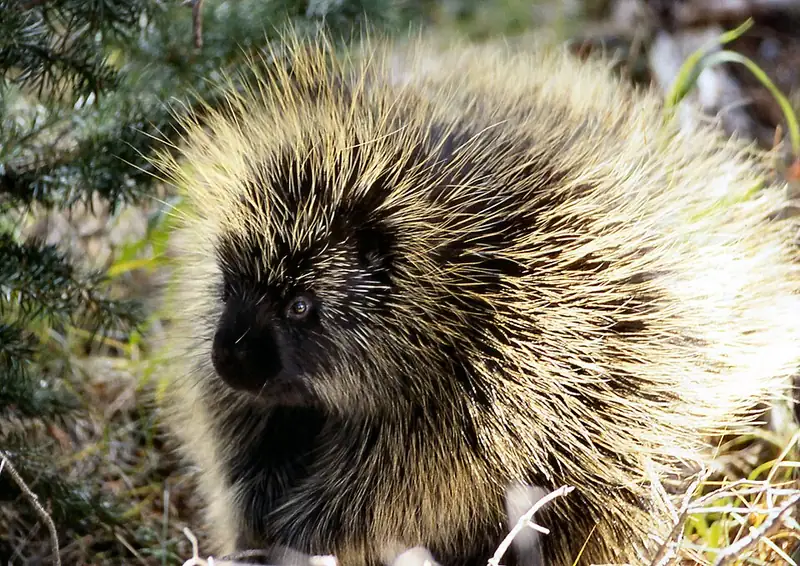 Mammal
North American porcupine
Erethizon dorsatum
A slow, quill-covered rodent of the canyon country at Arches and Canyonlands, and the second-largest rodent in North America after the beaver.
-
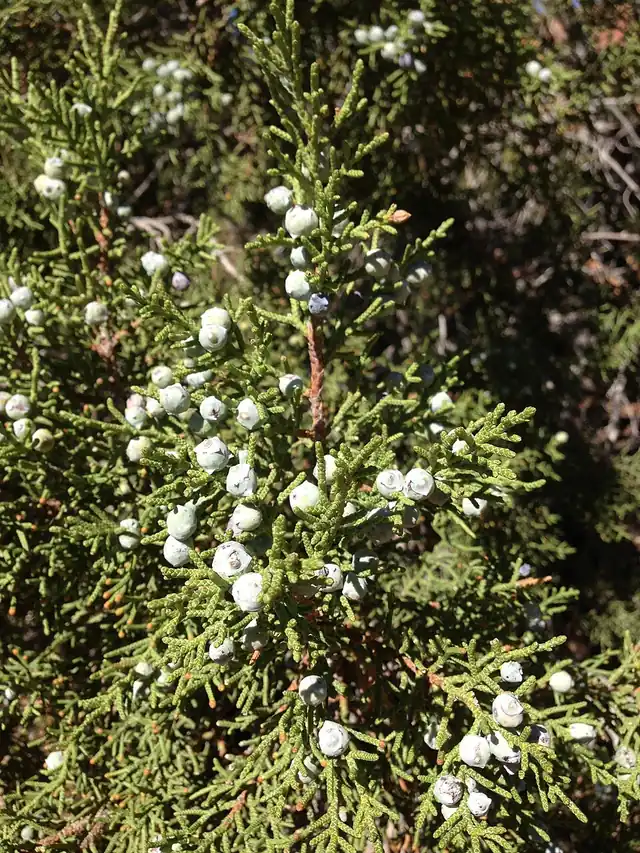 Plant
Utah juniper
Juniperus osteosperma
A short, twisted evergreen of dry canyon country, rooting in cracked rock at Mesa Verde, Black Canyon, Arches, Canyonlands, and Craters of the Moon lava fields.