Mammals of Olympic National Park
The 12 mammals of Olympic National Park. Their profiles carry sizes, diets, and whether you should worry.
Common questions
Which Olympic National Park mammals demand distance from a kid?
American black bear, Bobcat, Columbian black-tailed deer, Coyote, and Douglas squirrel carry a rule worth reading. American black bear: Black bears are usually shy and would rather leave than meet you. Bobcat: Very low. Columbian black-tailed deer: Usually calm around people, but they are wild animals, not park mascots. Coyote: Coyotes almost always run from people. Douglas squirrel: Harmless if left alone. 7 more species carry a rule worth reading. (per NPS species pages).
What do Olympic National Park mammals eat?
American black bear eats berries, acorns, nuts, insects, roots, sometimes carrion. Bobcat eats rabbits, hares, mice and other rodents, birds, occasionally young deer. Columbian black-tailed deer eats grasses, lichens, berries, leafy plants, young tree buds. Coyote eats mice, rabbits, lizards, insects, fruit, whatever it can find. 8 more species have menus worth reading. (per NPS species pages).
The strangest true thing about Olympic National Park's mammals.
American black bear: Great Smoky Mountains National Park has about two black bears per square mile, roughly 1,900 bears, one of the thickest black-bear populations anywhere. Bobcat: A bobcat's home range can cover many square miles as it hunts night after night, moving quietly enough that fresh tracks in dust or snow are usually the only sign one passed through. (per NPS species pages).
-
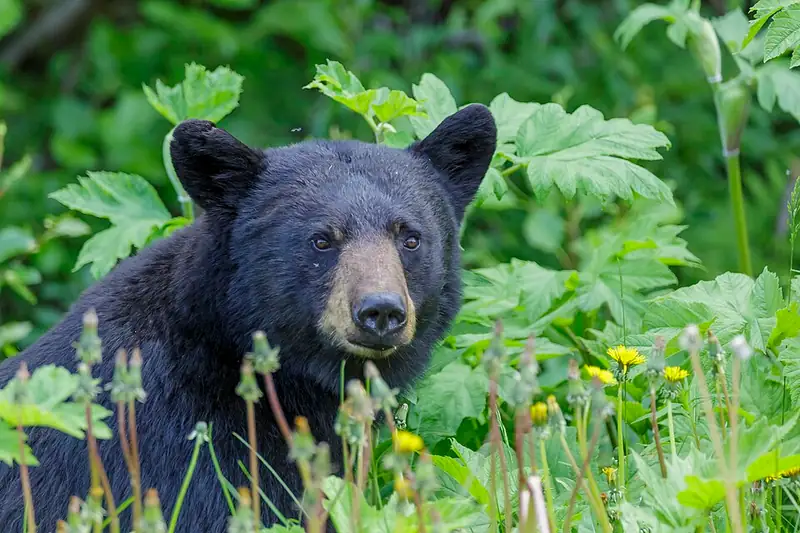 Mammal
American black bear
Ursus americanus
The bear you're most likely to meet east of the Rockies, a strong tree-climber that eats mostly plants and comes in black, brown, or cinnamon.
-
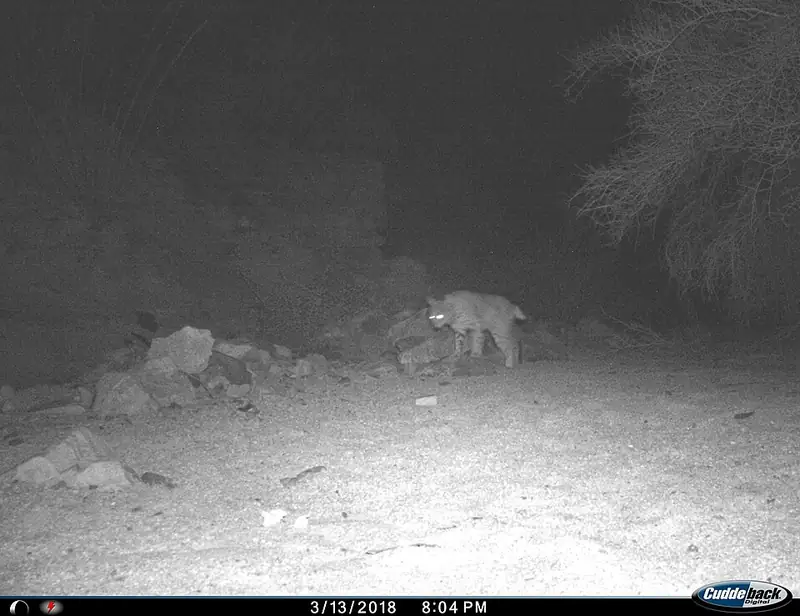 Mammal
Bobcat
Lynx rufus
A small wildcat about twice the size of a house cat, common but rarely seen, that can bring down prey many times its own weight.
-
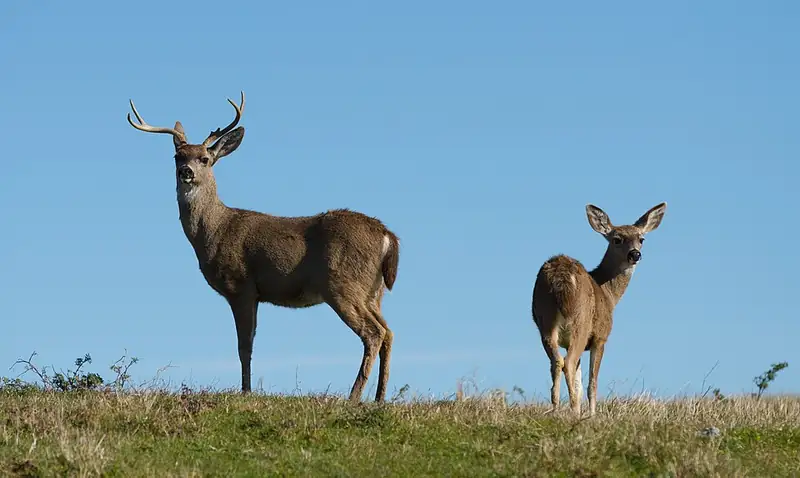 Mammal
Columbian black-tailed deer
Odocoileus hemionus columbianus
The coastal rainforest subspecies of mule deer, common on foggy meadow edges from Olympic to Redwood, easy to tell apart by its all-black tail.
-
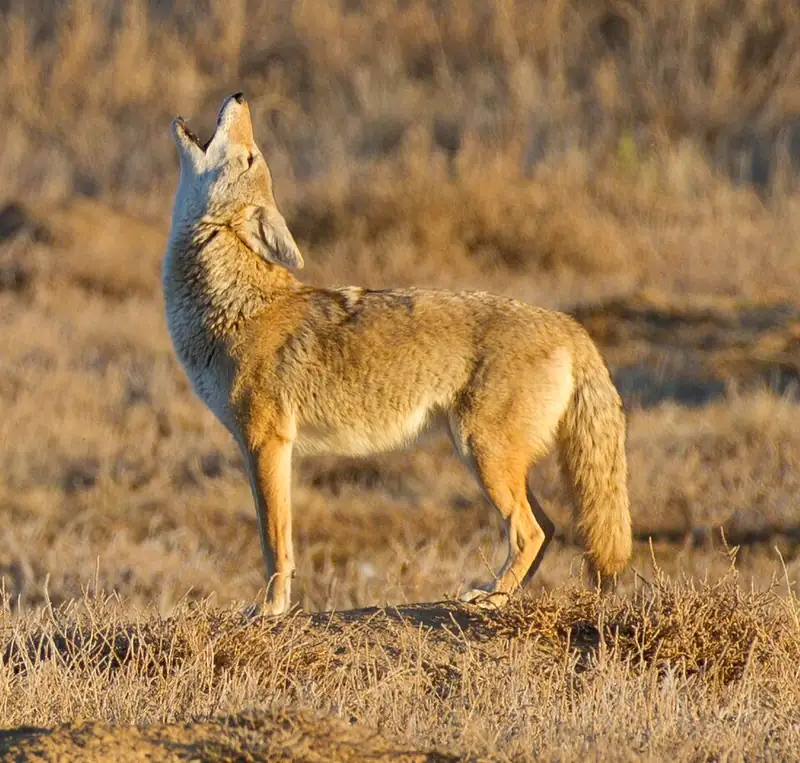 Mammal
Coyote
Canis latrans
The wild dog you're most likely to hear at a national park — a coyote, at home in the desert, the mountains, and the edges of towns.
-
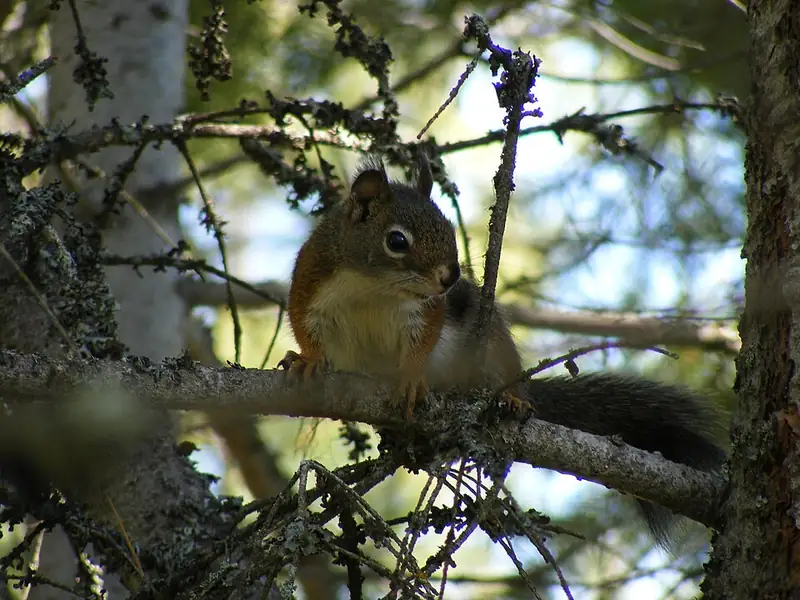 Mammal We saw it
Douglas squirrel
Tamiasciurus douglasii
A small, loud tree squirrel of West Coast conifer forests, known for cutting green cones by the hundred and scolding every hiker who walks under its tree.
-
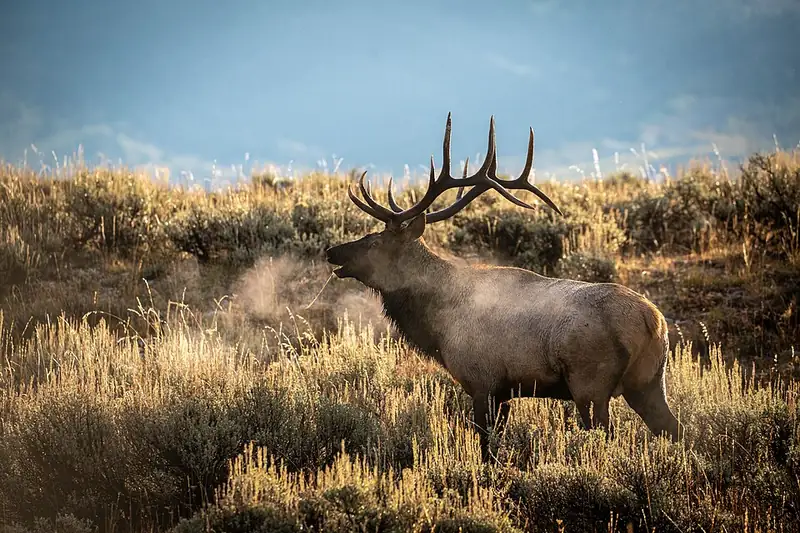 Mammal
Elk
Cervus canadensis
A large deer of mountain meadows whose bulls grow branching antlers and, each fall, bugle a high whistling call across the valley.
-
 Mammal
Harbor seal
Phoca vitulina
A gray, dog-snouted true seal that rests hauled out on rocks and floating glacier ice, bobbing in Alaska fjords with ear holes and no ear flaps.
-
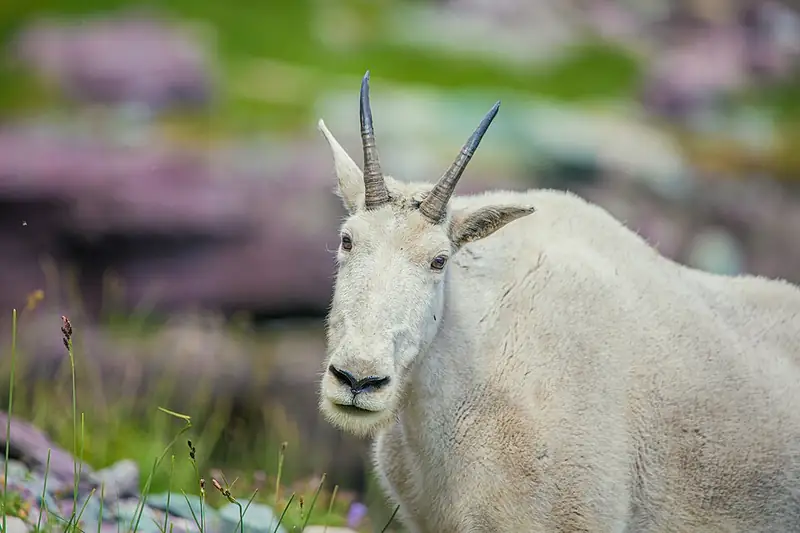 Mammal
Mountain goat
Oreamnos americanus
A white, shaggy climber with black horns that lives on the steepest crags and pumice fields high on Mount Rainier, where almost nothing else can walk.
-
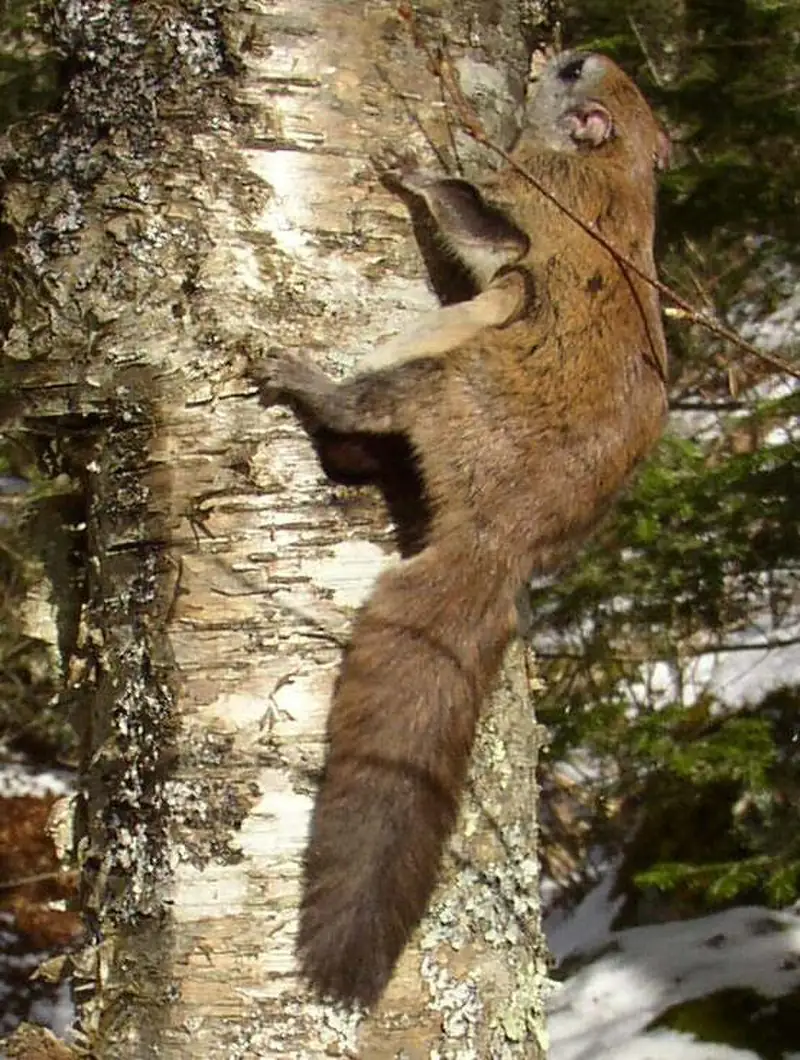 Mammal
Northern flying squirrel
Glaucomys sabrinus
A nocturnal glider of old-growth conifer forests that eats mostly underground fungus and, under a UV light, glows bubblegum pink.
-
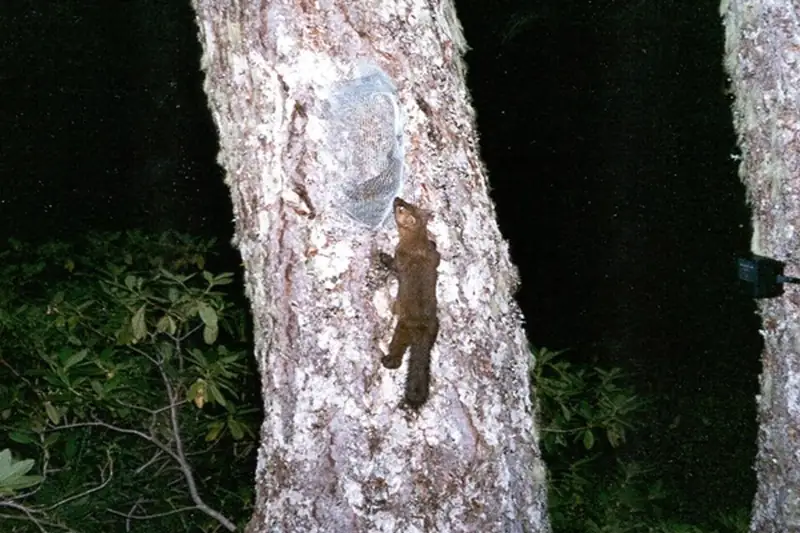 Mammal
Pacific marten
Martes caurina
A tree-climbing weasel relative of the old-growth canopy, whose coastal population was feared extinct for 50 years before a trail camera caught one in 1996.
-
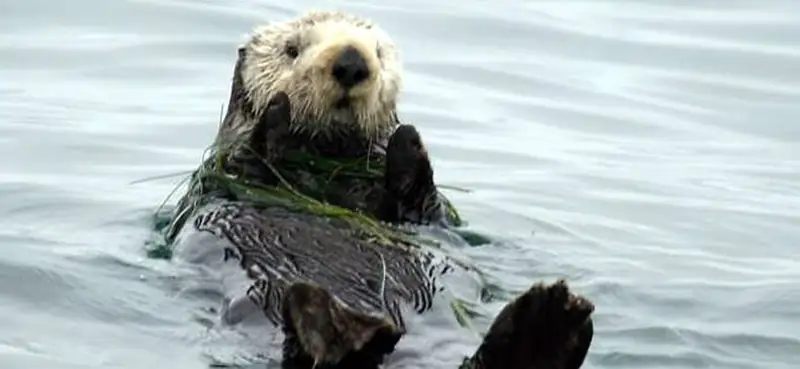 Mammal
Sea otter
Enhydra lutris
The heaviest weasel-family animal alive, floating on its back in Olympic's coastal kelp beds with no blubber at all, just the densest fur of any mammal.
-
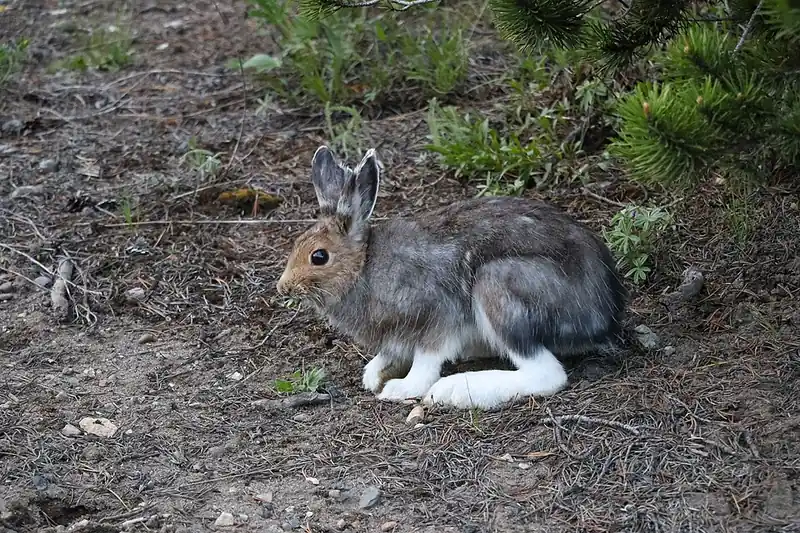 Mammal
Snowshoe hare
Lepus americanus
A forest hare whose coat flips from brown to white on a clock set by daylight, not by snow, and whose oversized feet work like actual snowshoes.