Mammals of Mesa Verde National Park
The 12 mammals of Mesa Verde National Park. Their profiles carry sizes, diets, and whether you should worry.
Common questions
Which Mesa Verde National Park mammals demand distance from a kid?
Abert's squirrel, American beaver, American black bear, Black-tailed jackrabbit, and Bobcat carry a rule worth reading. Abert's squirrel: Harmless and shy. American beaver: Beavers are shy and would rather swim off than confront anyone. American black bear: Black bears are usually shy and would rather leave than meet you. Black-tailed jackrabbit: A jackrabbit's entire plan is to run, not fight. Bobcat: Very low. 7 more species carry a rule worth reading. (per NPS species pages).
What do Mesa Verde National Park mammals eat?
Abert's squirrel eats ponderosa pine seeds and cones, the soft inner bark of pine twigs, mushrooms, old bones and antlers. American beaver eats willow and aspen bark and twigs, pond lilies and other water plants, conifer bark when little else is available. American black bear eats berries, acorns, nuts, insects, roots, sometimes carrion. Black-tailed jackrabbit eats grasses, sagebrush, creosote bush, cactus, clover and alfalfa where it grows. 8 more species have menus worth reading. (per NPS species pages).
The strangest true thing about Mesa Verde National Park's mammals.
Abert's squirrel: It's nicknamed the "scrabbit" because its tall, tufted ears look almost rabbit-like. American beaver: Yellowstone's northern-range beaver colonies bottomed out at just 8 in a 1953 survey, then climbed back to 127 by 2007 as habitat recovered. (per NPS species pages).
-
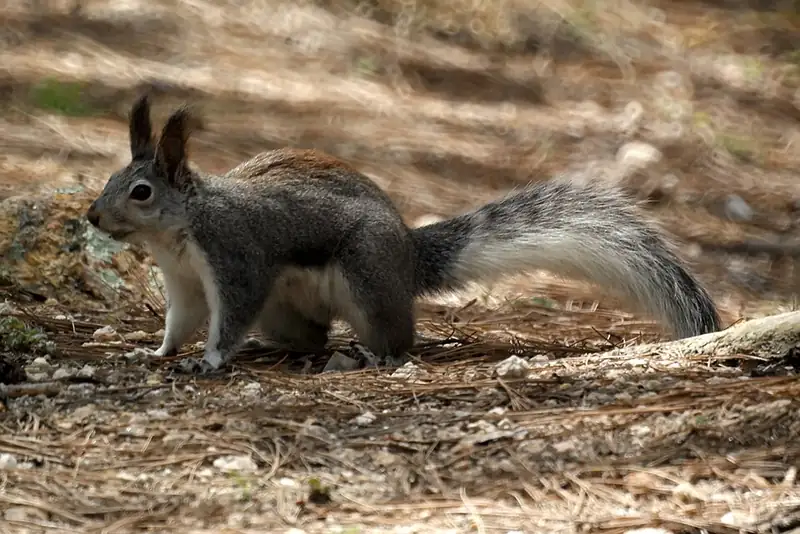 Mammal
Abert's squirrel
Sciurus aberti
A tasseled-eared squirrel of ponderosa pine forests at Mesa Verde, Rocky Mountain, and Great Sand Dunes, nicknamed the scrabbit.
-
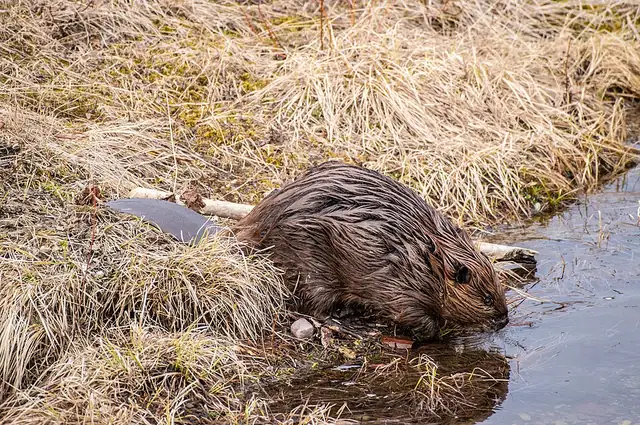 Mammal
American beaver
Castor canadensis
North America's largest rodent, a keystone species whose dams reshape whole streams at Yellowstone, Glacier, and ten other parks along the route.
-
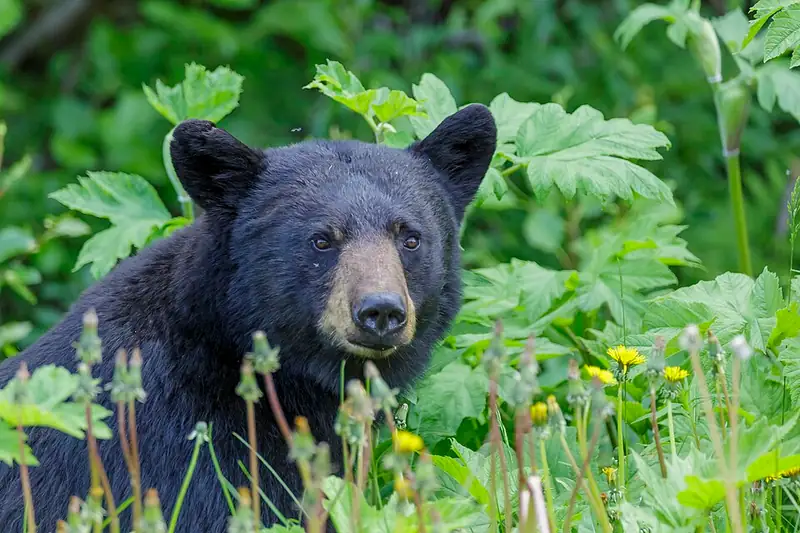 Mammal
American black bear
Ursus americanus
The bear you're most likely to meet east of the Rockies, a strong tree-climber that eats mostly plants and comes in black, brown, or cinnamon.
-
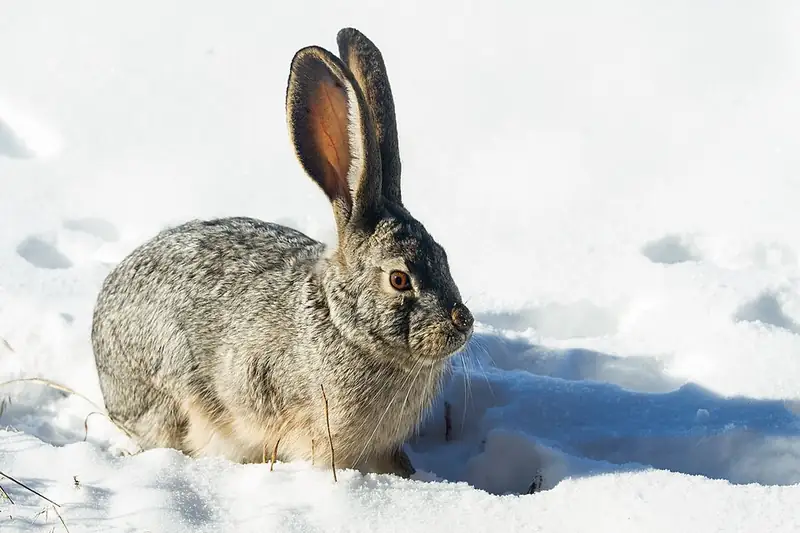 Mammal
Black-tailed jackrabbit
Lepus californicus
A big-eared hare of Joshua Tree, Lava Beds, Arches, and Canyonlands that dumps body heat through those ears and outruns coyotes in zigzags at 40 miles an hour.
-
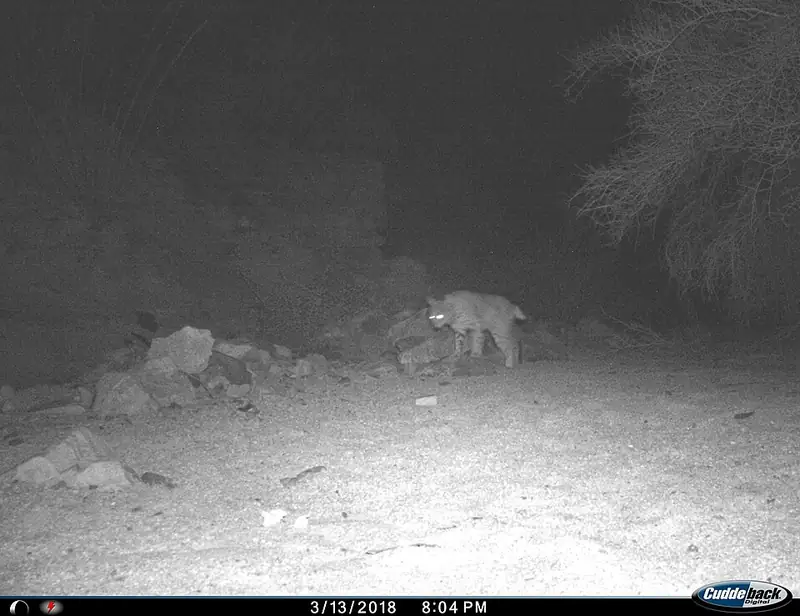 Mammal
Bobcat
Lynx rufus
A small wildcat about twice the size of a house cat, common but rarely seen, that can bring down prey many times its own weight.
-
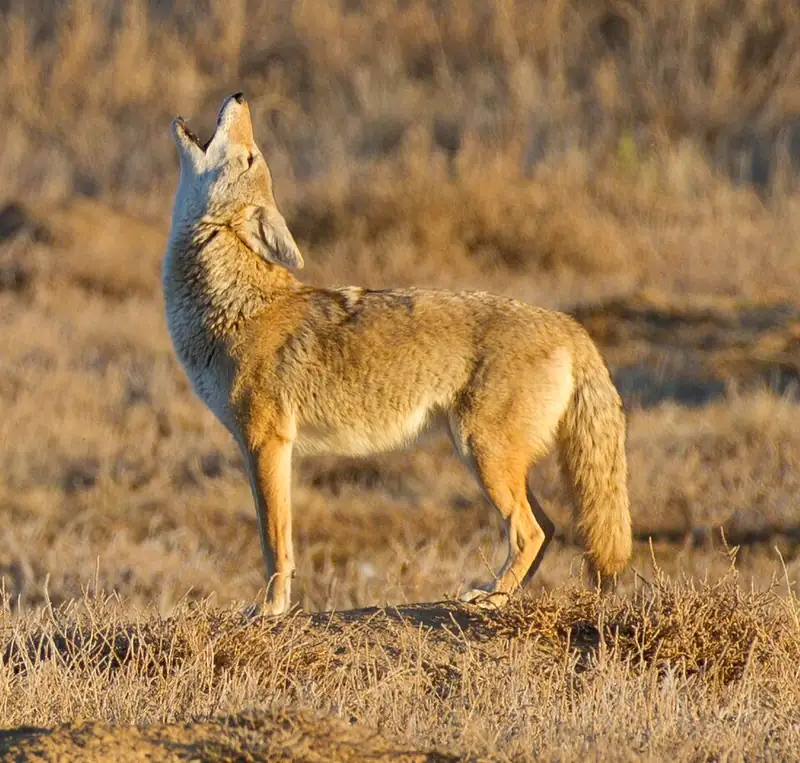 Mammal
Coyote
Canis latrans
The wild dog you're most likely to hear at a national park — a coyote, at home in the desert, the mountains, and the edges of towns.
-
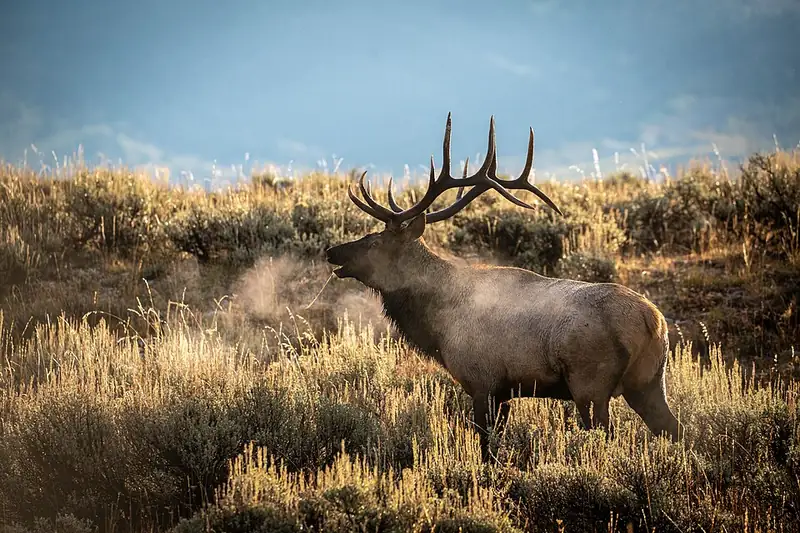 Mammal
Elk
Cervus canadensis
A large deer of mountain meadows whose bulls grow branching antlers and, each fall, bugle a high whistling call across the valley.
-
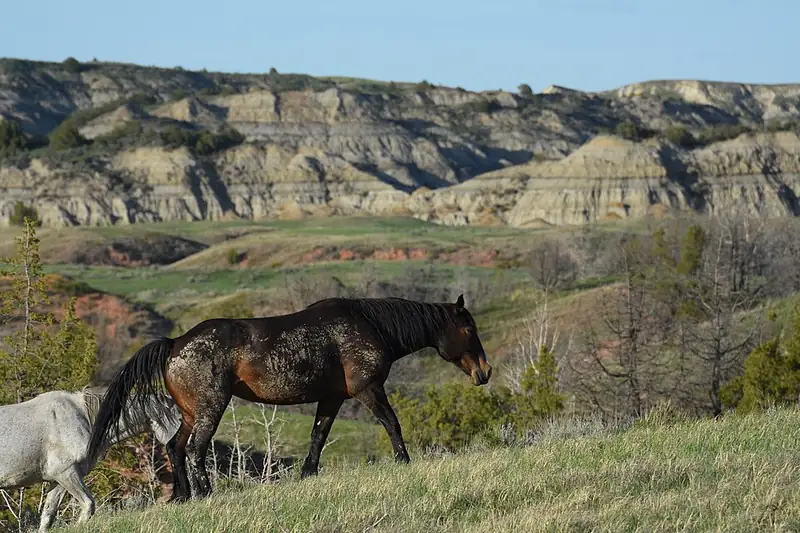 Mammal
Feral horse
Equus ferus caballus
Ranch horses turned loose on the open range and never gathered back. Their descendants live in Theodore Roosevelt's South Unit as feral livestock.
-
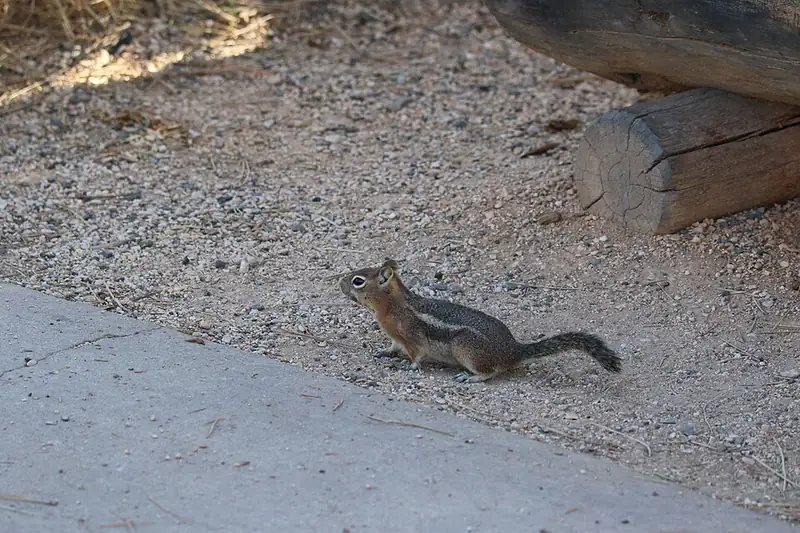 Mammal
Golden-mantled ground squirrel
Callospermophilus lateralis
A chipmunk-lookalike ground squirrel with a reddish-gold head and shoulders and no face stripes, common on rocks and trailsides from Glacier to Mesa Verde.
-
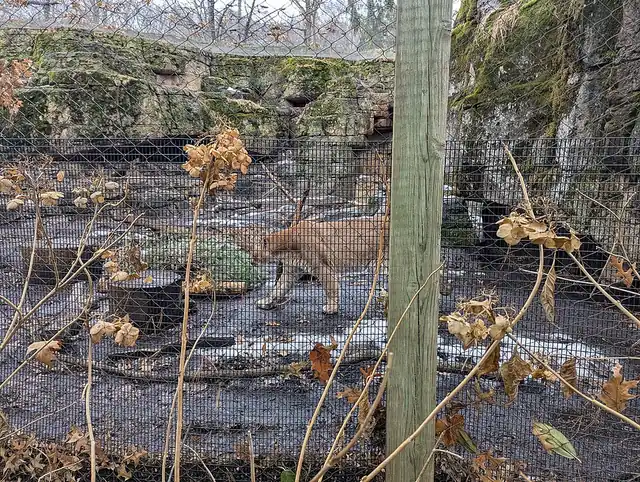 Mammal
Mountain lion
Puma concolor
A tan, solitary big cat found from Glacier to Mesa Verde, called cougar, puma, or panther by region, and rarely seen at all.
-
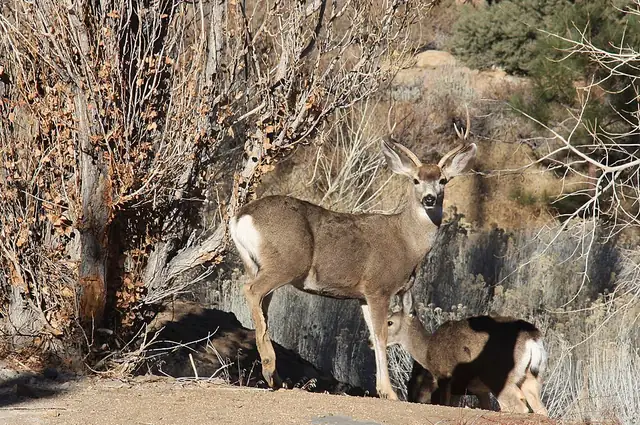 Mammal We saw it
Mule deer
Odocoileus hemionus
A western deer named for its big mule-like ears, common on canyon rims and in desert washes in Grand Canyon, Zion, Yosemite, Arches, Canyonlands, and Saguaro.
-
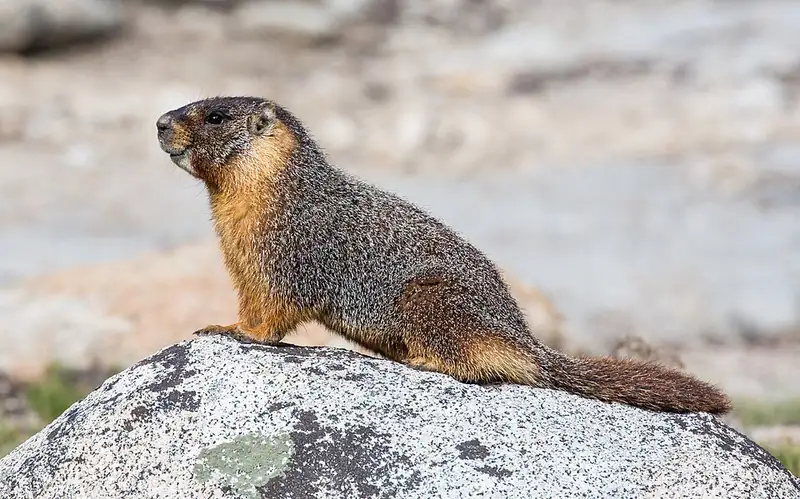 Mammal
Yellow-bellied marmot
Marmota flaviventris
A chubby, whistling ground squirrel that suns itself on high-country rocks at Rocky Mountain and Yosemite, and sleeps away most of the year.