Mammals of Black Canyon of the Gunnison National Park
The 10 mammals of Black Canyon of the Gunnison National Park. Their profiles carry sizes, diets, and whether you should worry.
Common questions
Which Black Canyon of the Gunnison National Park mammals demand distance from a kid?
American badger, Bighorn sheep, Coyote, Elk, and Golden-mantled ground squirrel carry a rule worth reading. American badger: Badgers would rather dig away than fight and avoid people entirely. Bighorn sheep: Bighorn sheep are shy and would rather climb away than come near you. Coyote: Coyotes almost always run from people. Elk: Elk look calm but they are large and wild. Golden-mantled ground squirrel: None. 5 more species carry a rule worth reading. (per NPS species pages).
What do Black Canyon of the Gunnison National Park mammals eat?
American badger eats ground squirrels, pocket gophers, small rodents, ground-nesting bird eggs. Bighorn sheep eats grasses, shrubs, desert plants. Coyote eats mice, rabbits, lizards, insects, fruit, whatever it can find. Elk eats grasses, forbs, shrubs, tree bark in winter. 6 more species have menus worth reading. (per NPS species pages).
The strangest true thing about Black Canyon of the Gunnison National Park's mammals.
American badger: A badger needs to eat about two ground squirrels or pocket gophers a day to keep its weight up, so it is almost always digging. Bighorn sheep: A ram's two curled horns can weigh up to 30 pounds together, about as much as a big bag of dog food, and he carries them on his head his whole life. (per NPS species pages).
-
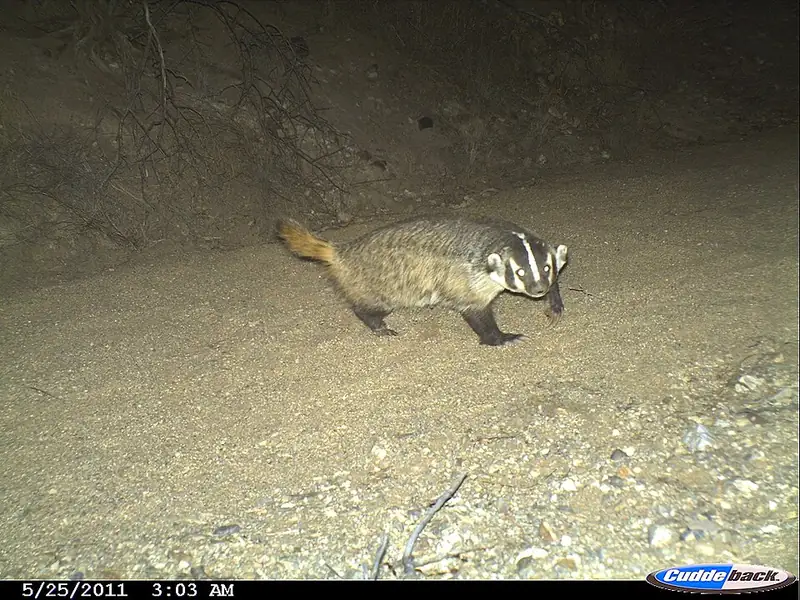 Mammal
American badger
Taxidea taxus
A short, wide-bodied digger with a white-striped face, common on the grasslands of Yellowstone and Badlands, that can vanish underground in minutes.
-
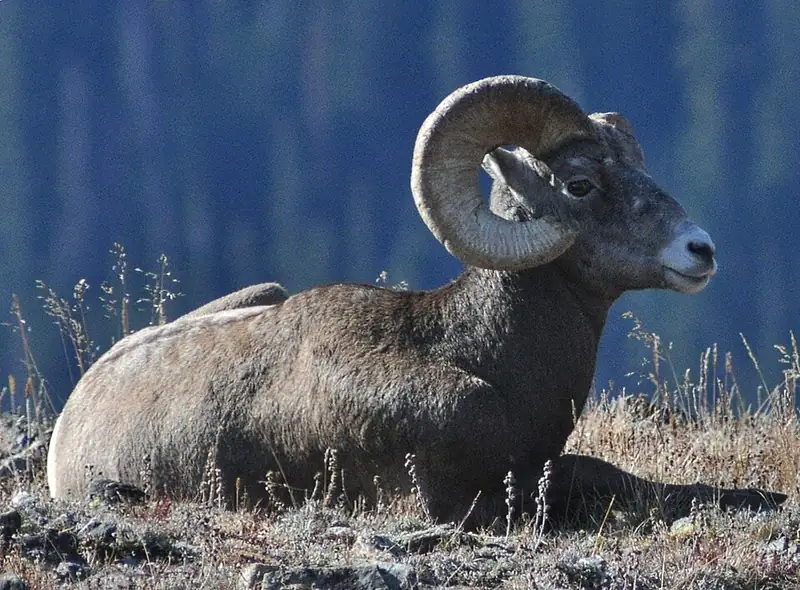 Mammal
Bighorn sheep
Ovis canadensis
A wild sheep of cliffs and canyons, where rams carry heavy curled horns and both sexes cross steep rock other animals can't.
-
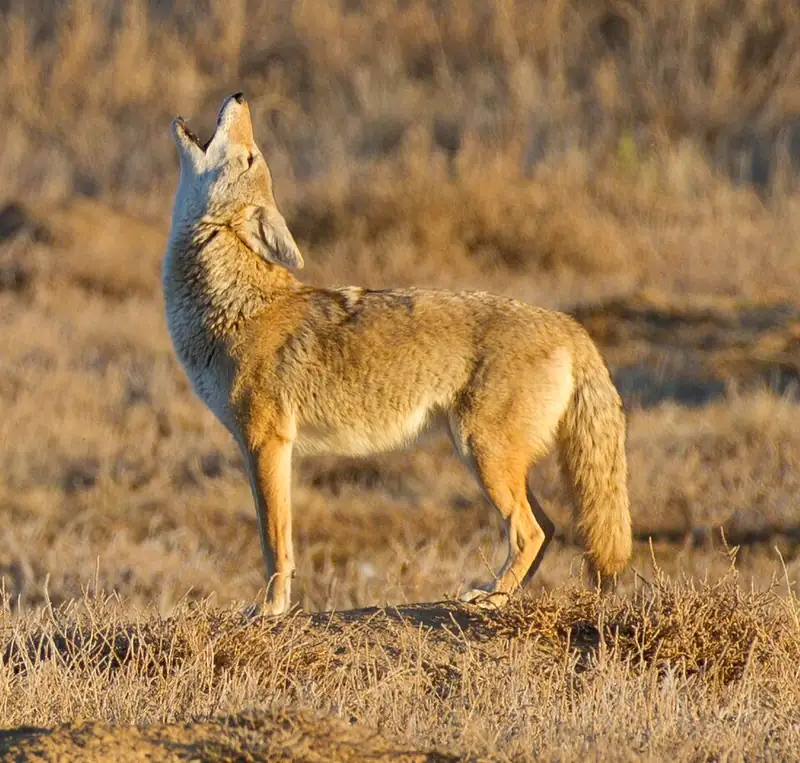 Mammal
Coyote
Canis latrans
The wild dog you're most likely to hear at a national park — a coyote, at home in the desert, the mountains, and the edges of towns.
-
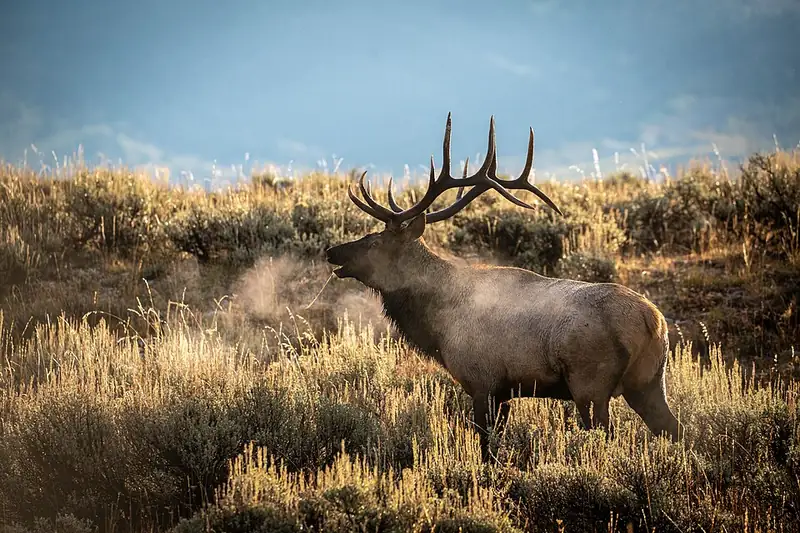 Mammal
Elk
Cervus canadensis
A large deer of mountain meadows whose bulls grow branching antlers and, each fall, bugle a high whistling call across the valley.
-
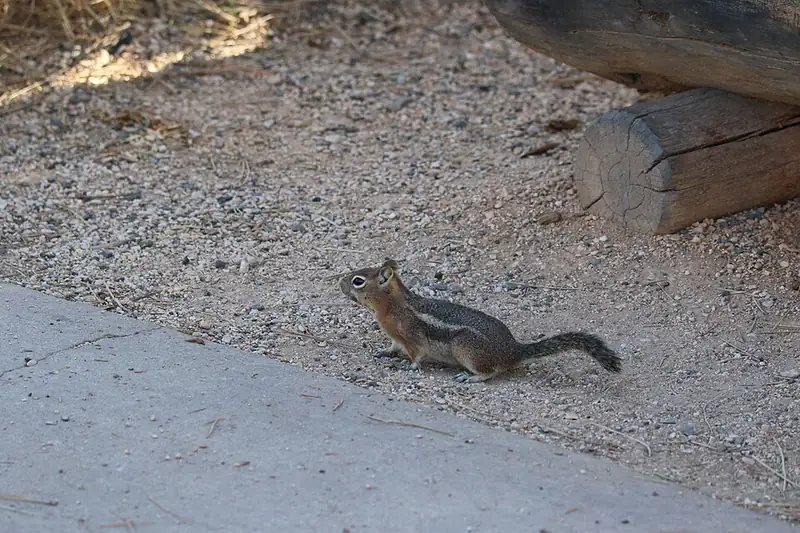 Mammal
Golden-mantled ground squirrel
Callospermophilus lateralis
A chipmunk-lookalike ground squirrel with a reddish-gold head and shoulders and no face stripes, common on rocks and trailsides from Glacier to Mesa Verde.
-
 Mammal
Little brown bat
Myotis lucifugus
A tiny brown flyer that hunts insects over water at dusk and sleeps in caves and barns, eating half its own weight in bugs each night.
-
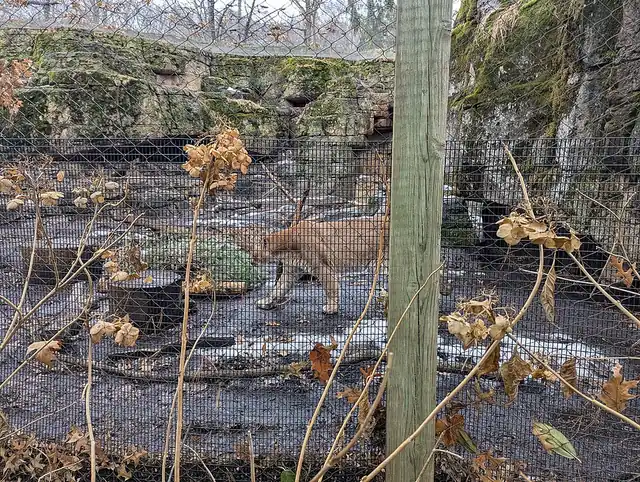 Mammal
Mountain lion
Puma concolor
A tan, solitary big cat found from Glacier to Mesa Verde, called cougar, puma, or panther by region, and rarely seen at all.
-
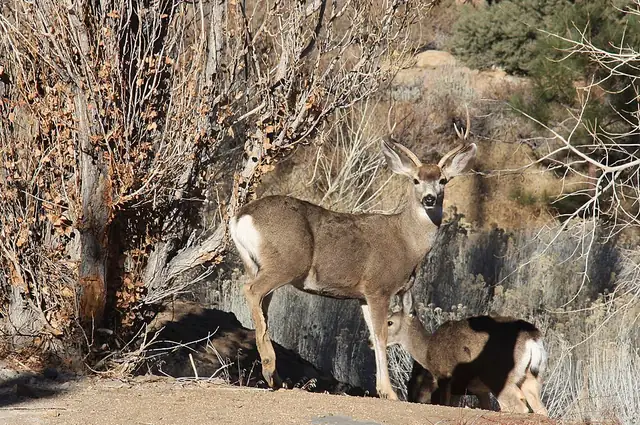 Mammal
Mule deer
Odocoileus hemionus
A western deer named for its big mule-like ears, common on canyon rims and in desert washes in Grand Canyon, Zion, Yosemite, Arches, Canyonlands, and Saguaro.
-
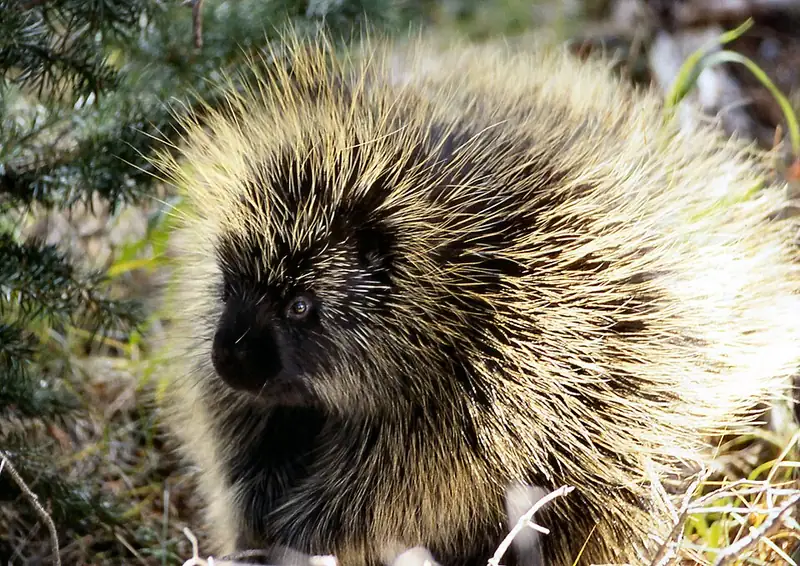 Mammal
North American porcupine
Erethizon dorsatum
A slow, quill-covered rodent of the canyon country at Arches and Canyonlands, and the second-largest rodent in North America after the beaver.
-
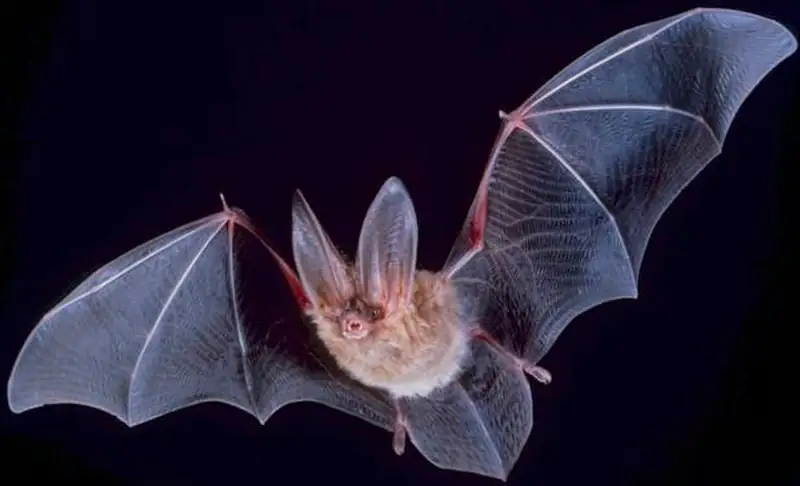 Mammal
Townsend's big-eared bat
Corynorhinus townsendii
A soft brown bat with enormous curling ears that roosts in the cool lava-tube caves of Lava Beds and hunts moths in the dark.