Shoshone-Bannock Tribes
A nation today
Background
Each member of the Fort Hall Business Council is assigned to meet regularly with one of the reservation's five districts, Gibson, Fort Hall, Ross Fork, Lincoln Creek and Bannock Creek. The council is the governing body, established under a Constitution and Bylaws the Tribes approved and the federal government ratified in 1937 under the Indian Reorganization Act of 1934, and it has seven members elected to staggered two-year terms. The Language and Cultural Preservation Department states a mission of cultural enrichment and preservation of the Shoshone and Bannock languages and traditions. It runs Shoshone and Bannock classes from its conference room, keeps an archives of tribal documents that support land claims, land use and family history, and runs a Grave Marker Project for people buried in the cemeteries on the reservation. Its Original Territories and Historical Research Program, once called the Lemhi Project, now reaches across the northern and southwestern United States and into Canada and Mexico. Water rights were settled in 1990 after five years of negotiations, and the Water Resources Department and Commission were created in 1998 to implement the Fort Hall Indian Water Rights Agreement, which recognizes the Tribes' right to water in the Upper Snake River Basin. The Fish and Wildlife Department quotes Article IV of the Fort Bridger Treaty of July 3, 1868 as setting out the right to hunt on the unoccupied land of the United States.
Visit and learn
Shoshone-Bannock Tribes's own site
Tribal lands have their own laws. Check the nation's site before you visit.
Parks on its homelands
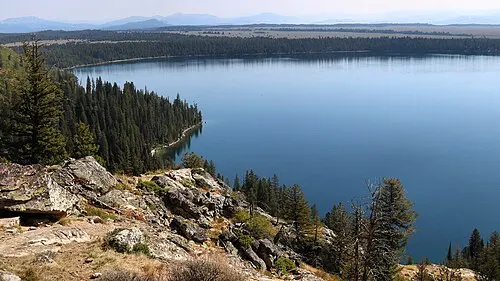
Grand Teton National ParkThe Shoshone-Bannock Tribes hold the Fort Hall Reservation in southeastern Idaho, set aside by executive order in 1867 and affirmed by the Fort Bridger Treaty a year later. Source
 Yellowstone National Park
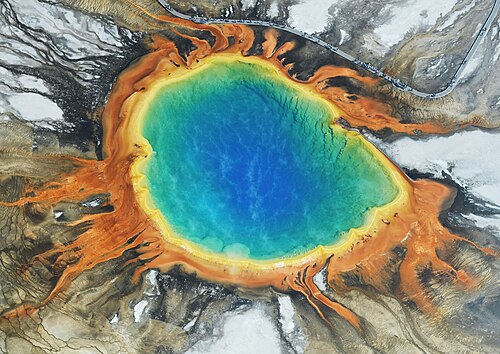
By 1900 the Tukudika, the Mountain Shoshone band that lived for thousands of years in what became Yellowstone, had been folded into the Eastern Shoshone of the Wind River Reservation and into the Mountain and Lemhi Shoshone and Bannock of the Fort Hall Reservation. NPS says some descendants prefer the name Mountain People to Tukudika or Sheep Eater. Source
Programs
Language and Cultural Preservation Department
The department's language program gives instruction in both Shoshone and Bannock through tribal members who serve as instructors, and the department pairs the language teaching with cultural values and tribal history so members know their sovereignty and treaty rights on and off the reservation. Classes run Monday to Friday, Shoshone from noon to 1:30pm and Bannock from 1:30 to 3:30pm, with an evening Bannock class on Monday and Wednesday.
Water Resources Department and Commission
The department and commission run on an integrated management system that sets water priorities for domestic, municipal, cultural, religious, agricultural, wildlife, commercial and industrial uses and administers water rights on the reservation. The department carries out a water quality program to maintain and restore the physical, chemical and biological integrity of the Tribe's water, and the commission holds policy direction and enforcement authority over tribal water rights on the reservation.
Fish and Wildlife Department
The department states a mission to protect, restore and enhance fish and wildlife resources and their habitats in line with the Tribe's treaty-protected harvest rights. It works through a Snake River Policy, runs a Memorandum of Agreement with several federal agencies that funds Endangered Species Act work on listed salmon and steelhead in the Salmon and Upper Snake River sub-basins, and manages that agreement's conservation hatchery, which develops local broodstocks and raises juvenile production in the upper Salmon River.
Sources
- https://www.govinfo.gov/content/pkg/FR-2026-01-30/html/2026-01899.htm
- https://www.sbtribes.com/fort-hall-business-council/
- https://www.sbtribes.com/language-culture/
- https://www.sbtribes.com/water-resources-department/
- https://www.sbtribes.com/fish-and-wildlife/
Checked September 2026.