Plants of Saguaro National Park
The 9 plants of Saguaro National Park. Each carries a fun fact and a note on whether a kid should worry about it.
Common questions
Which Saguaro National Park plants demand distance from a kid?
Claret cup cactus, Creosote bush, Engelmann prickly pear, Fishhook barrel cactus, and Foothill palo verde carry a rule worth reading. Claret cup cactus: This cactus is covered in stiff spines, so the rule is look, do not touch. Creosote bush: Safe to be near and to smell, but do not eat it. Engelmann prickly pear: This cactus has two kinds of spines. Fishhook barrel cactus: The central spines are thick, curved, and hooked — built to hold on. Foothill palo verde: The branch tips end in hard points, though the tree has no true thorns. 4 more species carry a rule worth reading. (per NPS species pages).
What do Saguaro National Park plants eat?
Claret cup cactus eats sunlight, rainwater, carbon dioxide, soil nutrients. Engelmann prickly pear eats sunlight, rainwater, carbon dioxide, soil nutrients. Fishhook barrel cactus eats sunlight, rainwater, carbon dioxide. Foothill palo verde eats sunlight, rainwater, carbon dioxide. 4 more species have menus worth reading. (per NPS species pages).
The strangest true thing about Saguaro National Park's plants.
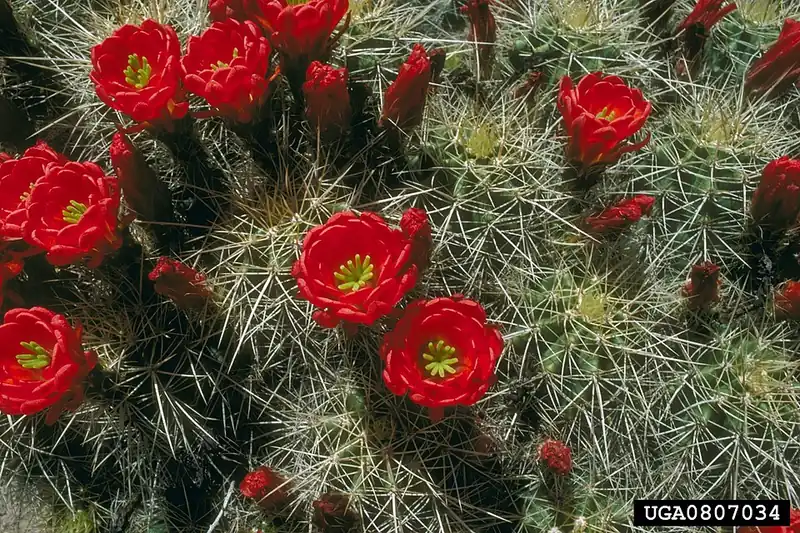
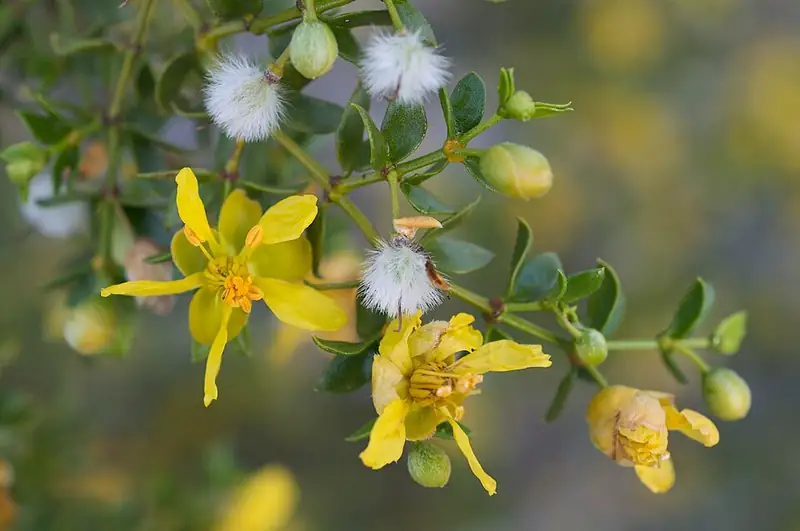
Claret cup cactus: The claret cup gets its name from its flowers, which are shaped like little cups and are a deep red, the color of a drink called claret. A single mound can hold dozens of blooms at once in spring. Creosote bush: The clean, sharp smell people call the smell of desert rain comes mostly from creosote. Its resin-coated leaves release the scent when the air turns humid before a storm. (per NPS species pages).
-
 Plant
Claret cup cactus
Echinocereus triglochidiatus
A low, mounding desert cactus that bursts into bright red, cup-shaped flowers each spring on rocky ground across the Southwest.
-
 Plant
Creosote bush
Larrea tridentata
The scraggly desert shrub whose leaves make the smell of desert rain, and whose slow-spreading clone rings are among the oldest living things on Earth.
-
 Plant
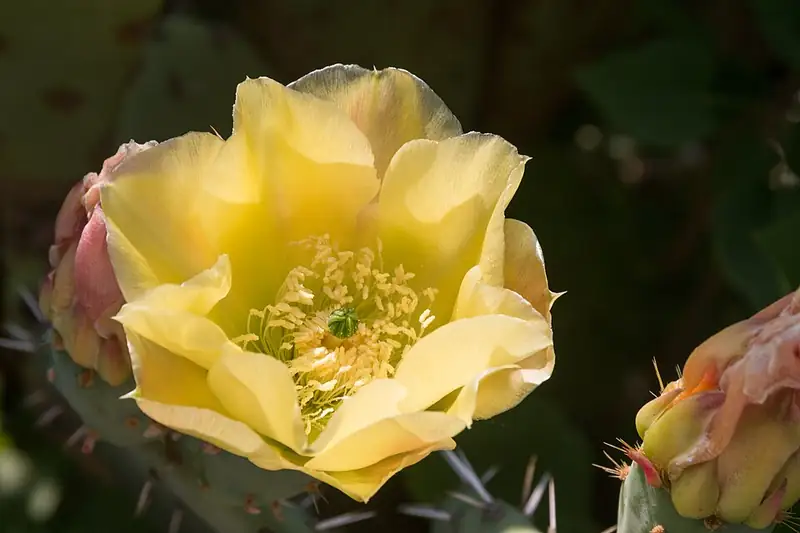
Engelmann prickly pear
Opuntia engelmannii
A wide, flat-padded cactus of the southwestern deserts, spreading in low clumps with yellow flowers and purple fruit at Big Bend, Saguaro, and Arches.
-
 Plant
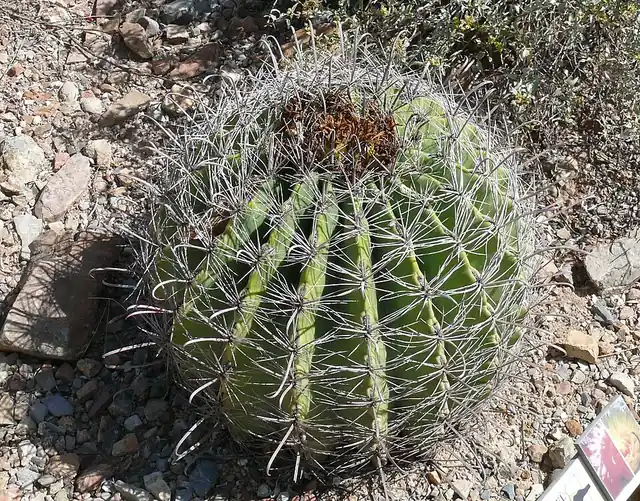
Fishhook barrel cactus
Ferocactus wislizeni
A pleated barrel cactus with hooked red spines, a crown of orange flowers in late summer, and a habit of leaning southwest.
-
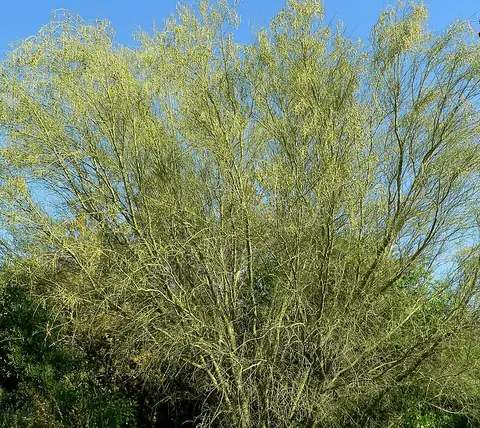 Plant
Foothill palo verde
Parkinsonia microphylla
The green-barked tree that dominates Saguaro's west district and shares Arizona's state-tree title with the blue palo verde.
-
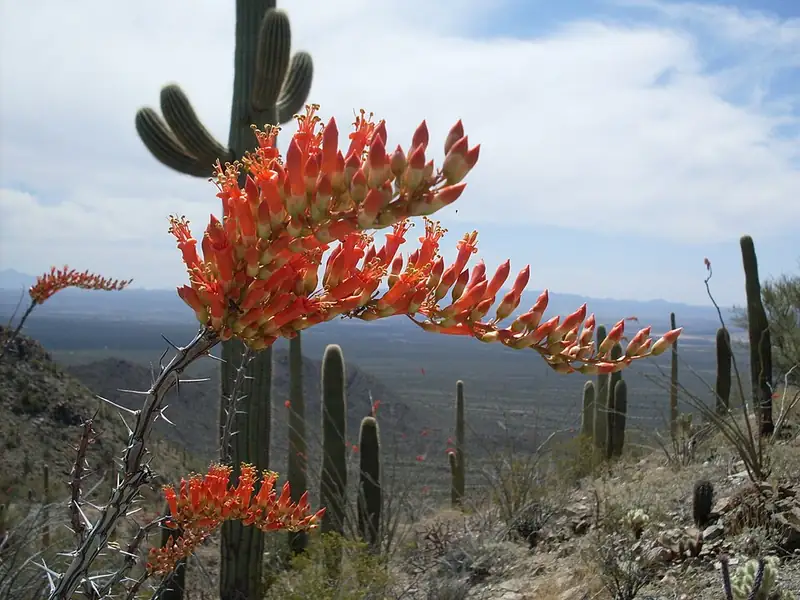 Plant
Ocotillo
Fouquieria splendens
A whip-thin desert shrub that looks dead most of the year, leafs out within days of rain, and wears red flowers in spring.
-
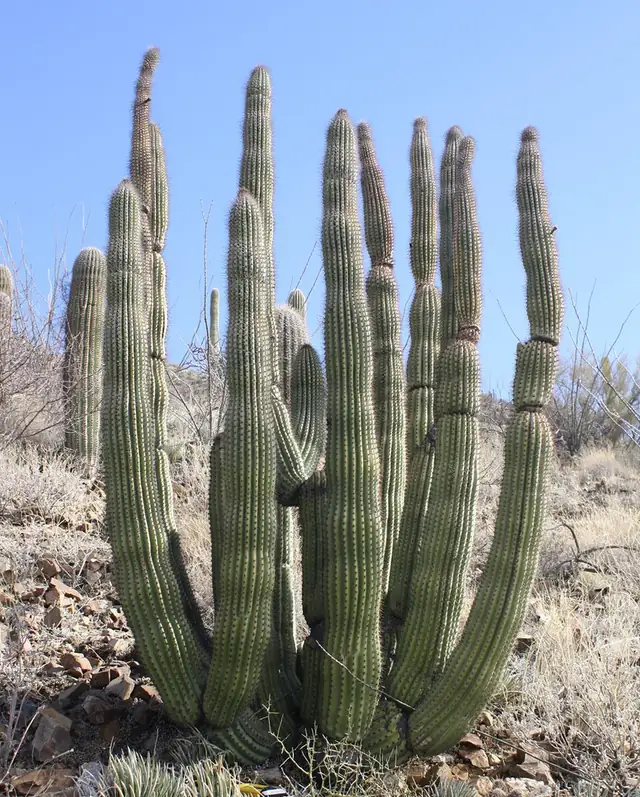 Plant
Organpipe cactus
Stenocereus thurberi
A many-columned cactus of the warmest Sonoran Desert, at the cold edge of its range in Arizona and nearly absent from Saguaro.
-
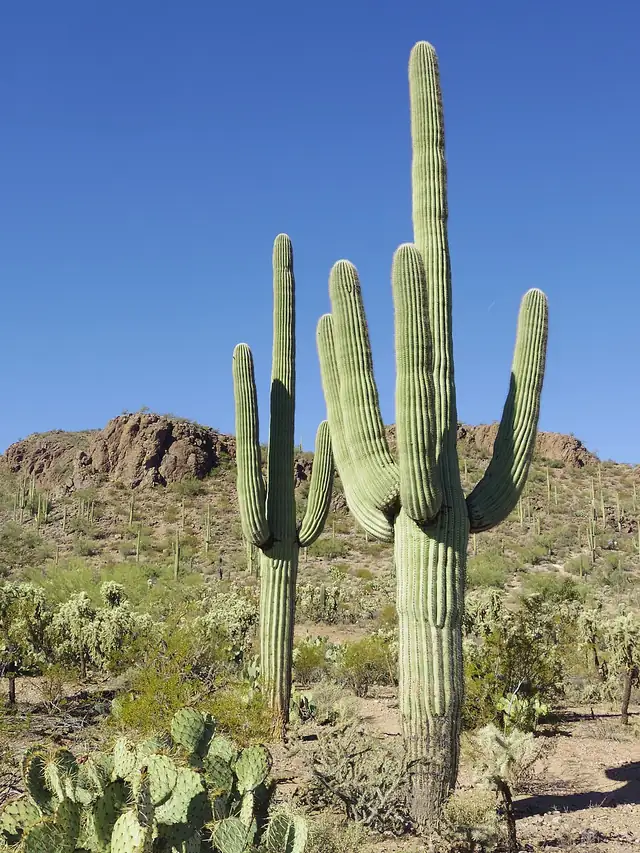 Plant
Saguaro
Carnegiea gigantea
The tall, arm-raising cactus of the Sonoran Desert, found in the United States mainly around Tucson at Saguaro National Park.
-
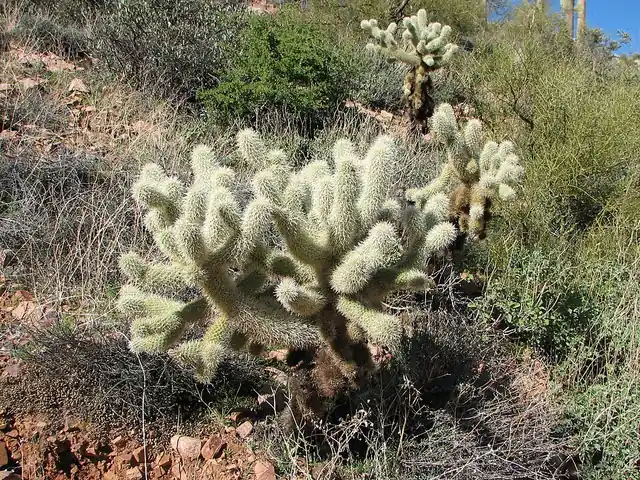 Plant
Teddy bear cholla
Cylindropuntia bigelovii
The cholla whose pale, crowded spines look soft from a distance and detach at a touch, rooting wherever the piece lands.